Private wellness guide · 8 min read
Metal RFID Membership Cards for Private Wellness Clubs
A private wellness credential can support calm recognition, facility access, booking, and member service while health and treatment information stays completely outside the card. The program should feel discreet because the operating rules and privacy boundaries are clear, not because the metal object suggests unlimited access.
Industry program views
Connect a discreet physical identity to a carefully protected service journey.
Reception, facility access, bookings, tier recognition, privacy, and replacement should work as one calm process without exposing sensitive member information.
Define the membership promise in operational terms.
Useful benefits may include protected booking windows, member-only facilities, assessments, classes, recovery sessions, concierge coordination, or guest allowances. Specify capacity, notice, exclusions, and expiry. A rose-gold or black tier has meaning only when staff can apply the underlying service rule consistently.
Translate each membership promise into capacity, timing and responsibility. Protected booking means defining which sessions, how far ahead and what happens when the schedule is full. Guest access needs limits and an accountable sponsor. When these rules are visible to reception and the member, the metal card becomes a calm recognition tool rather than a symbol that invites inconsistent exceptions.
Keep health and treatment information off the card.
The credential should identify the member or open an authenticated journey; it should not print or openly store diagnoses, treatment history, appointments, biometrics, medication, or other sensitive health information. Access to private records belongs in the club's controlled system with role-based permissions.
Apply data minimization to the entire journey, not only the card face. The NFC or QR destination should reveal no health category before authentication, and reception search results should show only what is necessary to serve the member. Personalization files, issue logs and replacement records also need limited access and retention. A premium experience can be personal without exposing why someone attends the club.
Choose technology by reception, door, and phone journey.
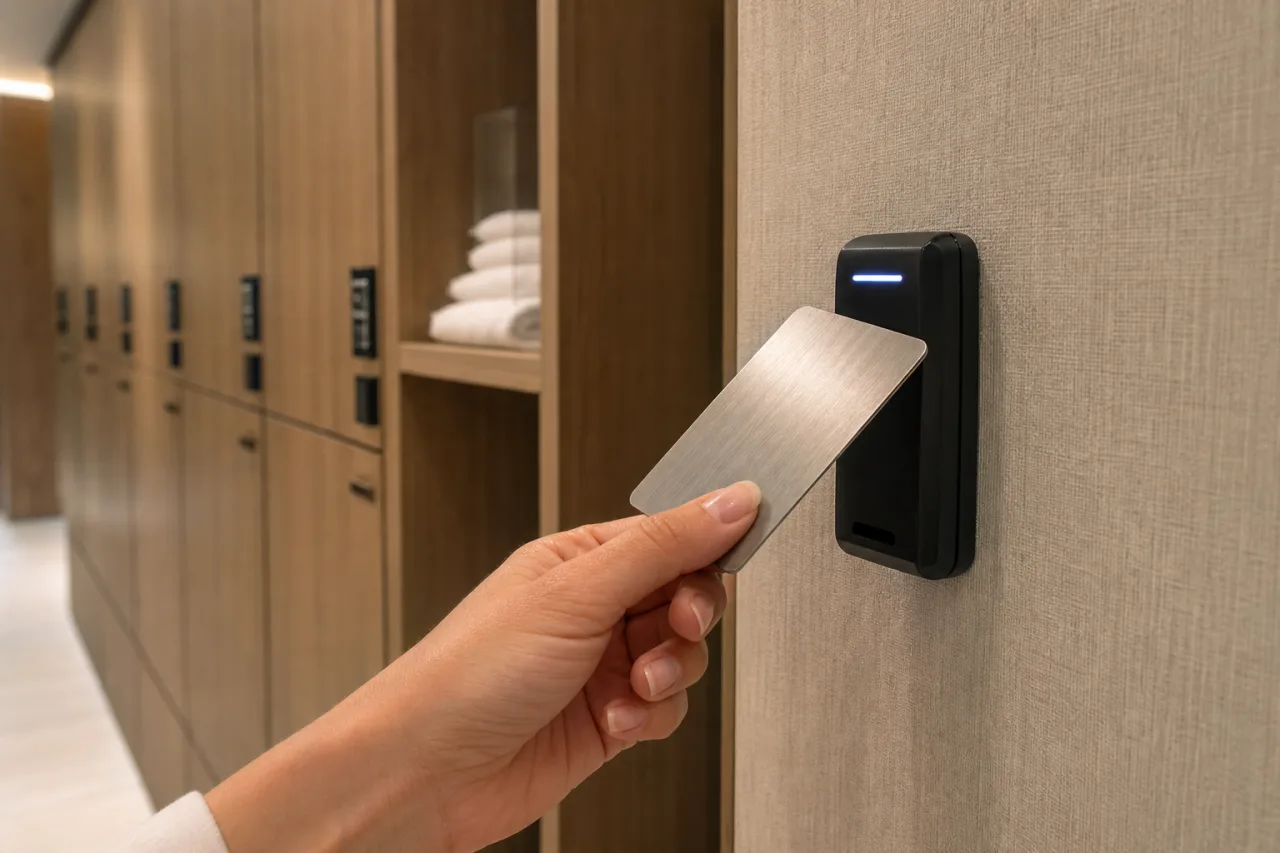
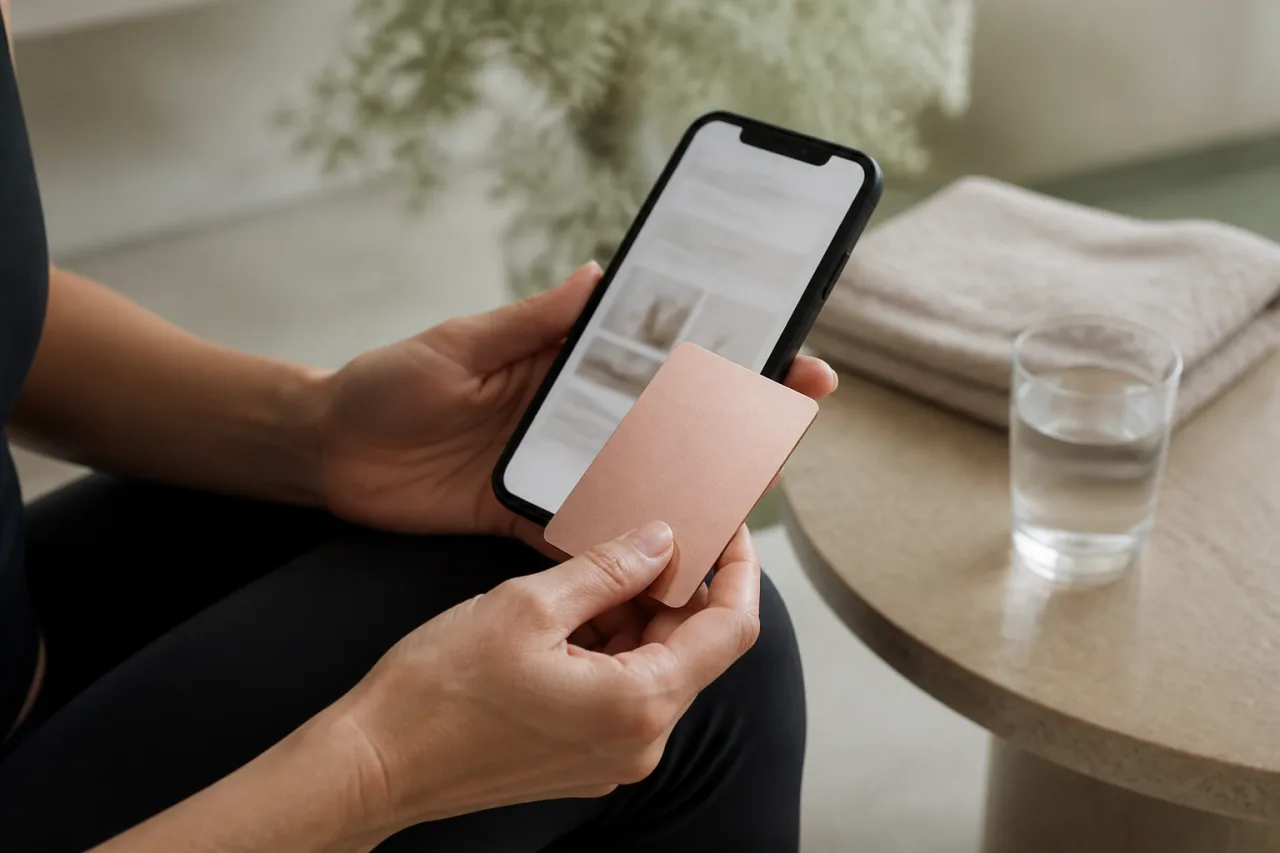
A compatible RFID credential may serve a gate, locker, or private area. NFC or QR may open booking, class schedules, renewal, or concierge contact. Confirm the installed reader before selecting a chip, and treat phone interaction and secure facility access as separate requirements even when one card supports both.
Keep booking, facility entry and locker access as separate test cases. They may share one physical object, but each has its own reader, data and failure mode. Start from the installed hardware, then approve the final chip, antenna, shielding, thickness and encoding on site. For phone use, test representative devices and cases and provide a high-contrast QR fallback where appropriate.
Design discretion into personalization and staff use.
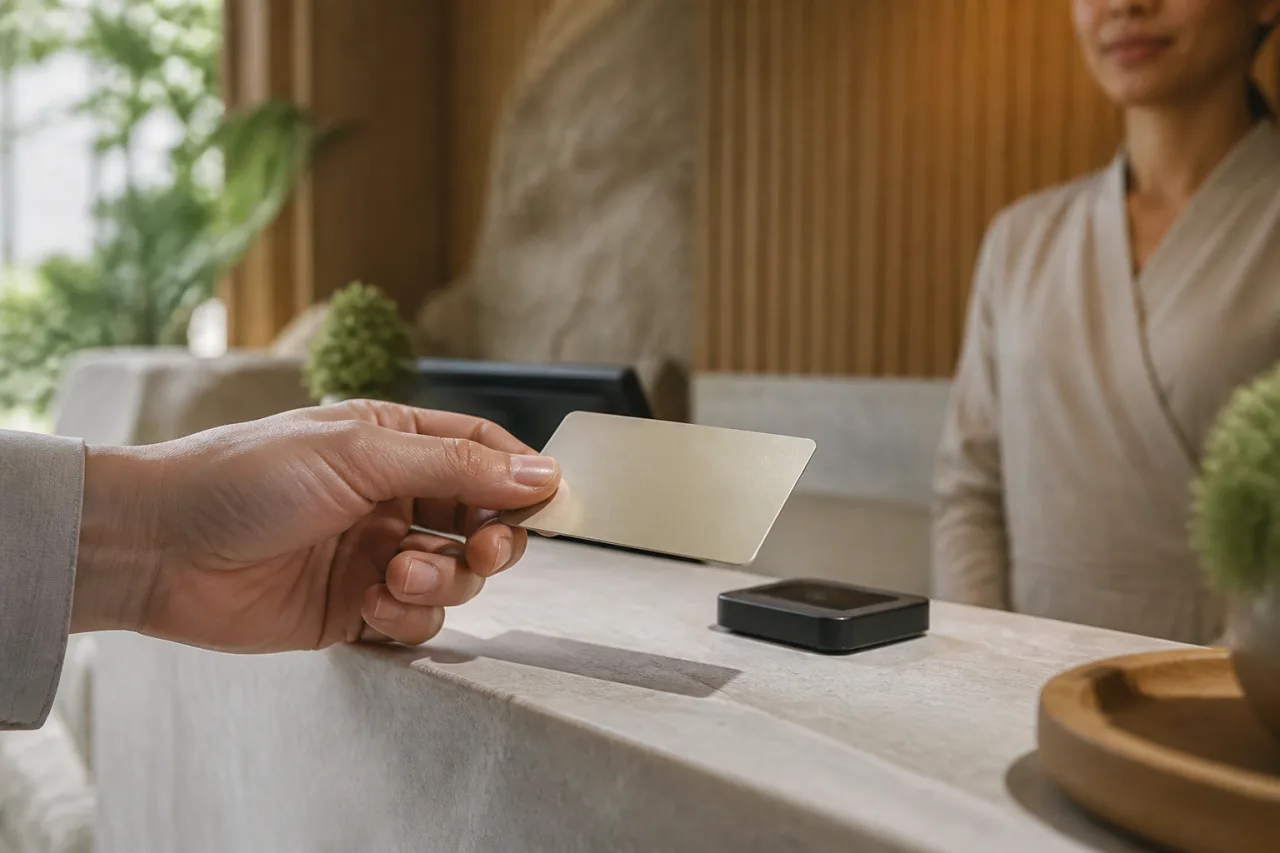
Use the minimum visible fields required for recognition: perhaps name, member number, tier, or expiry. Avoid labels that reveal a treatment or health category. Give reception a clear lookup path, a respectful fallback when the card is forgotten, and a process for private conversations away from the check-in queue.
Train for discretion as carefully as for technology. Staff should know how to verify a forgotten card, move a sensitive conversation away from the queue and explain a declined access event without naming a treatment or membership issue. Define who may override a rule and how the decision is recorded. Consistent, quiet handling contributes more to perceived exclusivity than an ornate finish alone.
Test cleaning, handling, and replacement realities.
Cards may encounter lotions, damp hands, lockers, towels, and frequent desk handling. Approve coating, laser contrast, edge comfort, sleeve choice, QR scanning, and reader behavior on the finished sample. Lost cards need immediate revocation, and replacements must preserve the member record without copying private history onto the credential.
Physical testing should reflect lotions, moisture, towels, pockets, lockers and repeated desk handling. Review coating, laser contrast, corners, sleeve fit and cleaning guidance on the real sample. Avoid unsupported claims about chemical resistance; agree a sensible care method instead. When a card is lost or damaged, revoke its identifier promptly and link the replacement to the existing member record without carrying private history on the card.
Best uses
- Private wellness, longevity, spa, and health clubs
- Founder, resident, recovery, and concierge memberships
- Reception, booking, classes, lockers, and selected access
- Programs requiring discreet identity and strong privacy boundaries
Relevant metal card routes
Frequently asked questions
Can treatment or health information be stored on the card?
It should not be printed or openly encoded. Keep sensitive records in authenticated systems with appropriate permissions.
Can one metal card support bookings and locker access?
Sometimes. Booking through NFC or QR and reader-based locker access are separate functions; both must be specified and tested on the final construction.
Which finish suits a private wellness club?
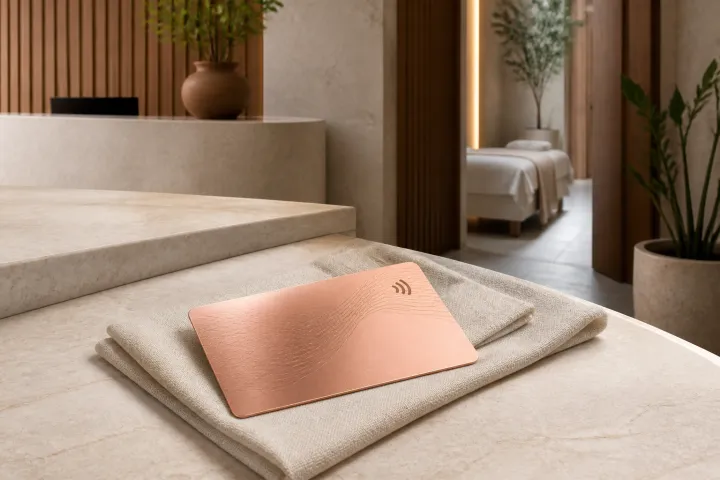
Brushed steel, soft champagne, rose gold, gunmetal, or matte black can work. Choose for brand fit, handling, contrast, and durability, then approve the physical sample.
Specification
| Card format | CR80 85.6 × 54 mm by default; custom outlines after RF review |
|---|---|
| Thickness | 0.3–0.8 mm depending on the metal and RF construction |
| Minimum order | None — from one working approval sample to production runs |
| Production time | About one week after artwork, data, and sample approval |
| Personalization | Member name, ID, tier, serial, expiry, QR, NFC data, and matched packaging |
| Approval path | Program brief, artwork proof, encoded sample, device test, and production approval |
| Privacy boundary | Member identifier only; no diagnosis, treatment, biometric, appointment, or health data on the credential |
| Critical test | Reception flow, cleaning and handling, phone journey, and every intended access or locker reader |
Related metal RFID card pages
- Metal RFID Membership Cards for Yacht Clubs and Marinas
- Metal RFID Membership Cards for Private Aviation and FBO Lounges
- Metal RFID Membership Cards for Golf and Country Clubs
- Metal RFID Membership Cards for Luxury Residence Clubs
- Custom Metal Membership Cards for Car Clubs
- Metal Membership Cards for Car Detailing Studios
- How to Build a Luxury Car Rental VIP Membership Program
- Metal Membership Cards for Private Car Storage Clubs
- Dealership VIP Cards That Extend the Owner Relationship
- VIP Metal Passes for Rallies, Track Days and Car Events
- NFC, RFID or QR for Automotive Membership Cards?
- How to Design Black, Gold and Founder Car Club Tiers
- What Can Be Personalized on a Metal Automotive Card?
- Metal vs Plastic Membership Cards for Automotive Brands
- How NFC Metal Cards Connect Automotive Member Portals
- Seven Benefits an Automotive VIP Card Can Support