Private aviation guide · 8 min read
Metal RFID Membership Cards for Private Aviation and FBO Lounges
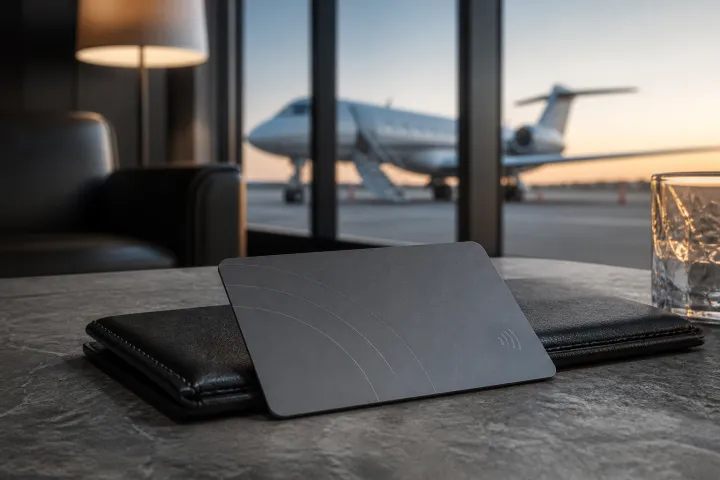
In private aviation, a membership card should accelerate recognition and service without pretending to replace identity, security, or flight documentation. A well-designed metal credential can support lounge access, account recognition, ground-service requests, and concierge contact while sensitive travel data remains in controlled systems.
Industry program views
Make the credential discreet, fast to recognise, and limited to its real authority.
Member identity, lounge access, service requests, privacy, and staff fallback procedures all need approval before the card becomes part of the arrival journey.
Define what the card proves—and what it never proves.
The card may identify a member, account, host relationship, or lounge entitlement. It must not imply that identity checks, security screening, passport control, passenger manifests, or flight authorization have been completed. Staff guidance should explain the exact service decisions the credential supports.
Begin with the service moments the program can genuinely improve: recognition on arrival, lounge hospitality, ground transport coordination, partner validation or a protected concierge channel. Assign an owner and fallback to every promise. A metal credential cannot compensate for an entitlement that staff cannot see, a partner cannot verify, or an assistance route that is not monitored outside office hours.
Design recognition for a low-friction arrival.
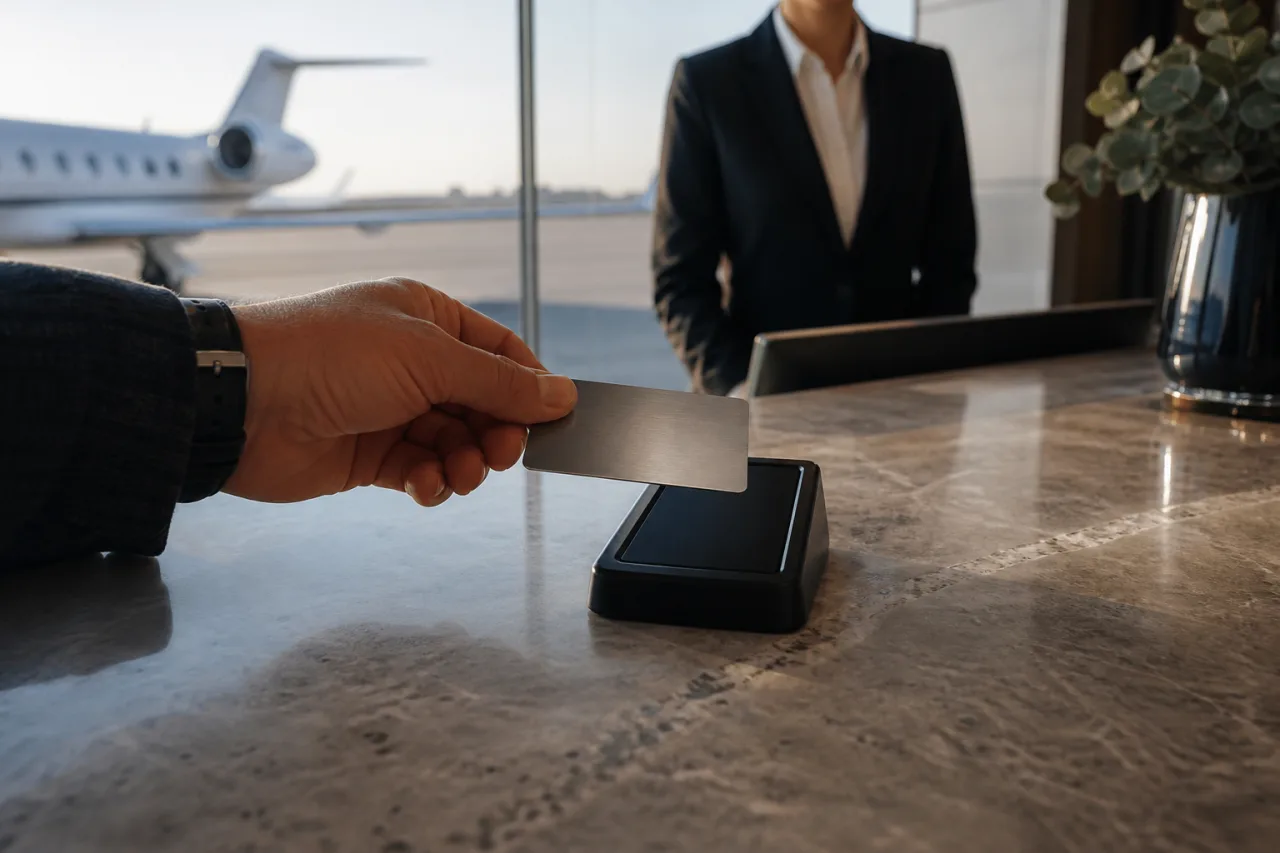
A visible member name, number, or tier can help reception recognise the relationship. RFID may serve a compatible lounge or private-area reader; NFC or QR can open a managed service page. Keep the front restrained, make the member identifier easy to verify, and provide a manual lookup when the card is absent or unreadable.
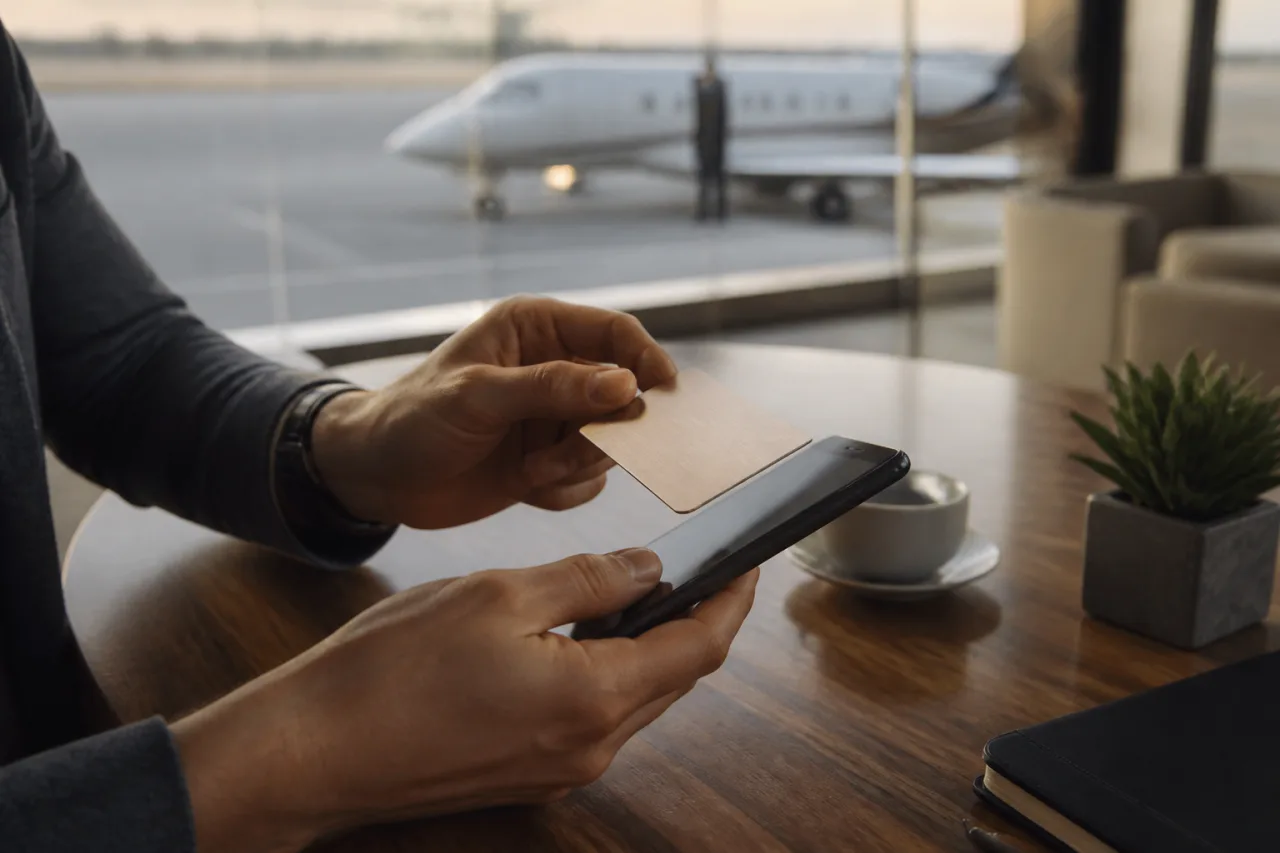
The first screen after a tap should be deliberately small and useful. Present only the actions appropriate to that membership, protect account details behind authentication, and keep the destination editable without replacing the card. Travel plans, passenger names and identity documents belong in controlled aviation systems. The card should carry or reveal only the minimum identifier needed to reach the relevant service.
Connect to services without exposing travel data.
A controlled portal can support ground transport, catering, lounge reservations, special handling, or concierge contact. The card should carry a token or managed link, not an itinerary, passenger document, aircraft movement, payment data, or unrestricted account record. Authentication and staff permissions belong in the portal.
Partner acceptance needs written governance. Define which locations participate, how they confirm status, what they may record, when privileges expire, and whom they call when a lookup fails. Avoid a static visual tier becoming permanent authority after a relationship changes. A live validation route, plus a respectful manual fallback, protects both the member experience and the partner from guessing.
Match access to the exact FBO system.
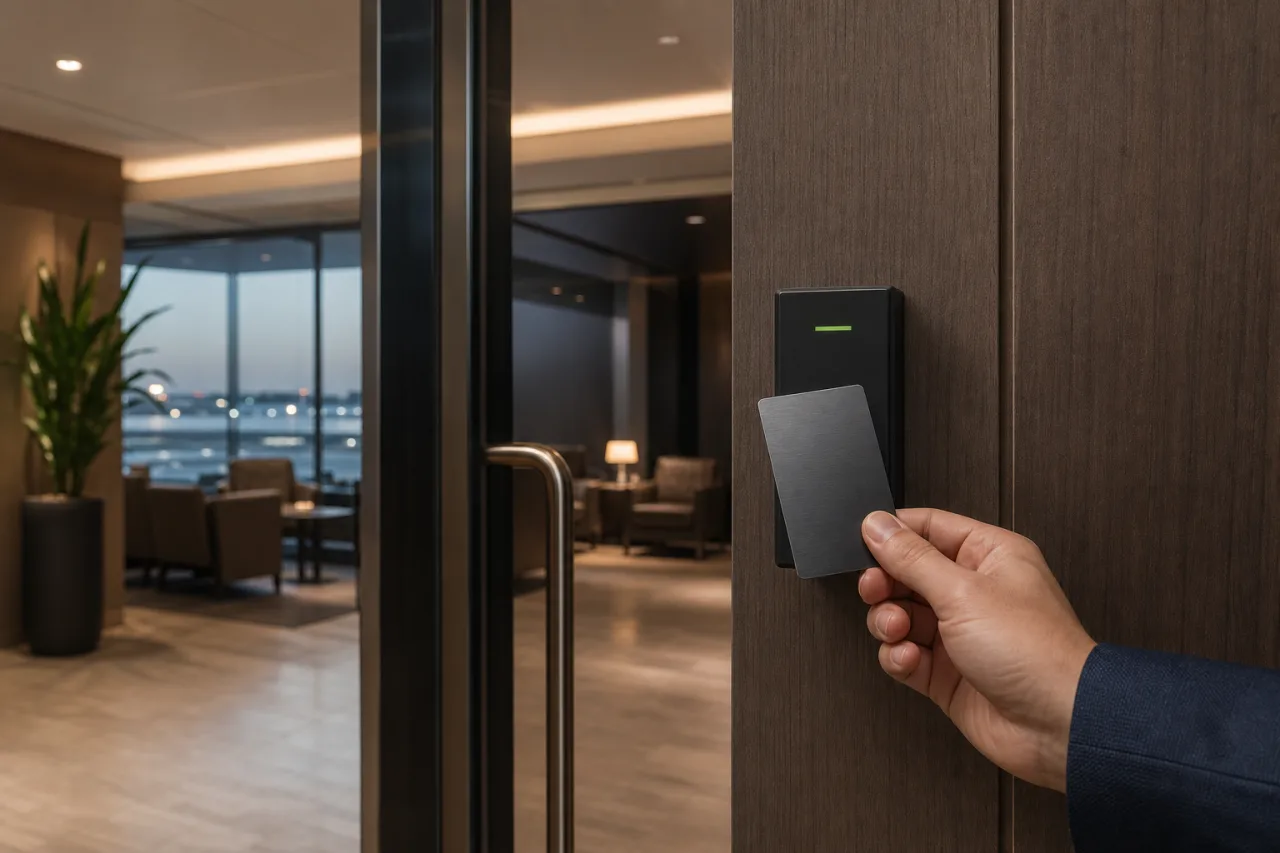
Installed readers determine frequency, chip family, credential format, and encoding. A general NFC claim does not establish access compatibility. Supply the reader specification or a working credential, then test the encoded metal sample at each intended door, elevator, lounge, and after-hours point before production.
For any lounge reader, work from the installed platform rather than a generic chip description. Obtain a working reference credential or precise reader specification, produce an encoded sample in the intended metal construction, and test it on site. Record orientation, read distance and failure behavior. A pass at one interior door does not establish compatibility with another property or any aviation-security system.
Plan reissue, expiry, and partner acceptance.
Membership status, lounge partners, and service rules can change while the physical card remains. Keep current entitlement in the live system, define lost-card revocation, and tell partner locations how to validate the member without requesting unnecessary personal information. The premium object should reduce uncertainty, not widen access.
Issue and replacement should be as discreet as the finished object. Use a controlled data file, verify names and tier before engraving, and keep the welcome insert free of sensitive itinerary information. When a card is lost, staff need a quick way to revoke the identifier, confirm the member through an approved channel and issue a replacement without copying unnecessary history onto the new credential.
Best uses
- Private aviation memberships and jet-card communities
- FBO lounges and invitation-only hospitality
- Owner, charter, founder, and concierge tiers
- Programs linking recognition to ground and lounge services
Relevant metal card routes
Frequently asked questions
Can the card replace a passport, boarding document, or security credential?
No. It is a membership or service credential only unless a separately governed system explicitly assigns a limited access function.
Can an FBO membership card open a lounge door?
Yes, when the exact installed access platform supports the selected credential and the finished encoded sample passes testing at that reader.
Should flight or passenger details be encoded on the card?
No. Keep sensitive travel and identity data in authenticated systems and use the card only as a controlled identifier or link.
Specification
| Card format | CR80 85.6 × 54 mm by default; custom outlines after RF review |
|---|---|
| Thickness | 0.3–0.8 mm depending on the metal and RF construction |
| Minimum order | None — from one working approval sample to production runs |
| Production time | About one week after artwork, data, and sample approval |
| Personalization | Member name, ID, tier, serial, expiry, QR, NFC data, and matched packaging |
| Approval path | Program brief, artwork proof, encoded sample, device test, and production approval |
| Identity boundary | Membership and service recognition only; no replacement for travel, security, or identity documents |
| Critical test | Staff workflow, portal authentication, partner validation, and every intended access reader |
Related metal RFID card pages
- Metal RFID Membership Cards for Yacht Clubs and Marinas
- Metal RFID Membership Cards for Golf and Country Clubs
- Metal RFID Membership Cards for Luxury Residence Clubs
- Metal RFID Membership Cards for Private Wellness Clubs
- Custom Metal Membership Cards for Car Clubs
- Metal Membership Cards for Car Detailing Studios
- How to Build a Luxury Car Rental VIP Membership Program
- Metal Membership Cards for Private Car Storage Clubs
- Dealership VIP Cards That Extend the Owner Relationship
- VIP Metal Passes for Rallies, Track Days and Car Events
- NFC, RFID or QR for Automotive Membership Cards?
- How to Design Black, Gold and Founder Car Club Tiers
- What Can Be Personalized on a Metal Automotive Card?
- Metal vs Plastic Membership Cards for Automotive Brands
- How NFC Metal Cards Connect Automotive Member Portals
- Seven Benefits an Automotive VIP Card Can Support