Variable data
QR and Serial Metal RFID Cards
A QR or serial zone gives gate staff, service teams, and systems a clear fallback beside RFID or NFC. On metal it arrives by two routes — lasered data marks or printed white-ink panels — and the mark, data file, encoding record, and packaging label all reconcile from one approved source.
Production detail views
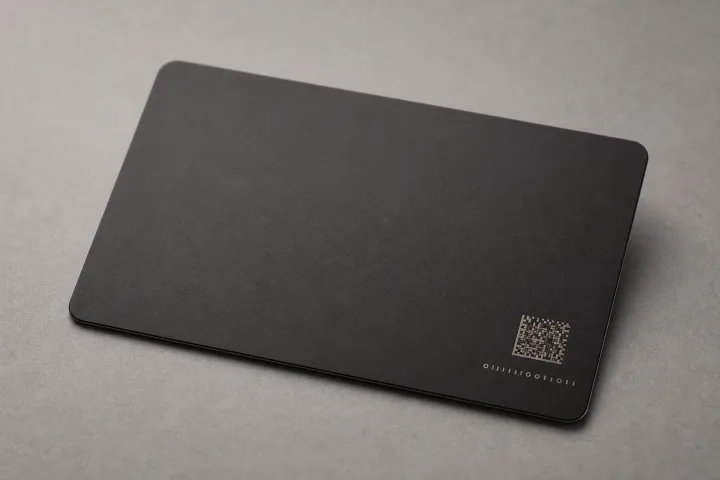
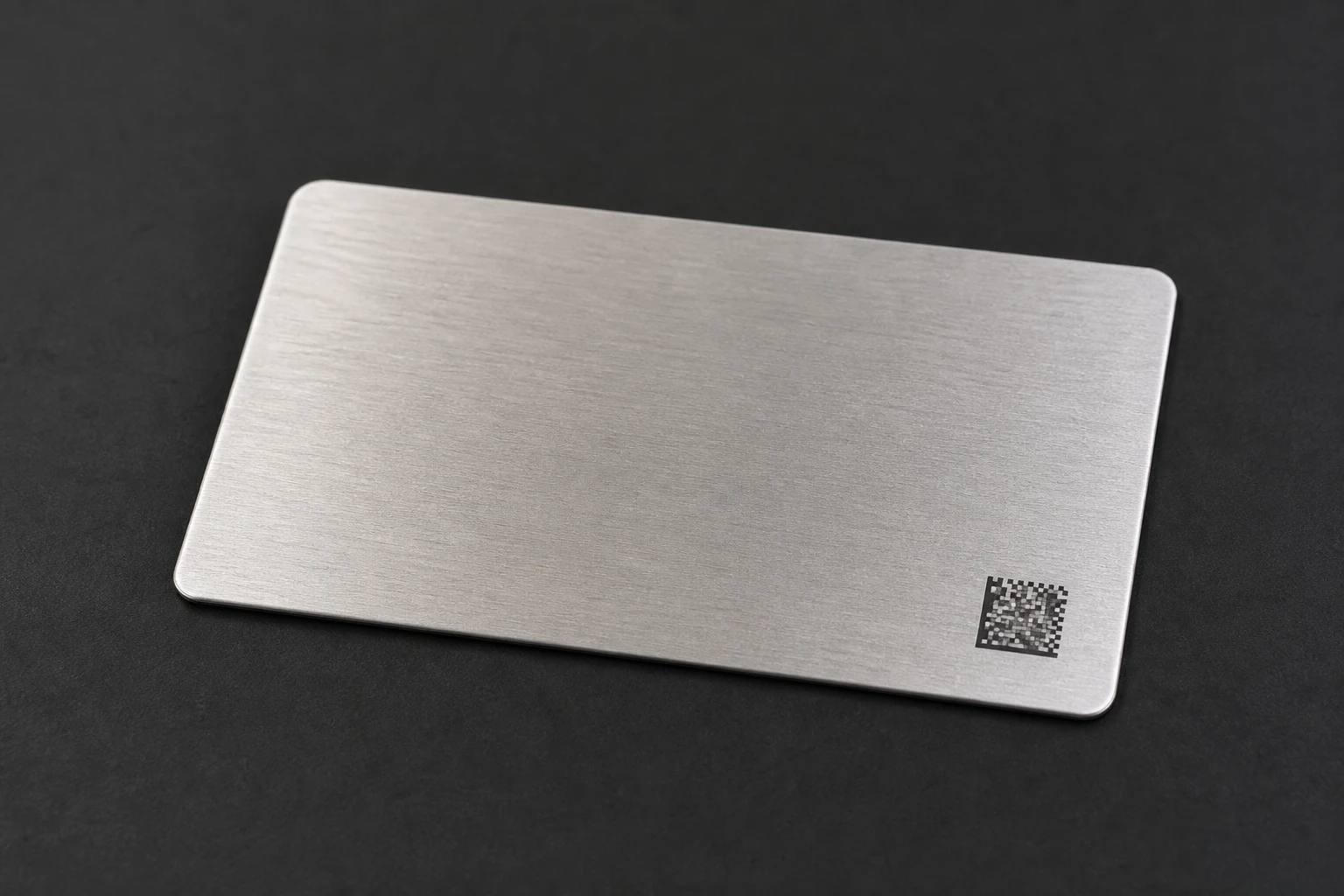
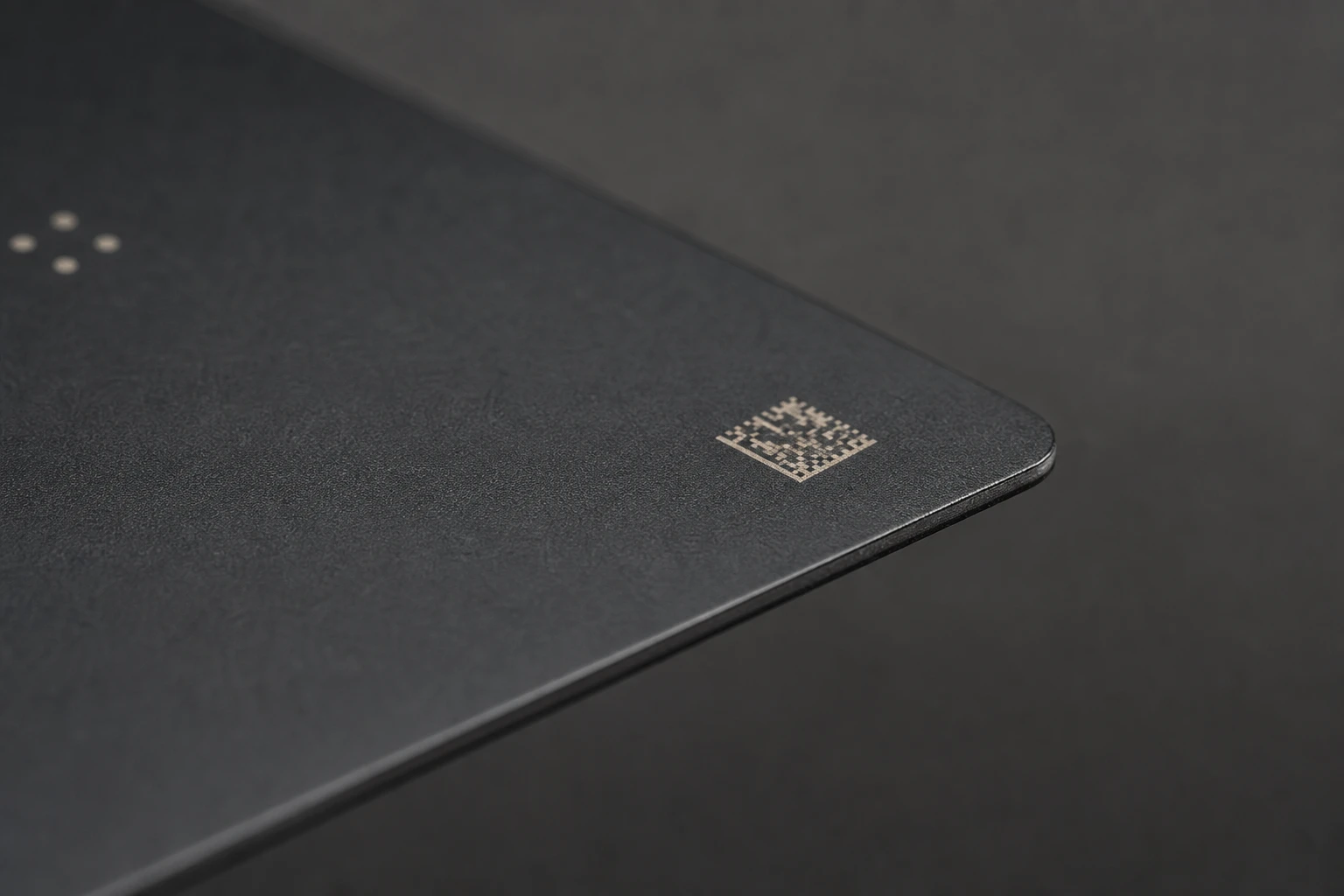
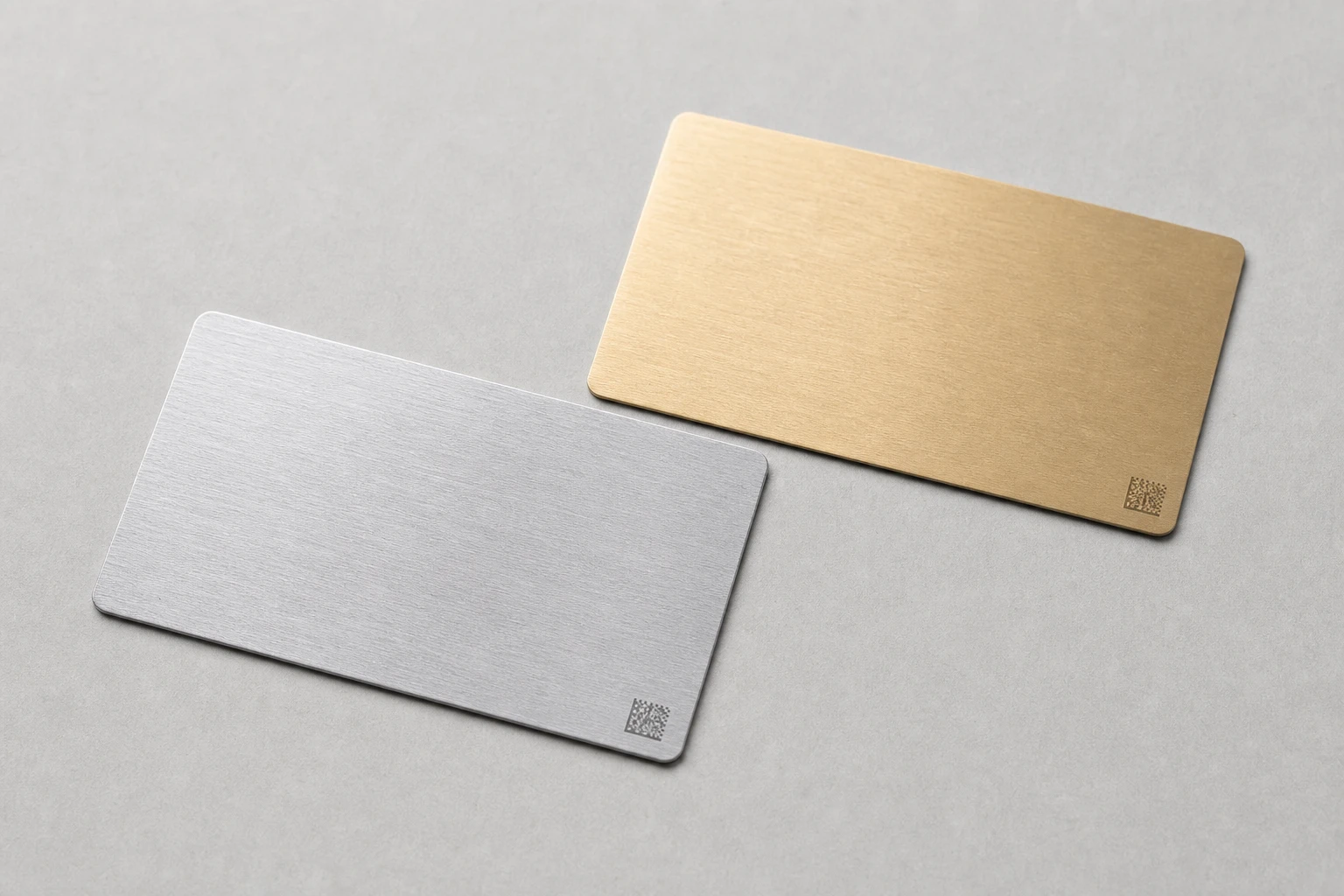
Four qr and serial references for planning the finished metal card.
Laser data marks, dark-surface contrast zones, a finish comparison pair, and a sharp data-matrix — variable data on metal.
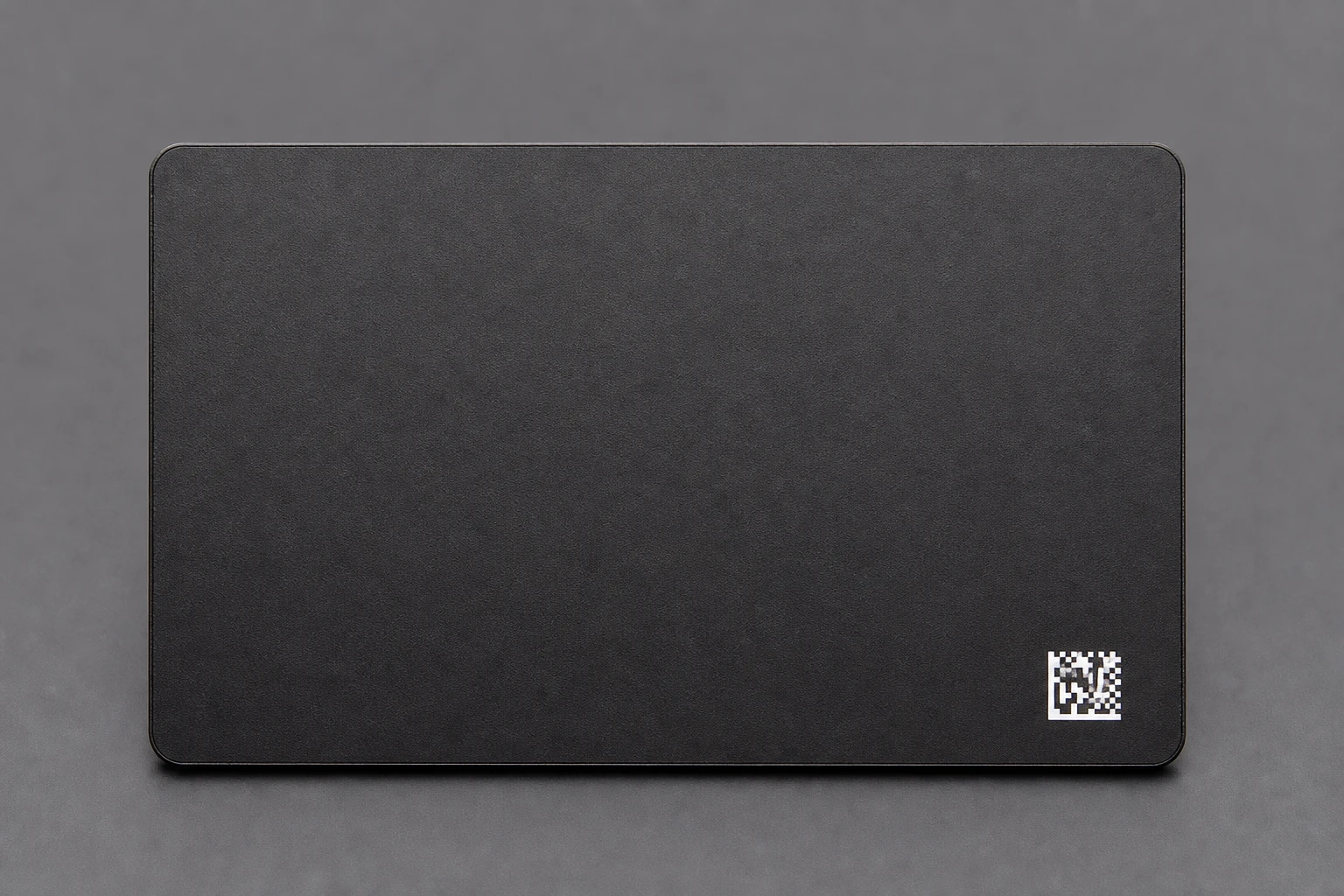
Reflective metal is the enemy of scan reliability.
Variable data reaches metal by two routes: lasered data-matrix or serial marks cut into the surface, and printed white-ink QR panels for dark or reflective faces. Reflection defeats scanners, so codes sit on a contrast panel with a clear quiet zone — and every payload is scan-verified against the production file before dispatch.
Prove visual and technical performance together.
Approve QR size, contrast, scan distance, variable data sample, and production-file reconciliation.
Best uses
- UID matching, QR fallback, serials, member IDs, access references, packaging labels, and audit trails.
- Premium metal card programs where the finish, data zones, and RF construction need coordinated approval
- Projects with a defined artwork file, variable-data need, and reader or scan validation route
Frequently asked questions
Can each metal card carry a unique QR code and serial?
Yes. Unique payloads, serials, and IDs are generated from one approved data file, matched to the encoding and packaging, and scan-verified before dispatch.
How do QR codes stay scannable on metal?
By respecting the surface: codes sit on a printed contrast panel or as a lasered data mark, with a clear quiet zone, and the scan is tested at real working distance on the finished card — reflection is what kills codes on metal.
Why do QR, chip data, and box labels come from one file?
Because the marking method never causes mismatches — separate files do. The QR, serial, encoded record, and box label are reconciled from one approved source and verified line by line before dispatch.
Specification
| Format | CR80 85.6 x 54 mm by default; custom outlines after RF review |
|---|---|
| Thickness | 0.3 mm to 0.8 mm depending on construction |
| Minimum order | None — single samples to production runs |
| Production time | About one week after artwork and sample approval |
| RF construction | Antenna, ferrite or hybrid shielding, chip, metal faces, and edge stack specified together |
| Chip routes | NFC tag, standard HF, high-security AES HF, LF compatibility, and selected UHF by reader test |
| Marking options | Laser etch, deep engraving, UV print, white ink, enamel fill, QR, serial, and controlled cut-through |
| Approval flow | Finish sample, encoded working sample, reader check, pre-production approval |
| Primary route | QR and serial |
| Best use | UID matching, QR fallback, serials, member IDs, access references, packaging labels, and audit trails. |
| Approval check | Approve QR size, contrast, scan distance, variable data sample, and production-file reconciliation. |
Related metal RFID card pages
- Laser Engraved Metal RFID Cards
- Deep Engraved Metal RFID Cards
- UV Printed Metal RFID Cards
- White Ink Metal RFID Cards
- Enamel Filled Metal RFID Cards
- Metal Card Edge Finishing
- Metal RFID Card Artwork Specs