Luxury rental guide · 8 min read
How to Build a Luxury Car Rental VIP Membership Program
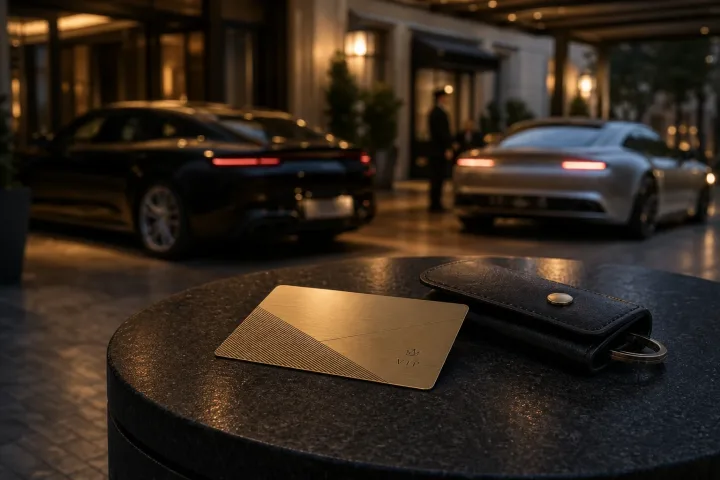
A luxury rental membership should reduce friction for known clients while making service feel more considered. A metal VIP card can identify tier, connect to a member profile, support collection, and present the program as a relationship rather than a sequence of isolated bookings.
Industry program views
Design the credential around the collection experience.
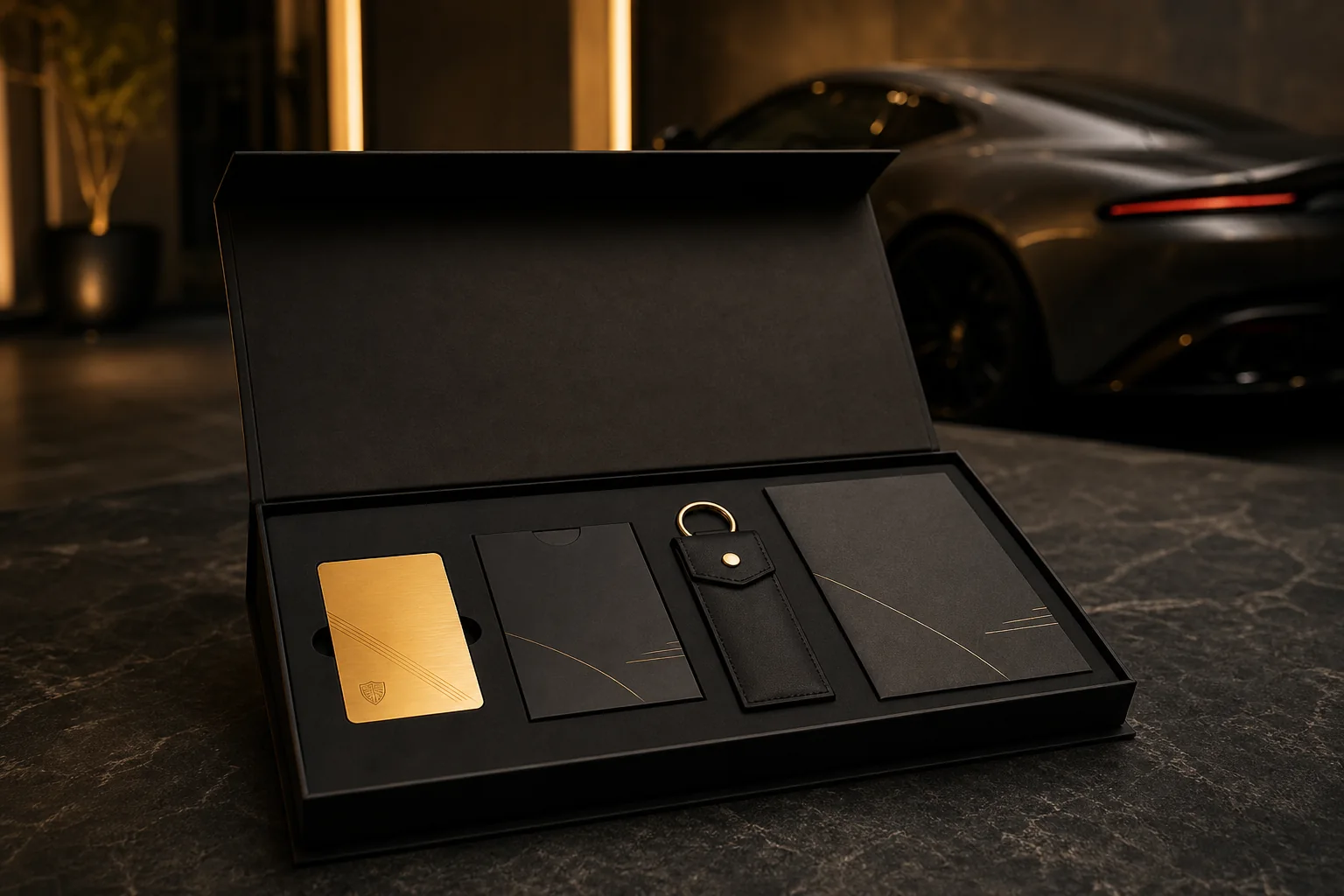
Membership tier, concierge handoff, priority collection, and onboarding should feel like one service system. The card is the physical thread connecting those moments.
Define which friction membership removes.
Useful rental membership may simplify repeat booking, preserve preferences, provide a dedicated collection route, offer planned upgrades, or give access to a curated vehicle category. Write those rules before designing tiers. A card should not imply automatic availability, unlimited mileage, or insurance terms that the operation cannot guarantee. It represents the relationship; the booking agreement still governs each rental.
Separate status from entitlement.
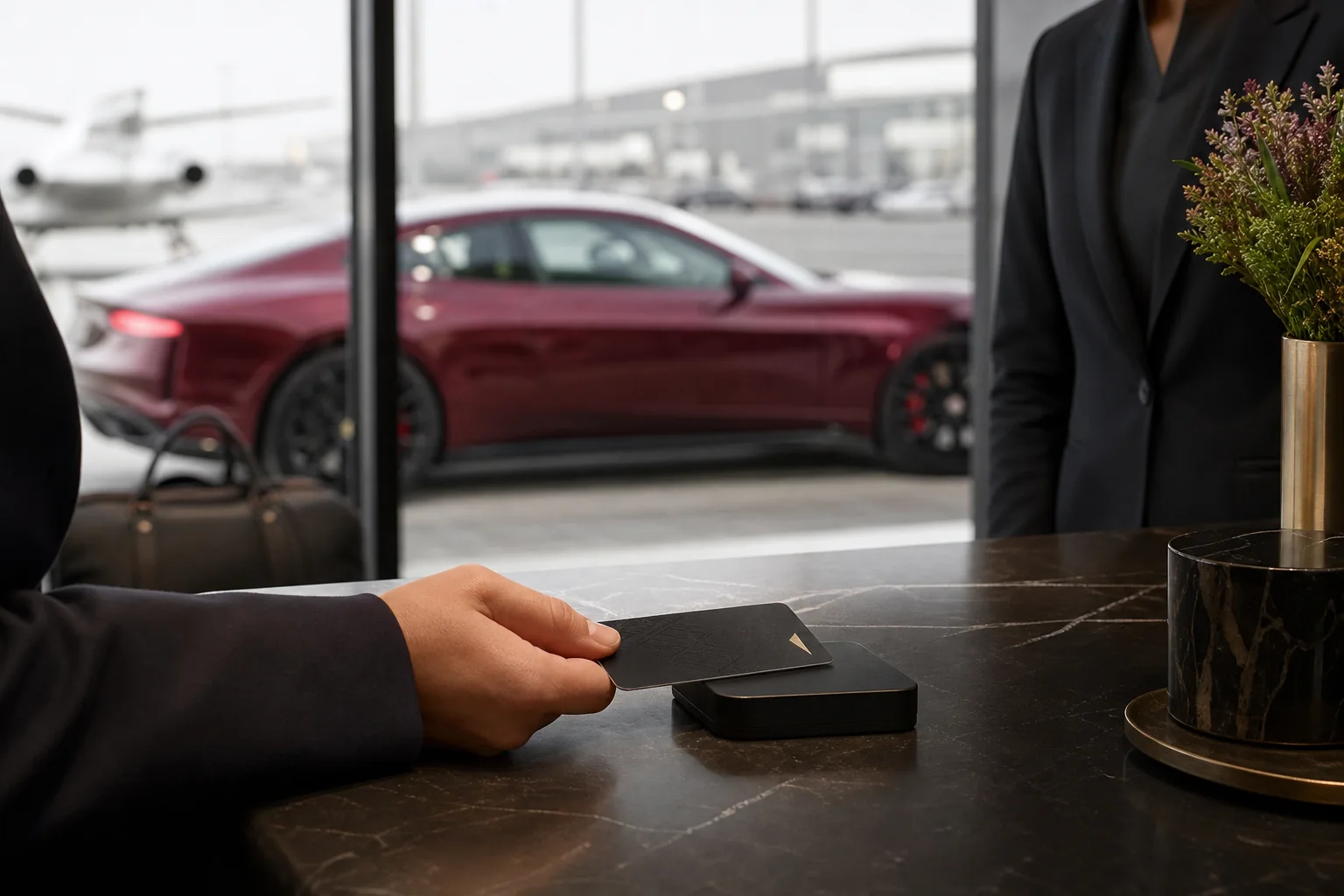
A visible black or gold tier helps staff recognise the service level, but the live member record should decide current benefits, eligibility, and booking status. Use a member number, NFC link, QR code, or reader credential to retrieve the controlled record. That protects the business when benefits change and avoids replacing every card after a program update.
Build collection and return around known-client data.
The program can remember preferred delivery areas, communication method, vehicle categories, child-seat or luggage needs, and service notes where consent allows. Keep sensitive records in the rental system, not on the physical card. At collection, staff should have a clear validation flow and a fallback if a phone, scanner, or network connection is unavailable.
Make tiers operationally different.
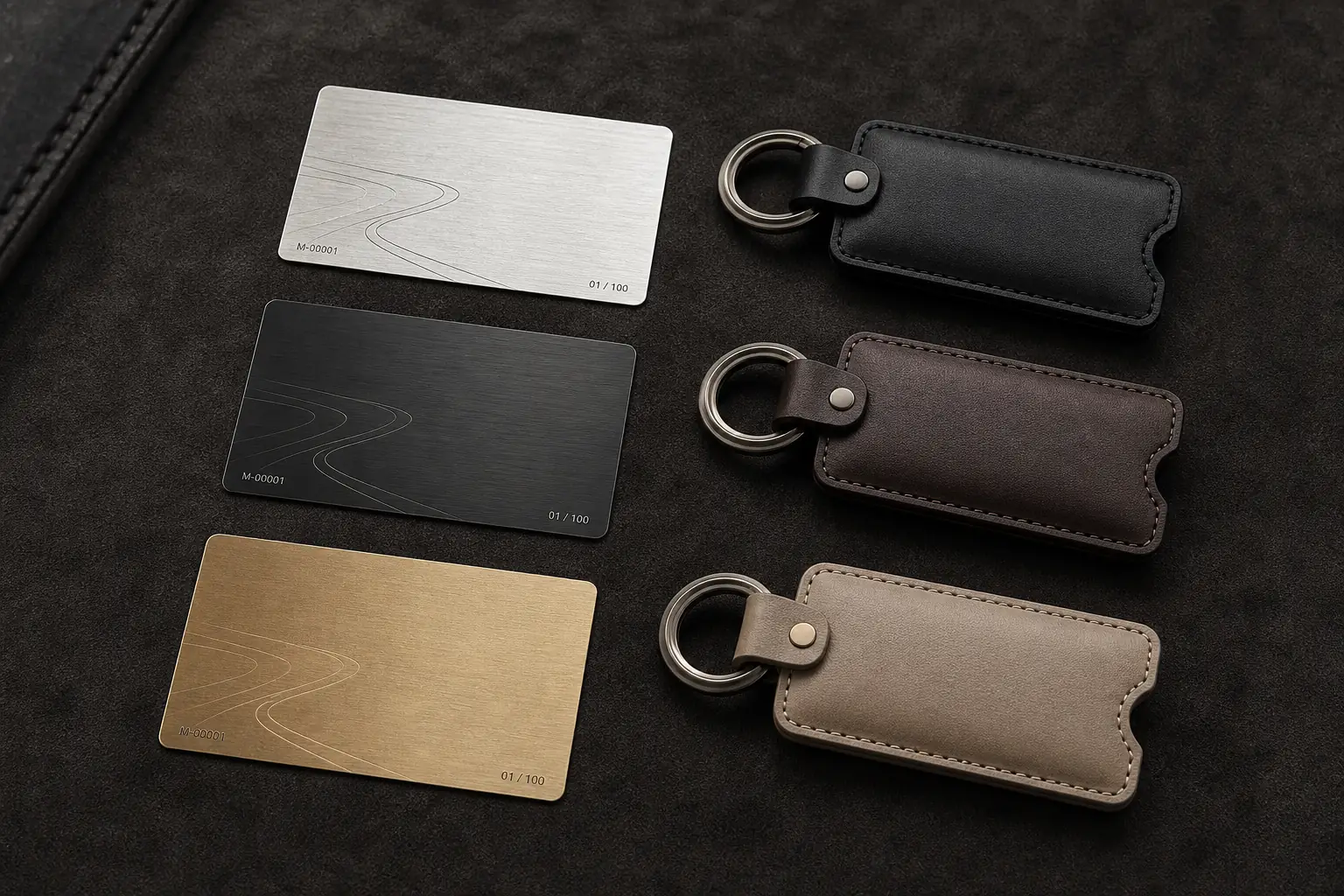
A founder, black, or gold tier should correspond to real differences such as response time, booking window, delivery radius, event access, or concierge handling. Avoid a long list of small discounts. Members are more likely to understand a few meaningful privileges that consistently appear at booking, collection, and return.
Issue the card as part of onboarding.
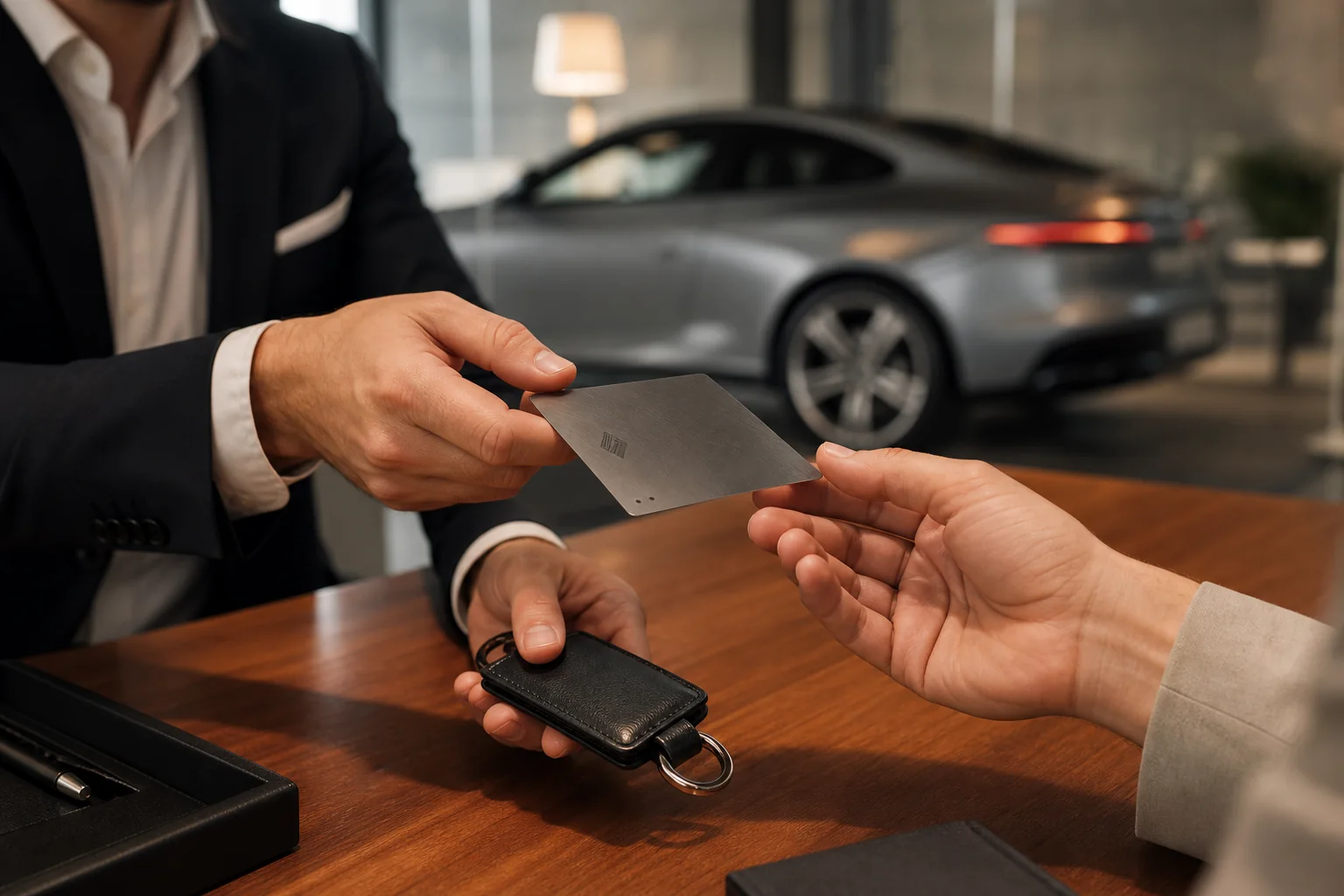
The welcome pack can explain booking contacts, validation, replacement, and how the NFC or QR route works. Match the member number on the card, sleeve, and internal record. Before production, test the finished metal construction on the actual phone or reader and review the card under the lighting used at desks, hotels, and collection lounges.
Best uses
- Exotic, performance, and luxury vehicle rental businesses
- Repeat-client and invitation-only programs
- Hotel delivery and private collection services
- Founder, black, gold, and concierge tiers
Relevant metal card routes
Frequently asked questions
Can the card store a member's rental history?
The card should identify or link to the member record; sensitive rental history should remain in the controlled business system rather than being printed or openly stored on the credential.
Can benefits change without replacing the card?
Yes. Link the card to a managed profile or benefits page so the live program can change while the physical member ID remains stable.
Should a rental membership card open or start a vehicle?
This guide concerns membership and service journeys. Vehicle-key functions are separate safety-critical systems and should not be implied unless a qualified integration is specifically designed and approved.
Specification
| Card format | CR80 85.6 × 54 mm by default; custom outlines after RF review |
|---|---|
| Thickness | 0.3–0.8 mm depending on construction |
| Minimum order | None — from one approval sample to production runs |
| Production time | About one week after artwork and sample approval |
| Personalization | Member name, ID, tier, serial, expiry, QR, NFC data, and matched packaging |
| Approval path | Finish proof, encoded working sample, reader or phone test, production approval |
| Member journey | Profile, booking route, concierge contact, tier recognition, and collection validation |
| Critical test | Live booking rules, staff recognition, data privacy, and phone or reader behavior |
Related metal RFID card pages
- Metal RFID Membership Cards for Yacht Clubs and Marinas
- Metal RFID Membership Cards for Private Aviation and FBO Lounges
- Metal RFID Membership Cards for Golf and Country Clubs
- Metal RFID Membership Cards for Luxury Residence Clubs
- Metal RFID Membership Cards for Private Wellness Clubs
- Custom Metal Membership Cards for Car Clubs
- Metal Membership Cards for Car Detailing Studios
- Metal Membership Cards for Private Car Storage Clubs
- Dealership VIP Cards That Extend the Owner Relationship
- VIP Metal Passes for Rallies, Track Days and Car Events
- NFC, RFID or QR for Automotive Membership Cards?
- How to Design Black, Gold and Founder Car Club Tiers
- What Can Be Personalized on a Metal Automotive Card?
- Metal vs Plastic Membership Cards for Automotive Brands
- How NFC Metal Cards Connect Automotive Member Portals
- Seven Benefits an Automotive VIP Card Can Support