Permanent mark
Laser Engraved Metal RFID Cards
Laser engraving is the cleanest permanent mark route for metal RFID cards: a fiber laser alters the metal surface itself, so the mark cannot peel, fade, or wear off. It is the choice for restrained logos, fine linework, serials, and NFC icons — with tone, line width, and contrast approved on the final finish rather than on screen.
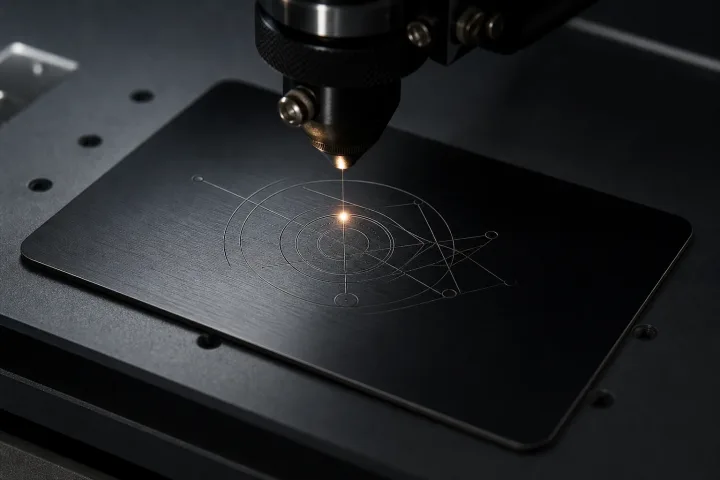
Production detail views
Four laser engraving references for planning the finished metal card.
Four laser references across stainless, black, and brass: mark tone, tone-on-tone contrast, warm-metal engraving, and production alignment.
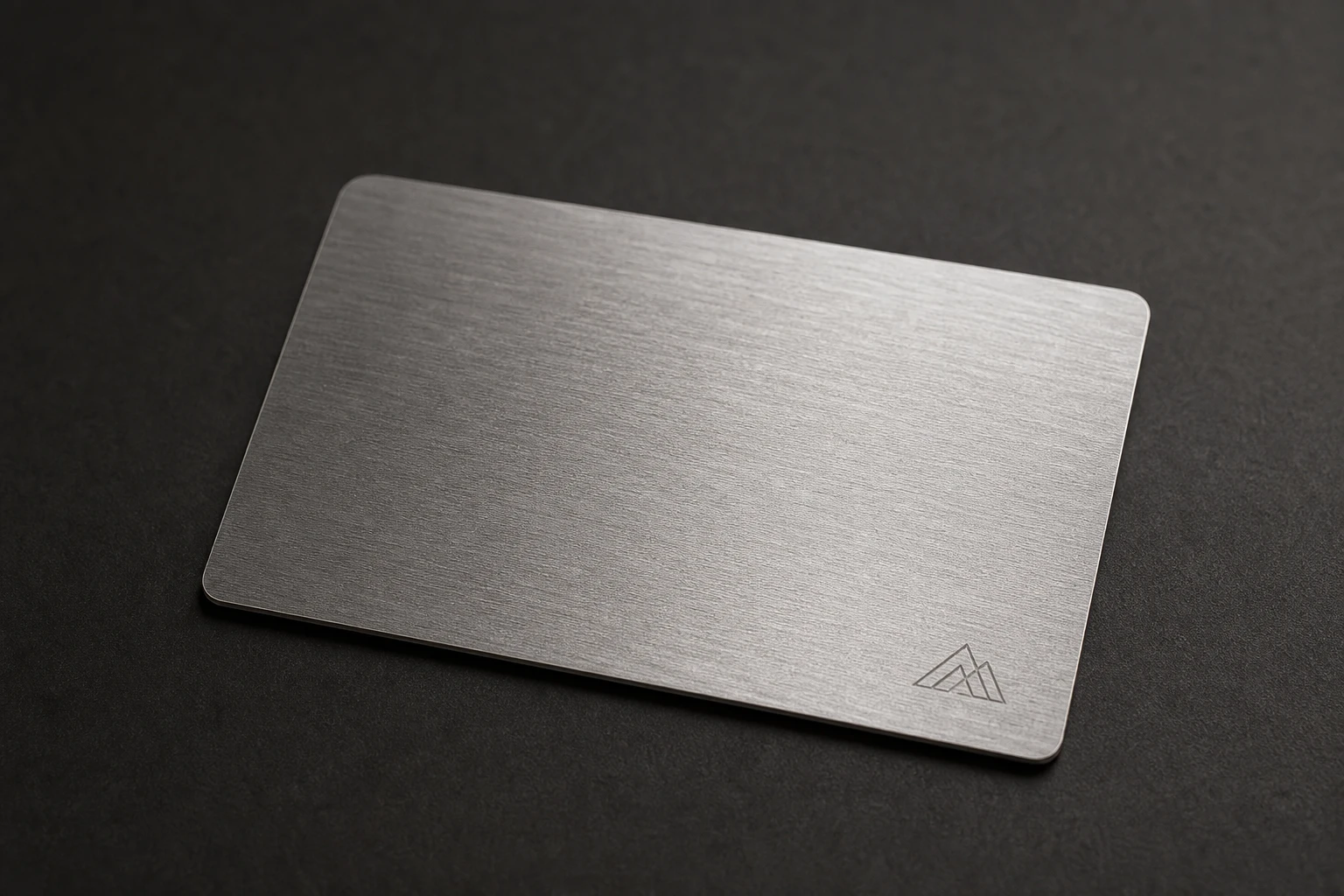
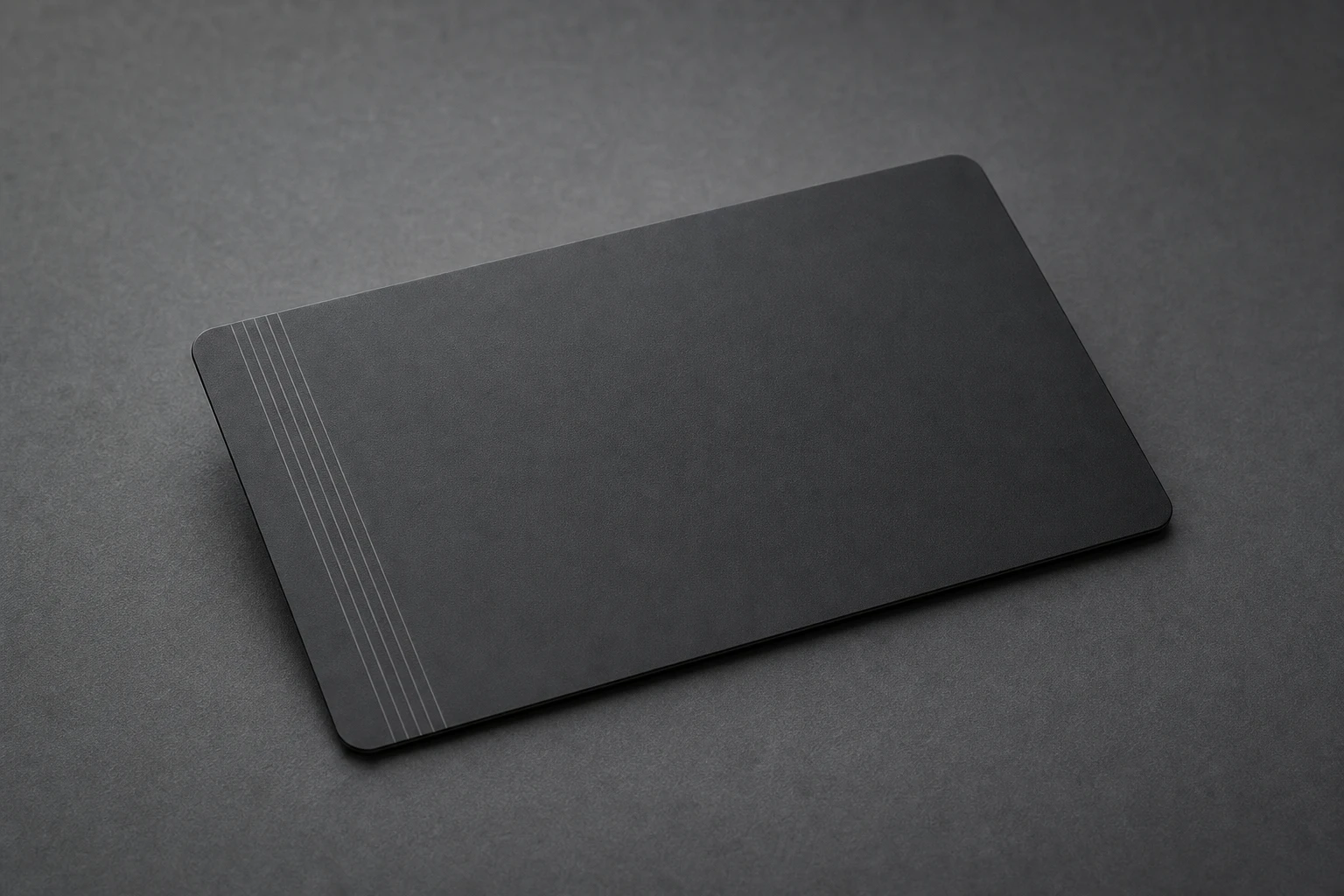
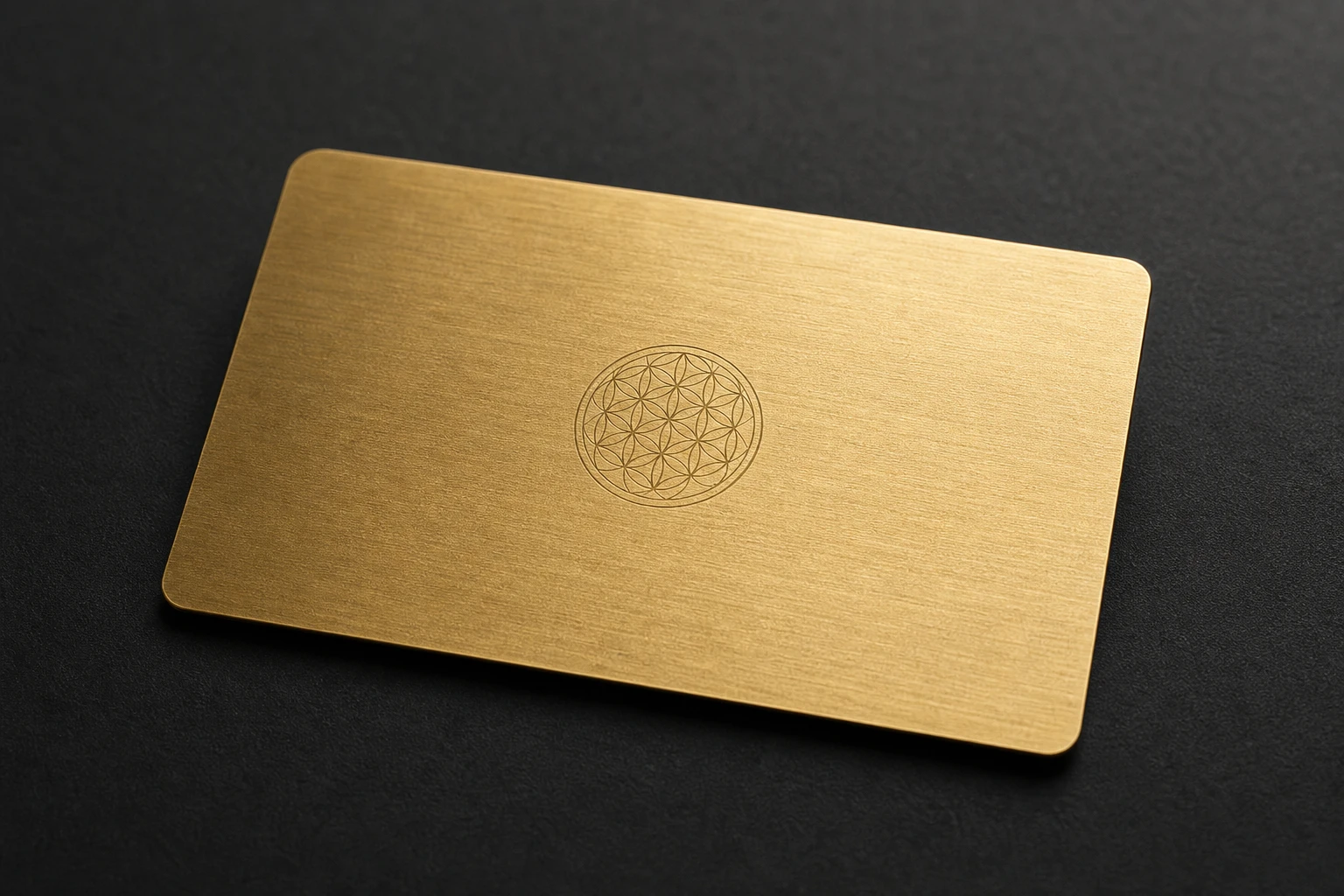
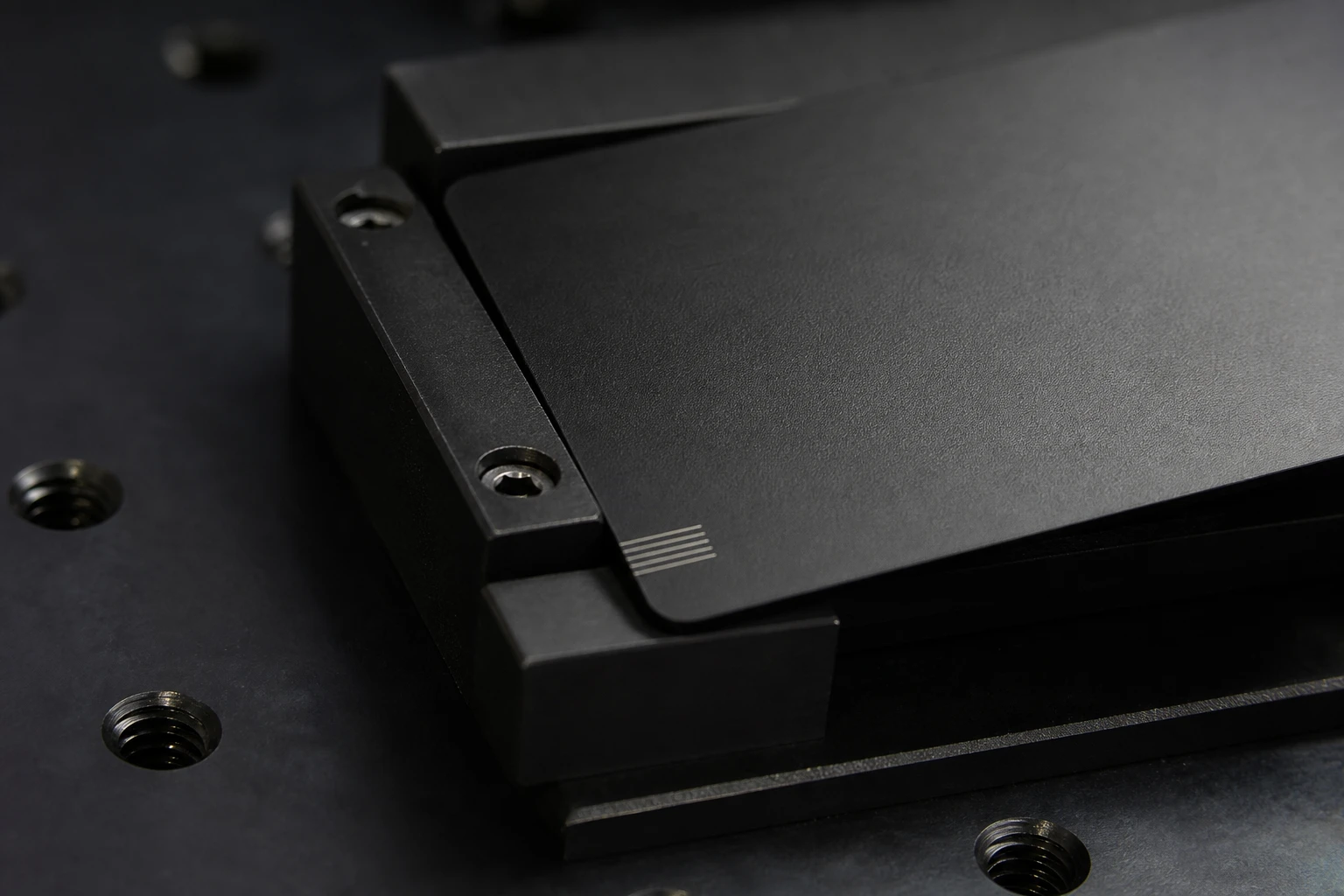
Contrast comes from the finish, not the laser.
Laser behaves differently on every face in the range. On brushed stainless the mark reads tone-on-tone and stays subtle; on matte black PVD the beam removes the dark coating and exposes bright steel — the strongest contrast available; on brass and copper it burns a darker, warmer mark. The finish is chosen with the mark, not before it.
Prove visual and technical performance together.
Approve laser tone, line width, contrast, and the finished reader-tested card sample.
Best uses
- Permanent logo marks, fine linework, contactless icons, serials, and durable member or access detail.
- Premium metal card programs where the finish, data zones, and RF construction need coordinated approval
- Projects with a defined artwork file, variable-data need, and reader or scan validation route
Frequently asked questions
Is laser engraving on metal cards permanent?
Yes. The mark is made in the metal surface itself rather than printed onto it, so it cannot peel or fade. On coated faces the laser exposes the base steel, which is also what creates the contrast.
What details can be laser engraved?
Logos, fine linework, serials, member numbers, contactless icons, and data-matrix marks. Minimum line width and the smallest readable detail are approved on the actual finish, because tone and contrast shift per face.
Can laser marking affect the RFID antenna?
Surface laser marks do not reach the antenna, but their position is still checked against the RF stack — and a request for deep, tactile marks moves the conversation to depth planning before a sample is cut.
Specification
| Format | CR80 85.6 x 54 mm by default; custom outlines after RF review |
|---|---|
| Thickness | 0.3 mm to 0.8 mm depending on construction |
| Minimum order | None — single samples to production runs |
| Production time | About one week after artwork and sample approval |
| RF construction | Antenna, ferrite or hybrid shielding, chip, metal faces, and edge stack specified together |
| Chip routes | NFC tag, standard HF, high-security AES HF, LF compatibility, and selected UHF by reader test |
| Marking options | Laser etch, deep engraving, UV print, white ink, enamel fill, QR, serial, and controlled cut-through |
| Approval flow | Finish sample, encoded working sample, reader check, pre-production approval |
| Primary route | Laser engraving |
| Best use | Permanent logo marks, fine linework, contactless icons, serials, and durable member or access detail. |
| Approval check | Approve laser tone, line width, contrast, and the finished reader-tested card sample. |
Related metal RFID card pages
- Deep Engraved Metal RFID Cards
- UV Printed Metal RFID Cards
- White Ink Metal RFID Cards
- Enamel Filled Metal RFID Cards
- QR and Serial Metal RFID Cards
- Metal Card Edge Finishing
- Metal RFID Card Artwork Specs