860–960 MHz
UHF Metal RFID Cards
UHF metal RFID cards operate between 860 and 960 MHz under EPC Gen2 (ISO/IEC 18000-63) — the band used where reading needs distance rather than a deliberate tap. Metal is the hardest environment UHF works in: an ordinary UHF inlay laminated to a metal face can lose most of its range, so these cards use on-metal antenna construction, and honest range expectations are set by testing rather than by the inlay datasheet.
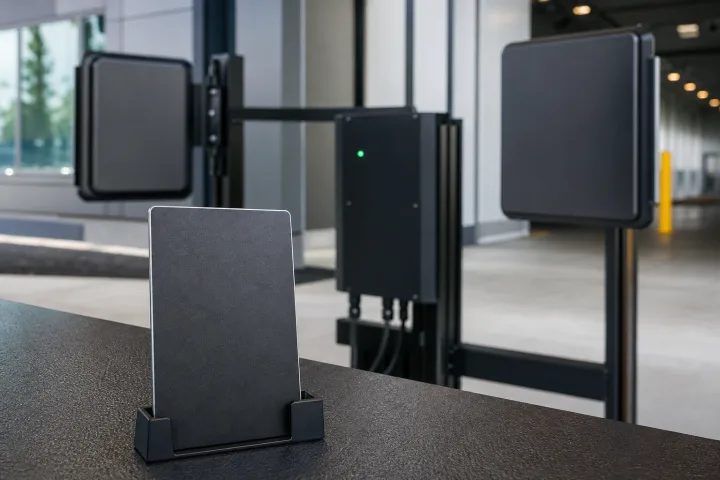
UHF RFID route brief
| Frequency | 860–960 MHz |
|---|---|
| Best use | Selected long-range identification, EPC-style data, asset flow, event experiments, and product authentication. |
| Chip route | EPC Gen2 (ISO/IEC 18000-63) inlay with on-metal antenna construction, selected around range, reader power, and orientation. |
| Phone behavior | Not smartphone NFC; it needs a UHF reader or scanner. |
| Encoding | EPC, TID or UID reference, asset ID, batch ID, or project-specific data. |
| Approval check | Test range, orientation, nearby materials, reader power, antenna position, and final metal finish stack. |
Visual references
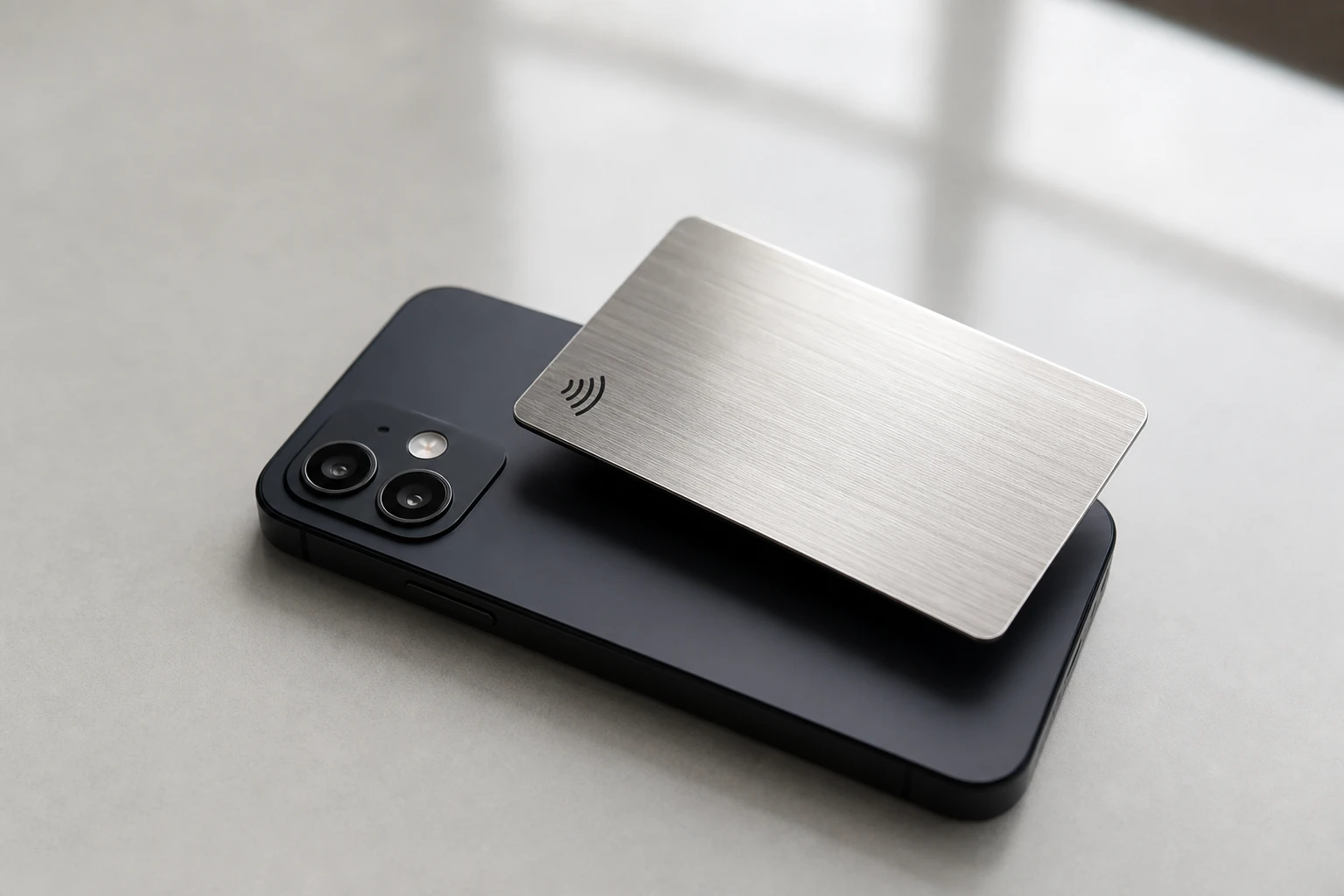
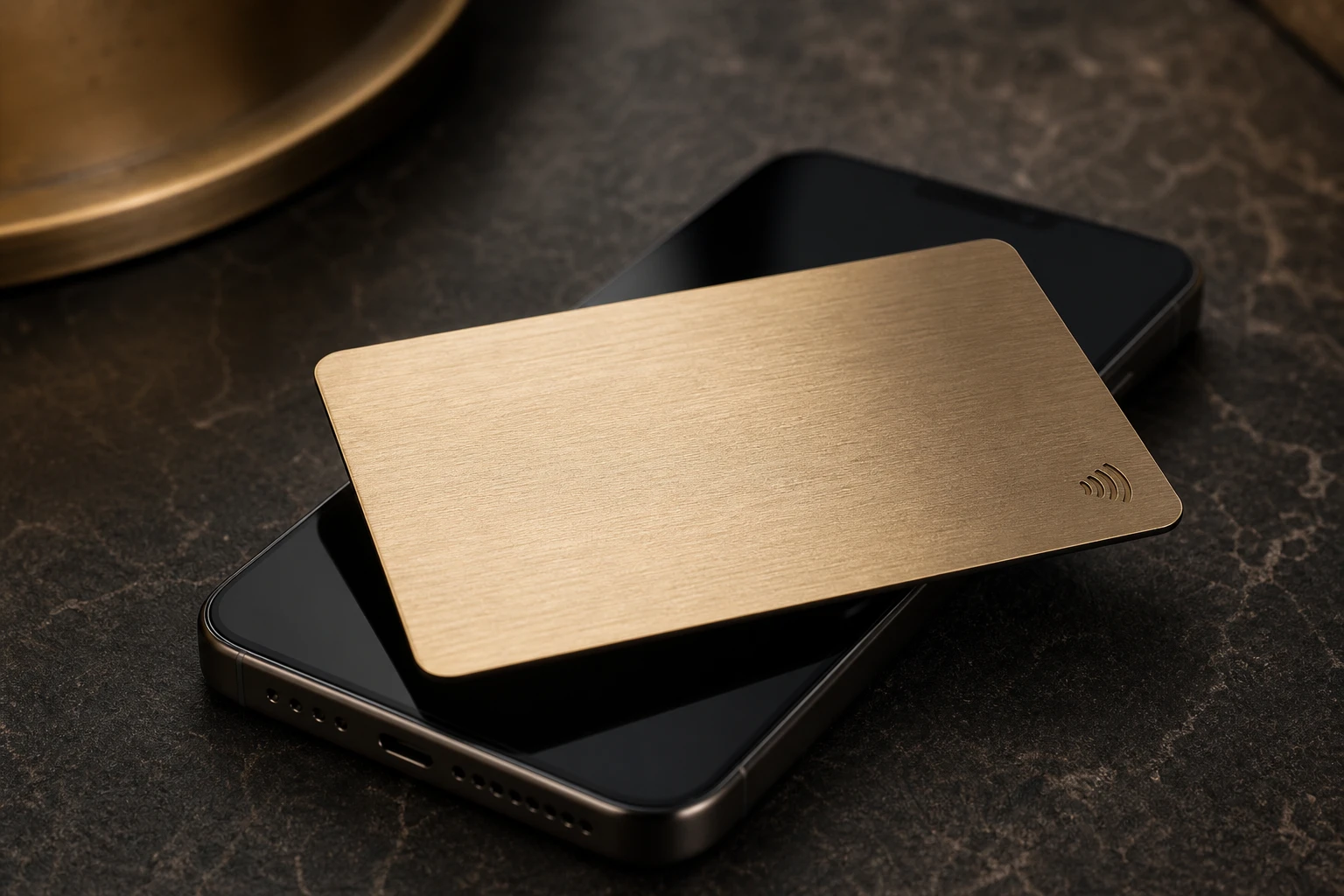
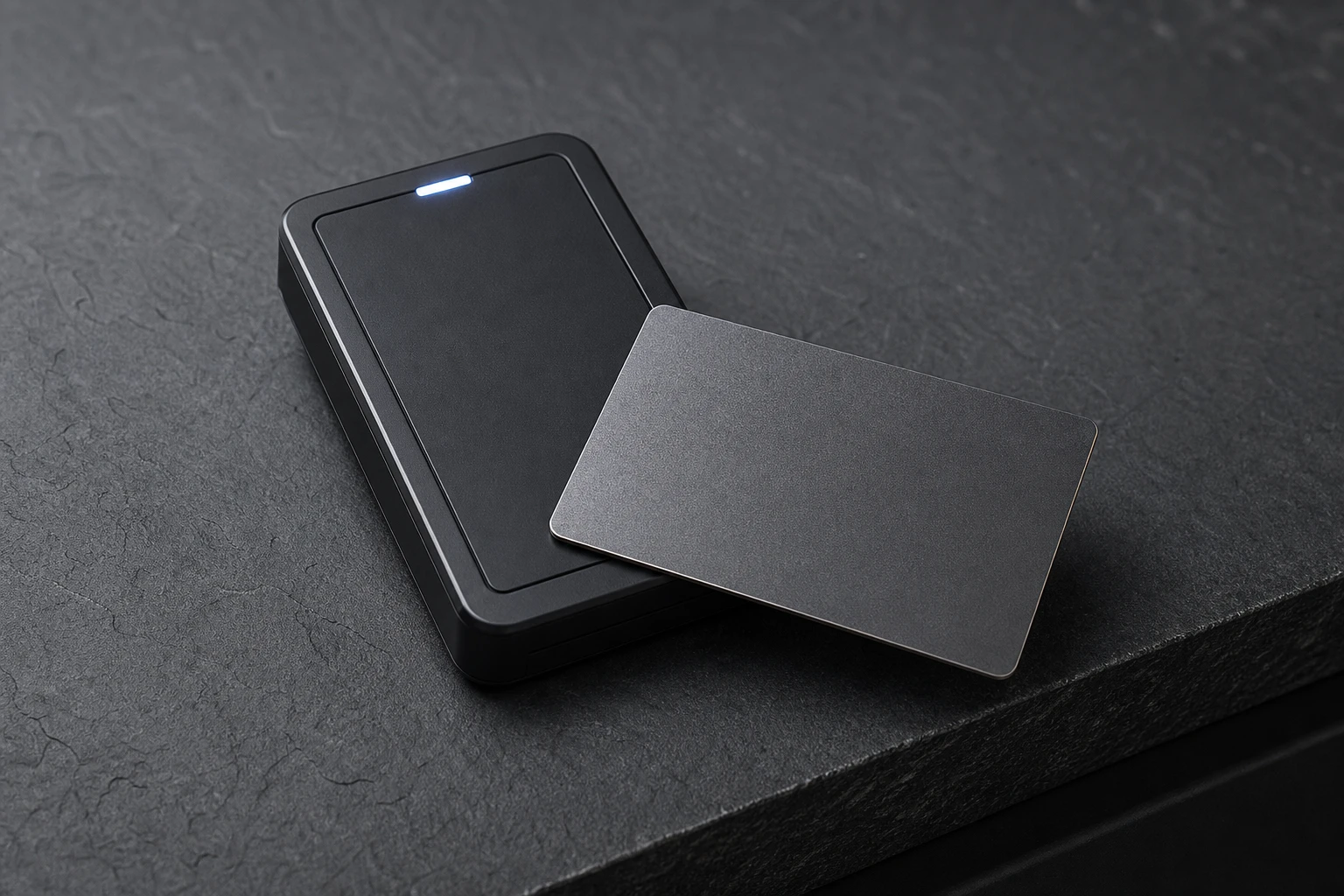
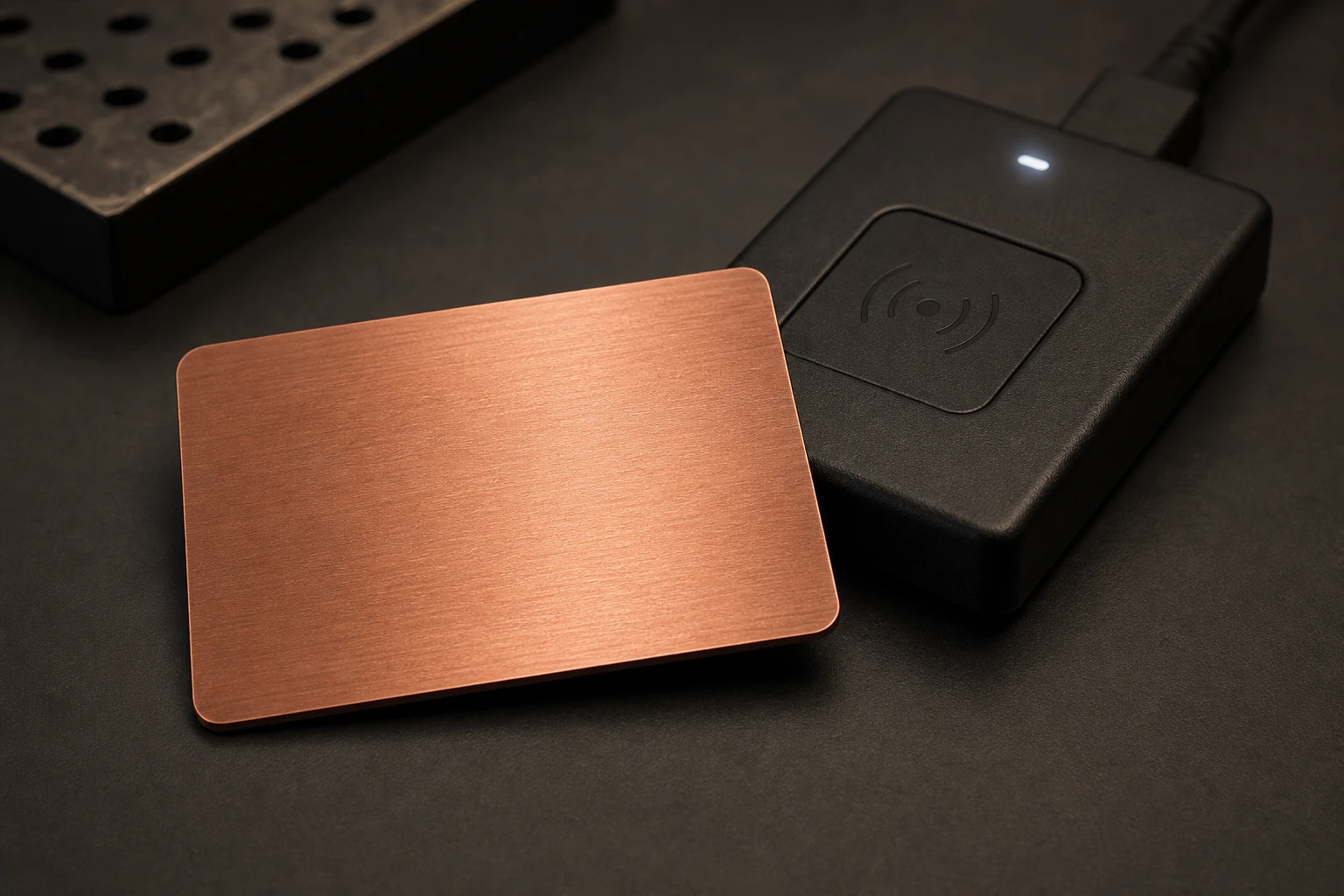
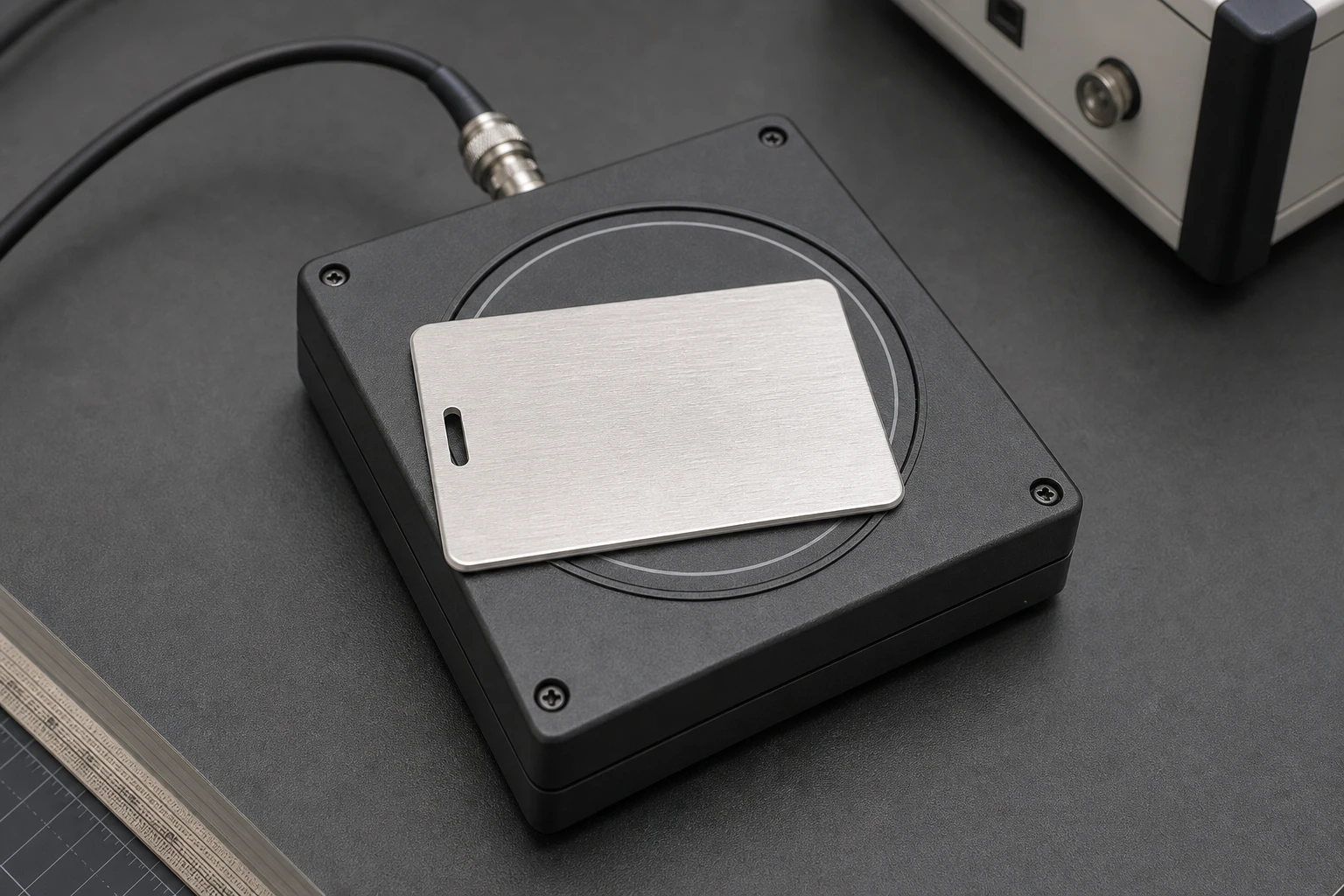
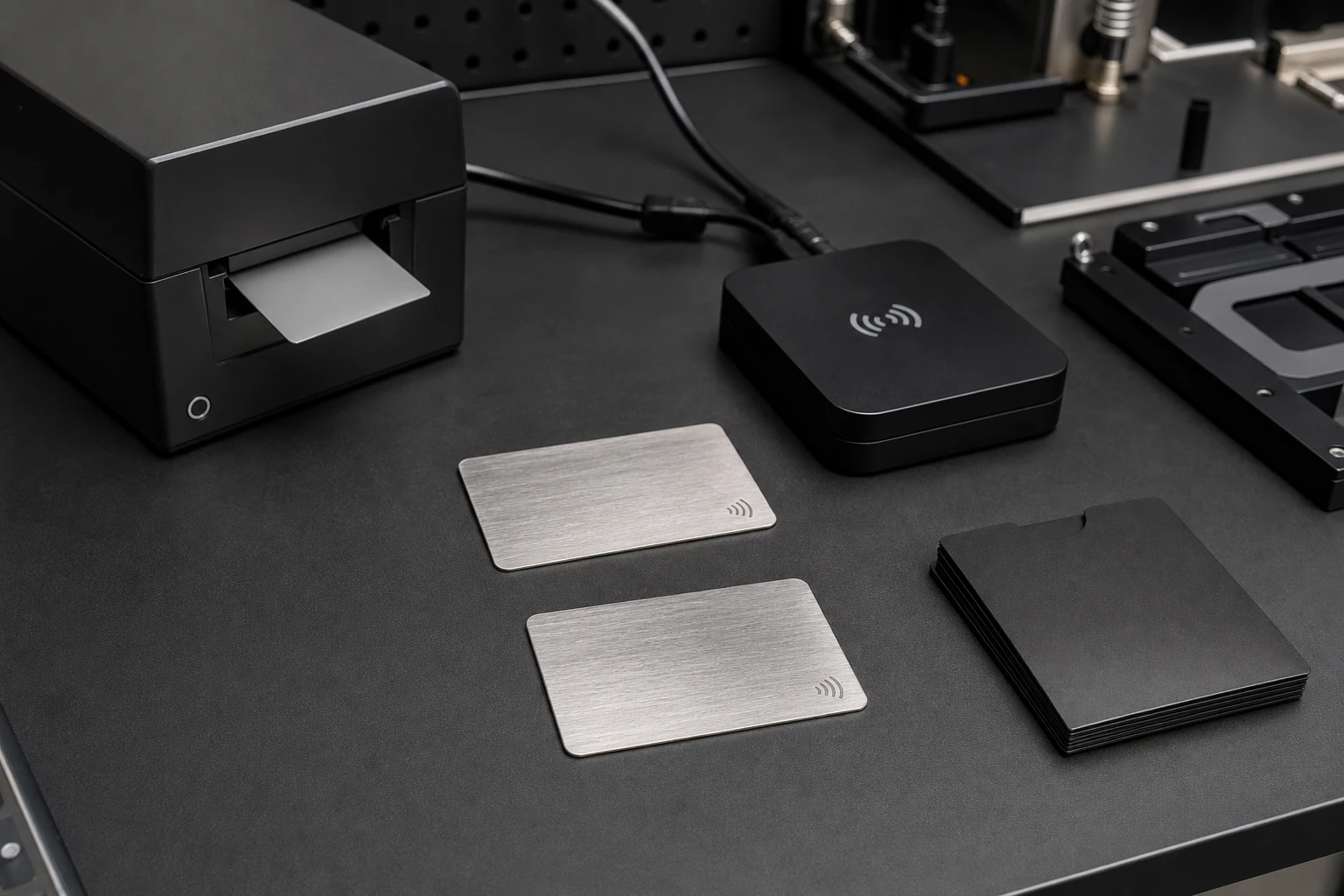
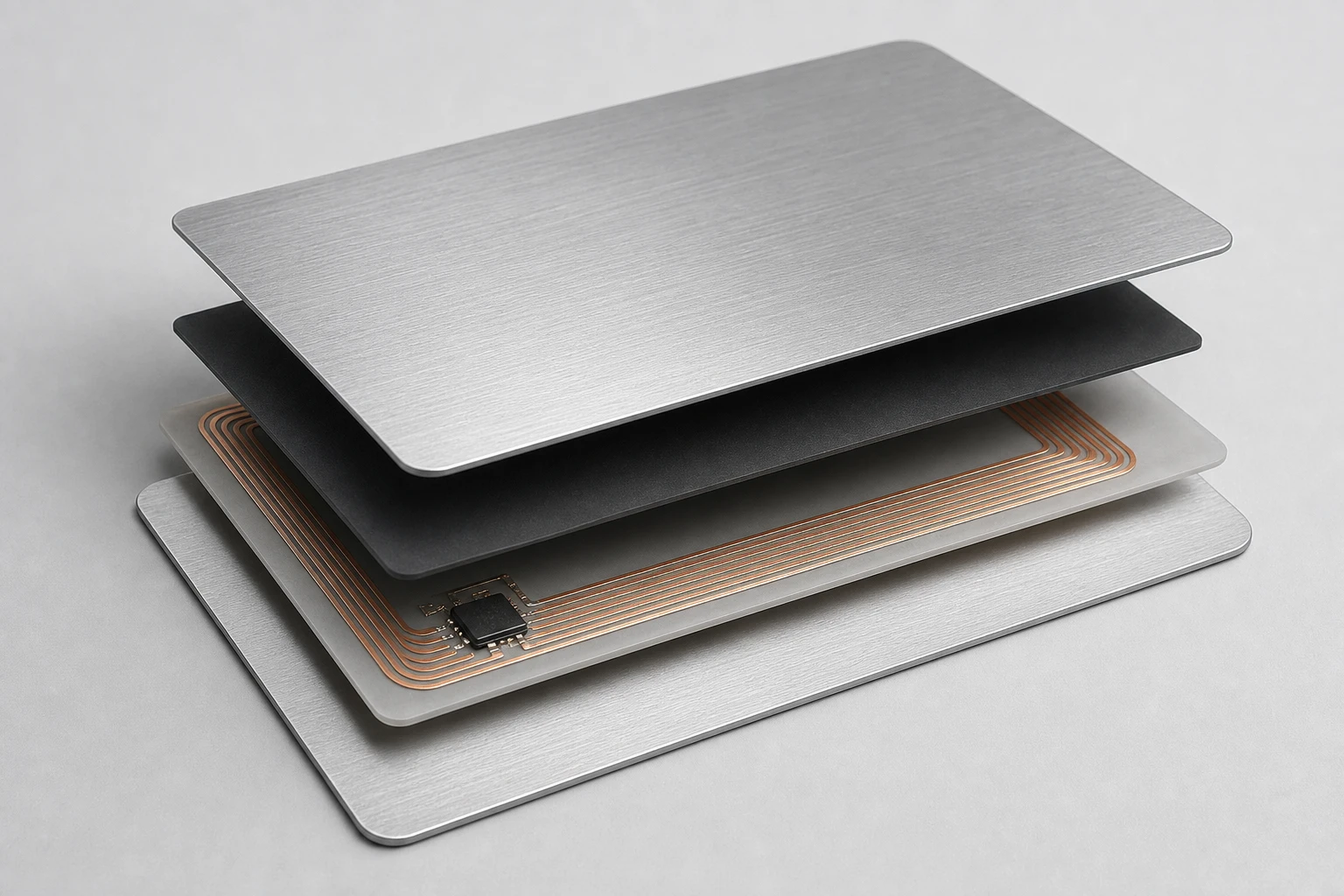
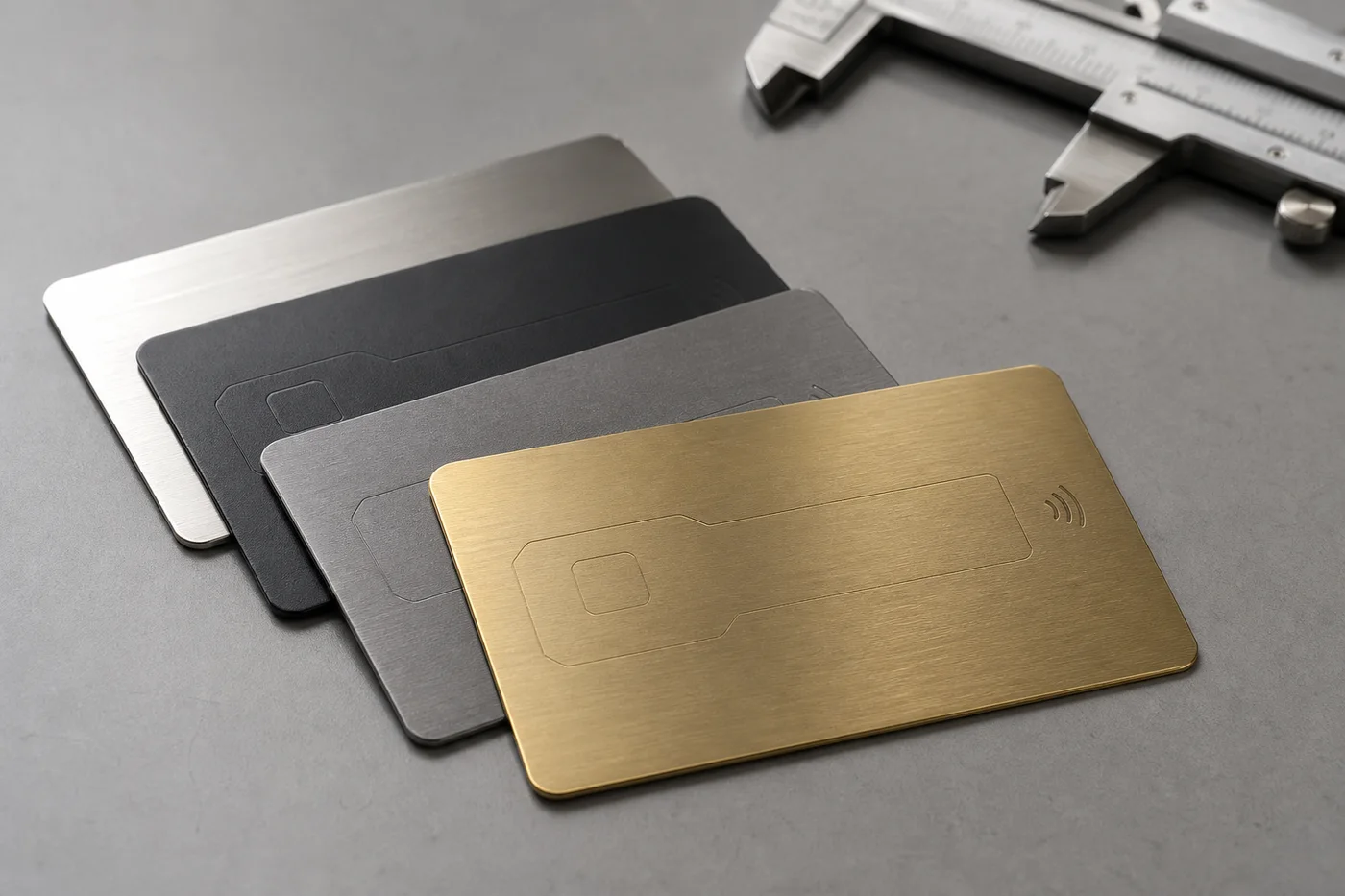
Expect metal to cost range — then measure what is left.
Free-air range figures on inlay datasheets do not survive a metal card body. Orientation, reader power, antenna position, and nearby materials all move the result. A UHF metal project therefore starts from the real read scenario — gate width, mounting, direction of travel — and is approved on measured performance in that setup, not on a theoretical number.
Approve a working sample in the real environment.
Test range, orientation, nearby materials, reader power, antenna position, and final metal finish stack.
Best uses
- Selected long-range identification, EPC-style data, asset flow, event experiments, and product authentication.
- Metal card programs that can validate a finished encoded sample on the target reader
- Projects that need print, serial, QR, packaging, and data handling reconciled in one approved brief
Frequently asked questions
When does a metal card genuinely need UHF?
When reading must happen at a distance or in bulk — gates, asset flows, vehicle-adjacent identification — under EPC Gen2 infrastructure. For tap-range use, HF and NFC are the correct band; UHF is chosen for range, not prestige.
Can a phone read a UHF metal card?
No. Smartphone NFC is 13.56 MHz; UHF runs at 860–960 MHz and requires a dedicated UHF reader or scanner. Programs that need both add a printed QR zone or a dual-technology plan.
How far does a UHF metal card read?
It depends on the on-metal antenna build, reader power, orientation, and surroundings — metal costs range, and the honest figure comes from testing the finished card in the real scenario. Range is approved by measurement, not quoted from an inlay datasheet.
Specification
| Format | CR80 85.6 x 54 mm by default; custom outlines after RF review |
|---|---|
| Thickness | 0.3 mm to 0.8 mm depending on construction |
| Minimum order | None — single samples to production runs |
| Production time | About one week after artwork and sample approval |
| RF construction | Antenna, ferrite or hybrid shielding, chip, metal faces, and edge stack specified together |
| Chip routes | NFC tag, standard HF, high-security AES HF, LF compatibility, and selected UHF by reader test |
| Marking options | Laser etch, deep engraving, UV print, white ink, enamel fill, QR, serial, and controlled cut-through |
| Approval flow | Finish sample, encoded working sample, reader check, pre-production approval |
| Frequency | 860–960 MHz |
| Chip route | EPC Gen2 (ISO/IEC 18000-63) inlay with on-metal antenna construction, selected around range, reader power, and orientation. |
| Phone behavior | Not smartphone NFC; it needs a UHF reader or scanner. |
| Encoding | EPC, TID or UID reference, asset ID, batch ID, or project-specific data. |
| Approval check | Test range, orientation, nearby materials, reader power, antenna position, and final metal finish stack. |
Related metal RFID card pages
- LF Metal RFID Cards
- HF NFC Metal RFID Cards
- NFC Tag Metal RFID Cards
- Entry-level HF Metal RFID Cards
- AES-secured HF Metal RFID Cards
- Standard HF Metal RFID Cards
- High-security AES Metal RFID Cards
- Programmable 125 kHz Metal RFID Cards
- Metal RFID Card Encoding
- RFID UID Converter & Wiegand 26-bit Calculator