Warm antique metal
Natural Brass RFID Cards
Natural brass is warmer and quieter than bright gold. It is useful for boutique hospitality, restaurants, cultural venues, private memberships, gifts, and branded sample kits where the metal card should feel crafted rather than flashy.
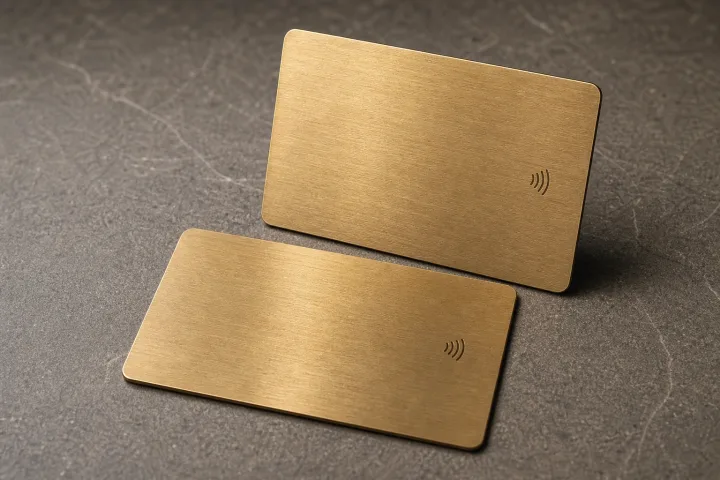
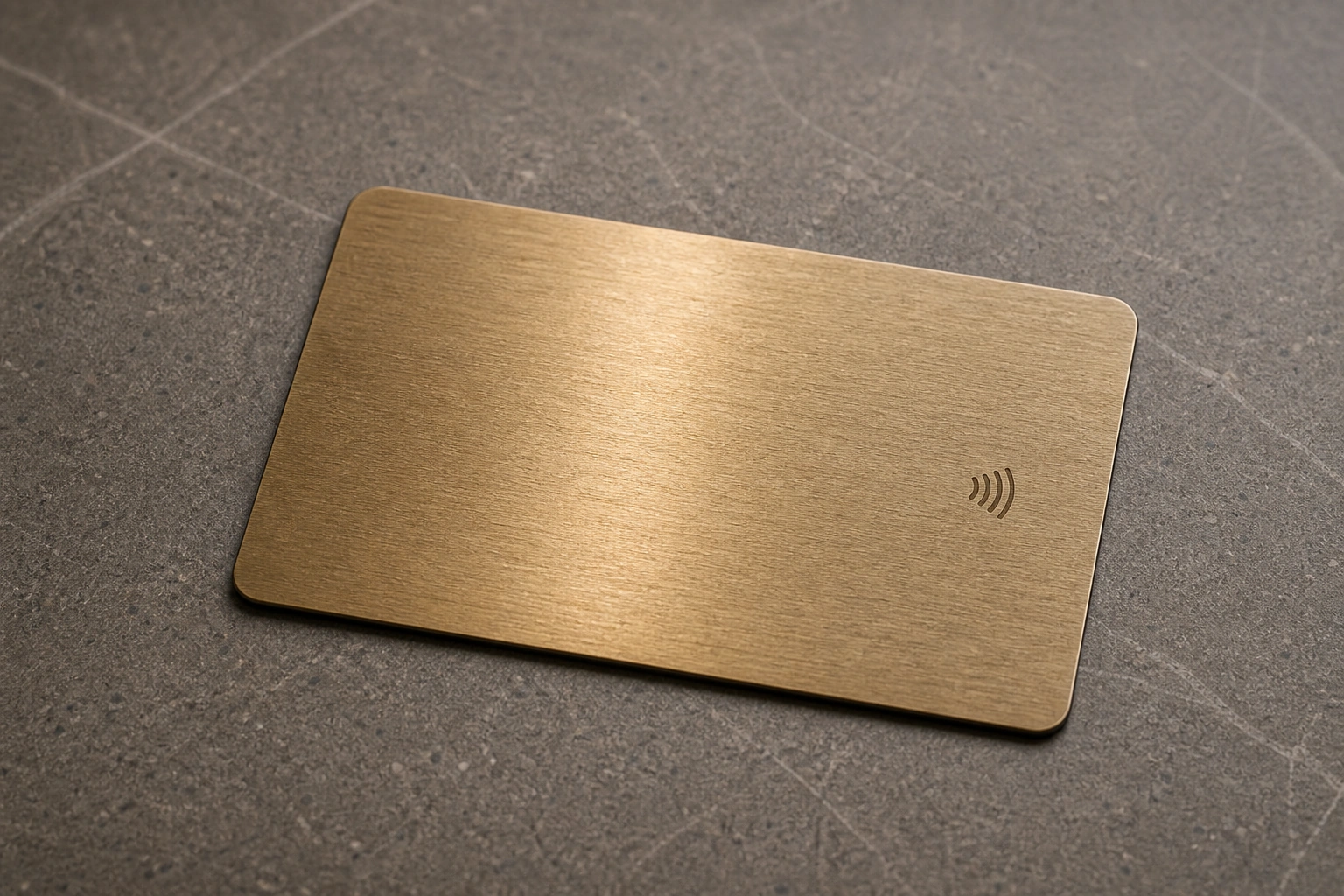
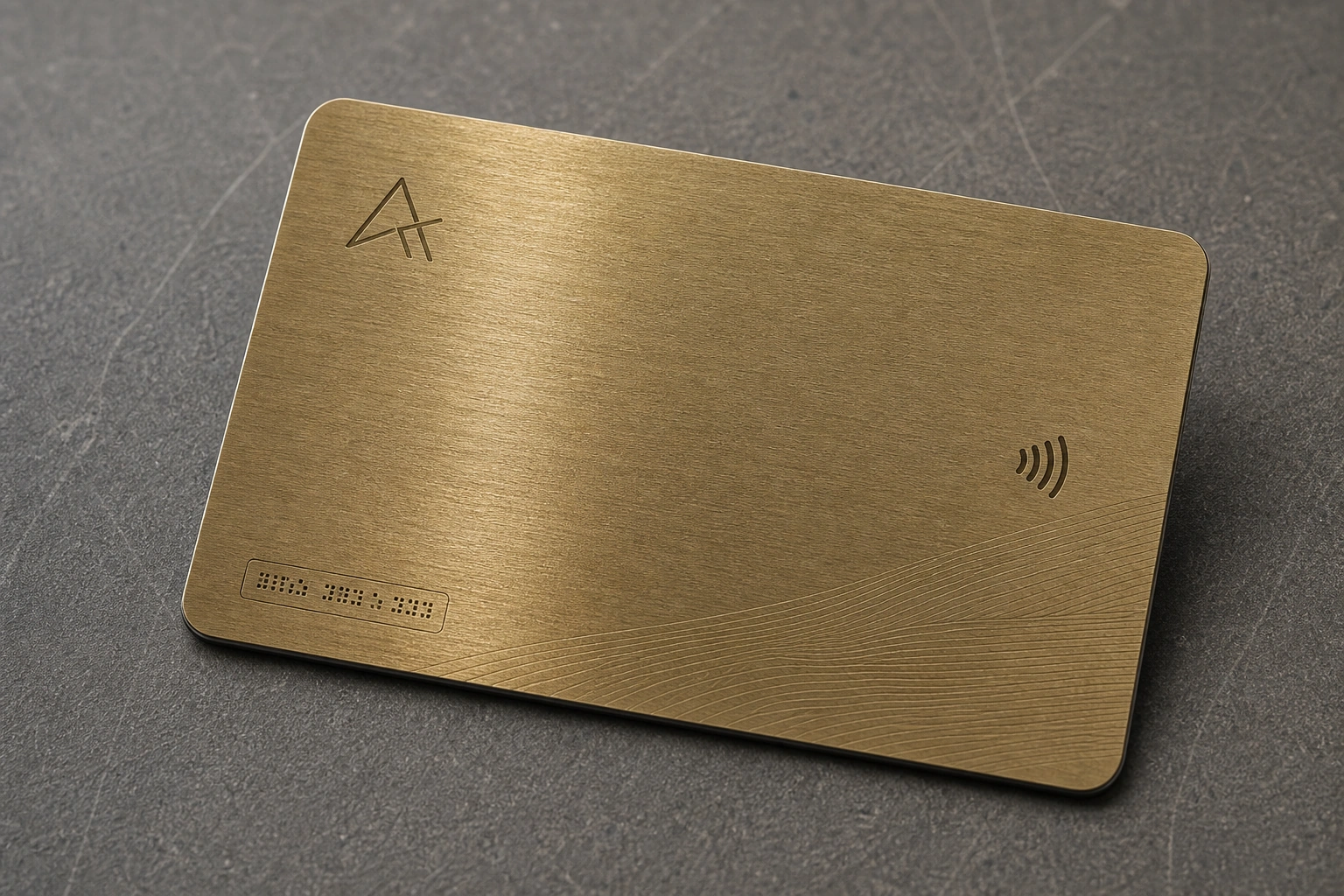
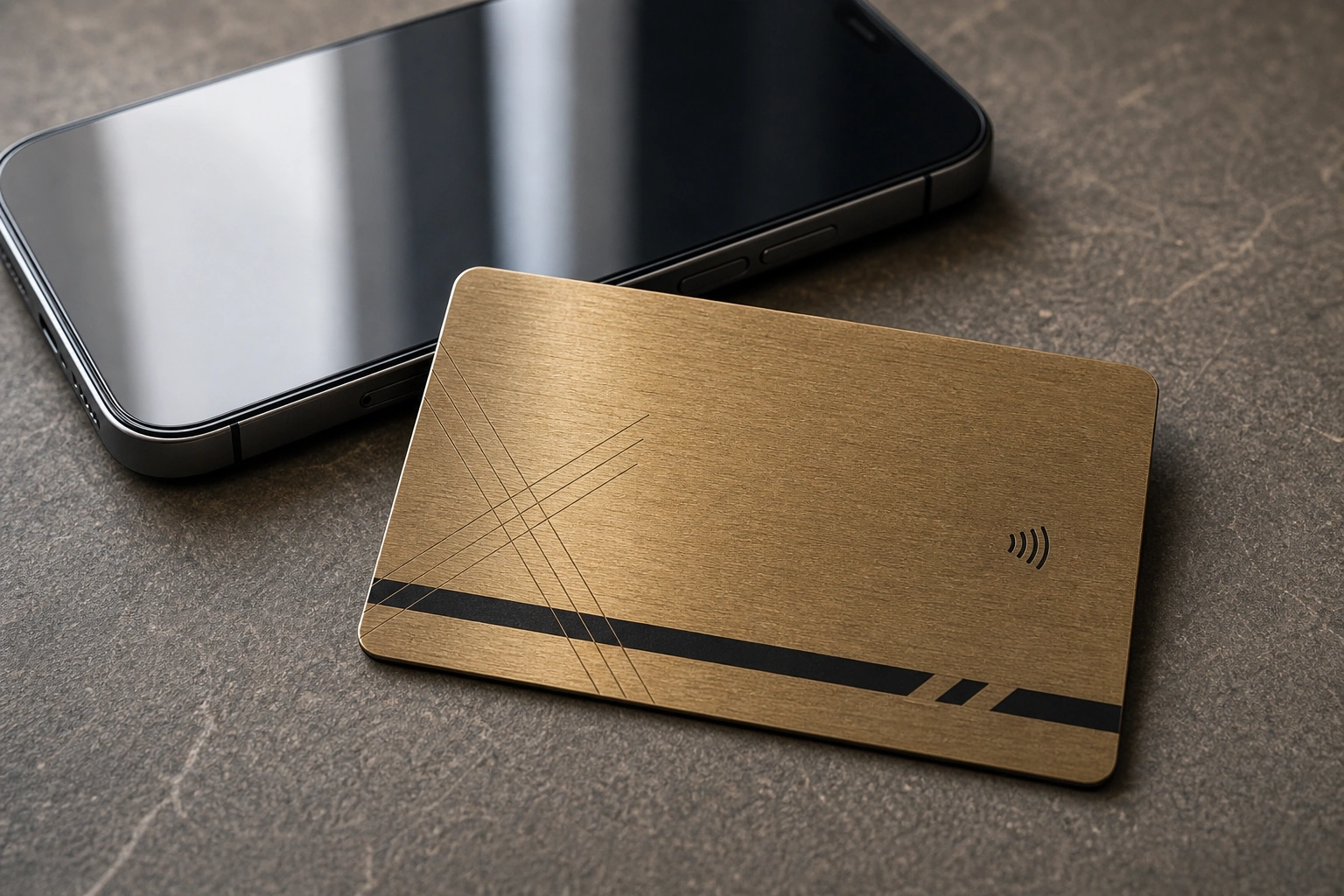
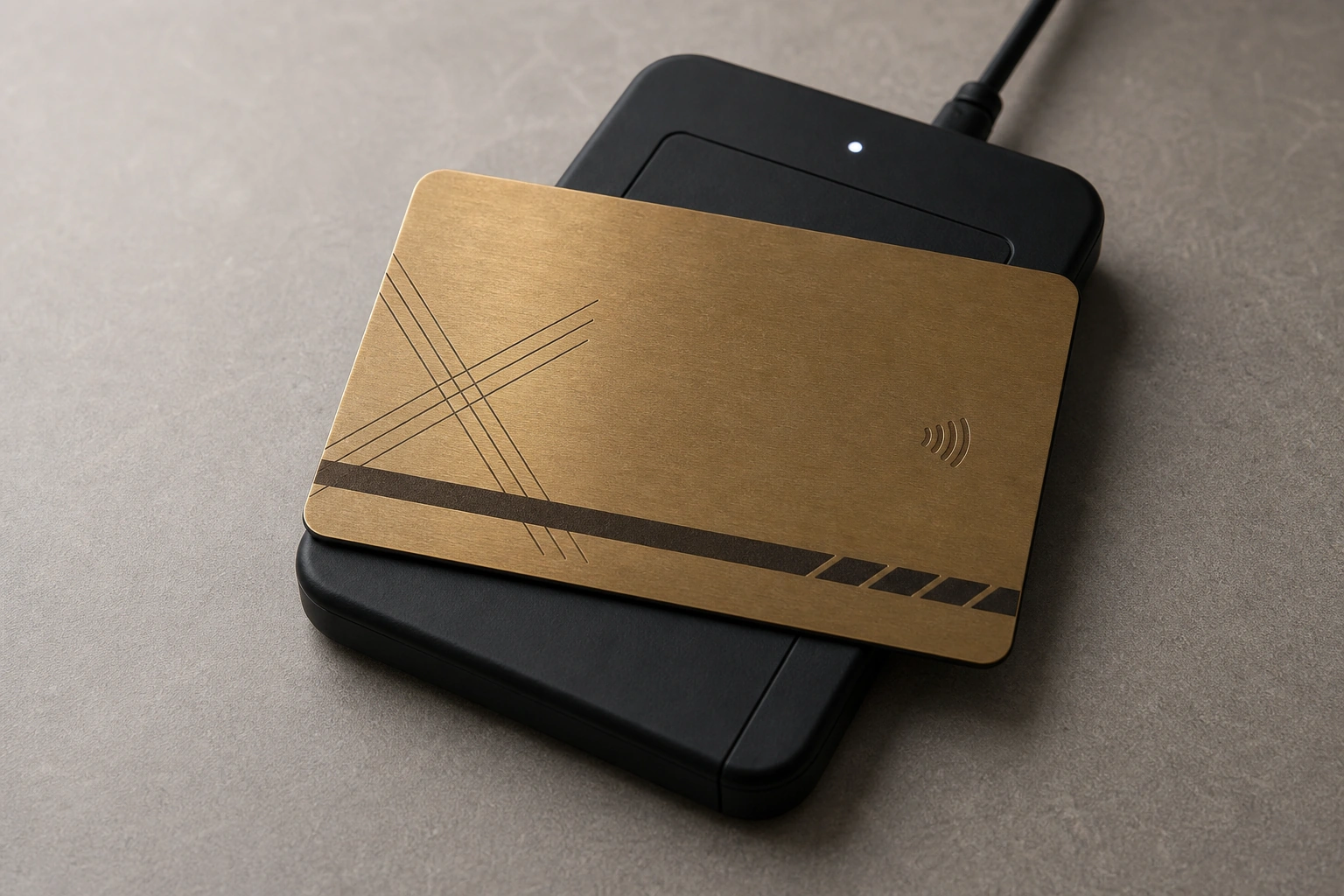
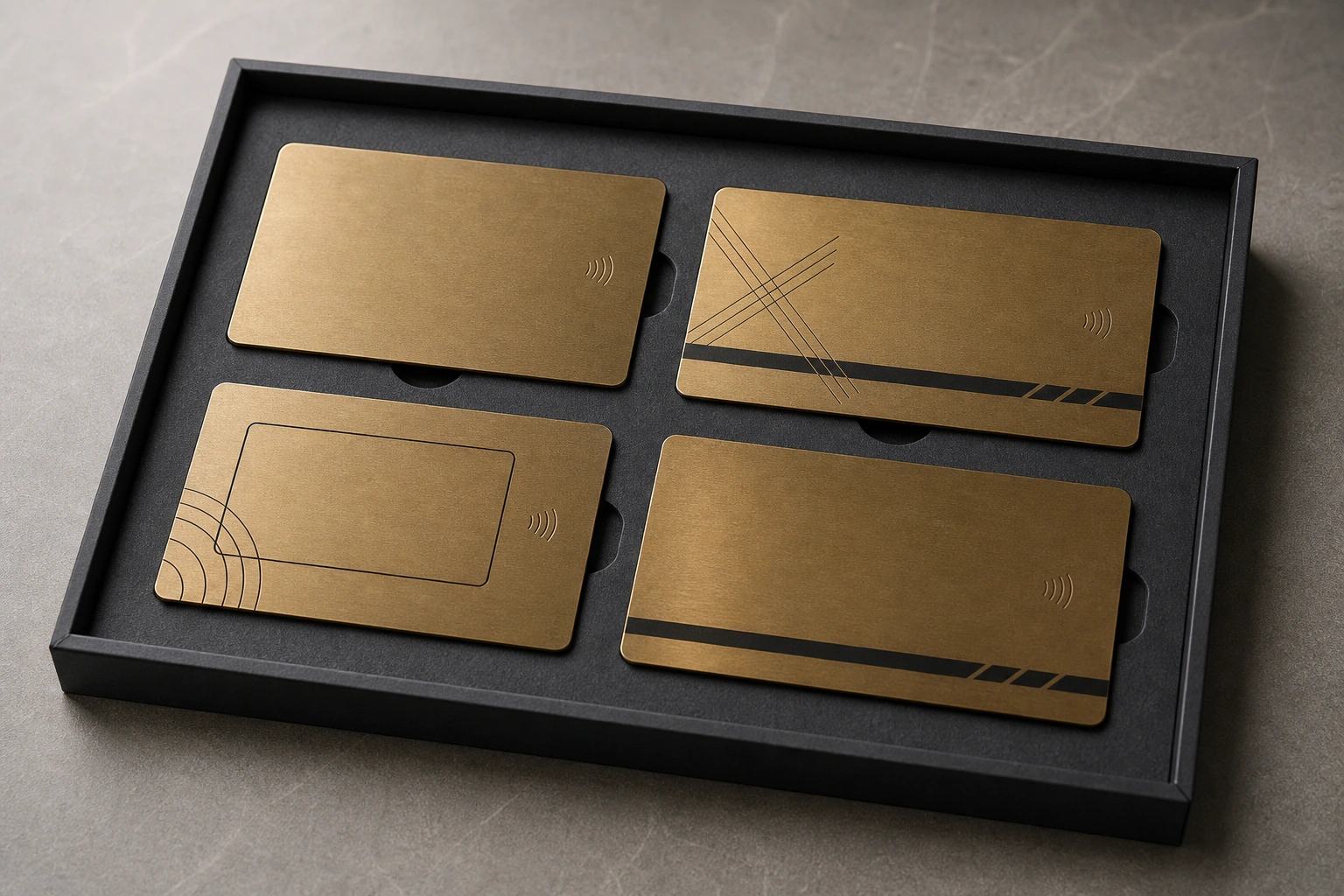
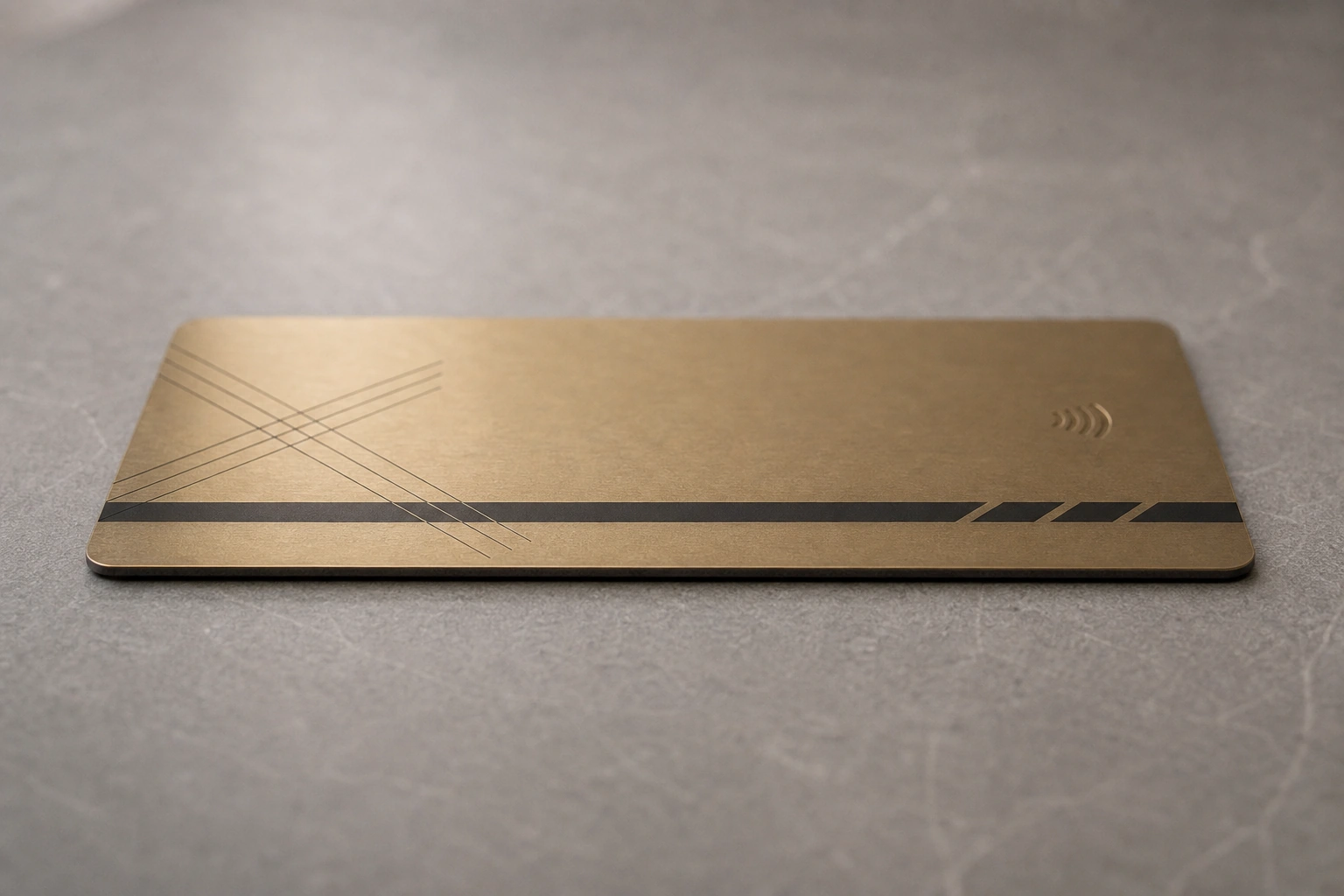
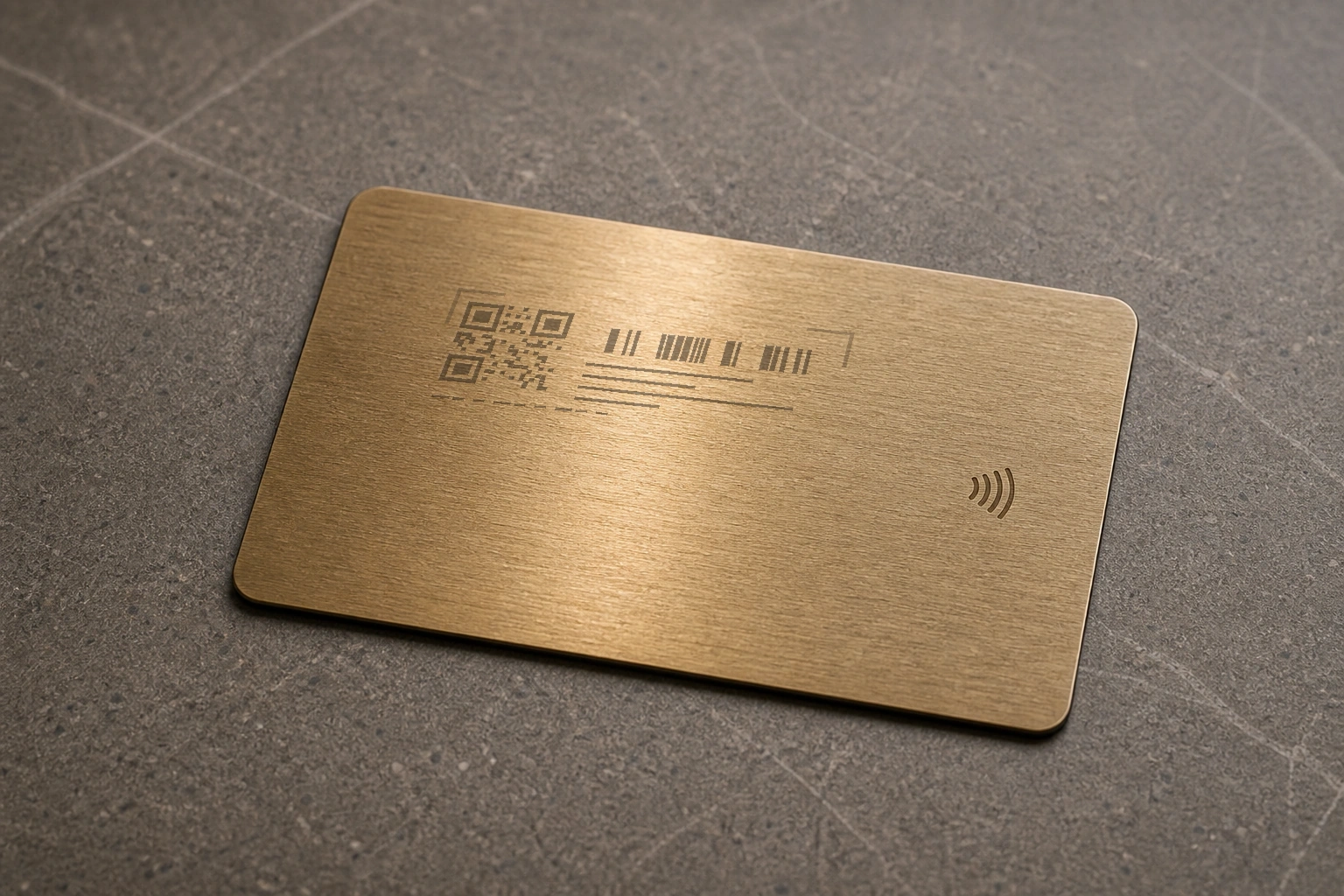
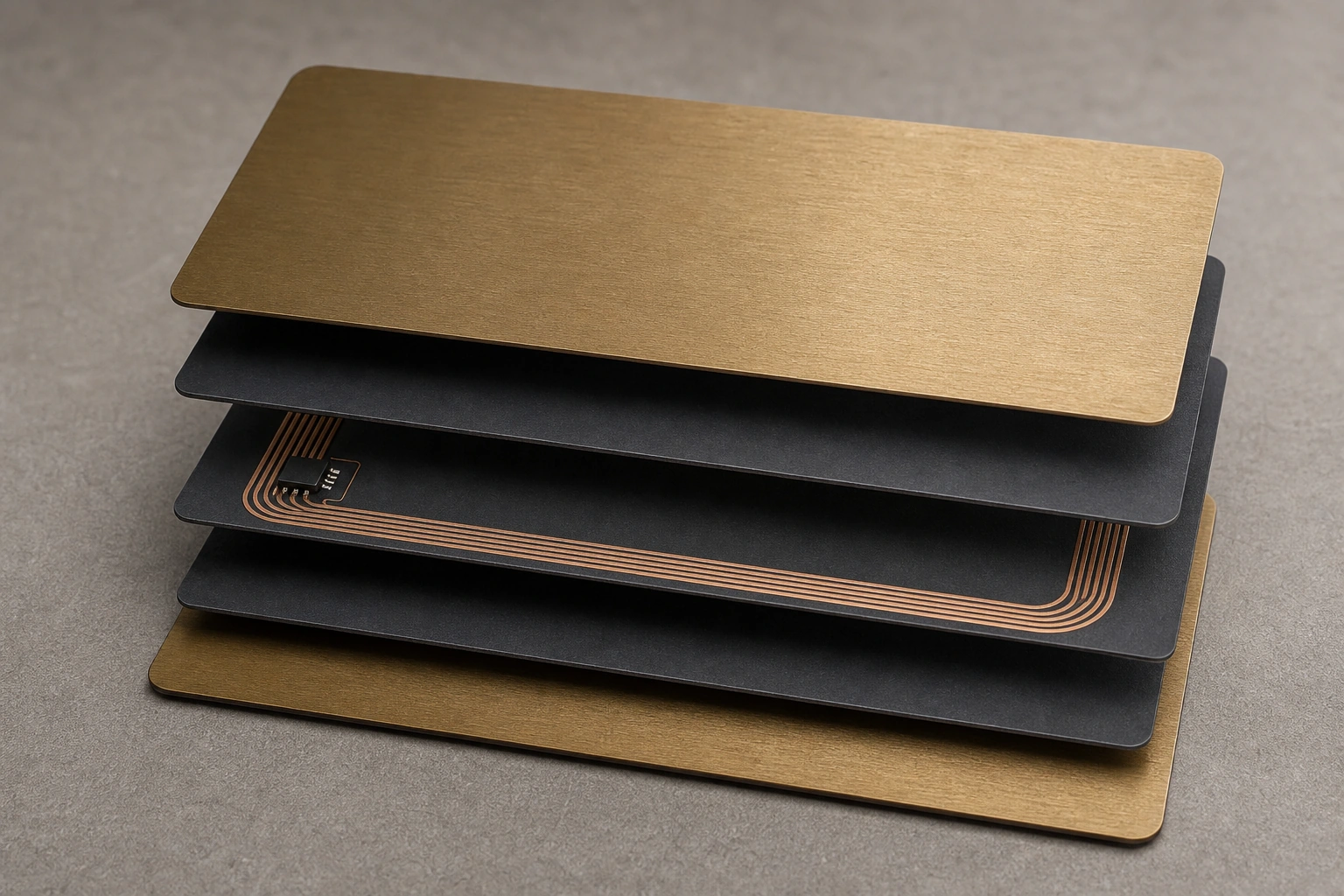
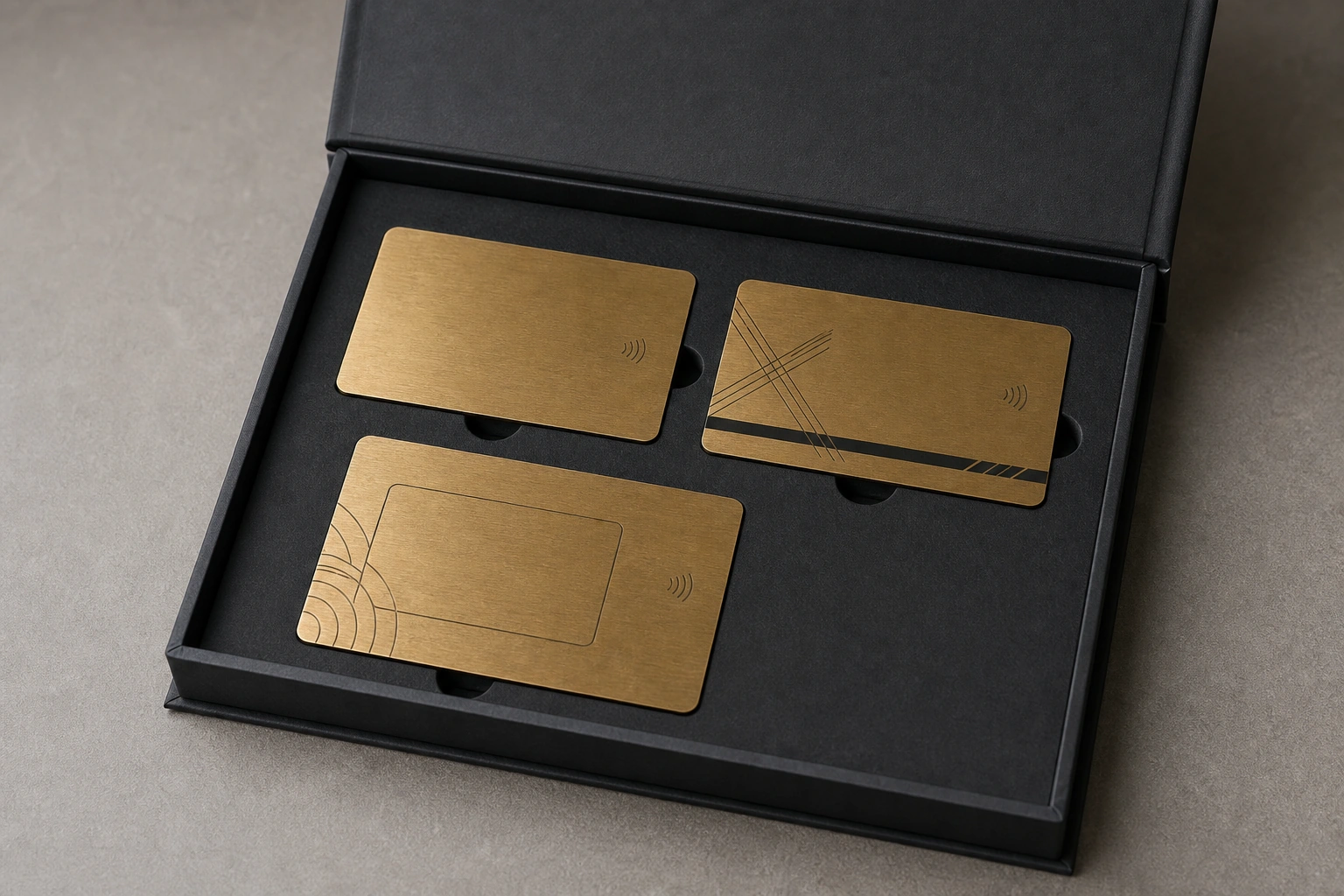
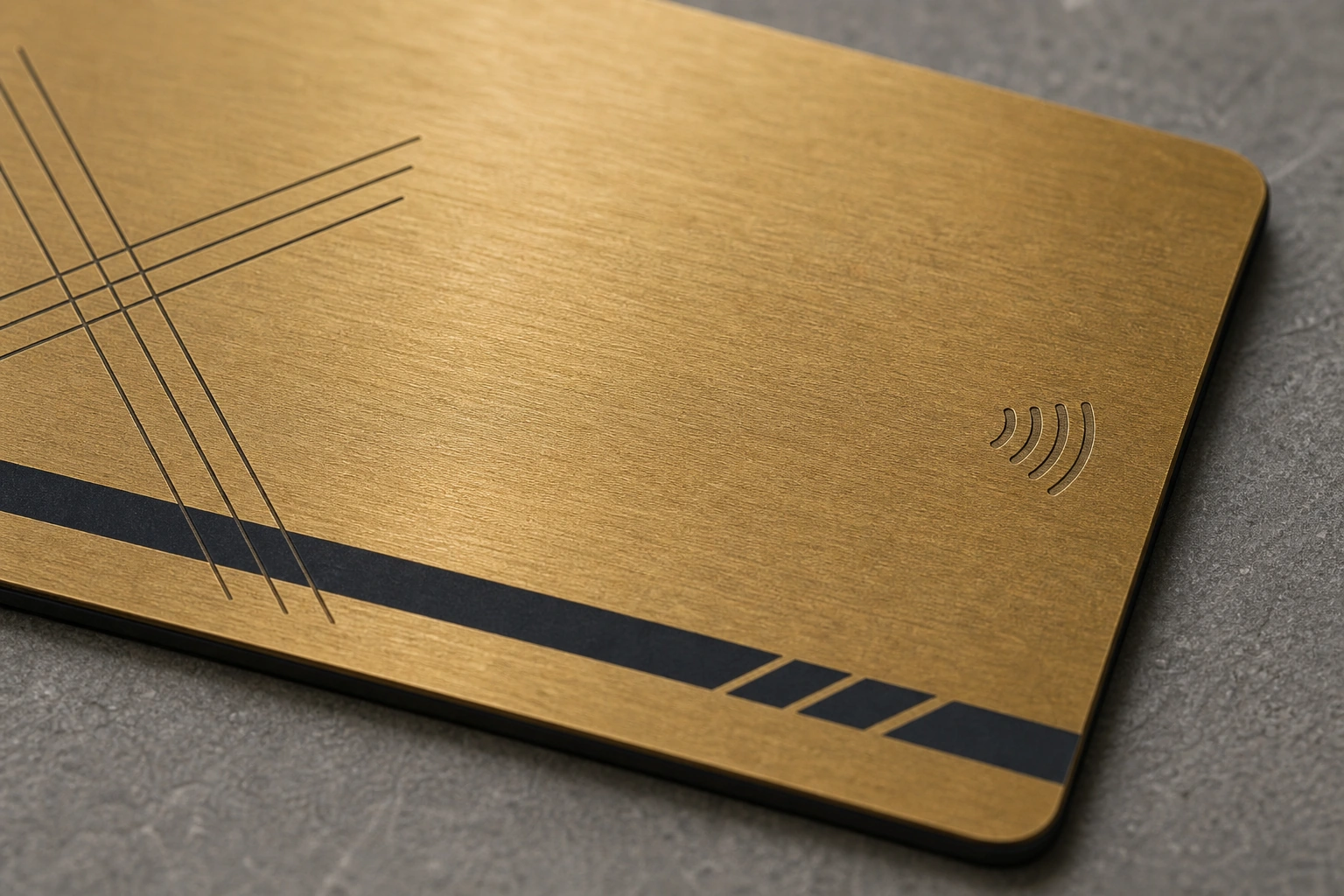
Natural brass image set
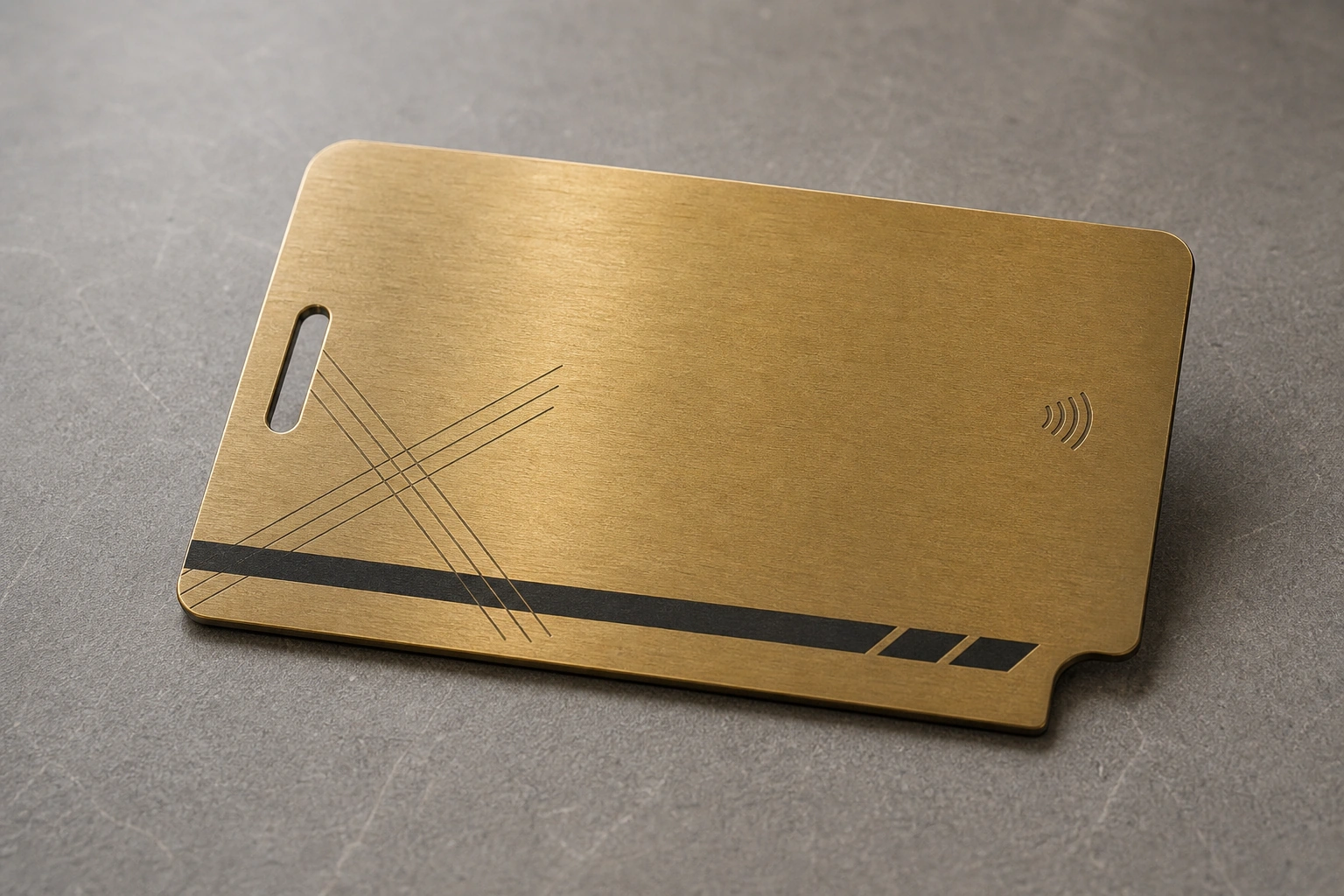
Best uses
- Boutique hotel, restaurant, and private member programs
- Cultural venues, galleries, retail experiences, and clubs
- Gift, loyalty, and invitation cards with a crafted feel
- Dark logo marks, enamel-style details, QR, UID, or serial zones
- Premium packaging where warm metal tone matters
Finish options
- Natural brushed brass or antique brass look
- Laser engraving, black UV, enamel fill, and fine linework
- White QR or serial panels for reliable scanning
- Hybrid RF route matched to the target reader
- Rigid sleeve, sample board, or member-kit presentation
RFID construction
Brass is the one face in the range that is a solid non-ferrous alloy rather than coated steel — copper and zinc, warmer in tone and softer under the tool, which is why it takes deep engraving and enamel fill so well. Electrically it is still very much metal: the same ferrite-shielded construction applies, and the encoded sample is proven on the target reader like every other build. Brass also lives — untreated it darkens toward patina, so each program decides at sample stage whether to clear-coat and hold the tone or let it age deliberately.
Print and marking
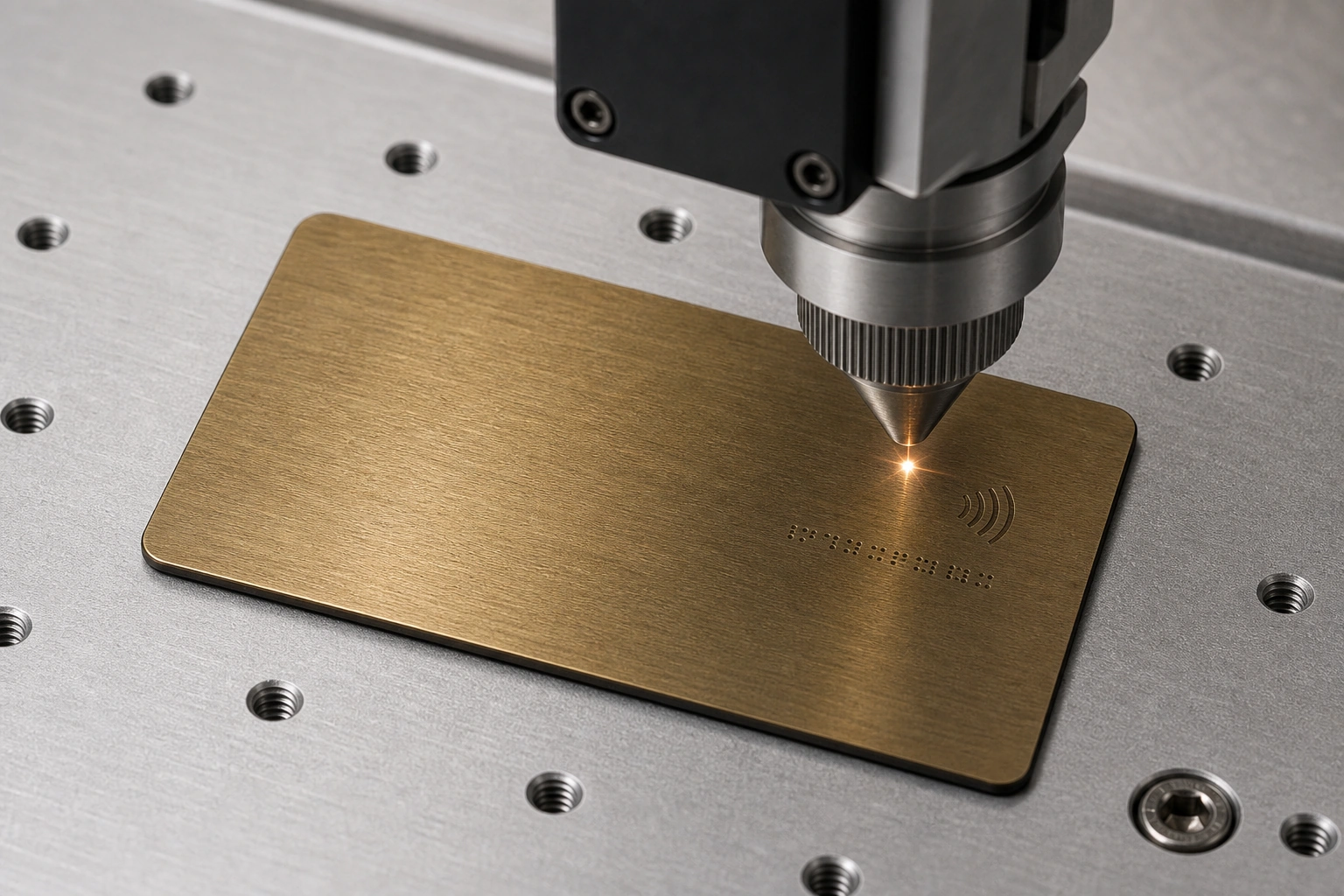
Brass takes dark marks deeply and well — engraving and enamel fill are its natural finishes. Tone, patina expectation, and contrast are specified explicitly at proof stage, and QR or barcode zones use controlled printed panels.
Frequently asked questions
Does a brass RFID card tarnish?
Untreated brass darkens toward a patina over time. Each program decides at sample stage whether to apply a protective clear coat and hold the tone, or let the card age deliberately as part of its character.
What are brass RFID cards best for?
Boutique hotels, restaurants, galleries, cultural venues, and private memberships that want a crafted, warm object rather than a bright gold statement — usually with engraving or enamel fill as the primary mark.
Is brass different from gold-finish cards?
Yes, structurally: gold cards are plated or PVD-coated steel, while brass cards are a solid copper-zinc alloy. Brass is warmer and quieter in tone, softer under engraving, and develops patina unless sealed.
Specification
| Card size | CR80-style 85.6 x 54 mm, custom shapes by RF review |
|---|---|
| Base build | Solid brass alloy (copper-zinc) face — softer than steel, takes deep engraving well |
| Thickness | 0.3 mm to 0.8 mm depending on construction |
| Minimum order | None — single samples to production runs |
| Production time | About one week after artwork and sample approval |
| Visual character | Warm brass tone with softer reflection than bright gold |
| Surface feel | Brushed or antique brass-style metal face |
| Best contrast | Deep laser etch, black UV, enamel fill, white data zones |
| QR / serial | Use printed contrast panels and approve scan distance on the finished sample |
| RF route | LF, HF/NFC, standard and high-security HF routes, selected UHF by reader test |
| Reader approval | Test against the exact phone, lock, gate, or desktop reader |
| Edge options | Rounded CR80 edge, chamfer control, dark RF layer by build |