Residence club guide · 8 min read
Metal RFID Membership Cards for Luxury Residence Clubs
A residence-club credential sits between hospitality and security. It can recognise owners or members, support compatible common-area access, and connect to concierge services, but it should never expose apartment, household, billing, or occupancy data on the physical card.
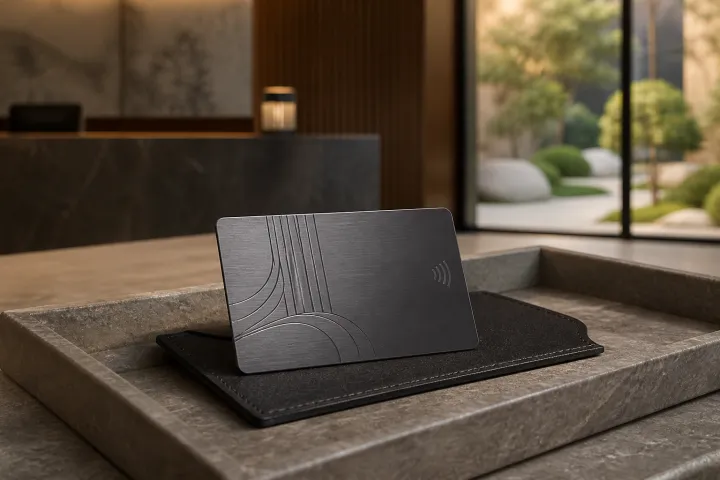
Industry program views
Keep the arrival experience premium while access remains precise.
Identity, household roles, guest permissions, amenity bookings, privacy, and emergency procedures must be designed together before the credential is issued.
Separate resident identity from physical access rights.
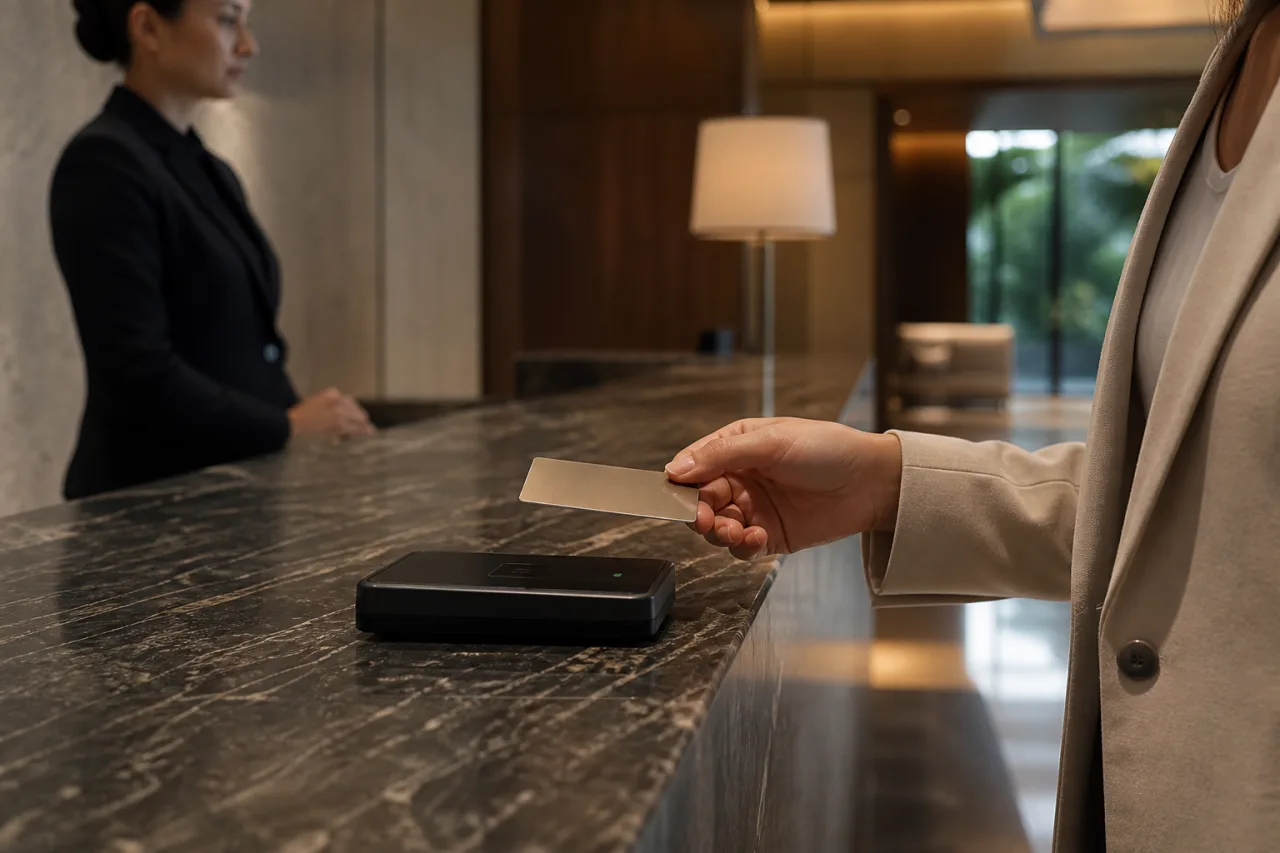
Owner, tenant, household member, staff member, and guest are not interchangeable roles. The live access platform should assign zones, schedules, and expiry to each individual credential. A visible metal card may support recognition, but it must not grant broader access merely because it signals a premium tier.
Start with a role-and-zone matrix that names the owner of every permission. Owners, tenants, family members, domestic staff, building teams and guests may share an address but do not share the same access. Link each credential to one person, role, schedule and expiry. This keeps the front-of-house experience warm while the access platform remains exact and reviewable.
Map every common-area and service journey.
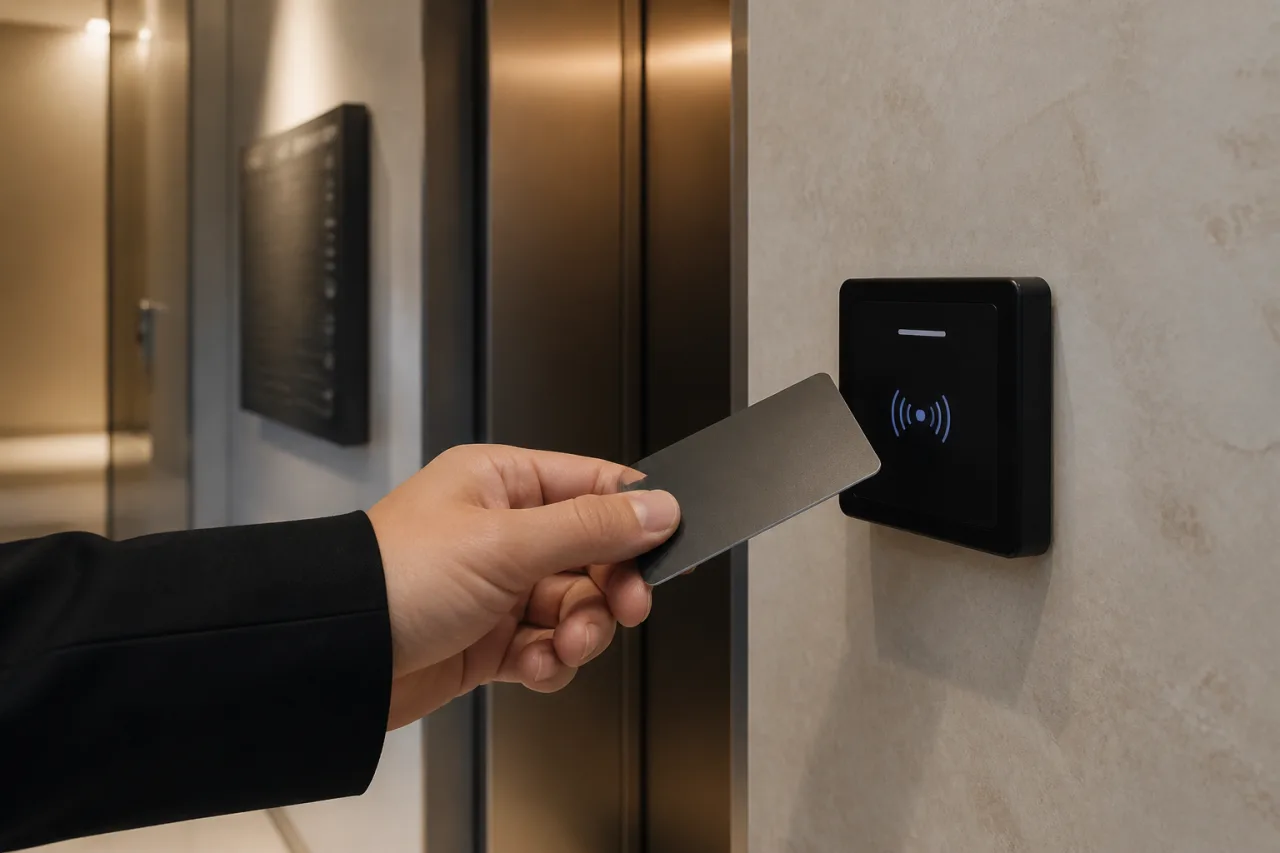
Lobby, lift, parking, pool, gym, lounge, coworking room, storage, and private events may use different controls. Concierge, amenity booking, maintenance, deliveries, and resident communication may be better served by an authenticated NFC or QR portal. Give each function the minimum authority it needs.
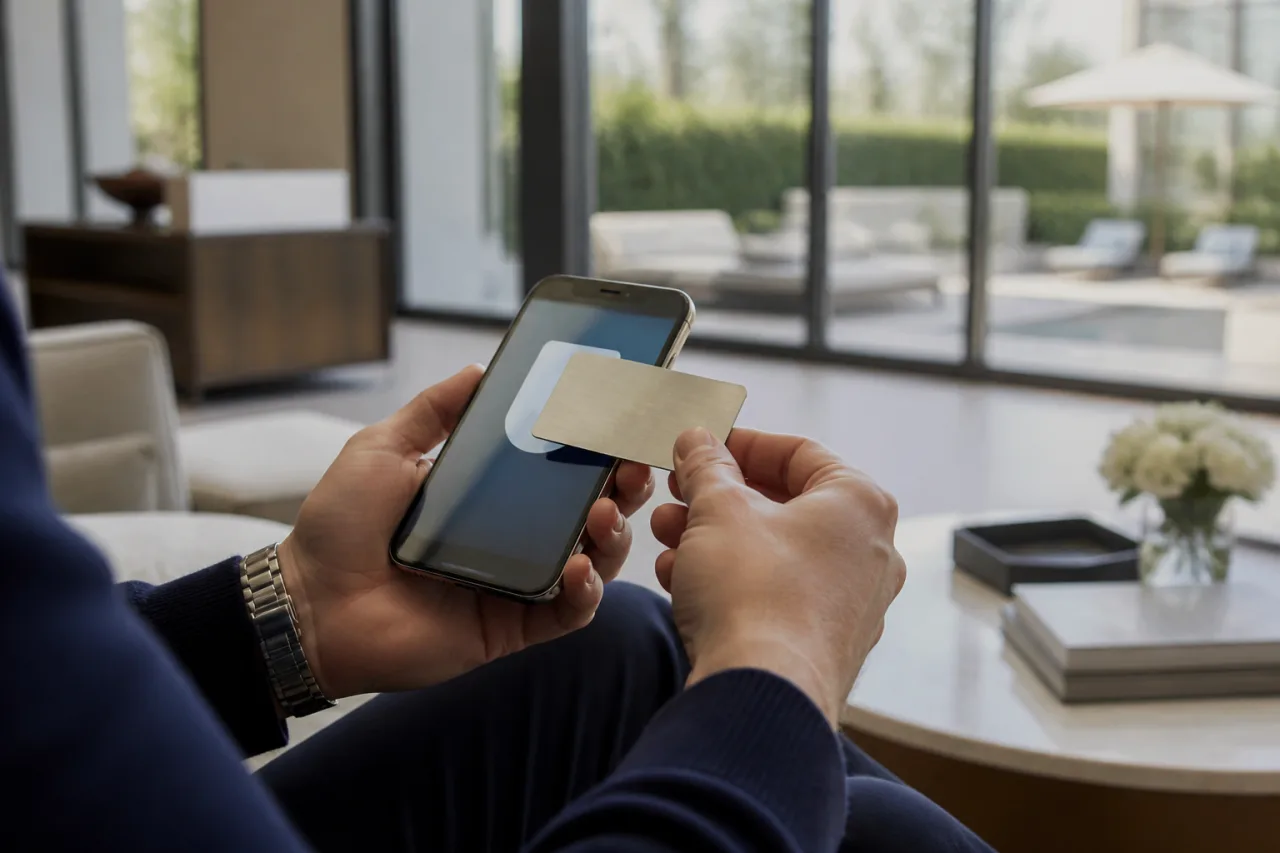
Separate stable identity from changing services. A managed NFC or QR destination can provide amenity booking, maintenance requests, community notices or concierge contact without encoding those details on the card. Require authentication before showing private requests or household information, and design a useful public landing state that reveals nothing when a lost card is tapped by someone else.
Protect household and occupancy information.
Do not print the unit number, household structure, access zones, occupancy pattern, or billing status. Use a neutral member or resident identifier and keep sensitive data behind staff permissions and authentication. Lost-card reporting should immediately revoke access without revealing why a credential is inactive.
Privacy also affects what staff say and display. A failed credential should produce a neutral prompt, not announce arrears, occupancy status or a household change at the desk. Provide a discreet verification route and clear escalation. Keep unit numbers off visible card faces and open payloads, minimize exported personalization files, and restrict the issue log to the people responsible for access and replacement.
Design guest and service-provider credentials separately.
Visitors, contractors, domestic staff, drivers, and short-term service providers need controlled start time, end time, host, zone, and revocation. A permanent resident card should not be loaned as a workaround. Temporary credentials or mobile invitations provide clearer accountability and safer expiry.
Temporary access should be designed as a separate product. A guest, contractor, driver or service provider needs a host, start and end time, permitted zones and immediate revocation. Mobile invitations, temporary cards or desk-issued passes can satisfy that requirement without lending a resident credential. Clear expiry reduces manual cleanup and gives concierge staff a consistent response when plans change.
Approve the finished card across the real estate.
Metal changes radio performance, and one successful lobby test does not prove every lift, garage, or amenity reader. Test the final chip, antenna, shielding, thickness, finish, and encoding at every important reader and in the carried orientation. Document a manual fallback for outages and damaged cards.
Test the final card through the whole property and through failure. Check lobby, lift, parking, amenity and after-hours readers with the encoded production sample, then rehearse power, network and damaged-card scenarios. Document who can issue a temporary alternative and how the event is recorded. Premium service is most visible when the exception is handled calmly without weakening the building's access rules.
Best uses
- Branded residences and private residence clubs
- Owner, resident, family, and invitation programs
- Common-area access plus concierge and amenity services
- Properties that require discreet identity and strict privacy
Relevant metal card routes
Frequently asked questions
Should the residence or apartment number appear on the card?
No. Use a neutral identifier and keep unit, household, and occupancy information inside the controlled property system.
Can one card operate the lobby, lift, parking, and amenities?
Possibly, if the same access platform supports every reader and the final metal credential passes testing at every point. Do not assume site-wide compatibility.
How should guests and contractors receive access?
Issue time-limited, host-linked credentials with explicit zones and revocation rather than lending a permanent resident card.
Specification
| Card format | CR80 85.6 × 54 mm by default; custom outlines after RF review |
|---|---|
| Thickness | 0.3–0.8 mm depending on the metal and RF construction |
| Minimum order | None — from one working approval sample to production runs |
| Production time | About one week after artwork, data, and sample approval |
| Personalization | Member name, ID, tier, serial, expiry, QR, NFC data, and matched packaging |
| Approval path | Program brief, artwork proof, encoded sample, device test, and production approval |
| Access governance | Individual role, zone, schedule, expiry, host, and revocation controlled by the live platform |
| Privacy rule | No unit, household, occupancy, billing, or detailed access information printed or openly encoded |
Related metal RFID card pages
- Metal RFID Membership Cards for Yacht Clubs and Marinas
- Metal RFID Membership Cards for Private Aviation and FBO Lounges
- Metal RFID Membership Cards for Golf and Country Clubs
- Metal RFID Membership Cards for Private Wellness Clubs
- Custom Metal Membership Cards for Car Clubs
- Metal Membership Cards for Car Detailing Studios
- How to Build a Luxury Car Rental VIP Membership Program
- Metal Membership Cards for Private Car Storage Clubs
- Dealership VIP Cards That Extend the Owner Relationship
- VIP Metal Passes for Rallies, Track Days and Car Events
- NFC, RFID or QR for Automotive Membership Cards?
- How to Design Black, Gold and Founder Car Club Tiers
- What Can Be Personalized on a Metal Automotive Card?
- Metal vs Plastic Membership Cards for Automotive Brands
- How NFC Metal Cards Connect Automotive Member Portals
- Seven Benefits an Automotive VIP Card Can Support