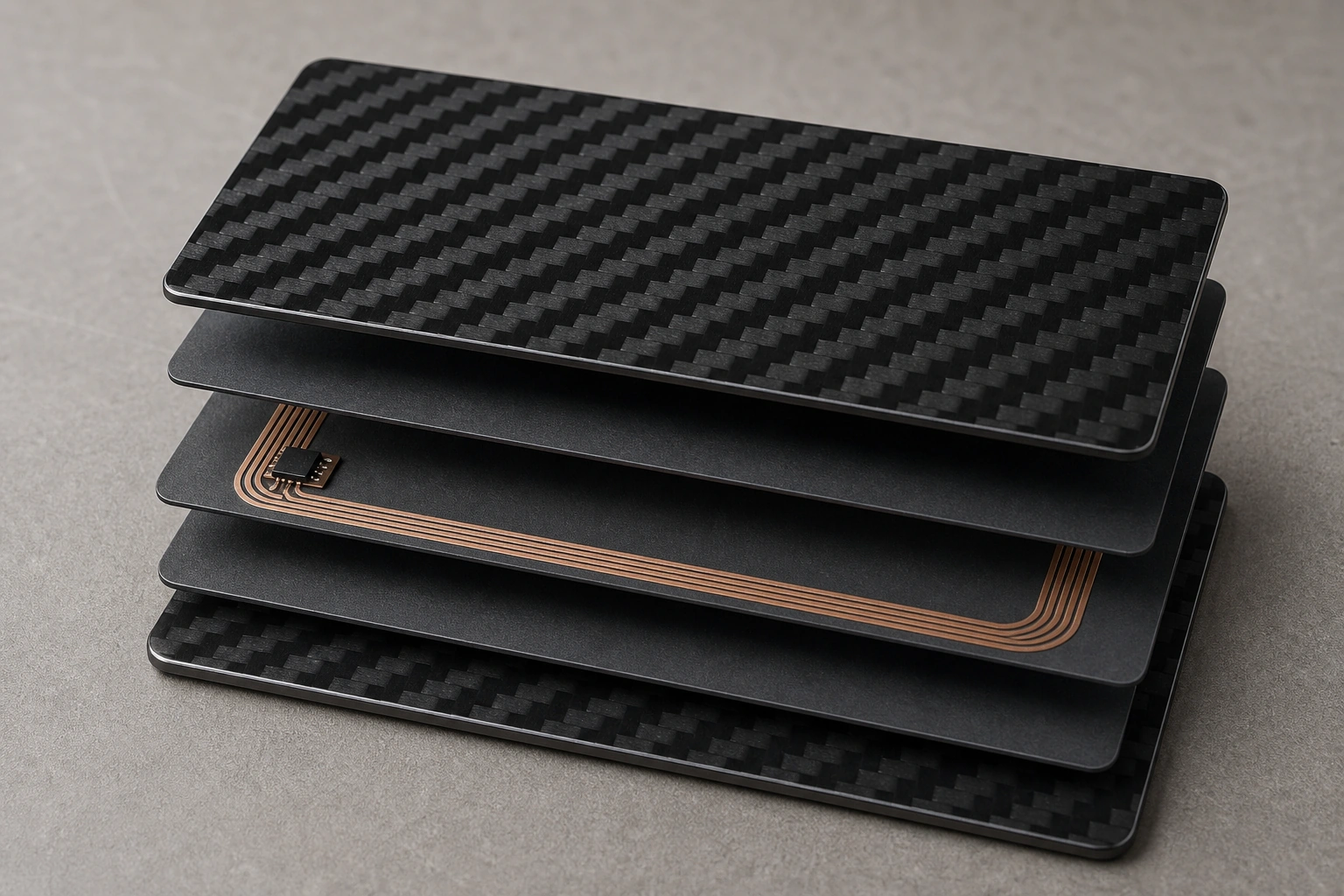
Carbon face + RF stack
Carbon Fiber Hybrid RFID Cards
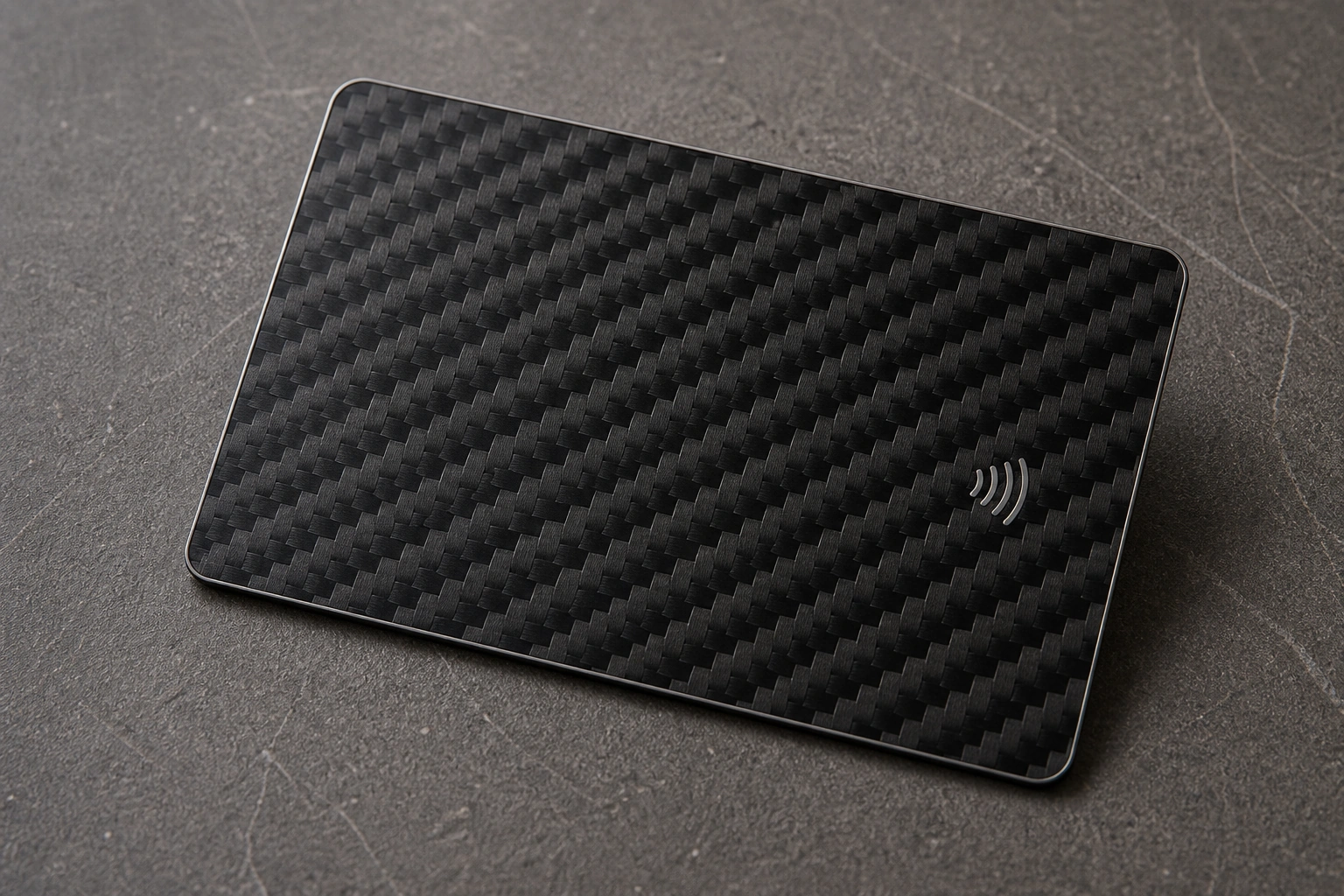
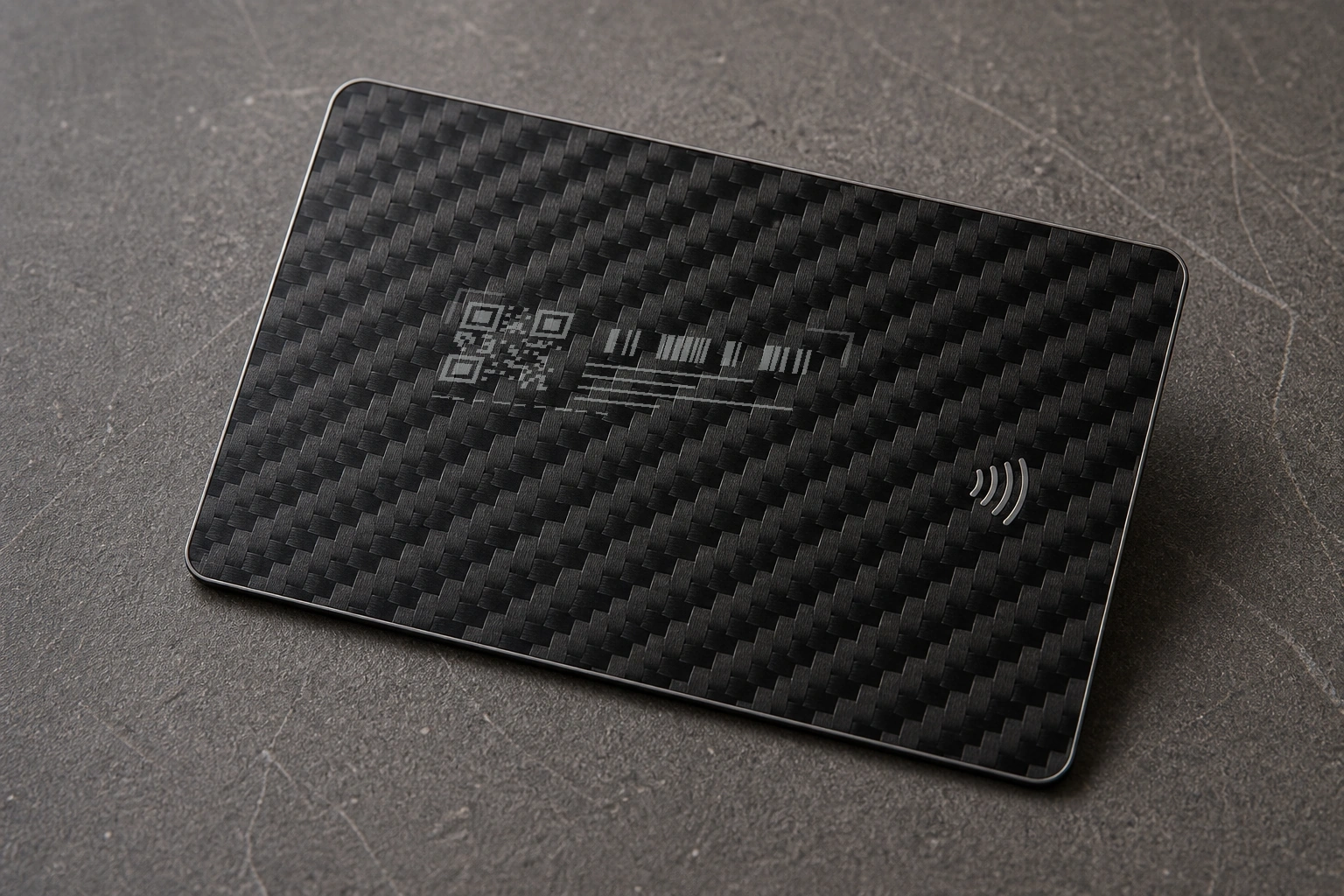
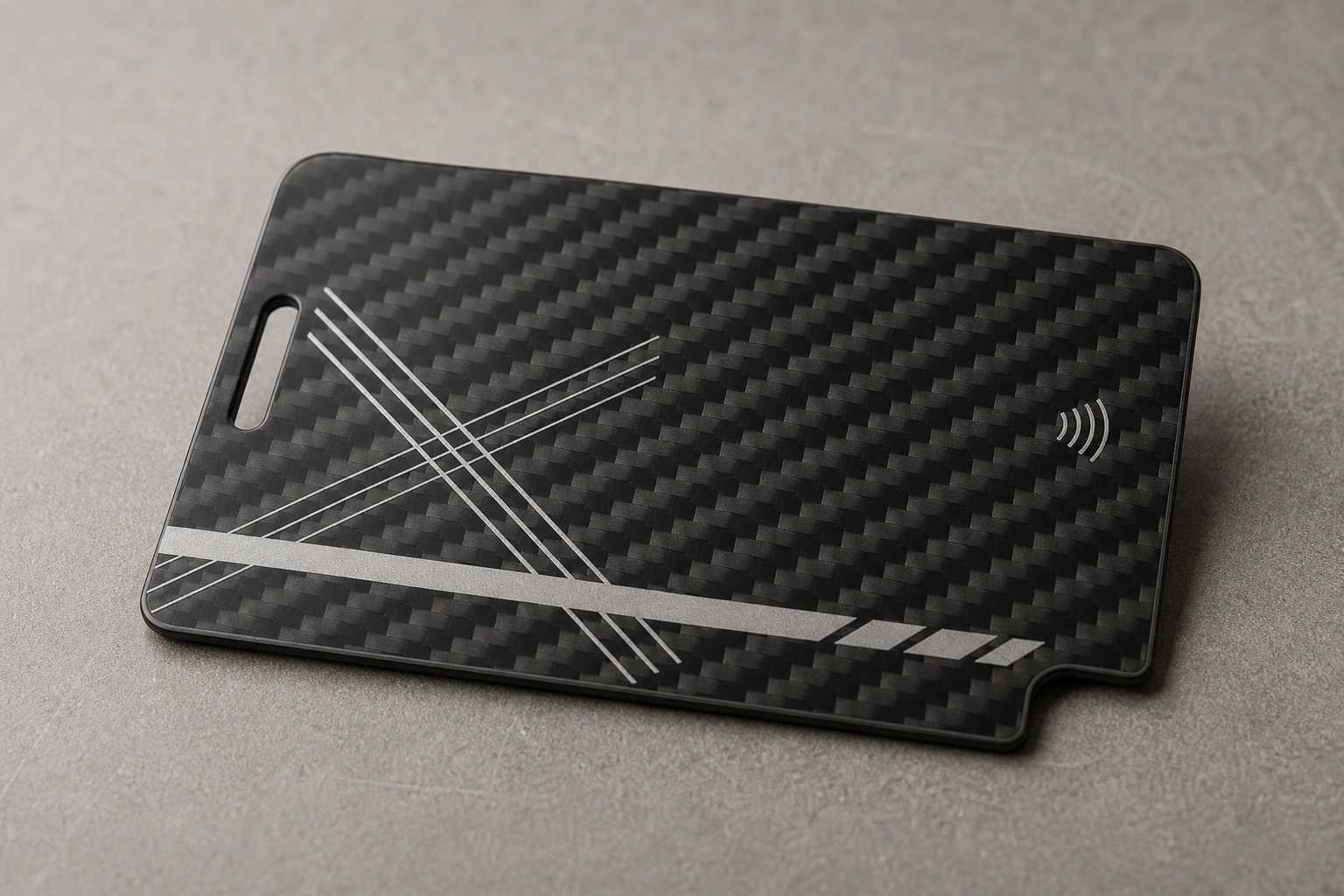
Carbon fiber hybrid RFID cards are the performance look in the metal range. They suit automotive, motorsport, technology, private access, and premium sample programs where the card should feel lightweight, technical, and visually different from plain metal.
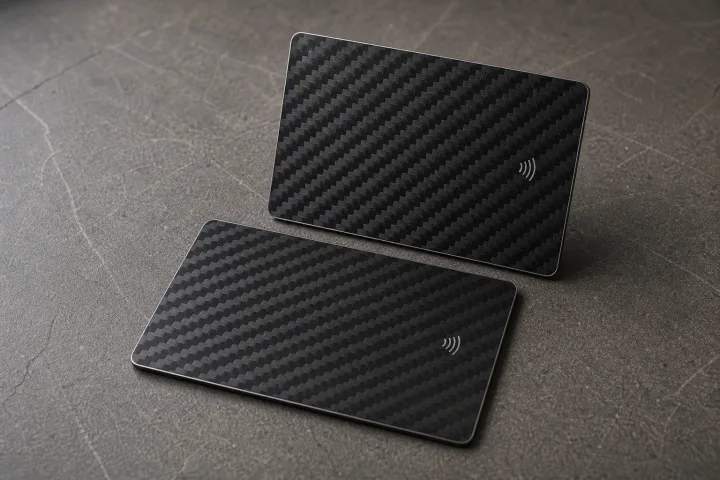
Carbon fiber hybrid image set
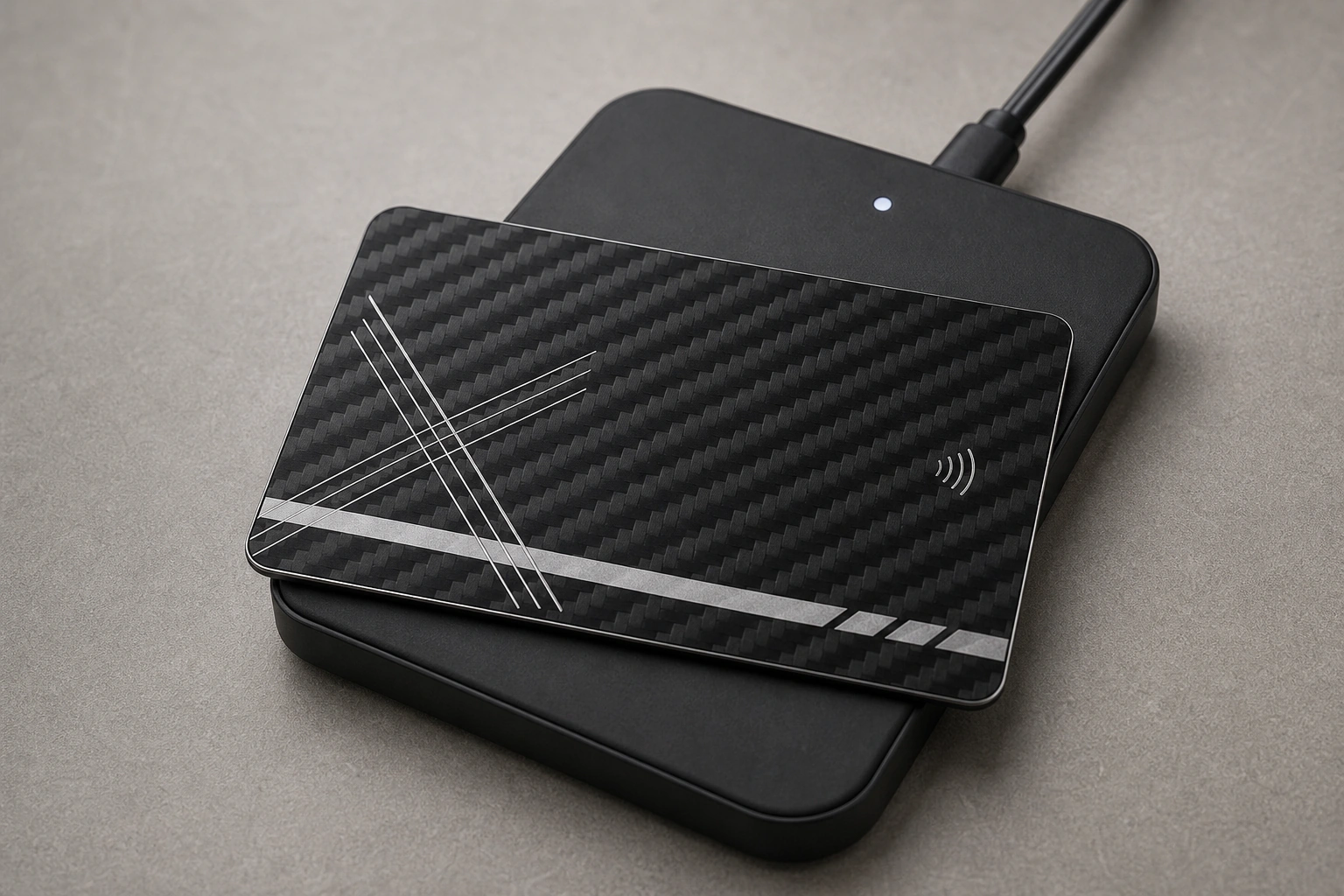
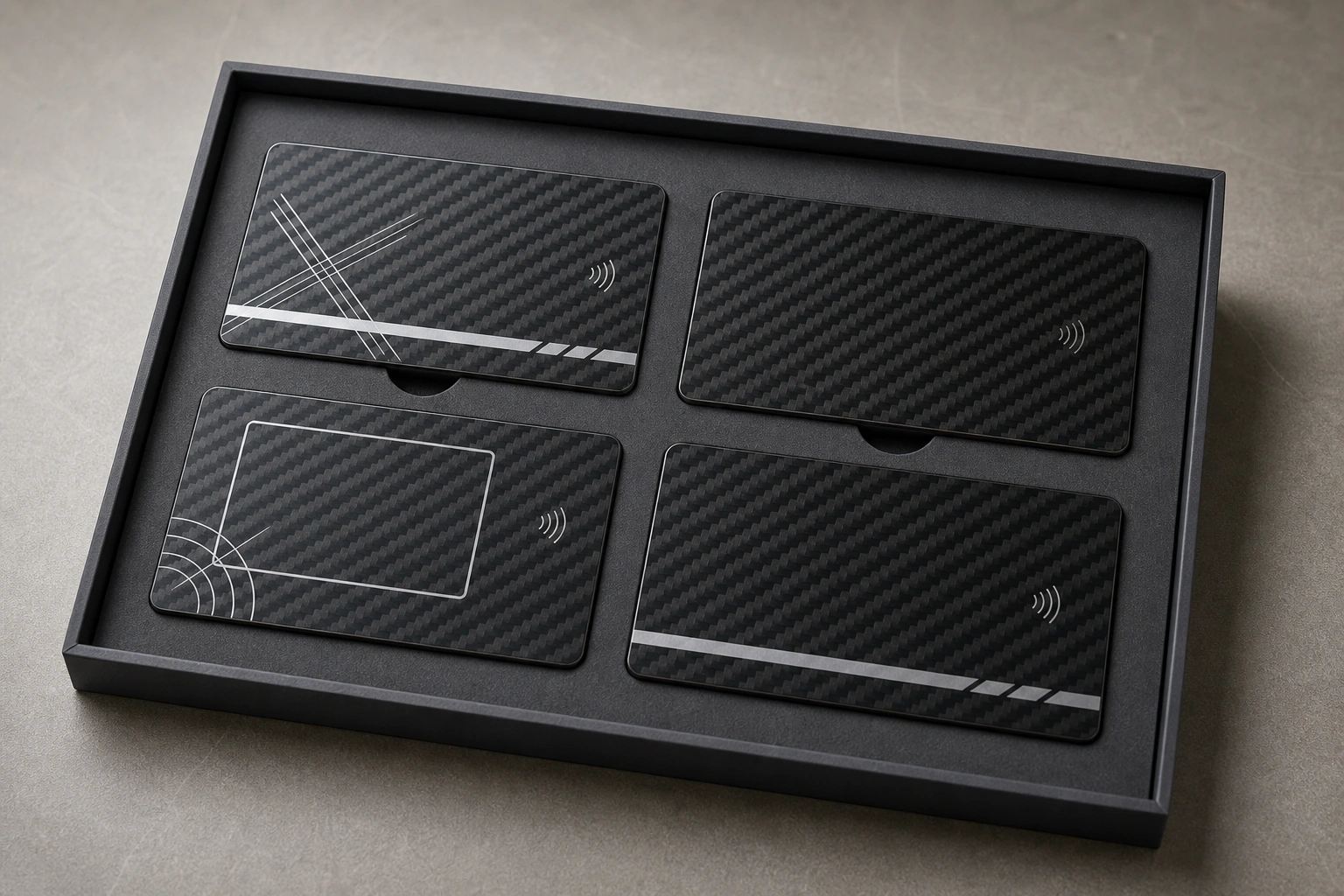
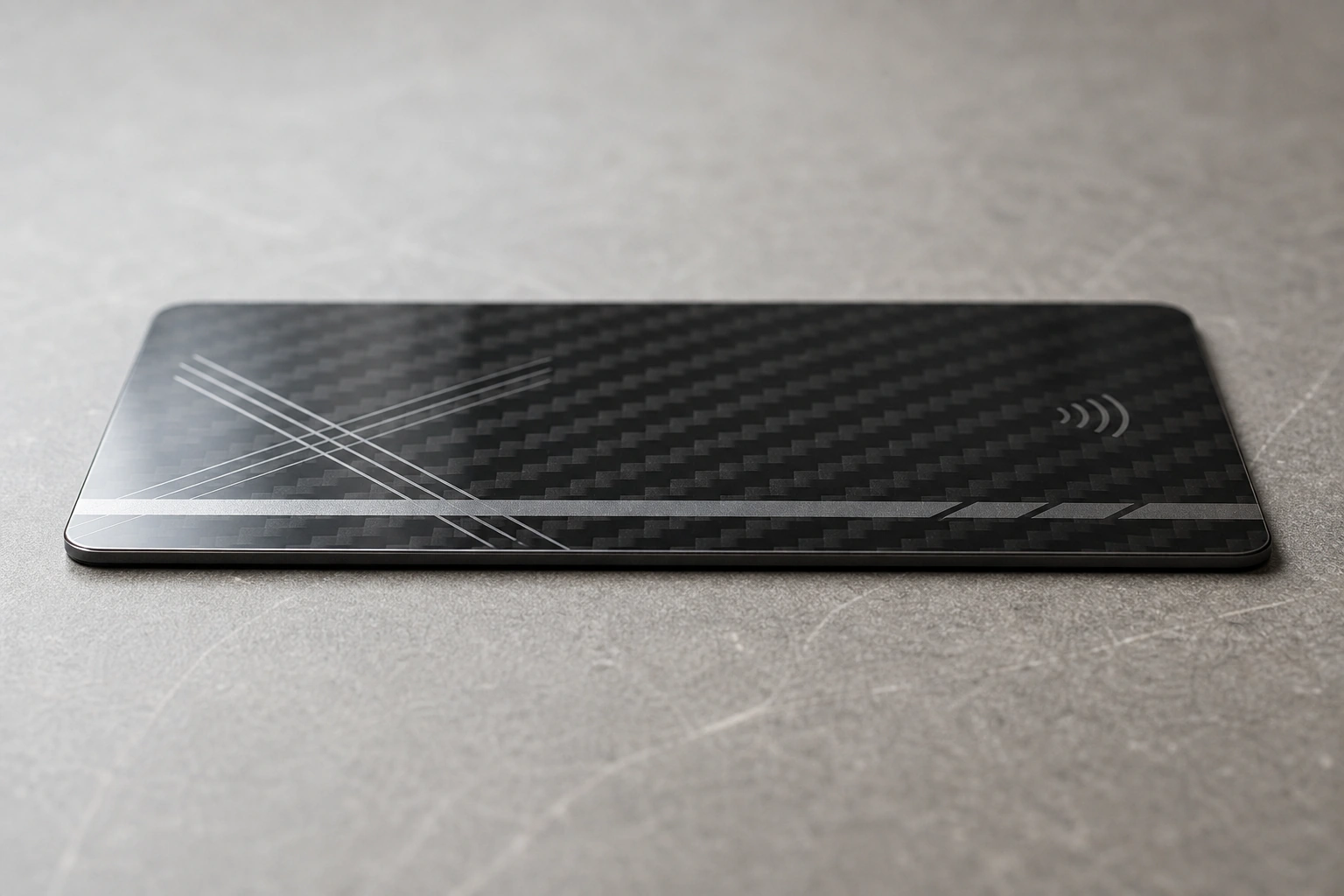
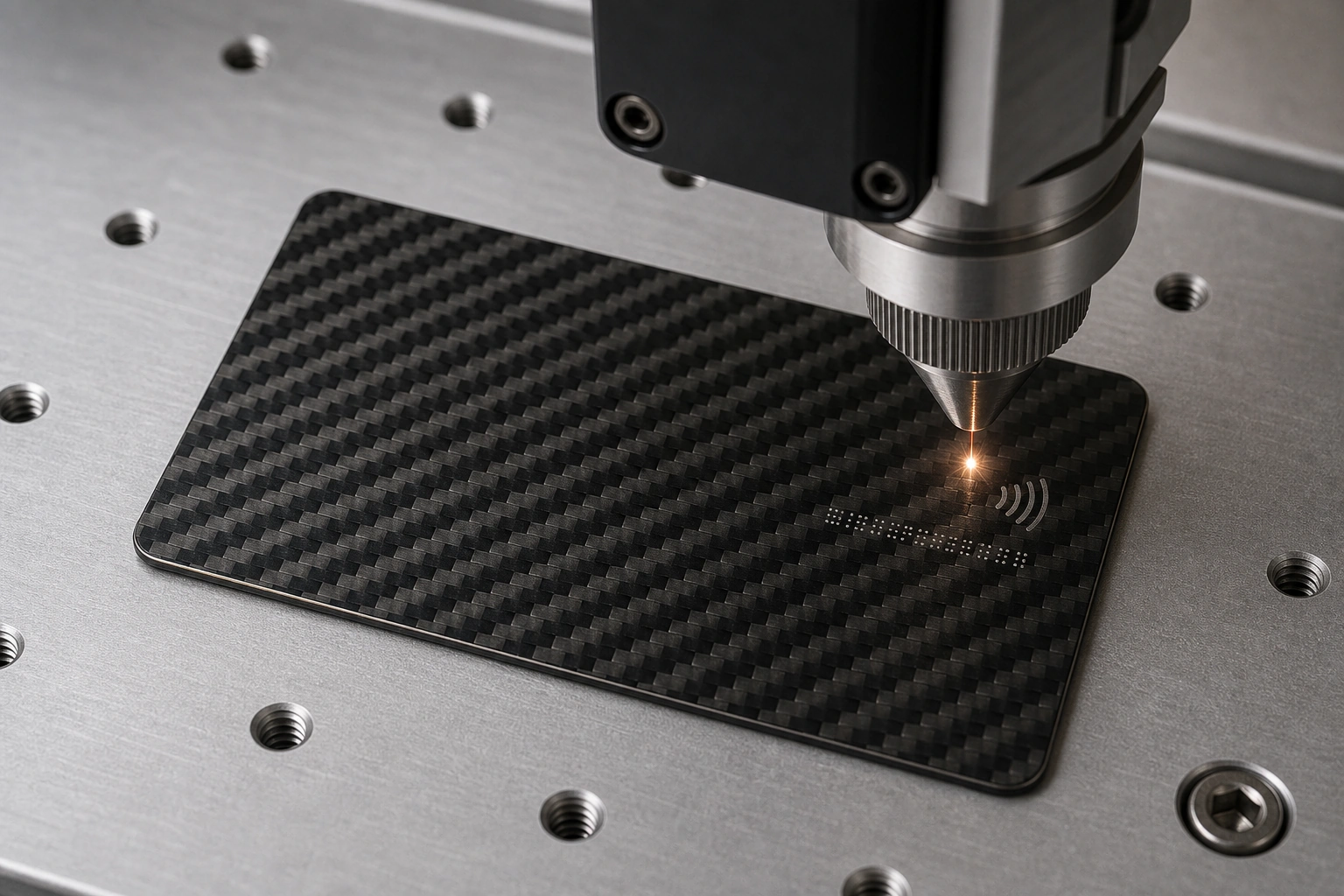
Best uses
- Automotive, motorsport, technology, and performance-brand cards
- Private access, membership, and NFC business cards
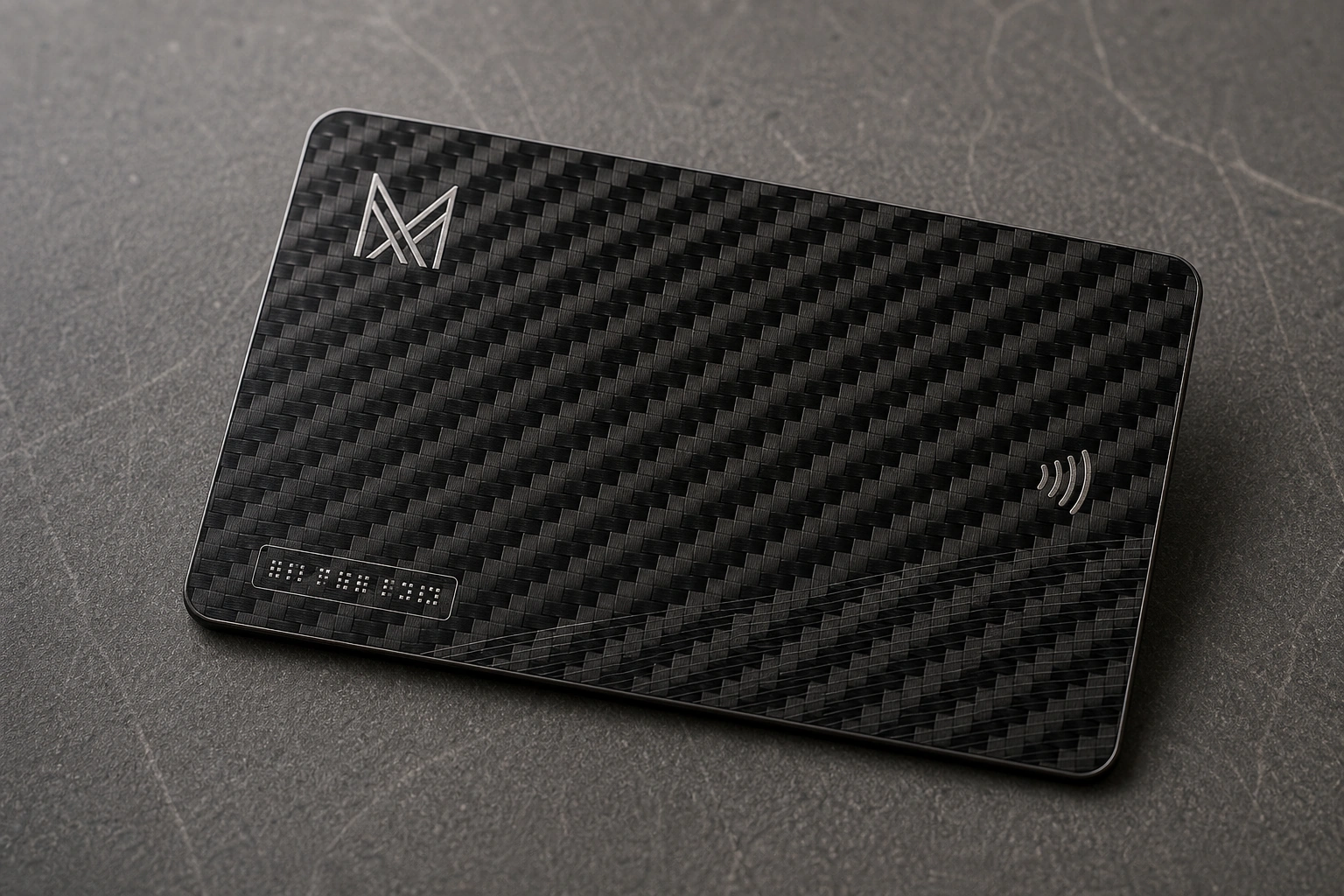
- White ink, silver print, QR, UID, and serial data zones
- Hybrid builds where visual impact and tap reliability both matter
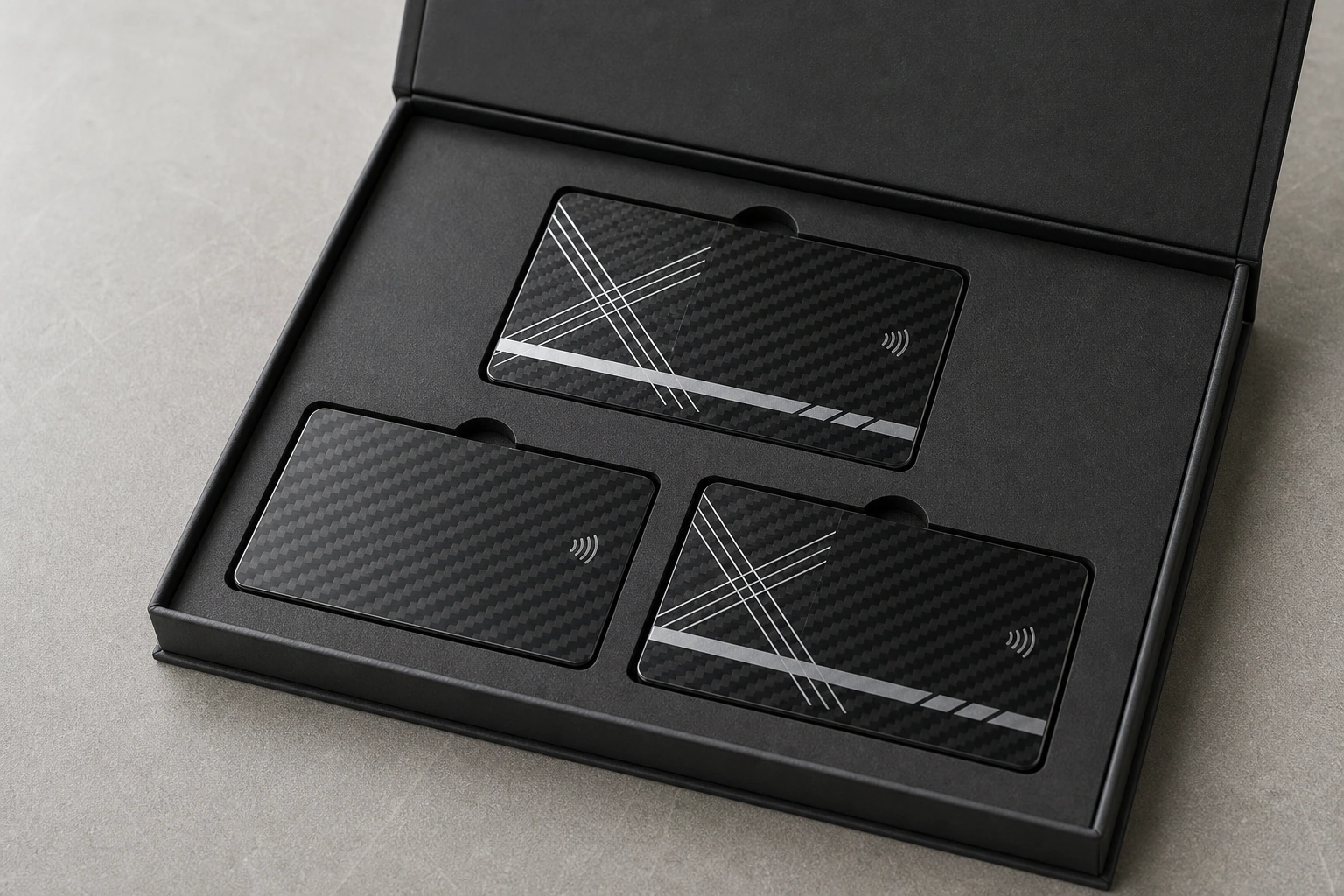
- Premium sample kits with carbon and metal finish comparisons
Finish options
- Carbon fiber face with metal or hybrid RF stack
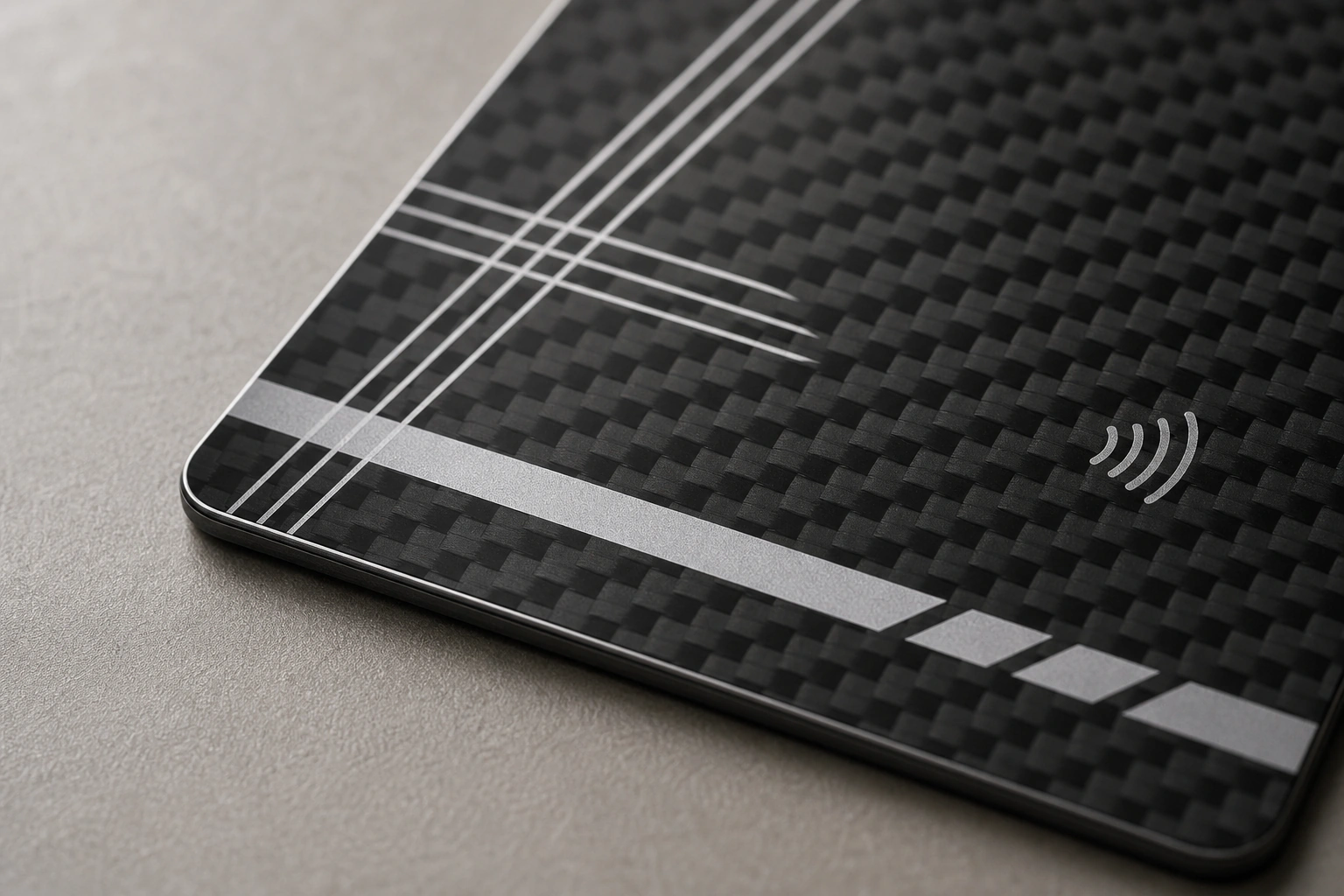
- White ink, silver UV print, QR, barcode, and serial panels
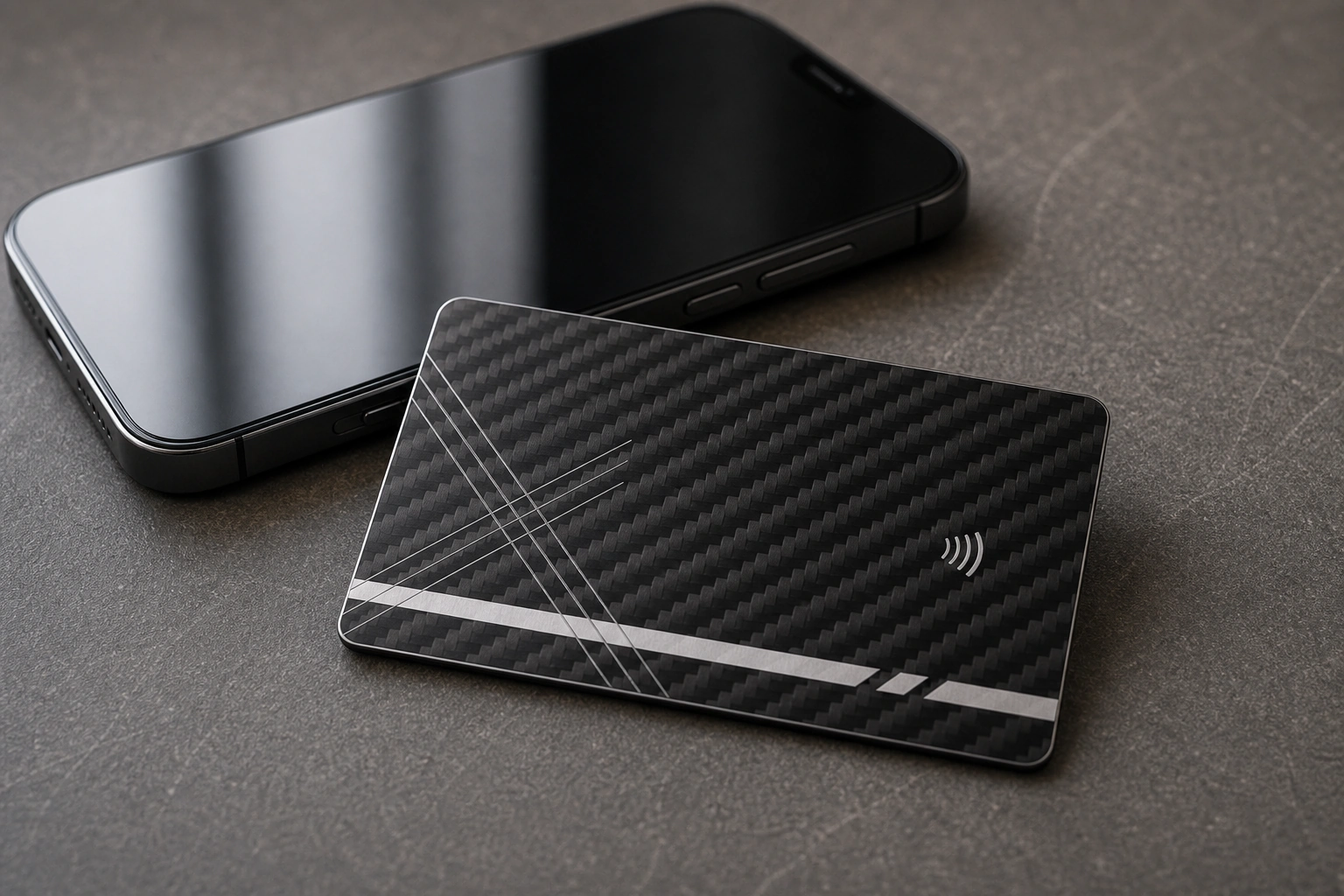
- Subtle dark gloss, linework, and contactless marks
- Reader-tested ferrite or shielding route
- Protective sleeve or performance-style sample kit
RFID construction
Carbon fiber earns its own RF story: the woven face is conductive graphite, so it interferes with radio much like metal does — a carbon card is not an easy alternative to steel, it is its own engineered hybrid. The stack places the antenna in an RF-transparent layer behind the weave, trading some of the metal mass for lower weight and more antenna freedom. Tap performance is still proven per build, on the target phones and readers, before any batch.
Print and marking
The weave eats low-contrast detail, so carbon runs high-contrast by rule: white ink, silver print, and clean QR panels, approved on the finished gloss or satin surface.
Frequently asked questions
Does carbon fiber block RFID like metal?
It interferes in its own way — the woven face is conductive graphite. That is why carbon cards are built as engineered hybrids, with the antenna placed in an RF-transparent layer behind the weave and the tap proven per build on the target phones and readers.
Why choose carbon over full metal?
Weight and character: the hybrid build is lighter in hand than a full-metal card and reads as technical rather than luxurious — which is why it suits automotive, motorsport, and technology brands.
What marking works on the carbon weave?
High-contrast routes only: white ink, silver print, and clean QR panels. Low-contrast black detail disappears into the weave, so artwork is approved on the finished surface.
Specification
| Card size | CR80-style 85.6 x 54 mm, custom shapes by RF review |
|---|---|
| Base build | Woven carbon face over a hybrid stack that places the antenna in an RF-transparent layer |
| Thickness | 0.3 mm to 0.8 mm depending on construction |
| Minimum order | None — single samples to production runs |
| Production time | About one week after artwork and sample approval |
| Visual character | Dark carbon weave face with metal-card structure |
| Surface feel | Textured carbon pattern over a hybrid RFID construction |
| Best contrast | White ink, silver marks, dark gloss contrast, QR panels |
| QR / serial | Use printed contrast panels and approve scan distance on the finished sample |
| RF route | LF, HF/NFC, standard and high-security HF routes, selected UHF by reader test |
| Reader approval | Test against the exact phone, lock, gate, or desktop reader |
| Edge options | Rounded CR80 edge, chamfer control, dark RF layer by build |