Metal marking guide
Metal Card Printing Specs
Metal card printing is a coordinated surface-and-data decision. Laser, deep engraving, UV colour, white ink, enamel fill, QR zones, serial data, edge finishing, and custom cuts need to stay compatible with the selected metal body, RF stack, scan requirements, and approval sample.
Metal Card Printing Specs pages
- Laser Engraved Metal RFID Cards
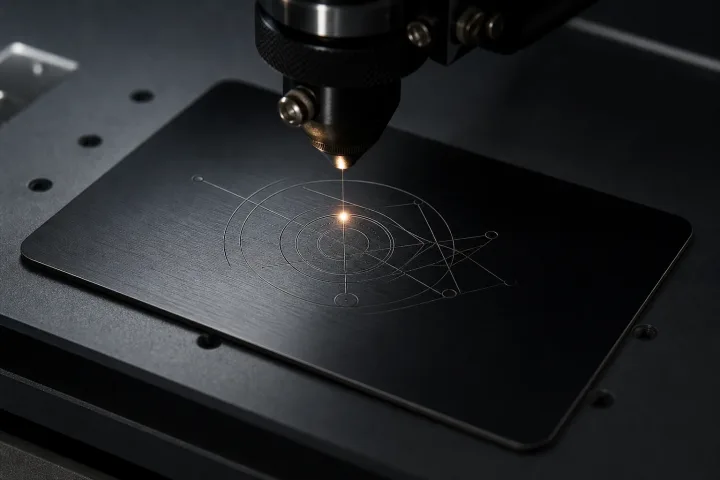
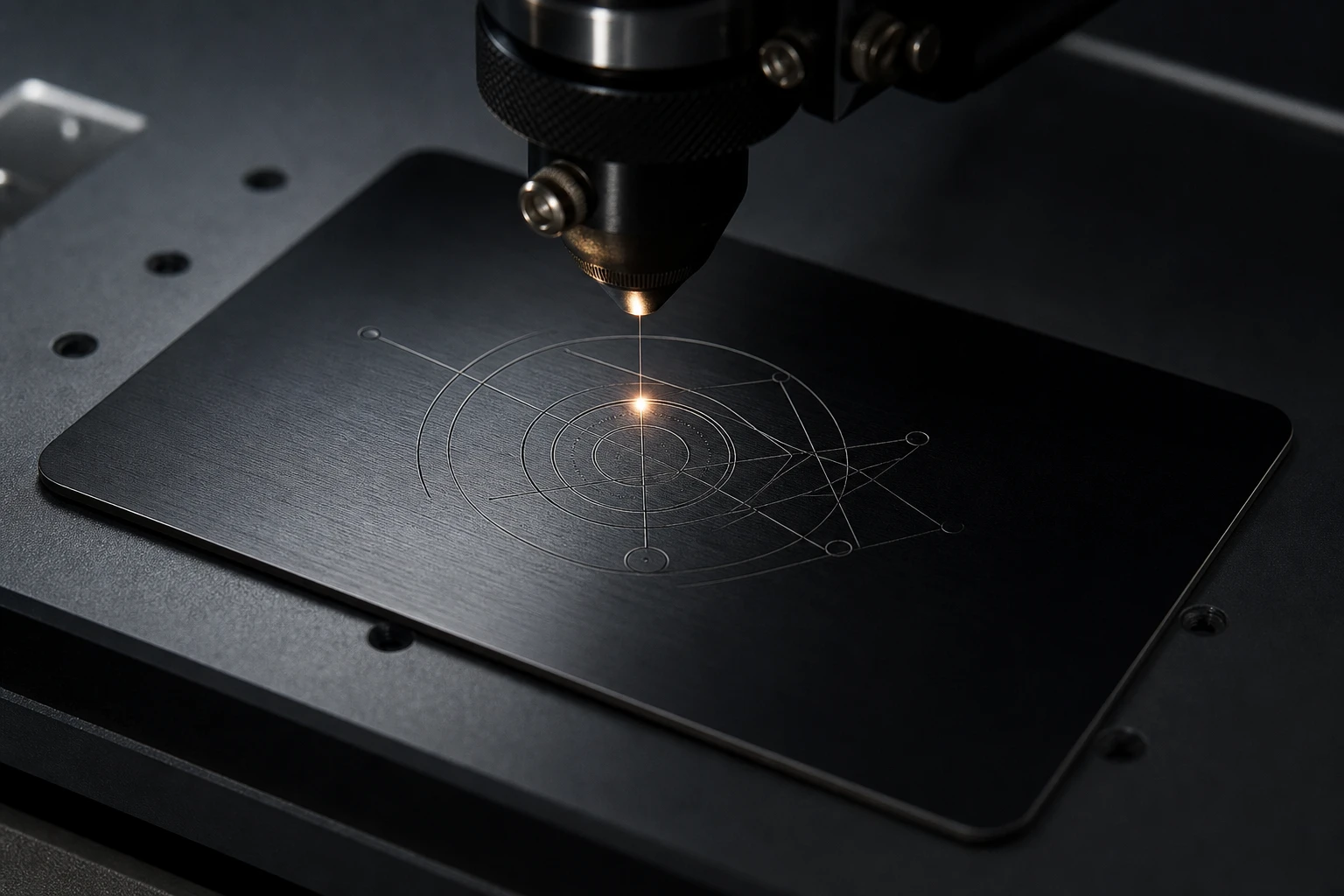
Laser engraving is the cleanest permanent mark route for metal RFID cards: a fiber laser alters the metal surface itself, so the mark cannot peel, fade, or wear off. It is the choice for restrained logos, fine linework, serials, and NFC icons — with tone, line width, and contrast approved on the final finish rather than on screen.
- Deep Engraved Metal RFID Cards
Deep engraving creates a tactile, dimensional metal card surface — a mark you feel under a fingertip, not just see. Recessed logos, sculpted patterns, and colour-fill zones are planned beside the RF stack, body thickness, and handling requirements, because depth is a physical budget on a card this thin.
- UV Printed Metal RFID Cards
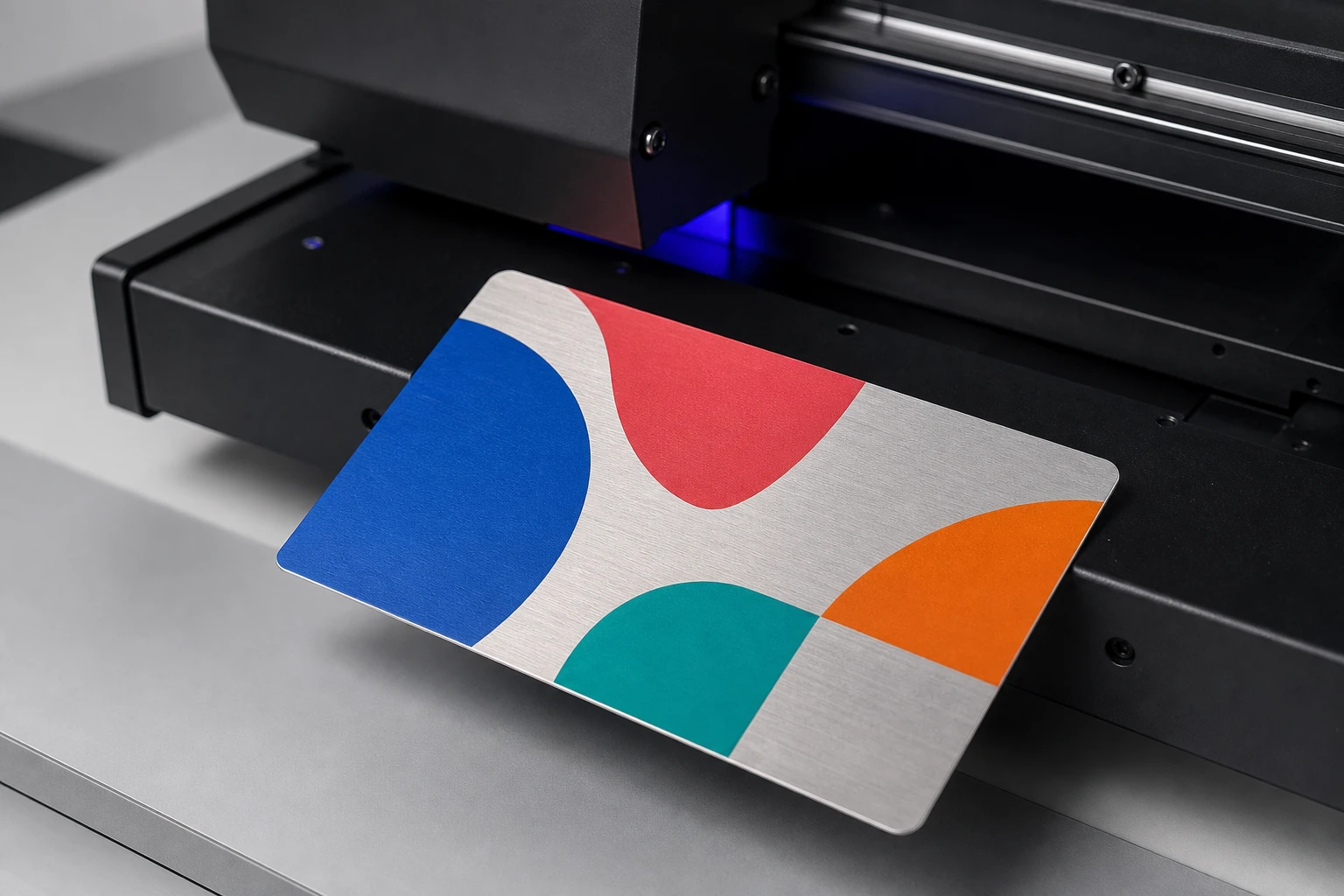
UV printing turns a metal card into a vivid brand surface while retaining the weight and edge quality of metal. The ink is laid onto the surface and cured instantly under UV light — which is why full colour on metal needs an opaque white underbase, and why colour, adhesion, and scan zones are proofed on the selected finish rather than on screen.
- White Ink Metal RFID Cards
White ink is the clearest print route on matte black, gunmetal, carbon, and other dark metal faces — an opaque layer that gives critical data and branding full contrast without losing the restraint of the base finish. Its real limits are size and distance, and both are approved by scanning a physical sample.
- Enamel Filled Metal RFID Cards
Enamel fill gives engraved metal marks clear, durable colour without turning the whole card into a generic printed surface. It is a sequence, not a print: engrave the recess, fill it with colour, cure, and level flush — which is why it excels at emblems, borders, and tier details with defined boundaries.
- QR and Serial Metal RFID Cards
A QR or serial zone gives gate staff, service teams, and systems a clear fallback beside RFID or NFC. On metal it arrives by two routes — lasered data marks or printed white-ink panels — and the mark, data file, encoding record, and packaging label all reconcile from one approved source.
- Metal Card Edge Finishing
The edge is where a metal card is judged in the hand. Edge finishing controls how a 0.3–0.8 mm body feels, reflects light, and survives handling — corners, polish, dark layers, slots, and cut-through details are approved together with the final antenna-safe layout.
- Metal RFID Card Artwork Specs
A metal RFID artwork file needs more than a logo. Production-ready means vector artwork (AI, PDF, or EPS) with fonts outlined, each process on its own named layer — laser, print, white ink, fill, cut, variable data — a die line for any custom outline, and an antenna-safe area confirmed before release.
Gallery
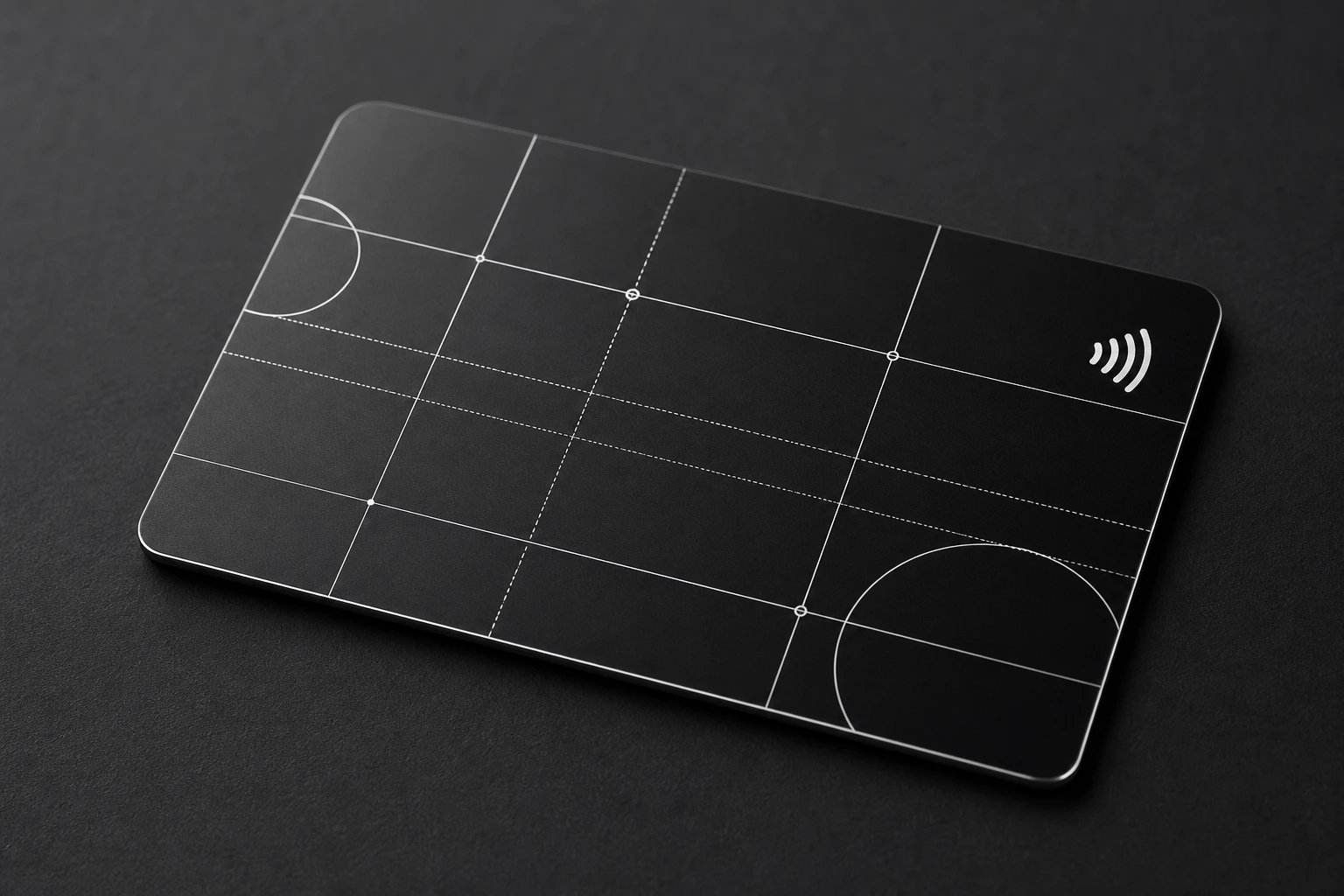
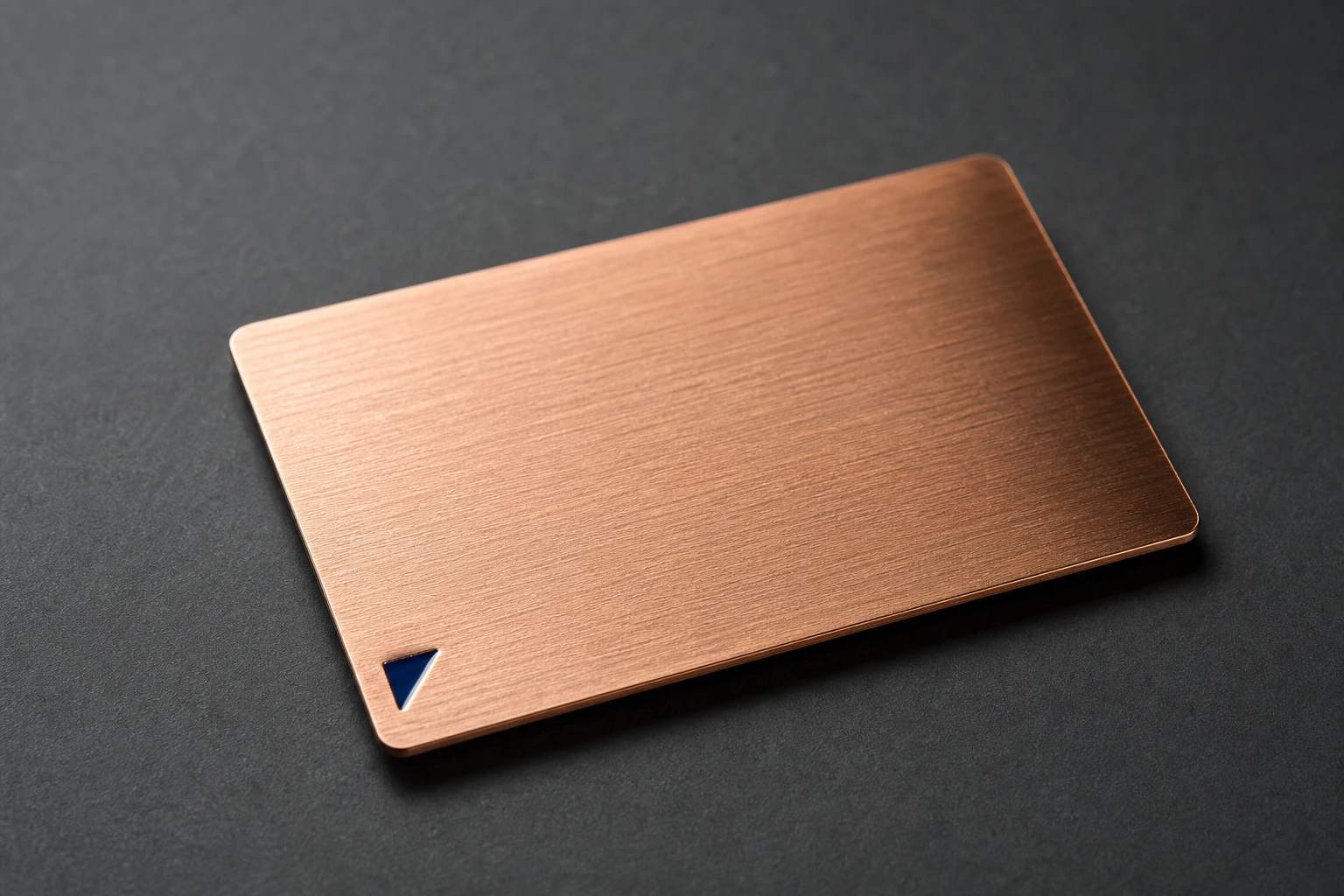
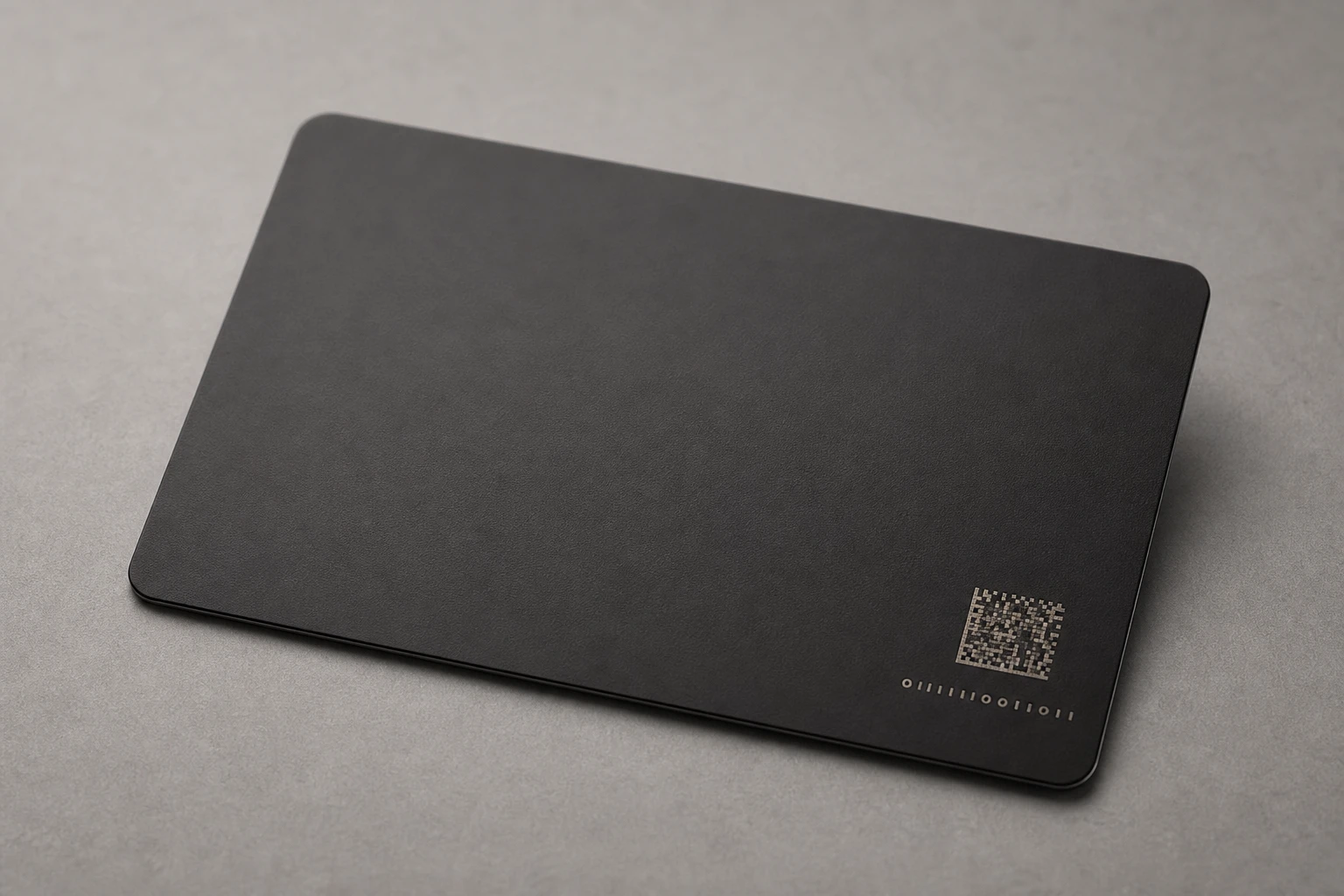
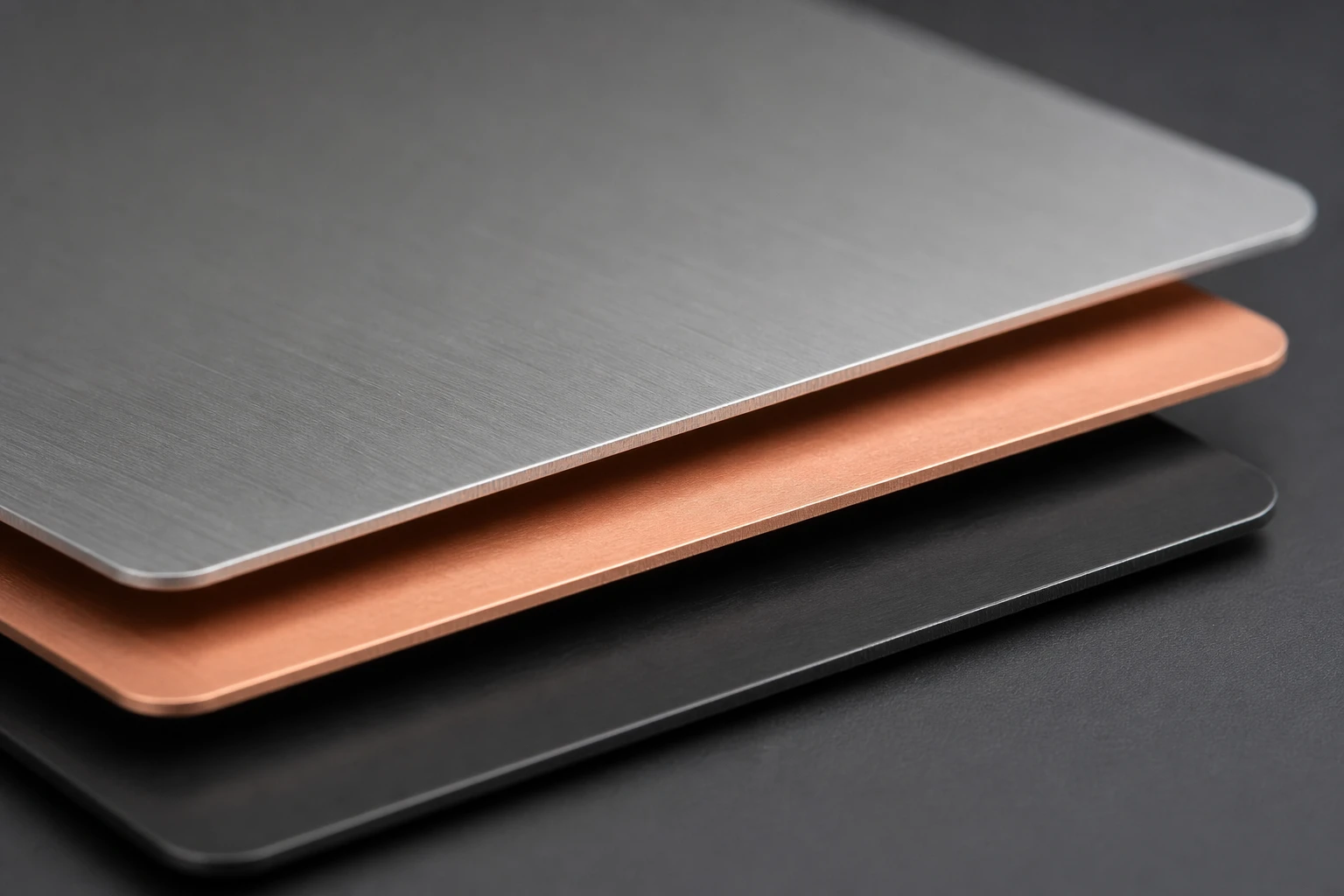
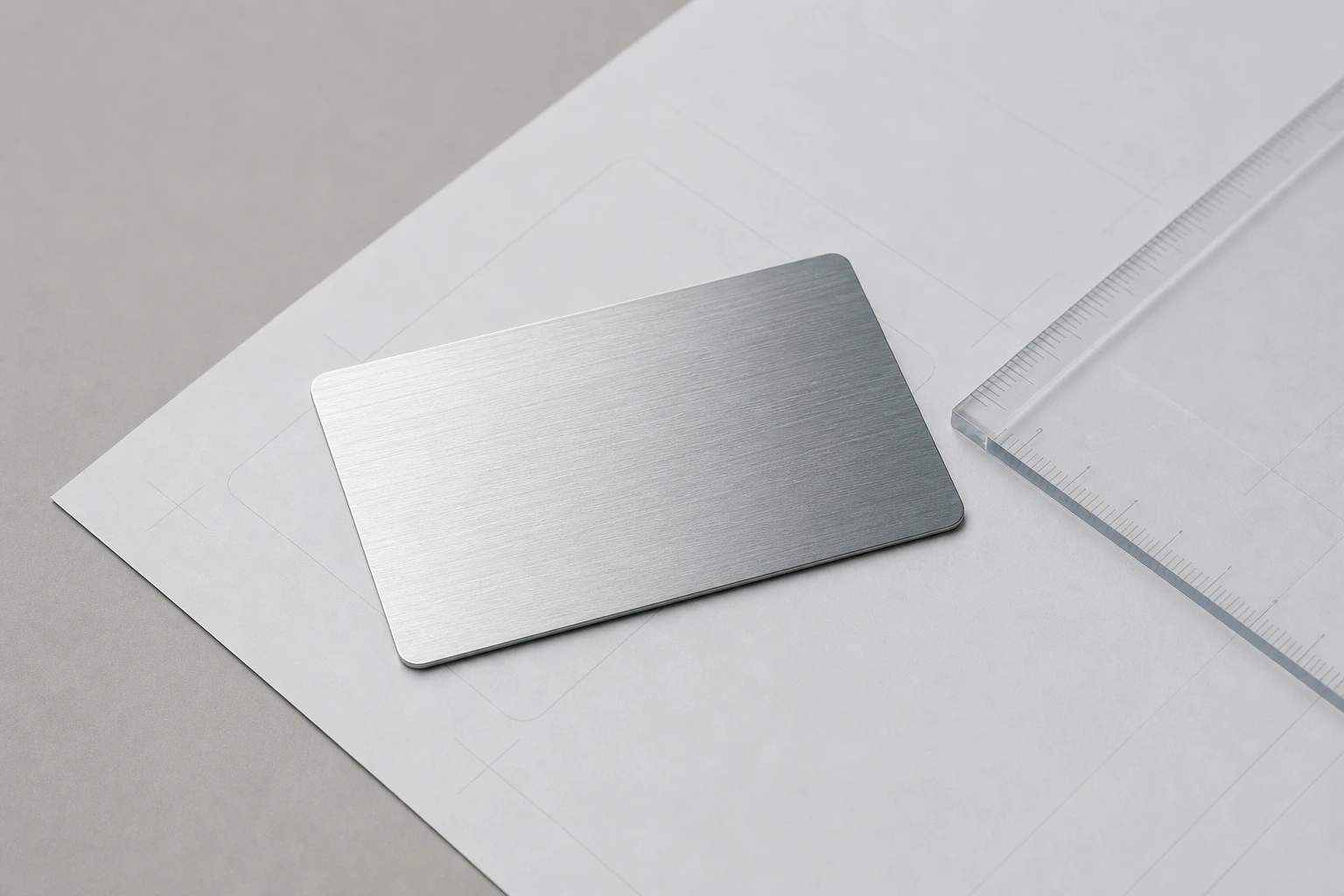
Select the metal surface before locking the marking route.
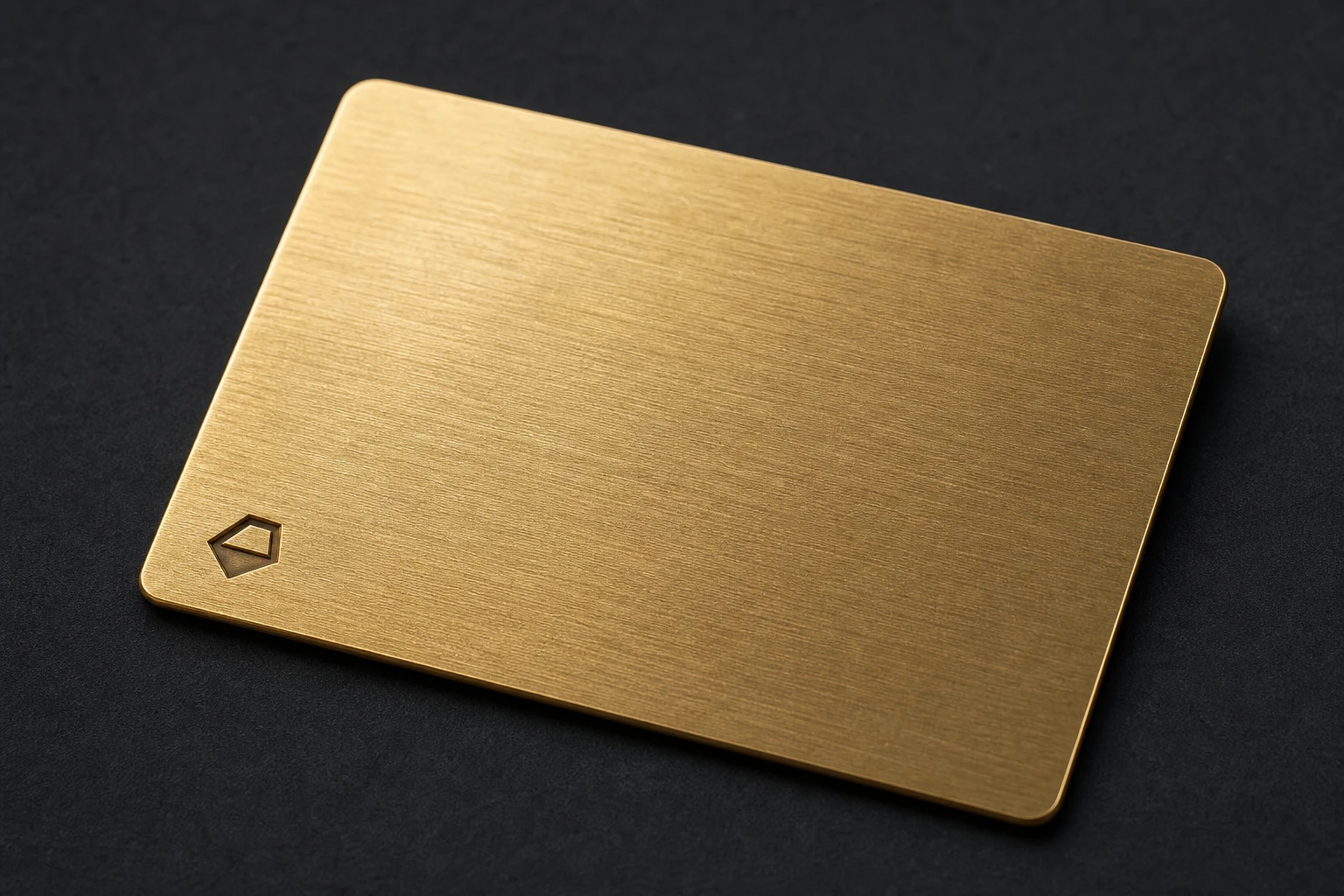
Mirror, brushed, black, gold, brass, copper, titanium, and carbon-hybrid faces all respond differently to laser tone, UV adhesion, white opacity, engraving depth, and scan contrast.
Keep variable data operational.
QR codes, serials, UID references, member IDs, packaging labels, and any NFC or access data should be generated from one approved file and validated against the finished print proof.
Frequently asked questions
Which marking route should a metal RFID card use?
Choose by the selected metal surface, required contrast, data zones, handling, and the intended visual character. Laser and engraving are permanent; UV and white ink support colour and high contrast; QR and serial data add operational fallback.
Can a metal RFID card use full-colour print?
Yes. Full-colour UV artwork, gradients, white underbase, and variable data can be used on approved metal constructions. A physical proof confirms colour, adhesion, edge registration, and scan performance.
What files are needed for metal card artwork?
Provide vector artwork, separate print and laser layers, QR or serial data template, die line where relevant, and the reader or chip requirement so RF-safe placement can be confirmed.
Specification
| Main routes | Laser, deep engraving, UV colour, white ink, enamel fill, QR and serial, edge finishing, artwork files |
|---|---|
| Data options | QR, serial, UID reference, NDEF URL, member ID, access reference, box label |
| Artwork inputs | Vector source, print layers, laser layers, data template, die line, RF-safe zones |
| Approval path | Finish proof, scan test, variable-data sample, encoded working sample, pre-production approval |