Colour-filled detail
Enamel Filled Metal RFID Cards
Enamel fill gives engraved metal marks clear, durable colour without turning the whole card into a generic printed surface. It is a sequence, not a print: engrave the recess, fill it with colour, cure, and level flush — which is why it excels at emblems, borders, and tier details with defined boundaries.
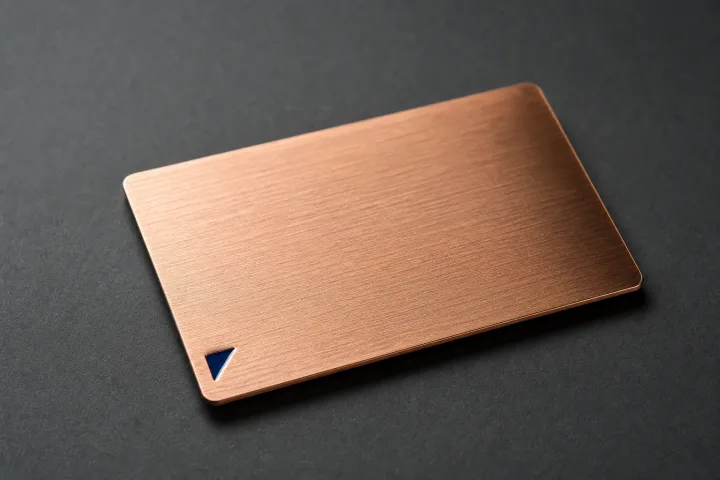
Production detail views
Four enamel fill references for planning the finished metal card.
Navy insets on copper, thin-edge enamel detail, a colour-option trio, and dark-metal accents — fill work across the range.
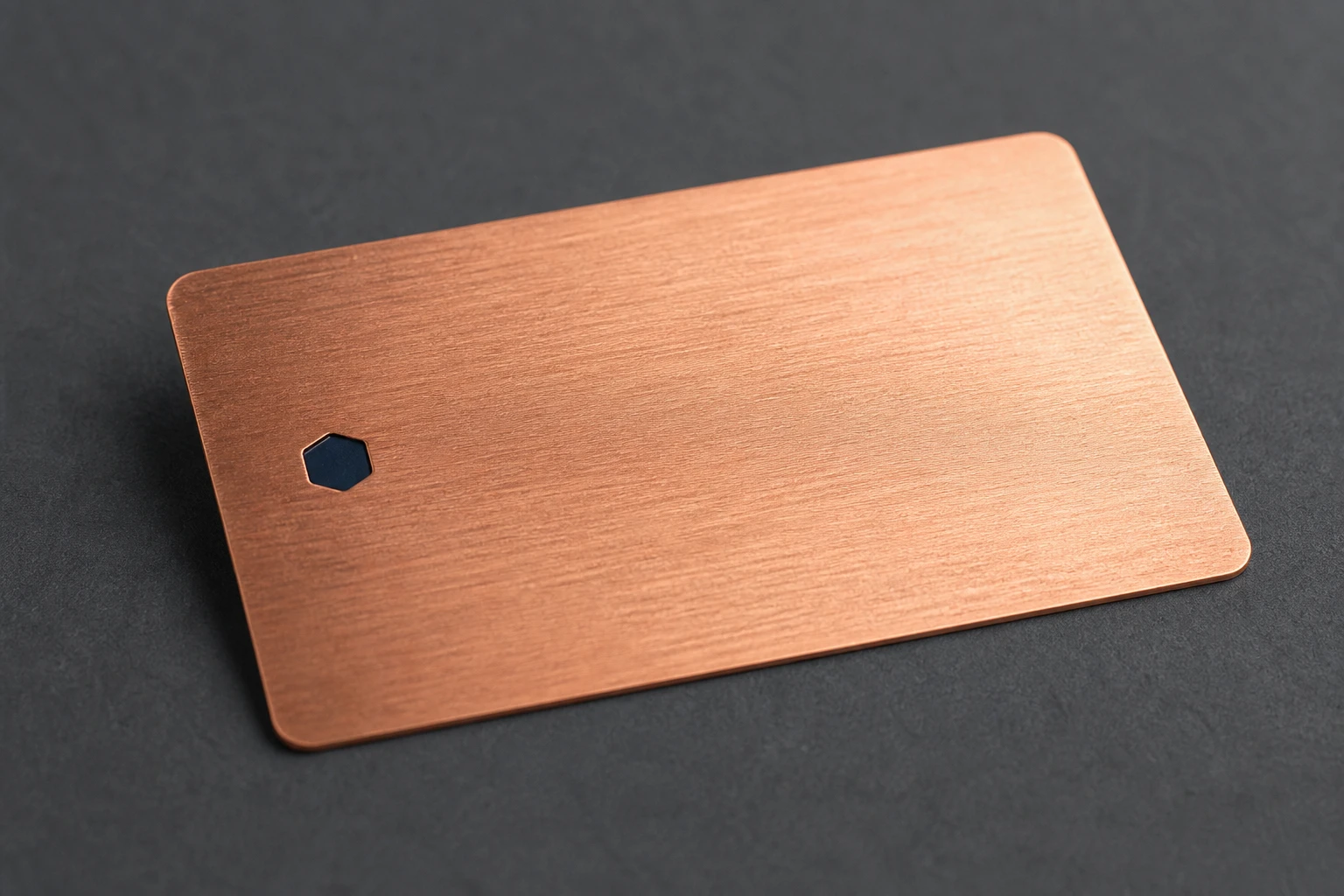
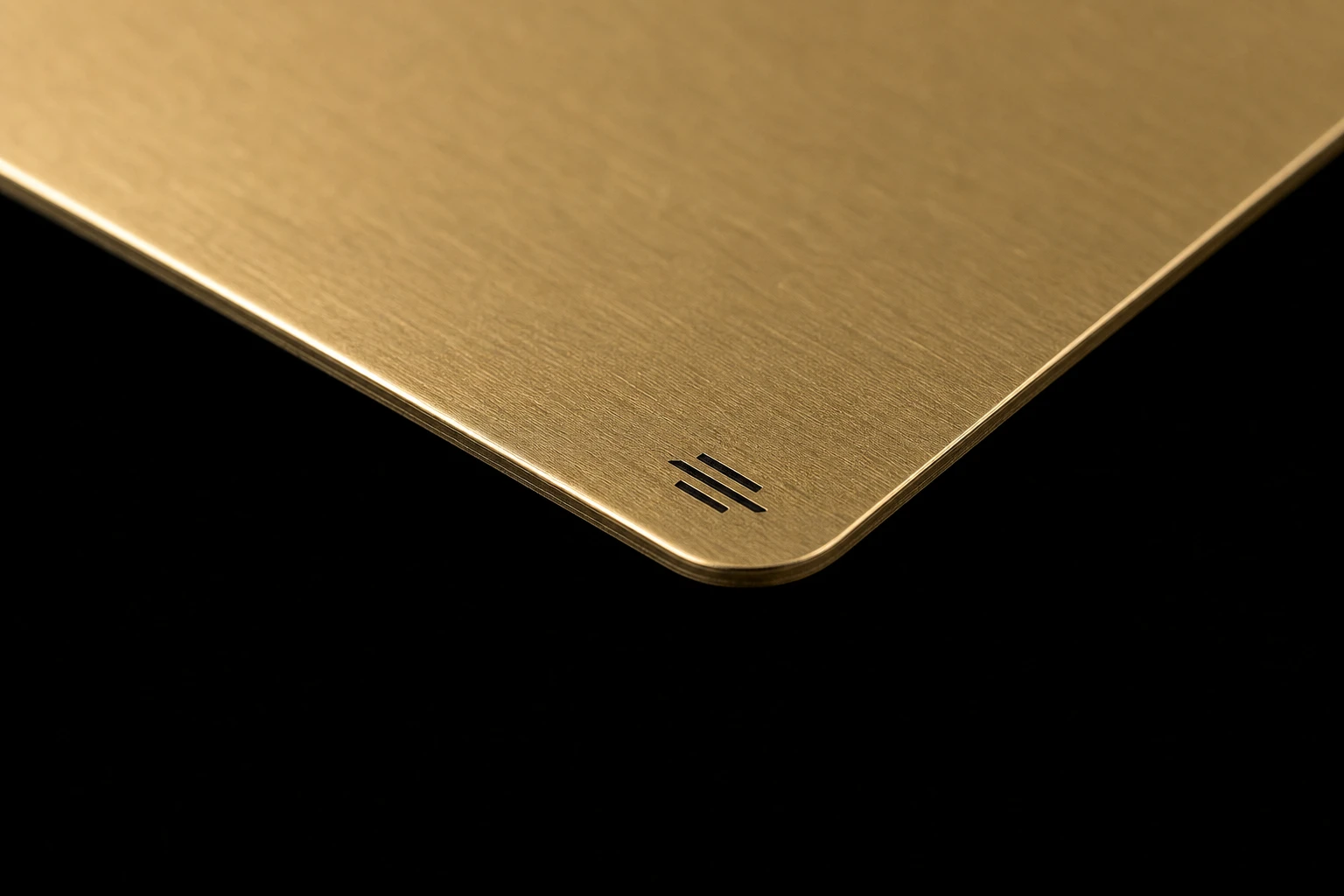
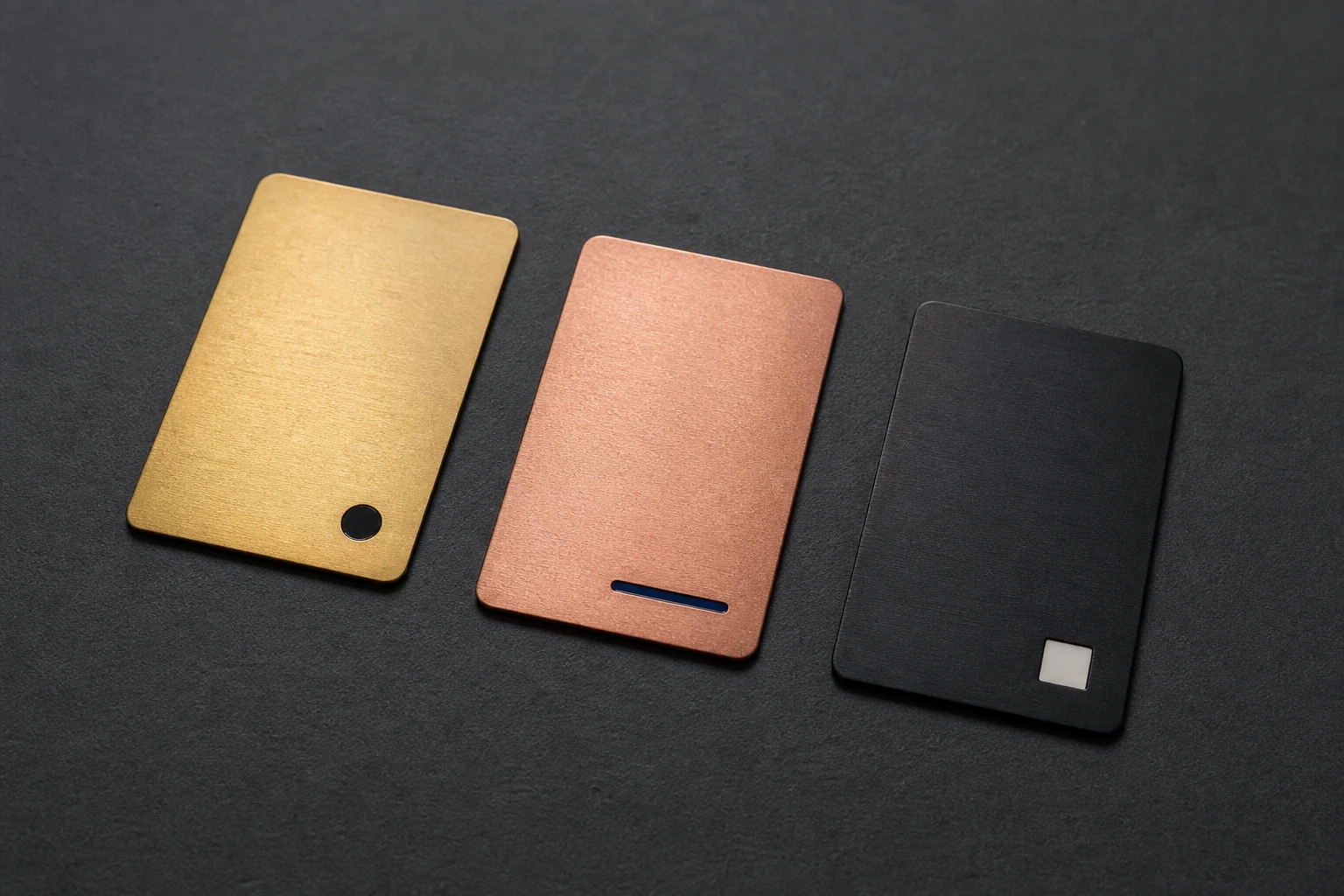
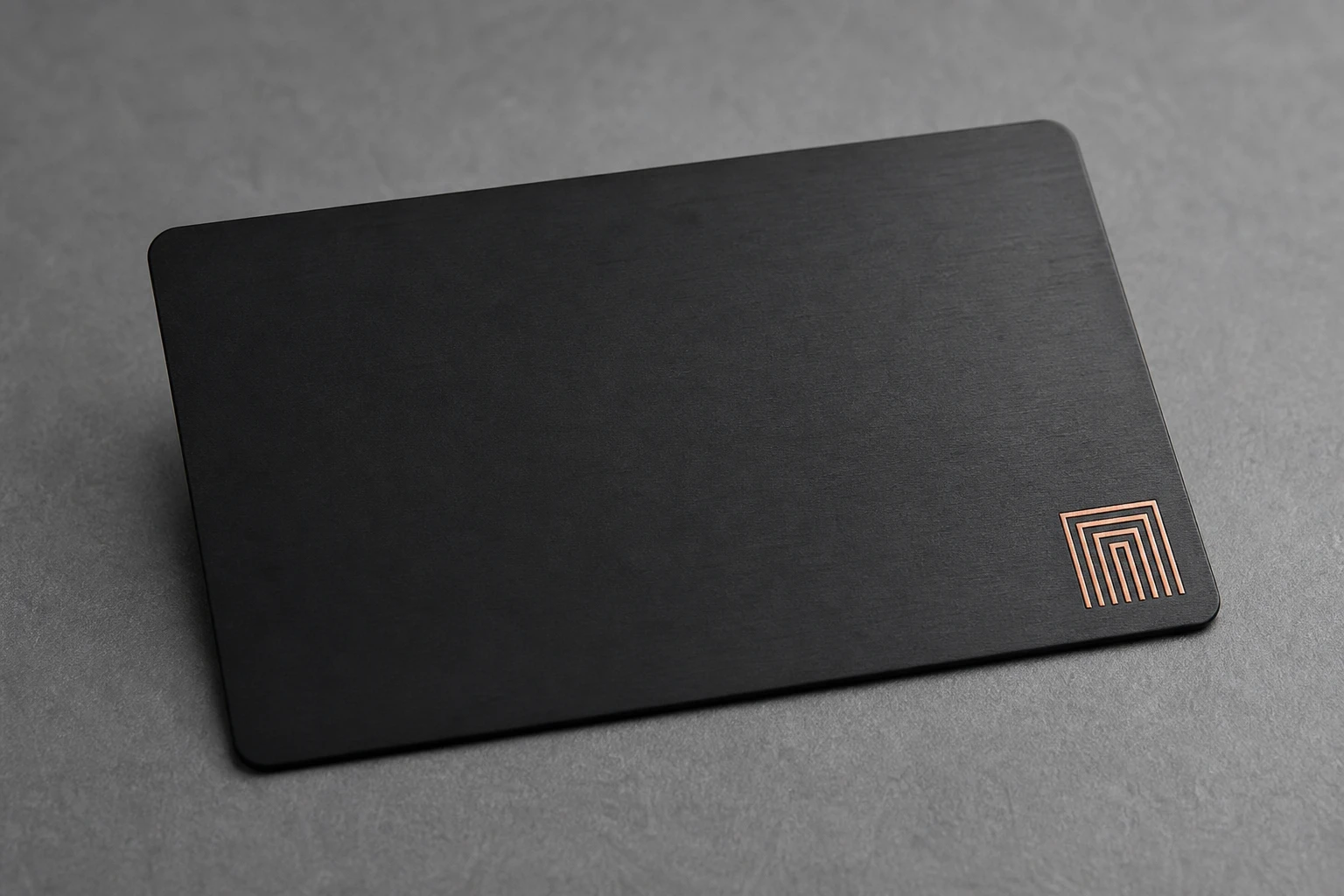
The recess is the dam — fill follows engraving.
Enamel fill is a sequence: the mark is engraved first so the recess forms a dam, colour is filled into it, cured, and levelled flush with the surface. That is why fill zones need engraved boundaries, and why fine, open linework fills poorly — the recess controls where colour can and cannot go.
Prove visual and technical performance together.
Approve engraving geometry, fill adhesion, colour tolerance, and the finished sample's surface feel.
Best uses
- Engraved logos, emblems, borders, tier marks, and small high-impact colour details.
- Premium metal card programs where the finish, data zones, and RF construction need coordinated approval
- Projects with a defined artwork file, variable-data need, and reader or scan validation route
Frequently asked questions
How is colour applied to an engraved metal card?
In sequence: the mark is engraved so the recess forms a boundary, the colour is filled into it, cured, and levelled flush with the surface. The result sits in the metal rather than on it.
What designs suit enamel fill best?
Emblems, borders, tier marks, and short graphic elements with closed shapes. Fine, open linework fills poorly because the recess is what holds the colour — geometry is confirmed at proof stage.
Does the engraved fill zone affect RFID?
The recess is shallow relative to the body, but like all engraving its depth and position are agreed with the shielding stack and antenna-safe area before the fill sample is approved.
Specification
| Format | CR80 85.6 x 54 mm by default; custom outlines after RF review |
|---|---|
| Thickness | 0.3 mm to 0.8 mm depending on construction |
| Minimum order | None — single samples to production runs |
| Production time | About one week after artwork and sample approval |
| RF construction | Antenna, ferrite or hybrid shielding, chip, metal faces, and edge stack specified together |
| Chip routes | NFC tag, standard HF, high-security AES HF, LF compatibility, and selected UHF by reader test |
| Marking options | Laser etch, deep engraving, UV print, white ink, enamel fill, QR, serial, and controlled cut-through |
| Approval flow | Finish sample, encoded working sample, reader check, pre-production approval |
| Primary route | Enamel fill |
| Best use | Engraved logos, emblems, borders, tier marks, and small high-impact colour details. |
| Approval check | Approve engraving geometry, fill adhesion, colour tolerance, and the finished sample's surface feel. |
Related metal RFID card pages
- Laser Engraved Metal RFID Cards
- Deep Engraved Metal RFID Cards
- UV Printed Metal RFID Cards
- White Ink Metal RFID Cards
- QR and Serial Metal RFID Cards
- Metal Card Edge Finishing
- Metal RFID Card Artwork Specs