(02) — Blog
Sell a care plan, not another monthly subscription.
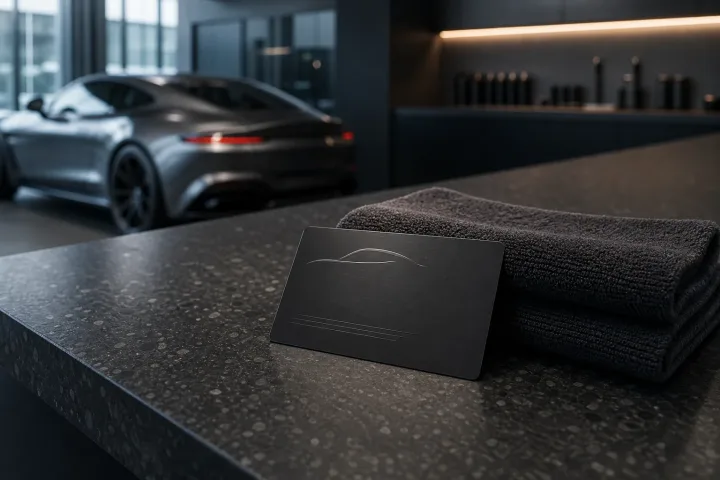
Premium clients often value continuity: the studio already knows the vehicle, coating, finish history, preferred products, storage conditions, and next recommended service. Build the membership around that managed schedule. The card then represents a useful relationship — priority booking, reserved maintenance windows, collection coordination, inspection reminders, or preferred rates on defined services — rather than a vague promise of discounts.
(03) — Blog
Keep the vehicle record behind the card, not printed on it.
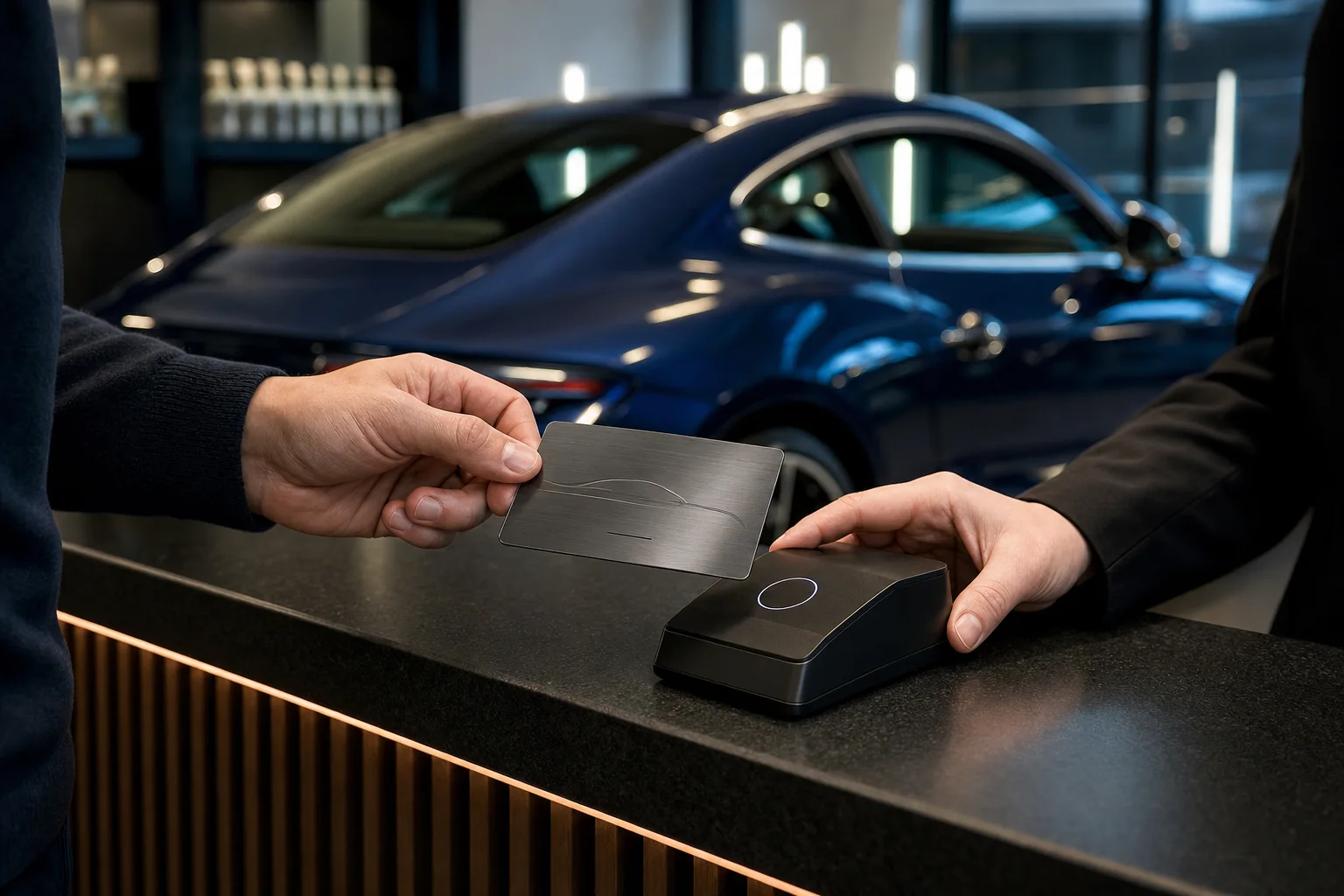
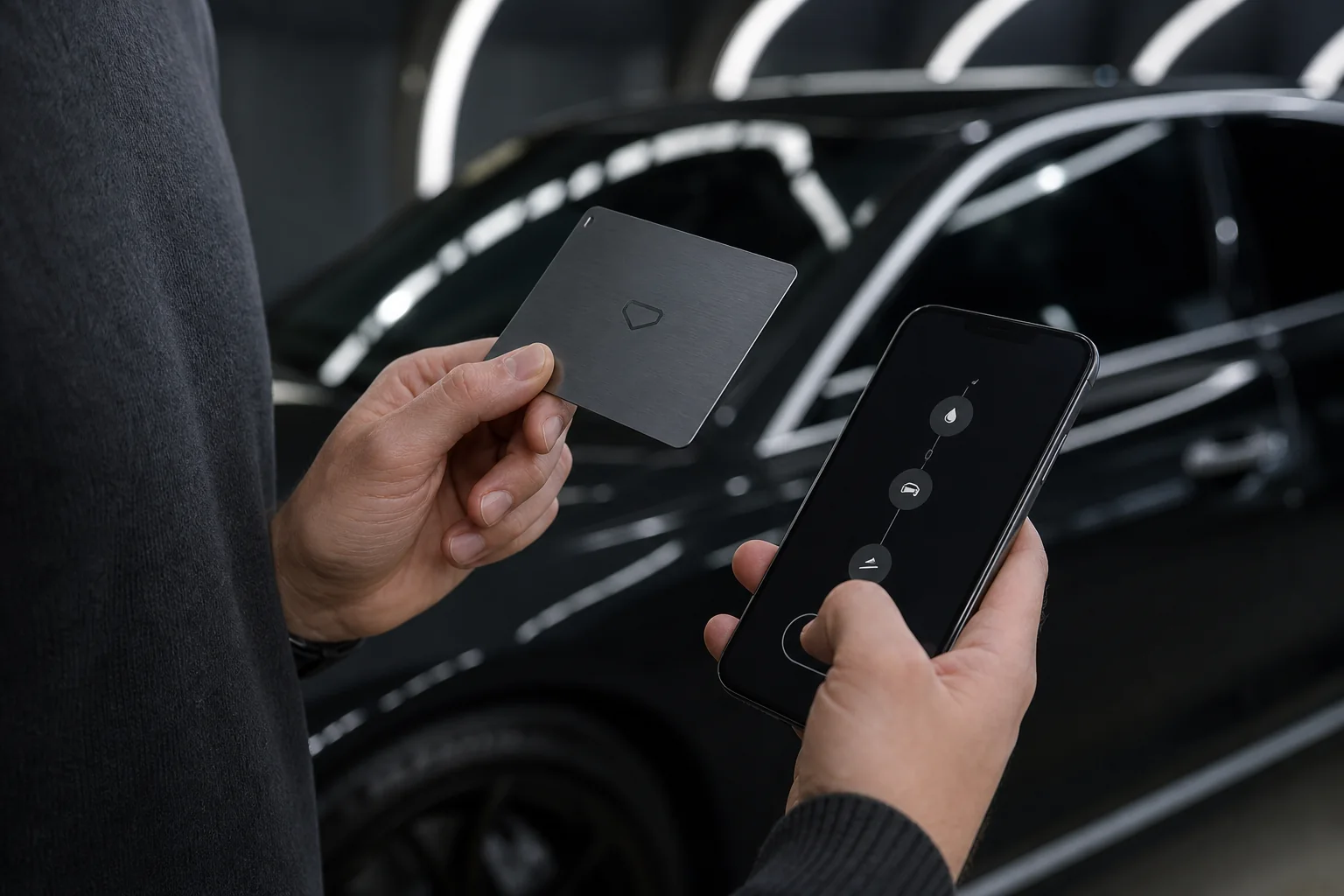
A phone-readable NFC or QR route can open a secure client portal, booking page, or vehicle-care summary. Avoid printing sensitive vehicle details on the card. Use a member ID or controlled link, then let the studio system decide what the client and staff can view. If one client has several cars, the portal should hold the garage while the physical credential identifies the member.
(04) — Blog
Make tiers correspond to real service capacity.
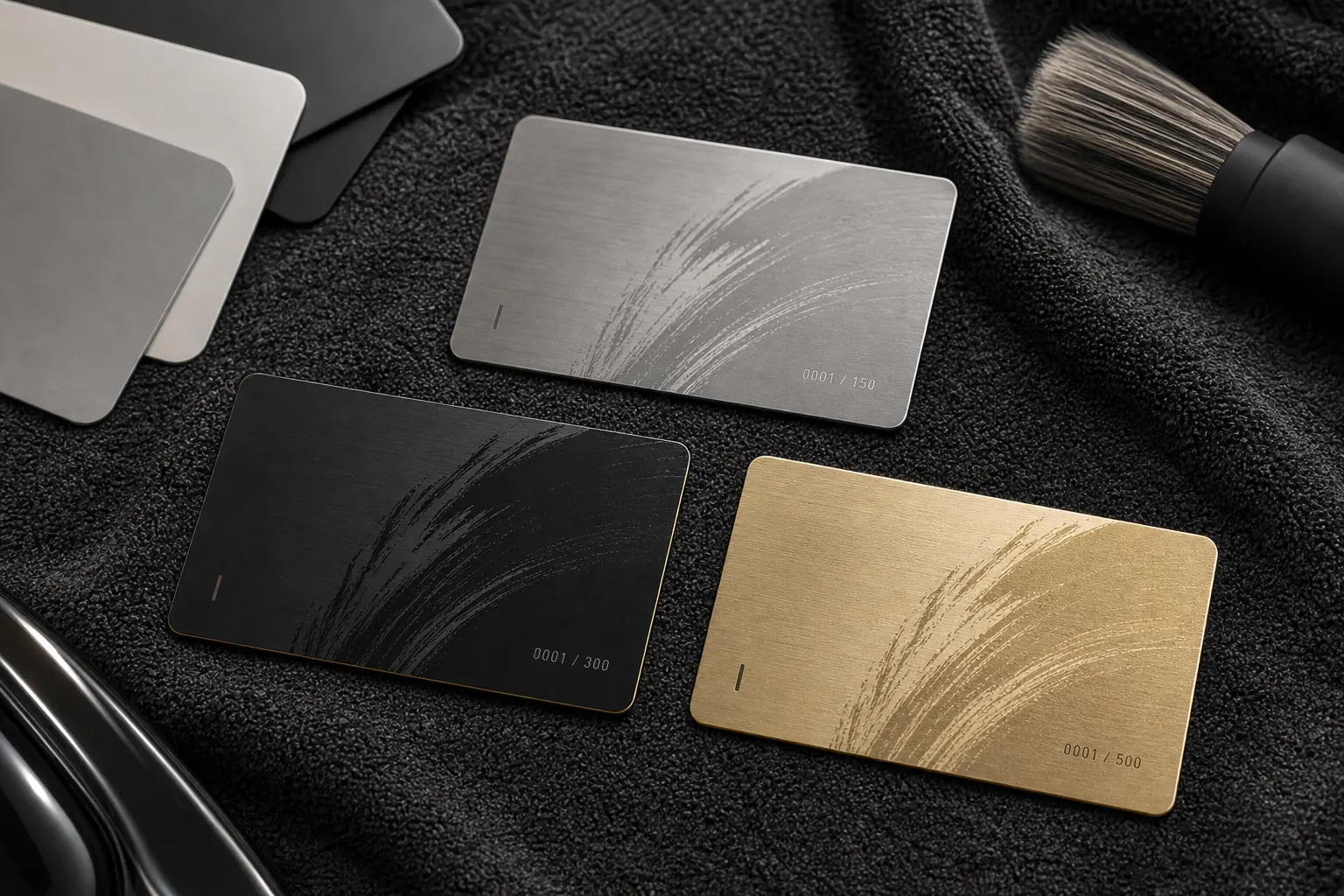
A black, steel, or gold card feels credible only when the underlying tiers are operationally distinct. Separate them by visit frequency, inspection depth, collection radius, emergency availability, storage preparation, or access to specialist services. Do not promise unlimited priority if the studio cannot protect appointment capacity. The physical tier should make the service rule easier for staff to apply.
(05) — Blog
Use the card at the moments clients actually remember.
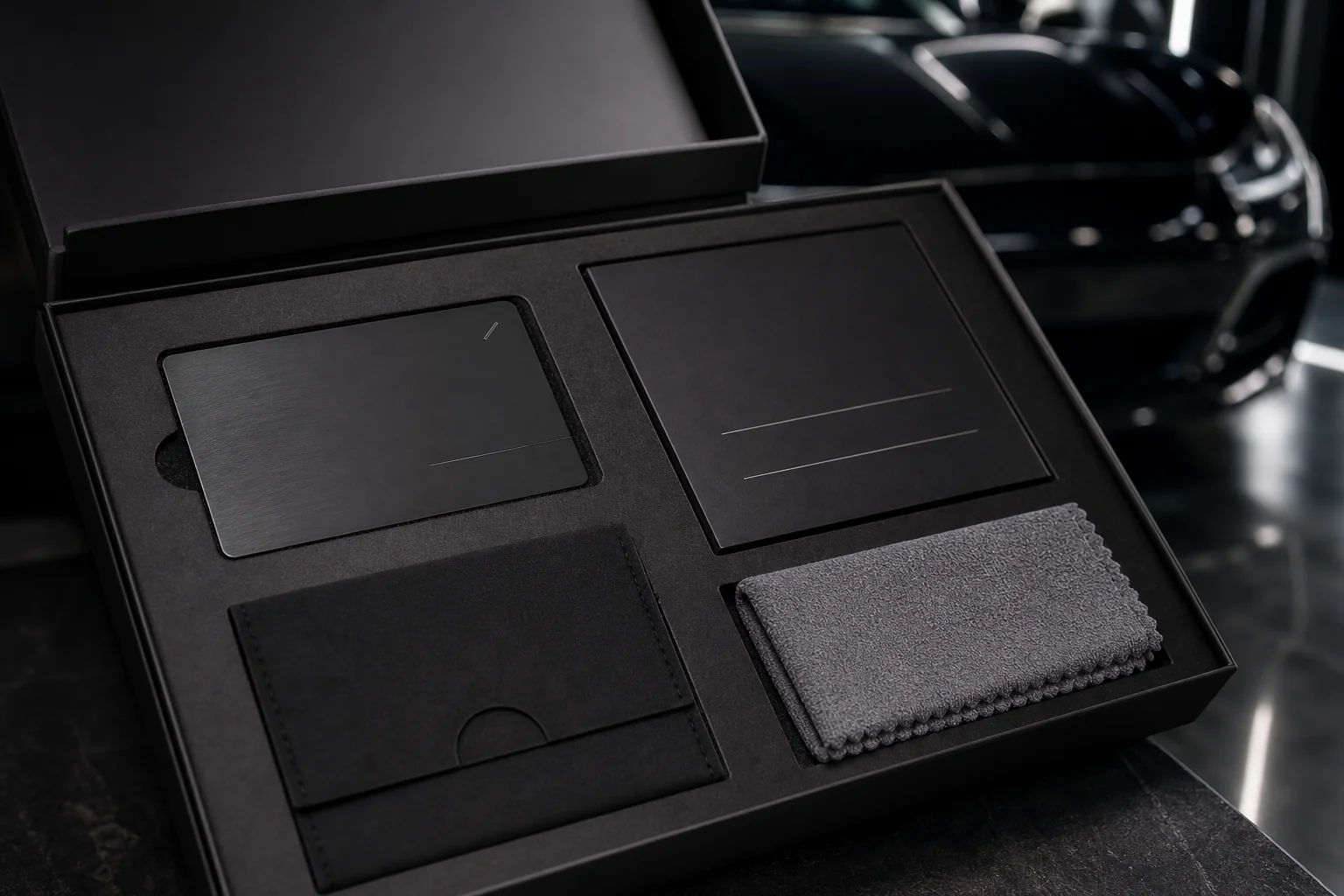
Issue it with the first inspection or annual plan, present it in a restrained box, and use it again at check-in, handover, and renewal. The card can tap to booking at home, while a QR or serial gives reception a visible fallback. Good packaging explains the member process in a few lines; it should not bury the client under a catalogue of services.
(06) — Blog
Measure whether membership improves the relationship.
Track renewal, visit regularity, advance-booking behavior, plan upgrades, and referral participation. The card itself does not create loyalty. It makes a well-designed program easier to remember and easier to operate. Start with a small founder group, observe how clients and staff use the credential, then adjust the portal and benefits before expanding.