Tap-to-profile identity
Metal NFC Business Cards
A metal NFC business card is a physical object with a digital job: open the right profile at the exact moment of introduction. It is specified around its destination, phone behavior, chip memory, NDEF data, and metal RF stack, so the card looks considered and still works when it is handed over.
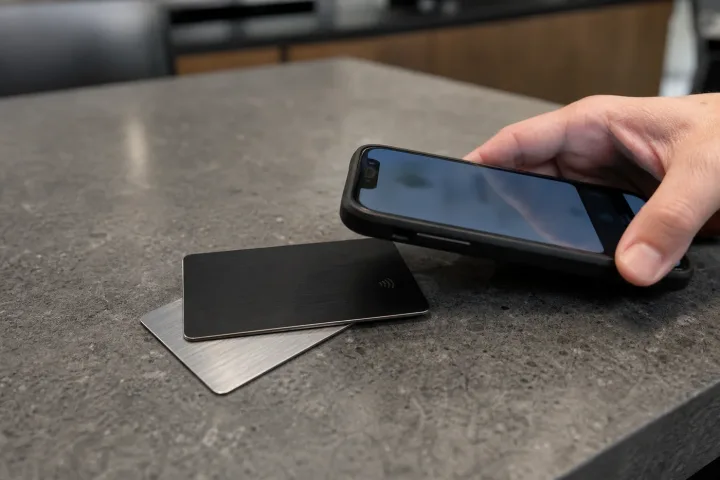
NFC identity cards
Make the tap, the handover, and the digital destination feel like one interaction.
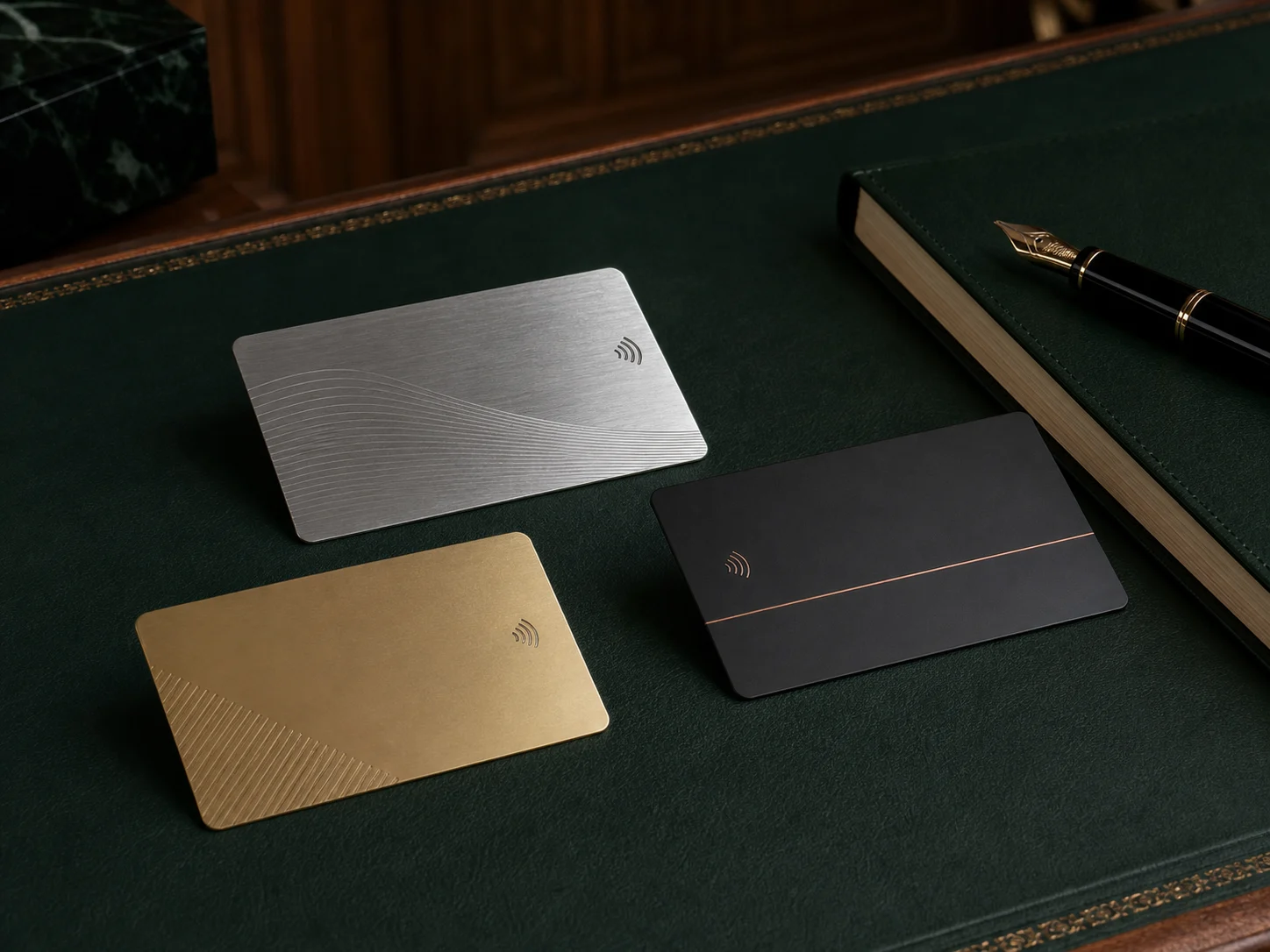
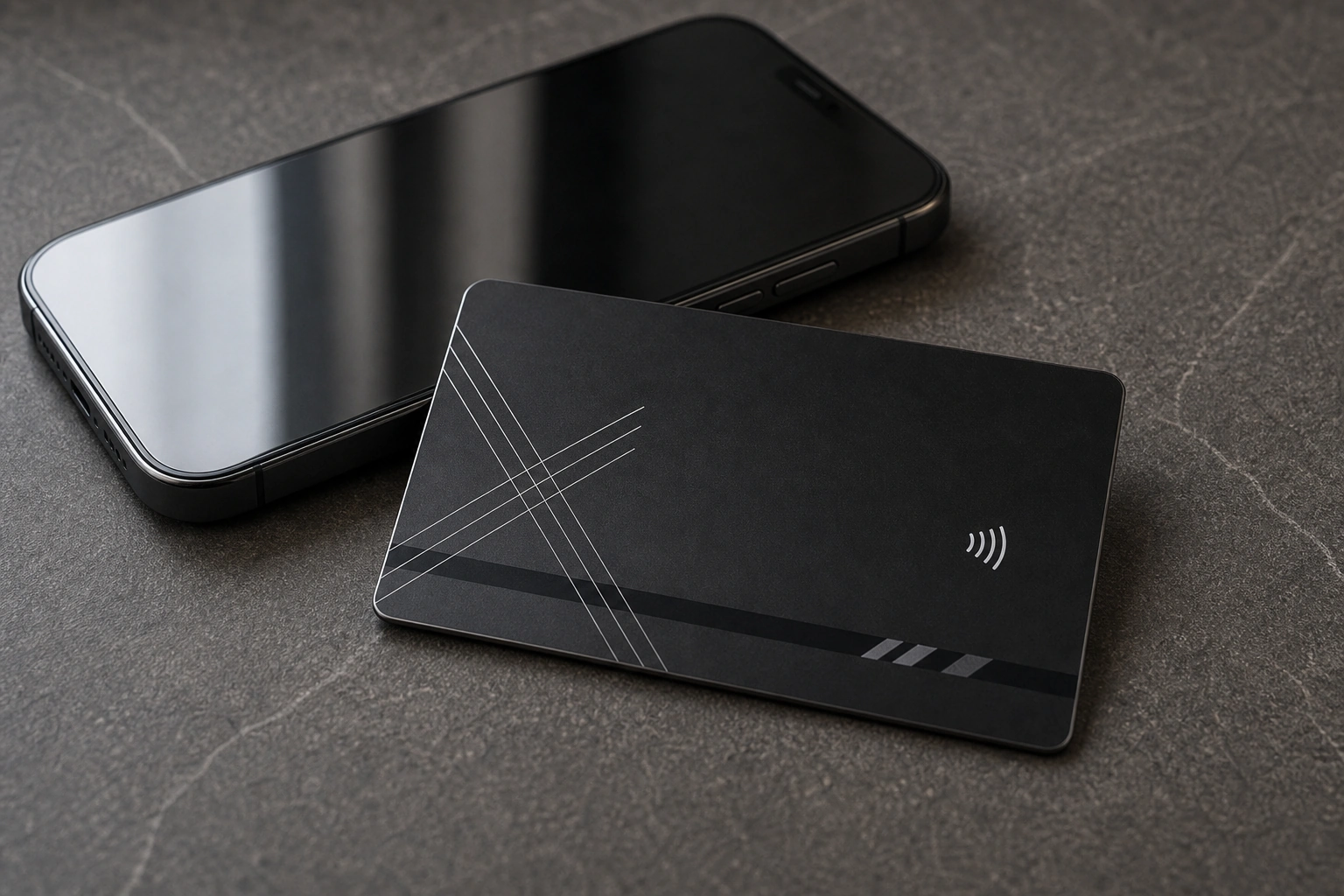
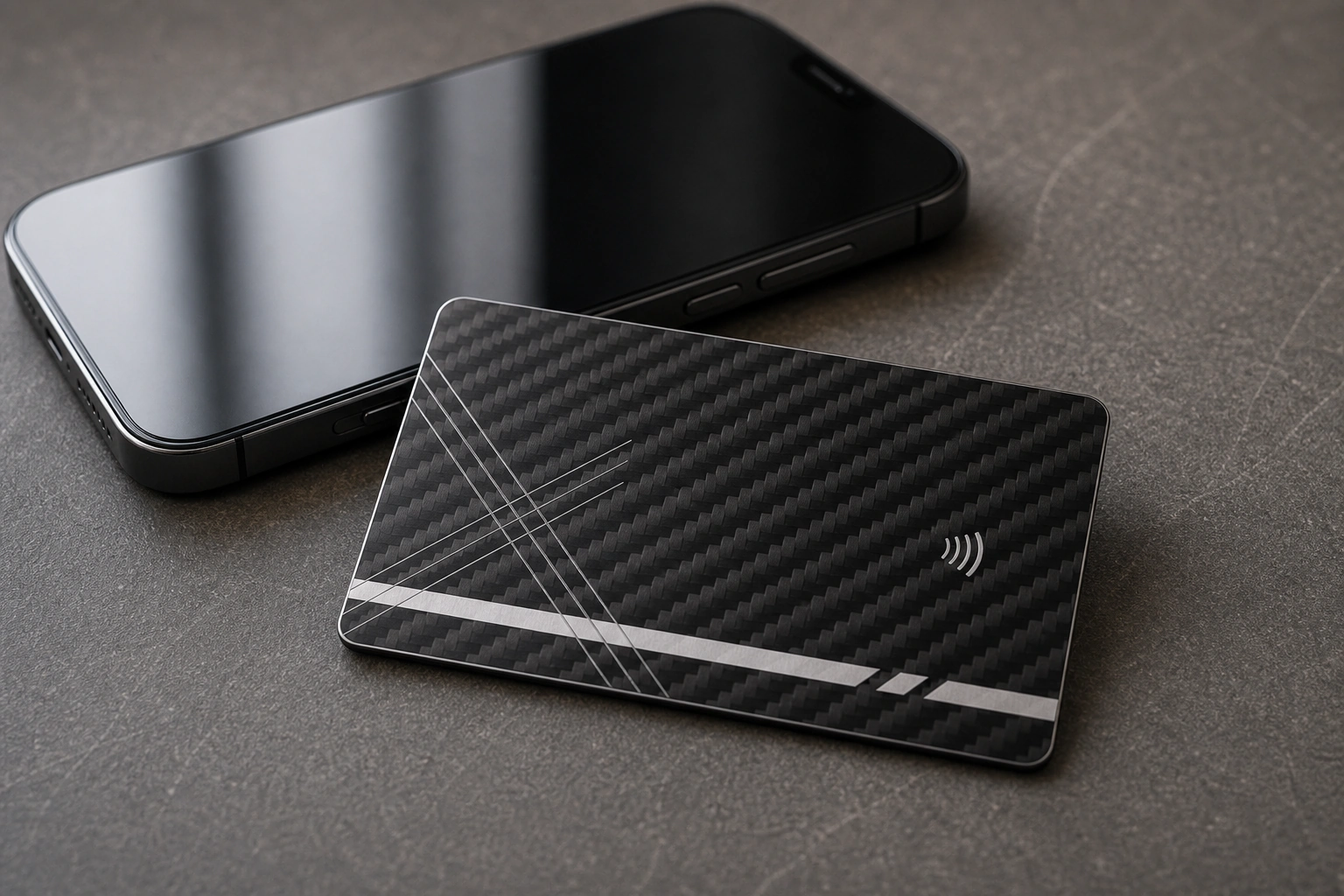
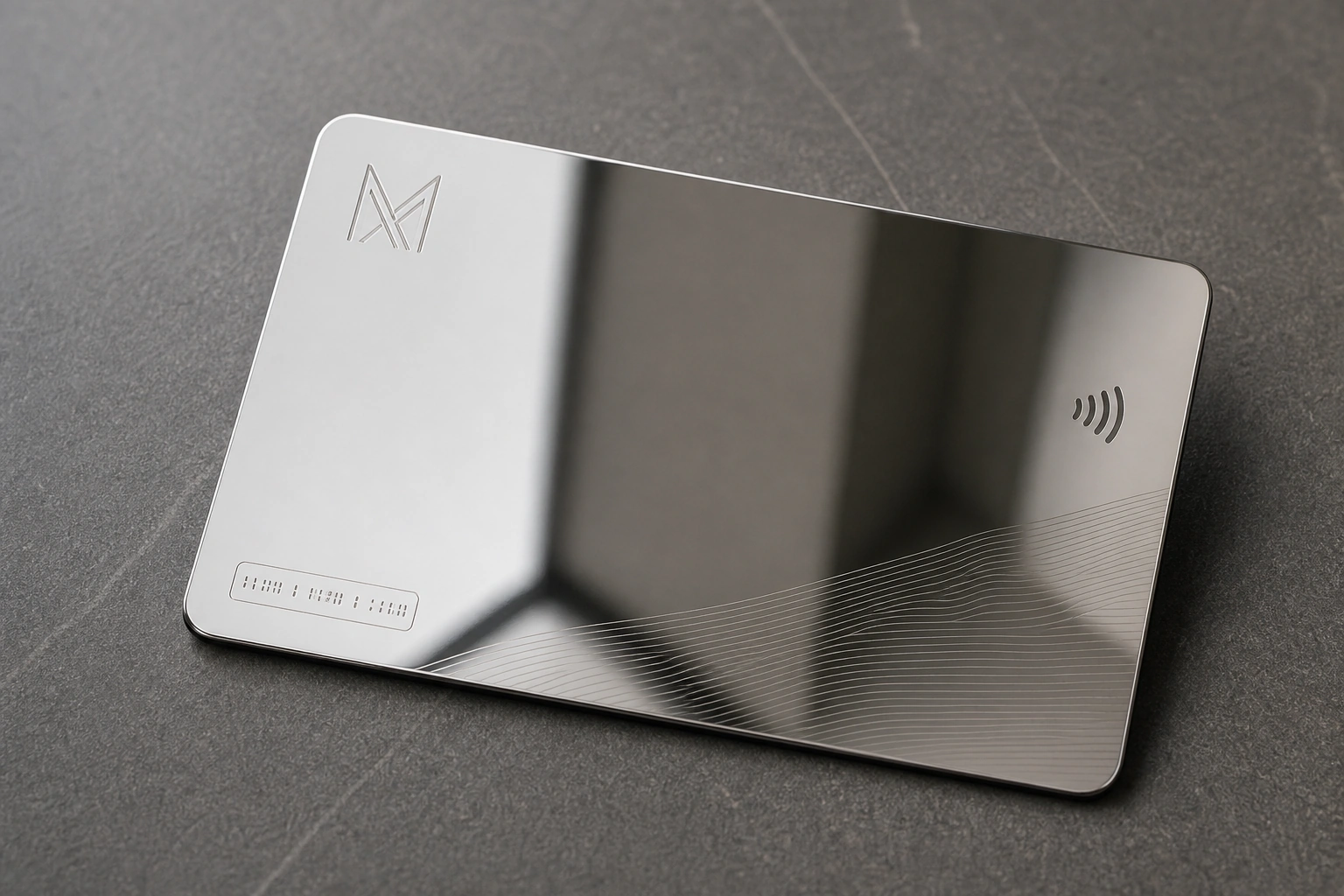
Compare a real phone tap, a face-to-face handover, portfolio presentation, team consistency, material performance, print direction, and surface detail before approving the NFC construction.
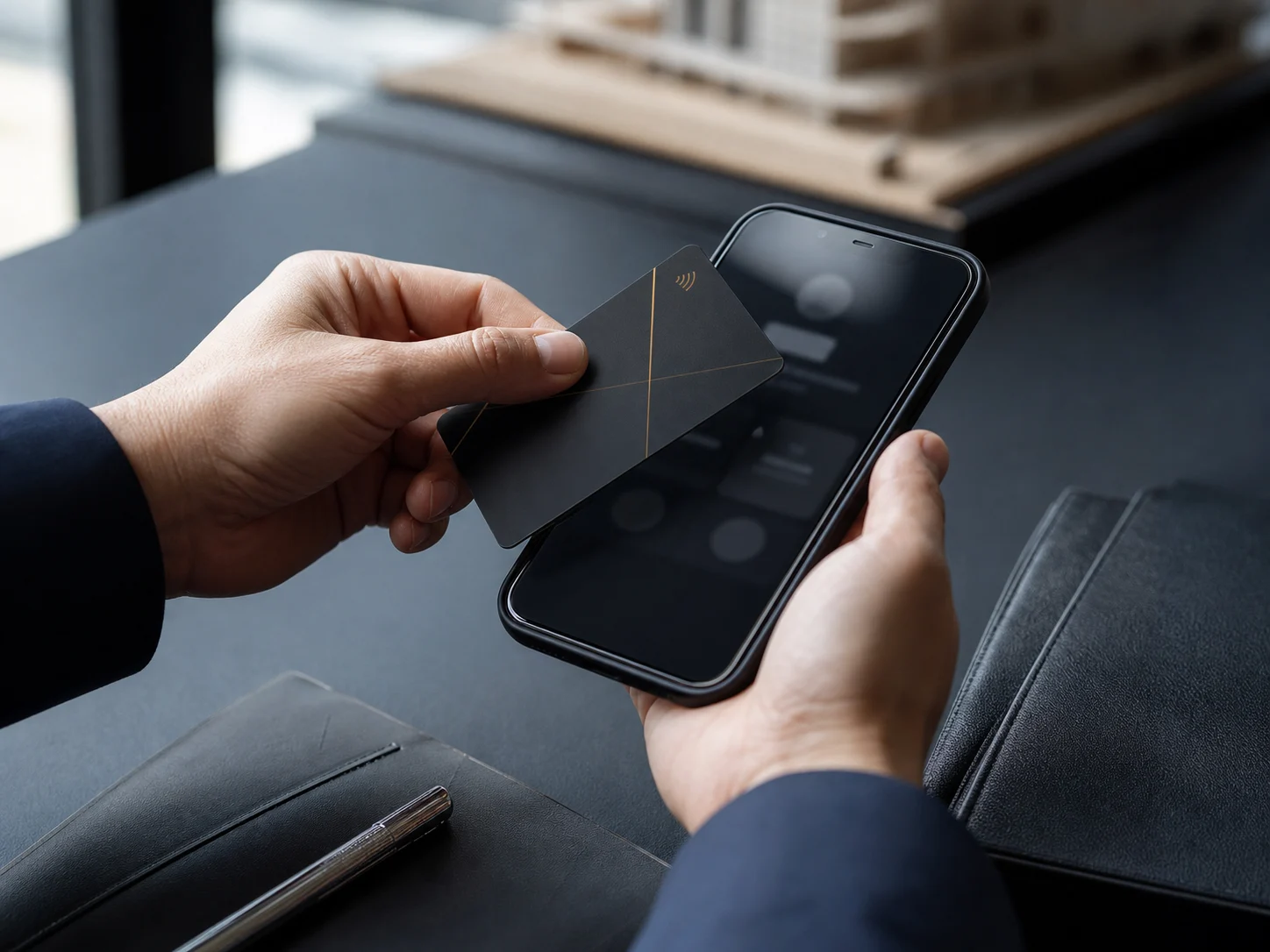
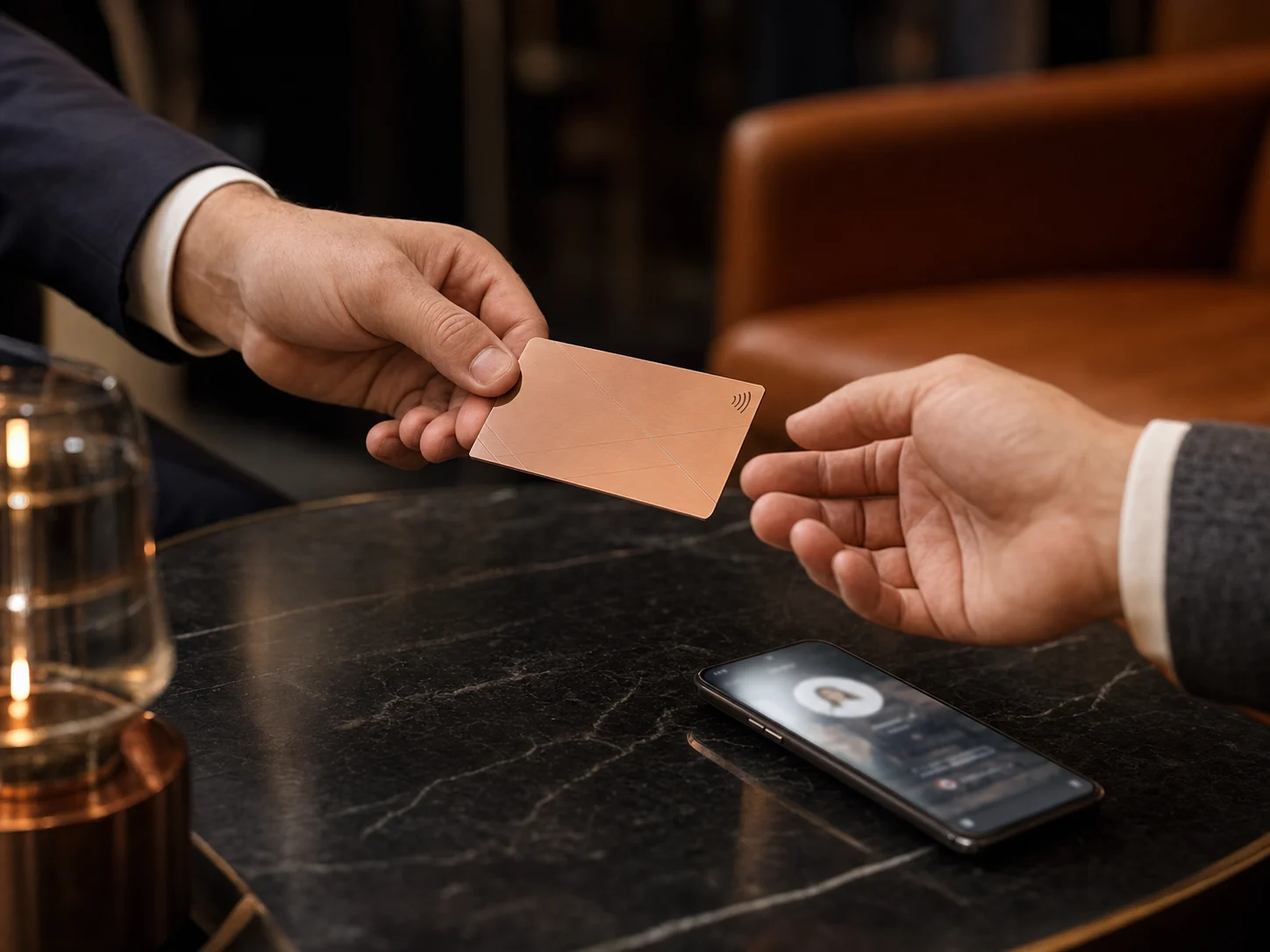
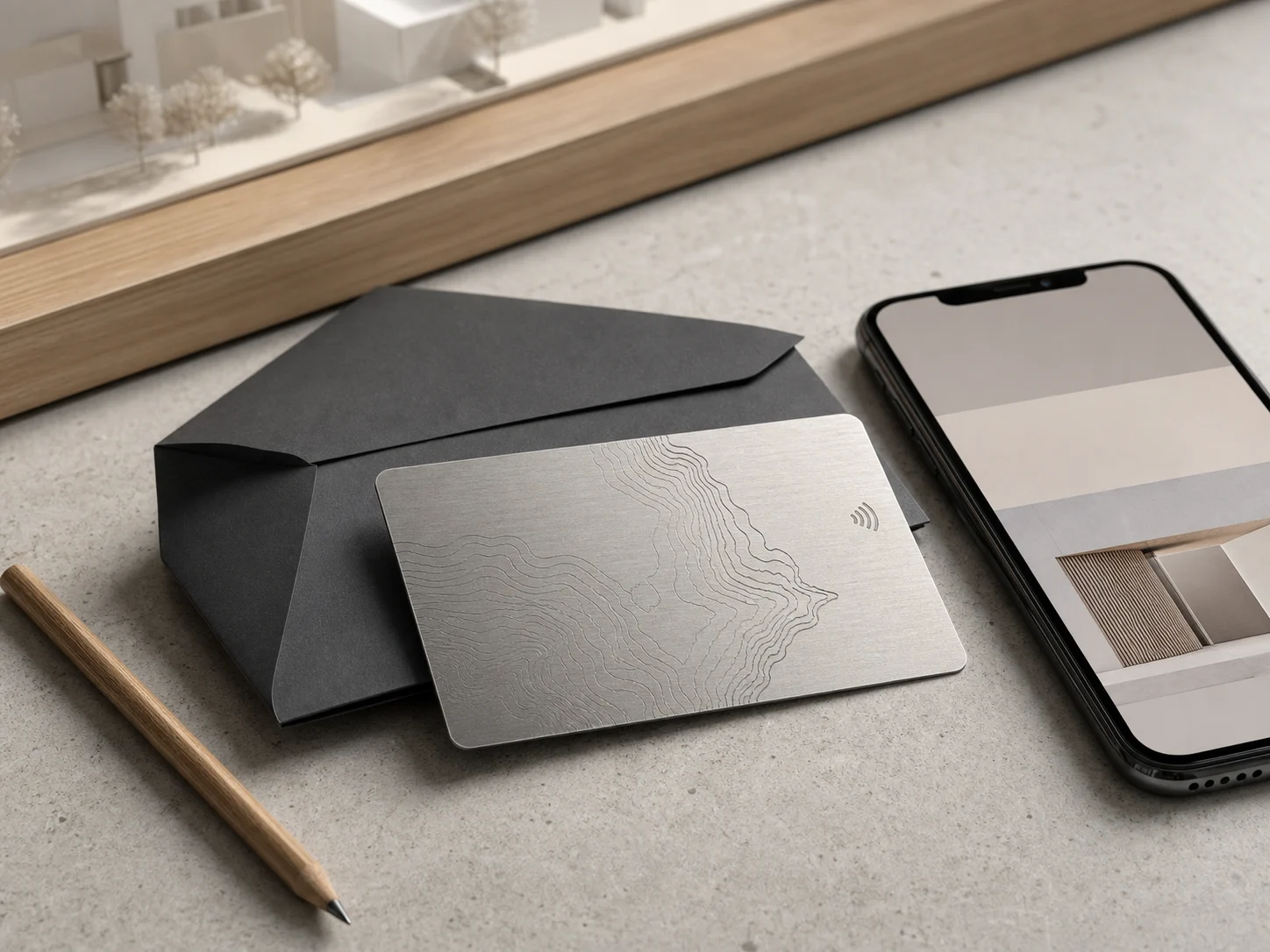
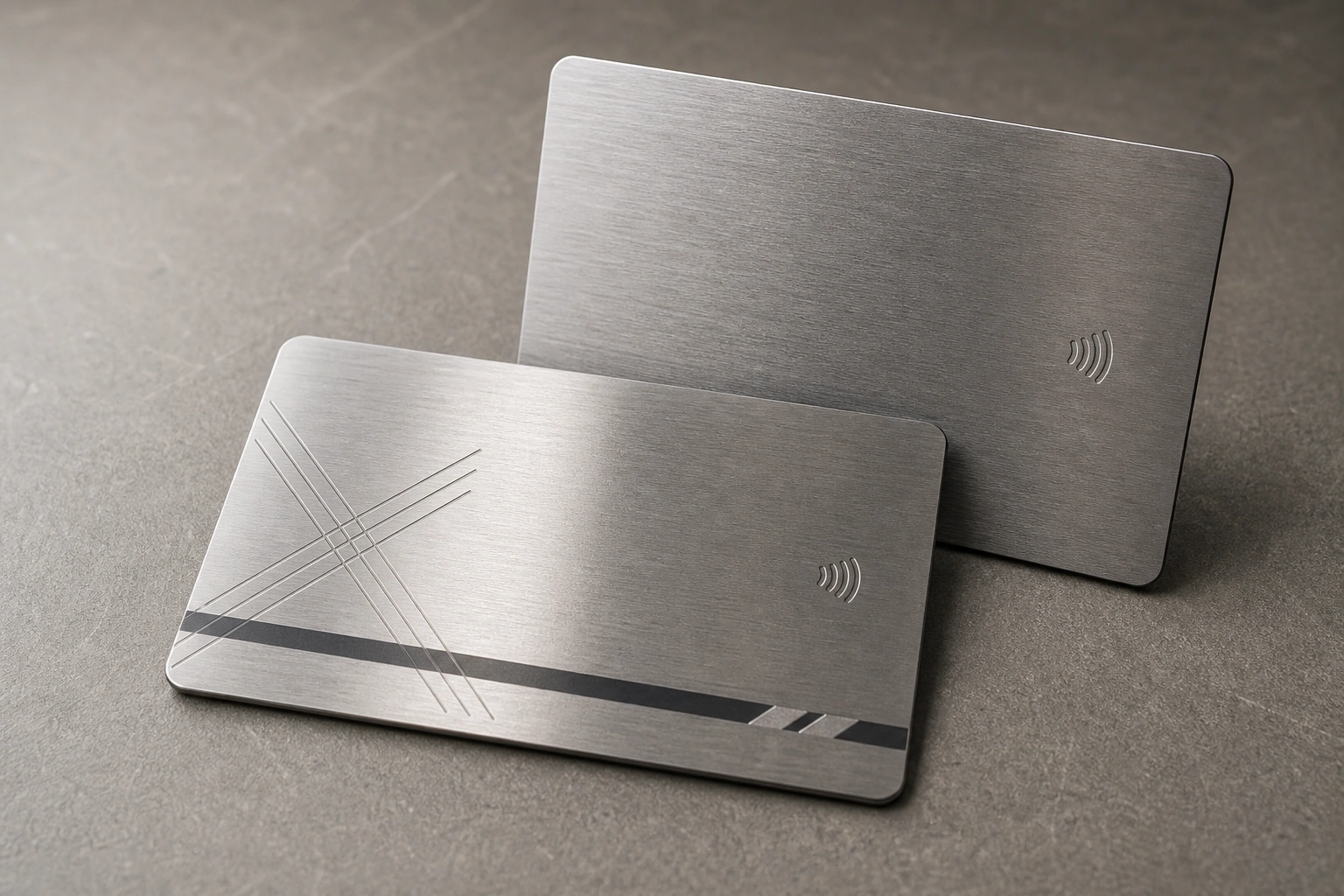
Design the destination before the metal card.
The tap can open a profile, vCard, portfolio, booking page, product story, secure landing page, or campaign-specific URL. Confirm the destination, ownership, redirect behavior, and future update process before encoding the first card.
A phone tap is a real technical requirement.
Metal changes NFC behavior. The chip, antenna, shielding route, card thickness, and intended phone targets should be tested together, including the physical tap location a recipient can understand without instruction.
Keep the physical card disciplined.
The strongest metal NFC business cards stay visually quiet: a considered finish, an accurate contactless cue, and only the identity information that supports the introduction. The tap destination does the heavier storytelling.
Best uses
- Founders, executives, advisors, and client-facing teams
- Private members clubs and high-value relationship programs
- Automotive, technology, architecture, finance, and luxury service brands
- Small teams that need a premium card with a controlled digital destination
Frequently asked questions
Can a metal NFC business card tap an iPhone?
Yes, when the NFC stack is engineered for the metal body and tested on the intended phone targets. The tap location and payload should be approved with the finished sample.
Can the URL be changed later?
Yes, if the NDEF record points to a URL you control or to a managed redirect. That update route should be decided before encoding.
Specification
| Format | CR80 85.6 x 54 mm by default; custom outlines after RF review |
|---|---|
| Thickness | 0.3 mm to 0.8 mm depending on construction |
| Minimum order | None — single samples to production runs |
| Production time | About one week after artwork and sample approval |
| RF construction | Antenna, ferrite or hybrid shielding, chip, metal faces, and edge stack specified together |
| Chip routes | NFC tag, standard HF, high-security AES HF, LF compatibility, and selected UHF by reader test |
| Marking options | Laser etch, deep engraving, UV print, white ink, enamel fill, QR, serial, and controlled cut-through |
| Approval flow | Finish sample, encoded working sample, reader check, pre-production approval |
| NFC data | NDEF URL, vCard, profile ID, landing page, campaign tag, or customer-specific payload |
| Phone approval | Tested on agreed iPhone and Android targets with a clear tap zone |
| Finish fit | Matte black, brushed steel, mirror, gunmetal, carbon hybrid, gold, or rose gold |
| Surface hierarchy | Understated identity detail, clear contactless cue, controlled linework, and clean tactile finish |
Related metal RFID card pages
- Metal Hotel Key Cards
- Metal Membership Cards
- Metal Event Passes
- Metal Loyalty Cards
- Metal RFID ID Badges
- Metal Gift Cards
- Custom Metal RFID Cards