Personalization guide · 8 min read
What Can Be Personalized on a Metal Automotive Card?
Personalization turns a metal card from a branded object into a controlled member credential. The important question is not how much data will fit, but which details help members, staff, readers, scanners, and the issuing system do their jobs safely.
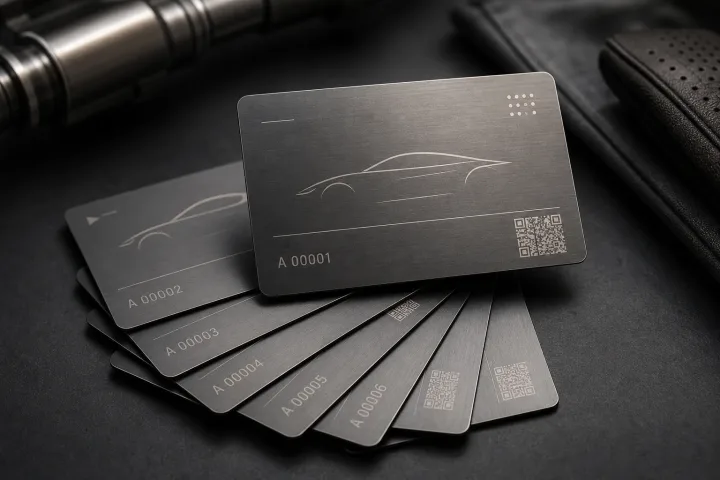
Industry program views
Treat artwork, encoded data, and packaging as one record.
Laser personalization, variable-data checks, QR contrast, and card-to-kit matching all depend on a controlled source file and a clear exception process.
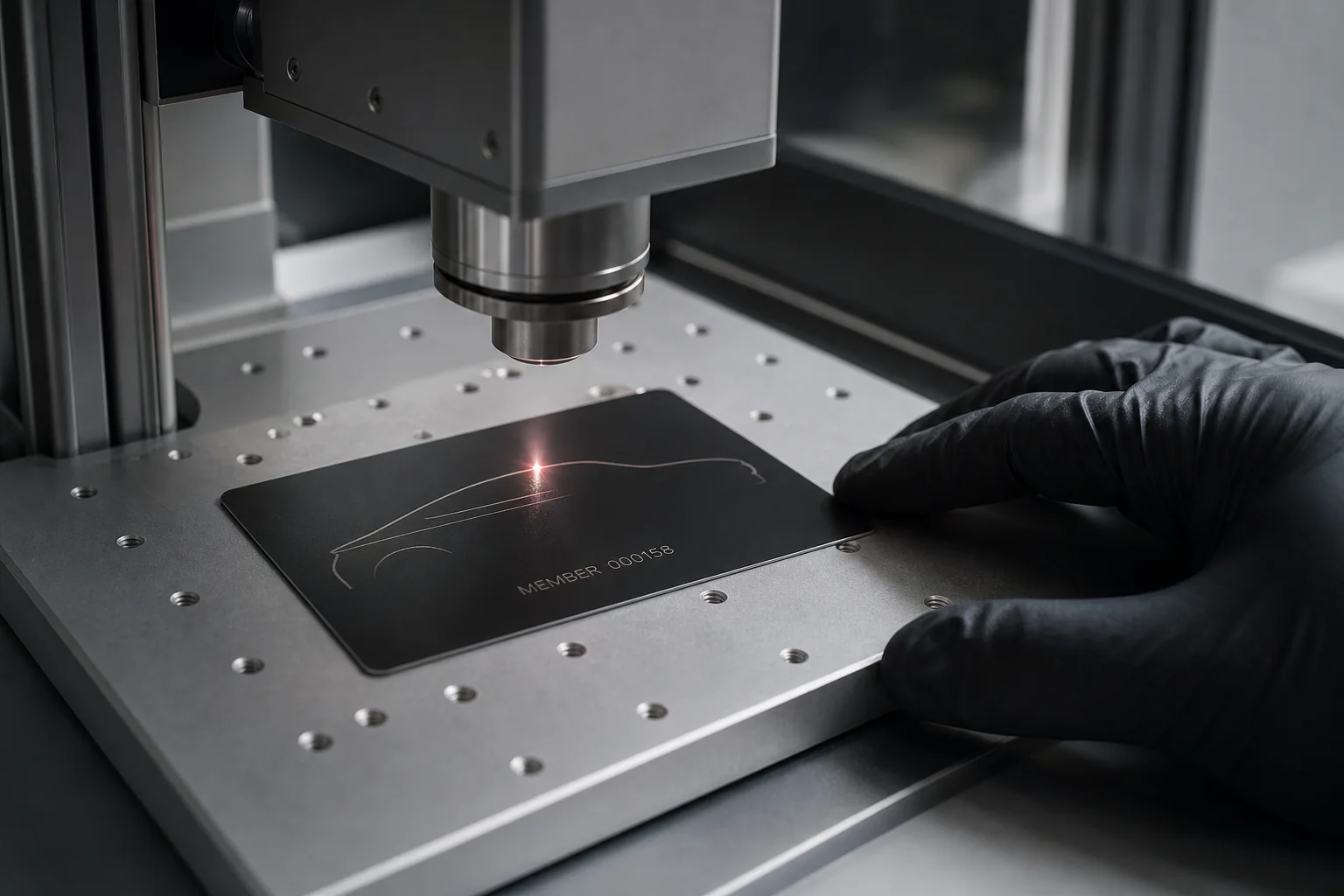
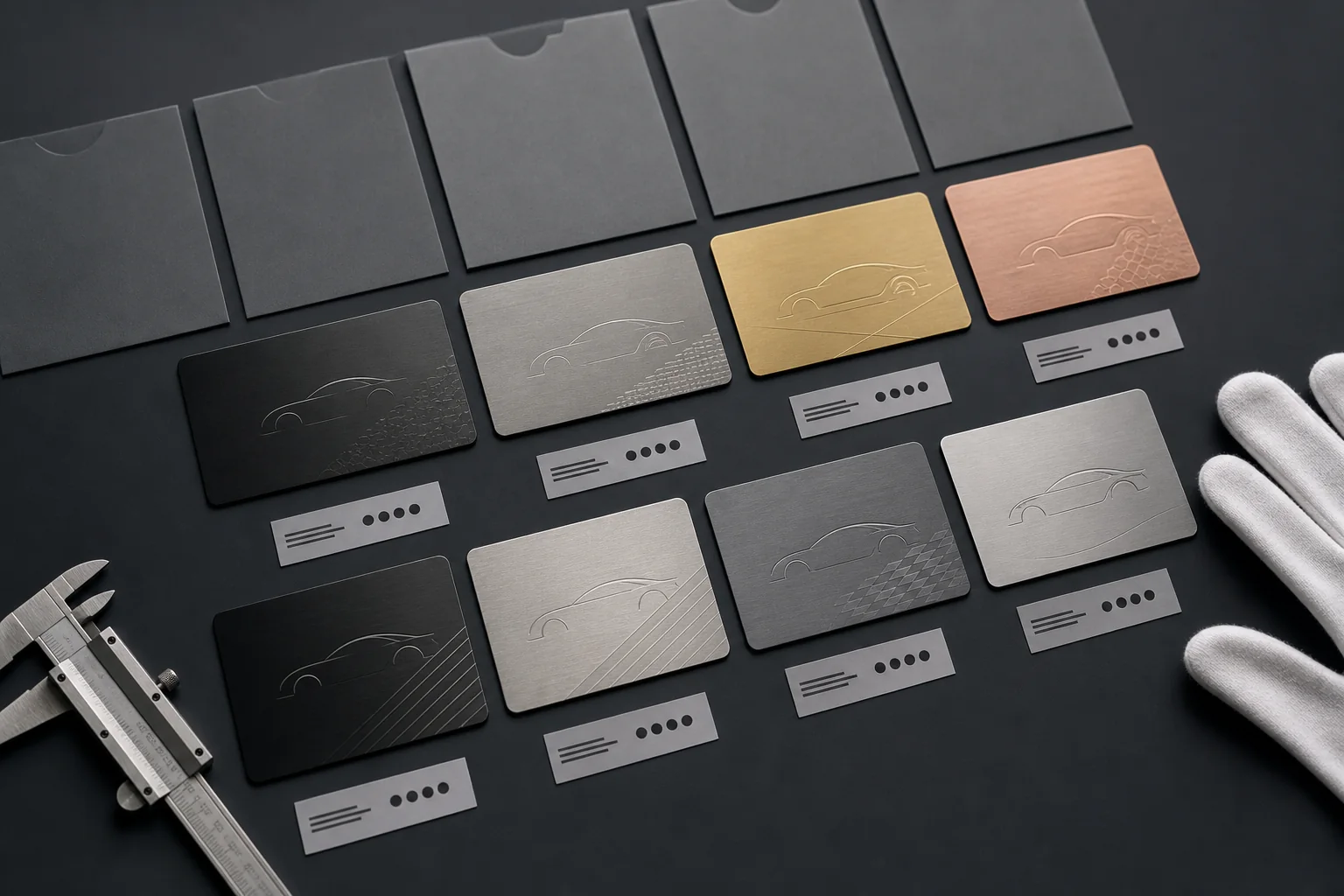
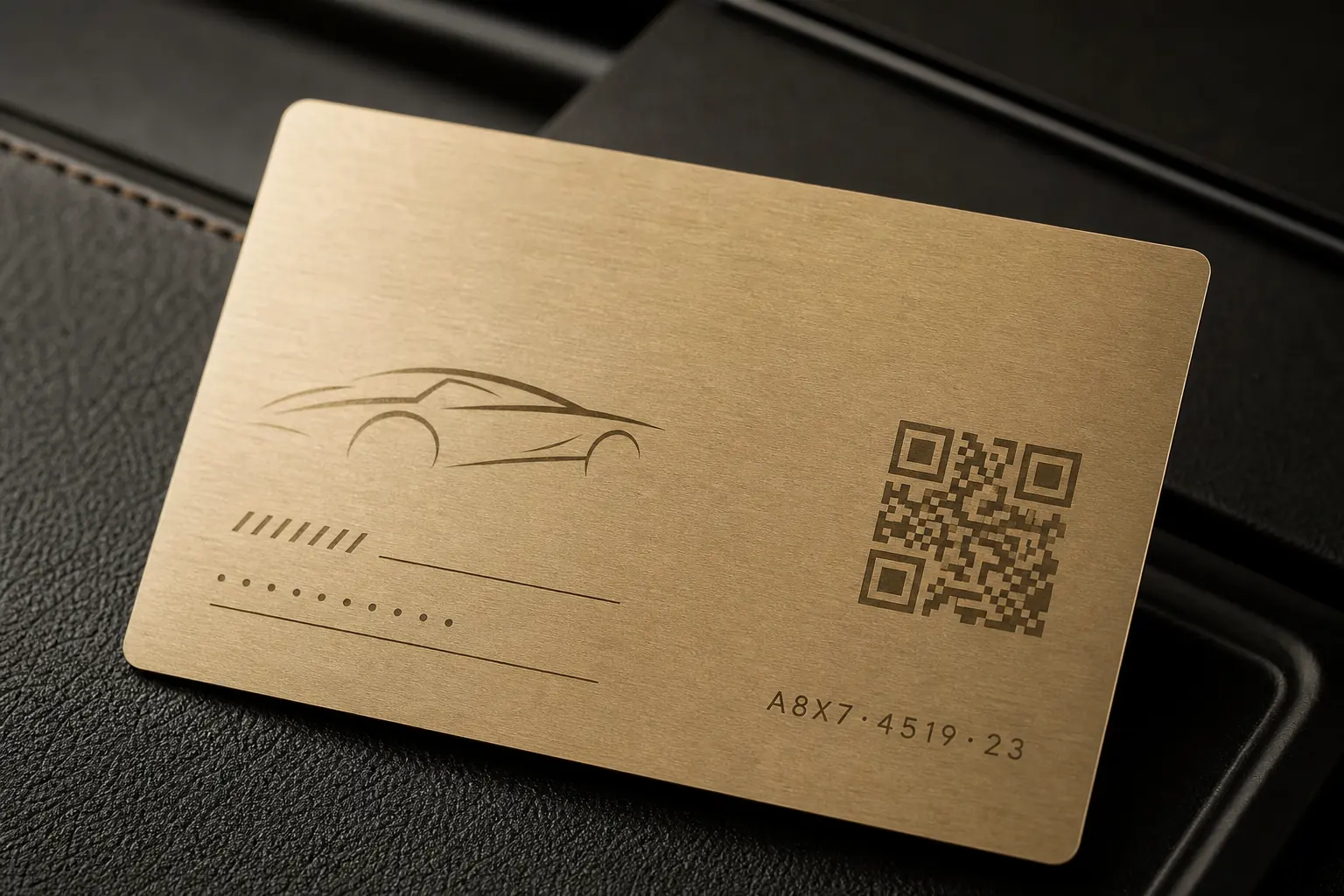
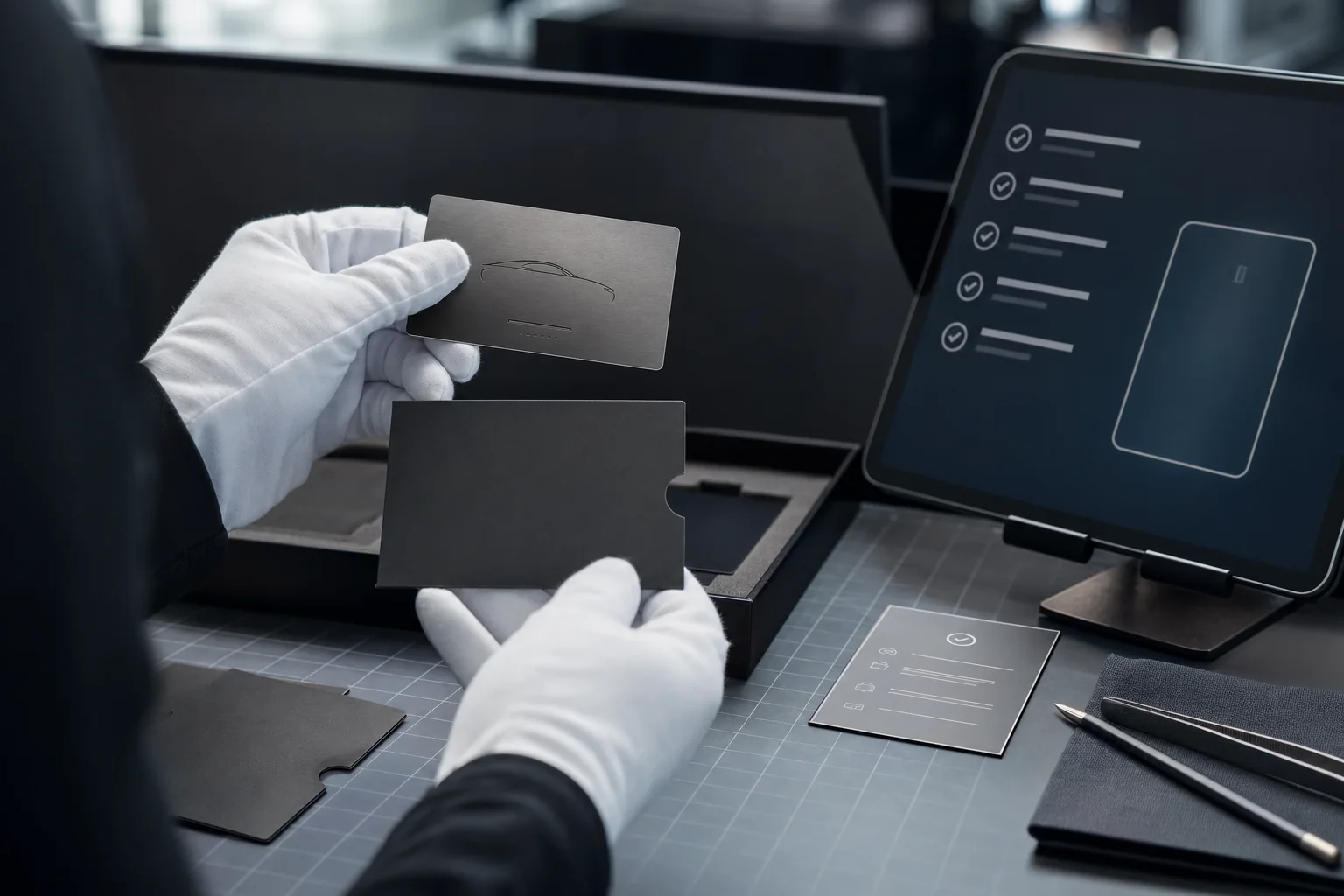
Separate visible identity from system data.
Visible fields may include member name, member number, tier, issue date, expiry, vehicle-community chapter, or a limited-edition sequence. Encoded or linked fields may include an NFC destination, UID reference, access identifier, or internal record key. Print only what staff and members genuinely need to see; keep private vehicle and transaction information inside the controlled system.
Choose the right marking method for each field.
Laser engraving suits permanent names, serials, and fine linework. White ink can create a high-contrast variable panel on black or reflective metal. UV print supports color and more complex graphics. QR codes need a stable contrast field and quiet zone. The selected surface, code size, font size, and scan behavior should be approved on a real sample.
Design the data file before final artwork.
Agree column names, character limits, capitalization, missing-value rules, tier codes, QR payload format, and packaging labels before importing the member list. Use one unique record per card and reject duplicates. A proof should show the longest realistic name, smallest approved code, non-Latin characters where required, and every tier variation.
Match physical, digital, and packaging identifiers.
The card serial, encoded record, printed QR, sleeve label, box label, and dispatch list should reconcile. This is especially important when credentials carry access or when individual kits ship directly to members. Scan and read a sample from each batch, then preserve the approved data and exception report.
Plan privacy, corrections, and replacement.
Collect only the data required to produce and operate the program. Confirm who approves spellings, who may access the source file, and how corrections are handled after engraving. When a card is replaced, keep a record linking the retired serial or encoded identifier to the new credential without exposing private history on the card itself.
Best uses
- Named automotive club and owner credentials
- Founder sequences and limited editions
- QR, serial, member ID, and NFC-linked programs
- Individually matched sleeves, boxes, and direct fulfilment
Relevant metal card routes
Frequently asked questions
Can every metal card have a different name and QR code?
Yes. Names, numbers, QR payloads, serials, tiers, and packaging labels can vary by record when the approved data file is structured and checked before production.
Can a mistake be corrected after laser engraving?
Permanent laser marks usually require a replacement card, which is why spelling approval and a longest-name proof are important before the batch runs.
What personal data should be printed on the card?
Use the minimum needed for visible recognition. Keep sensitive contact, vehicle, access, and transaction details in the controlled member system.
Specification
| Card format | CR80 85.6 × 54 mm by default; custom outlines after RF review |
|---|---|
| Thickness | 0.3–0.8 mm depending on construction |
| Minimum order | None — from one approval sample to production runs |
| Production time | About one week after artwork and sample approval |
| Personalization | Member name, ID, tier, serial, expiry, QR, NFC data, and matched packaging |
| Approval path | Finish proof, encoded working sample, reader or phone test, production approval |
| Visible fields | Name, member number, tier, issue or expiry date, founder sequence |
| Digital fields | NFC destination, QR payload, UID or access reference, internal record key |
| Data QA | Duplicate check, longest-name proof, code scan, encoding read, and pack reconciliation |
Related metal RFID card pages
- Metal RFID Membership Cards for Yacht Clubs and Marinas
- Metal RFID Membership Cards for Private Aviation and FBO Lounges
- Metal RFID Membership Cards for Golf and Country Clubs
- Metal RFID Membership Cards for Luxury Residence Clubs
- Metal RFID Membership Cards for Private Wellness Clubs
- Custom Metal Membership Cards for Car Clubs
- Metal Membership Cards for Car Detailing Studios
- How to Build a Luxury Car Rental VIP Membership Program
- Metal Membership Cards for Private Car Storage Clubs
- Dealership VIP Cards That Extend the Owner Relationship
- VIP Metal Passes for Rallies, Track Days and Car Events
- NFC, RFID or QR for Automotive Membership Cards?
- How to Design Black, Gold and Founder Car Club Tiers
- Metal vs Plastic Membership Cards for Automotive Brands
- How NFC Metal Cards Connect Automotive Member Portals
- Seven Benefits an Automotive VIP Card Can Support