13.56 MHz NFC
NFC Tag Metal RFID Cards
NFC tag metal NFC cards are the clearest route to a card any modern smartphone can tap. The three common chips differ mainly by user memory — 144-byte NFC tag holds 144 bytes, 504-byte NFC tag 504 bytes, 888-byte NFC tag 888 bytes — which in practice decides how long the encoded URL, vCard, or record can be. A short campaign URL fits comfortably in 144-byte NFC tag; a full vCard usually wants 888-byte NFC tag.
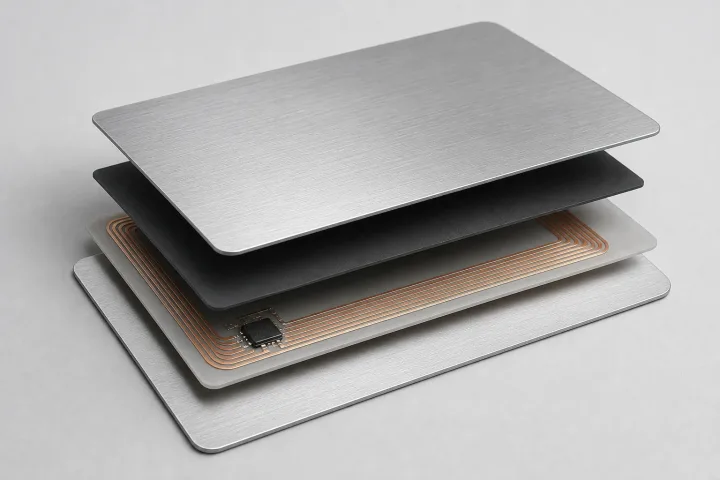
NFC Tag route brief
| Frequency | 13.56 MHz NFC |
|---|---|
| Best use | Public phone-tap experiences: business cards, profiles, menus, loyalty, product authentication, and event pages. |
| Chip route | 144-byte NFC tag (144 B), 504-byte NFC tag (504 B), or 888-byte NFC tag (888 B) selected by memory need and data plan. |
| Phone behavior | The clearest route for broad smartphone tap behavior when the card opens a public URL or record. |
| Encoding | NDEF URL, short URL, profile, vCard, campaign URL, optional QR fallback, and a write-lock decision. |
| Approval check | Confirm tap zone, record length, redirect behavior, and phone performance in the final metal build. |
Visual references
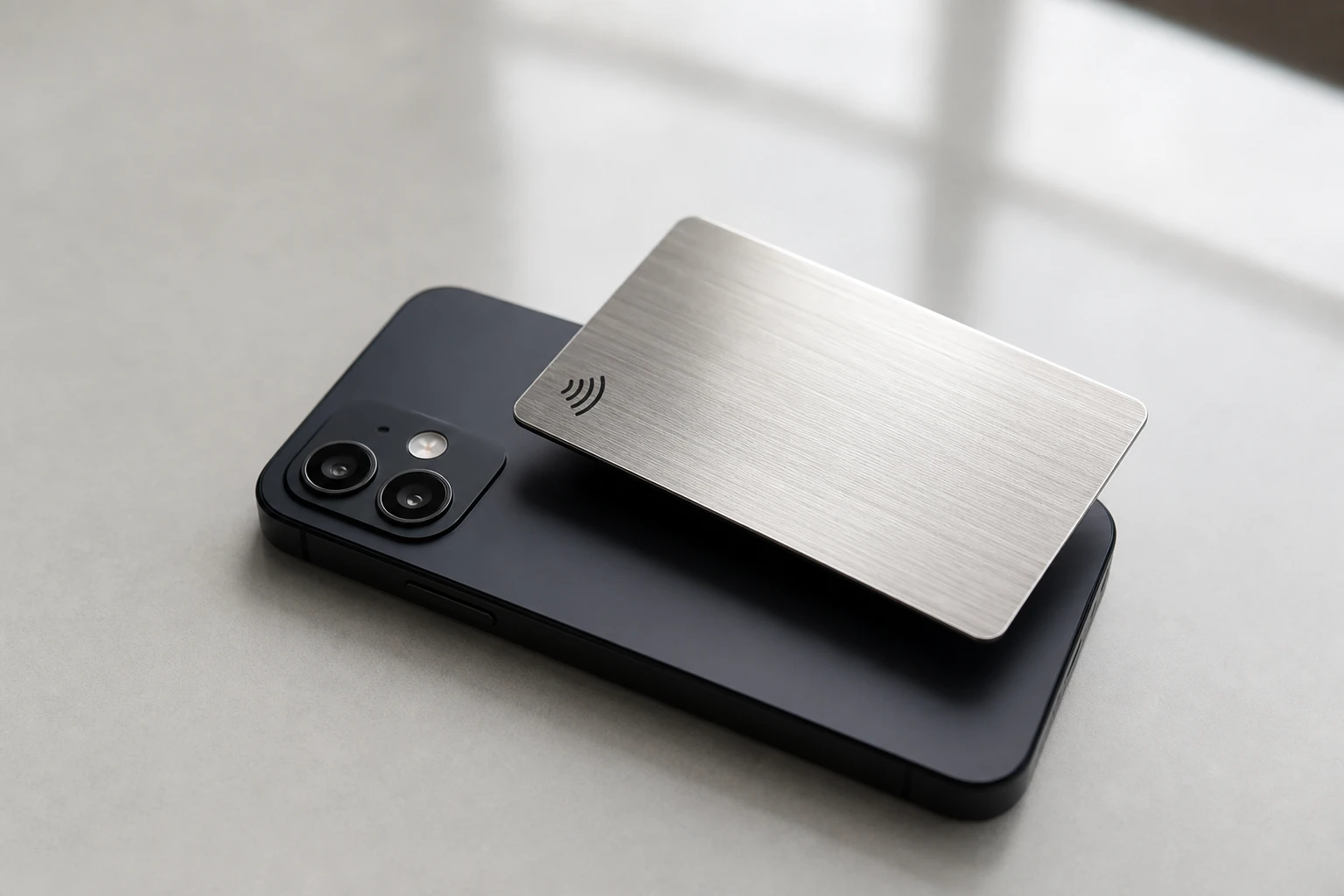
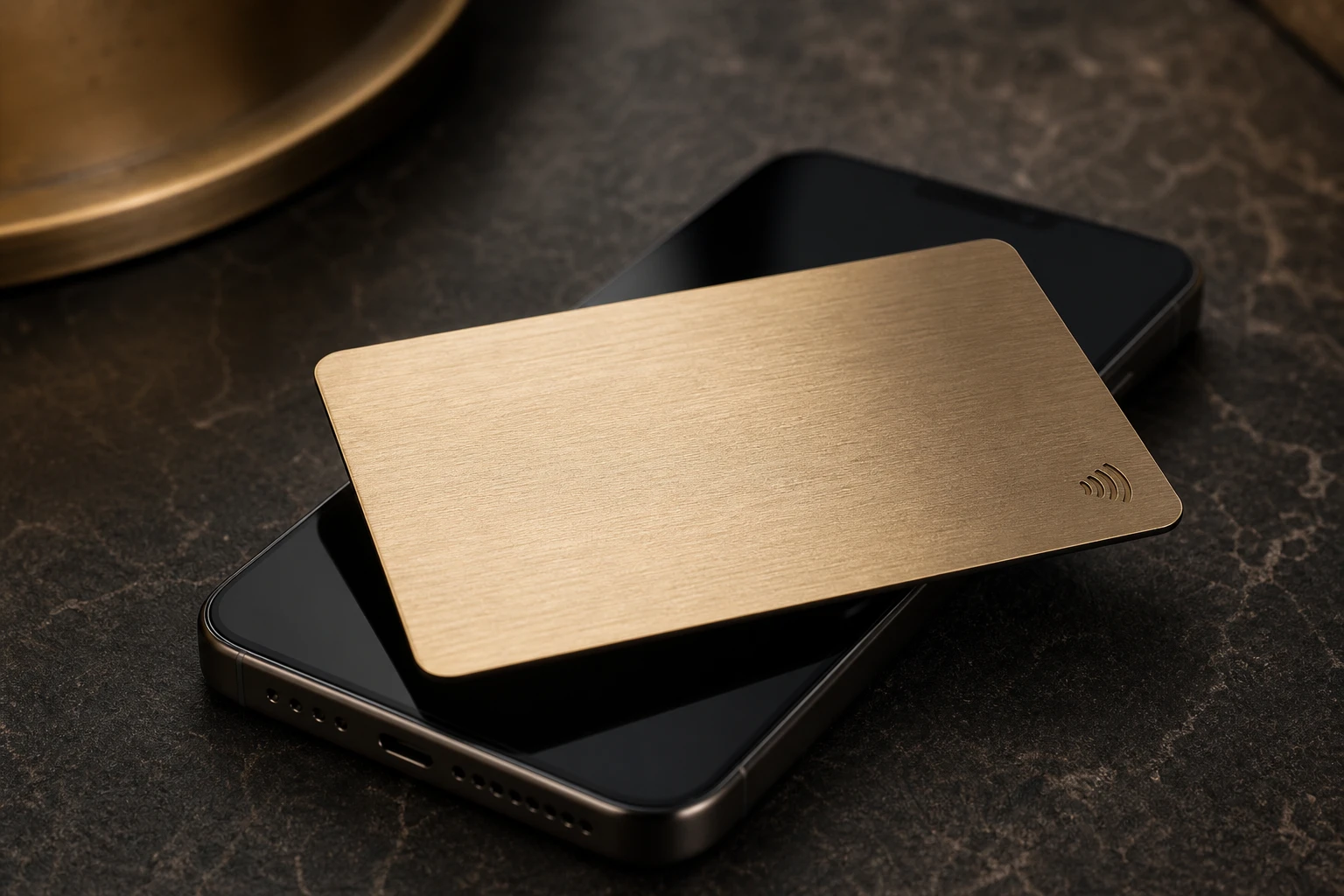
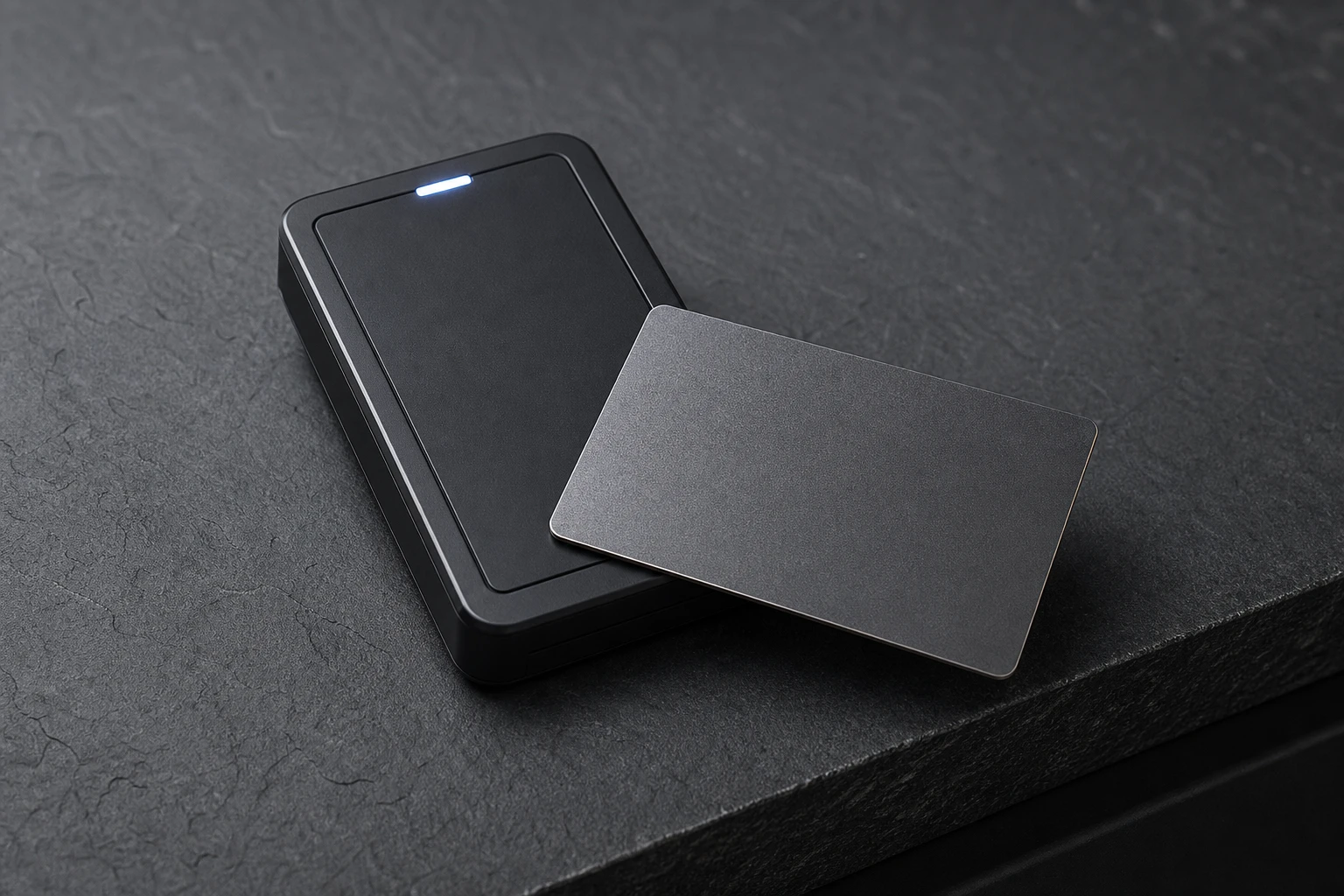
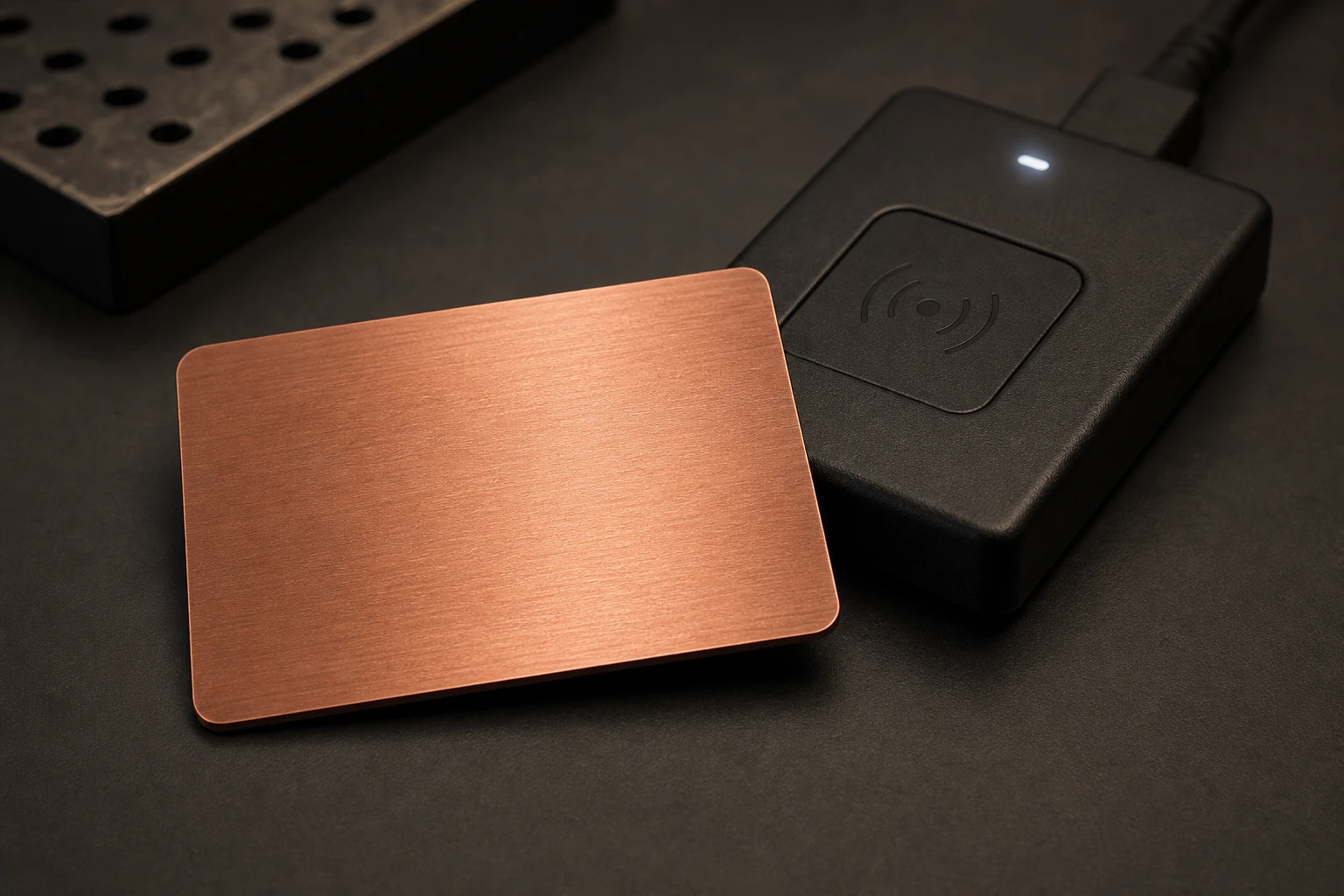
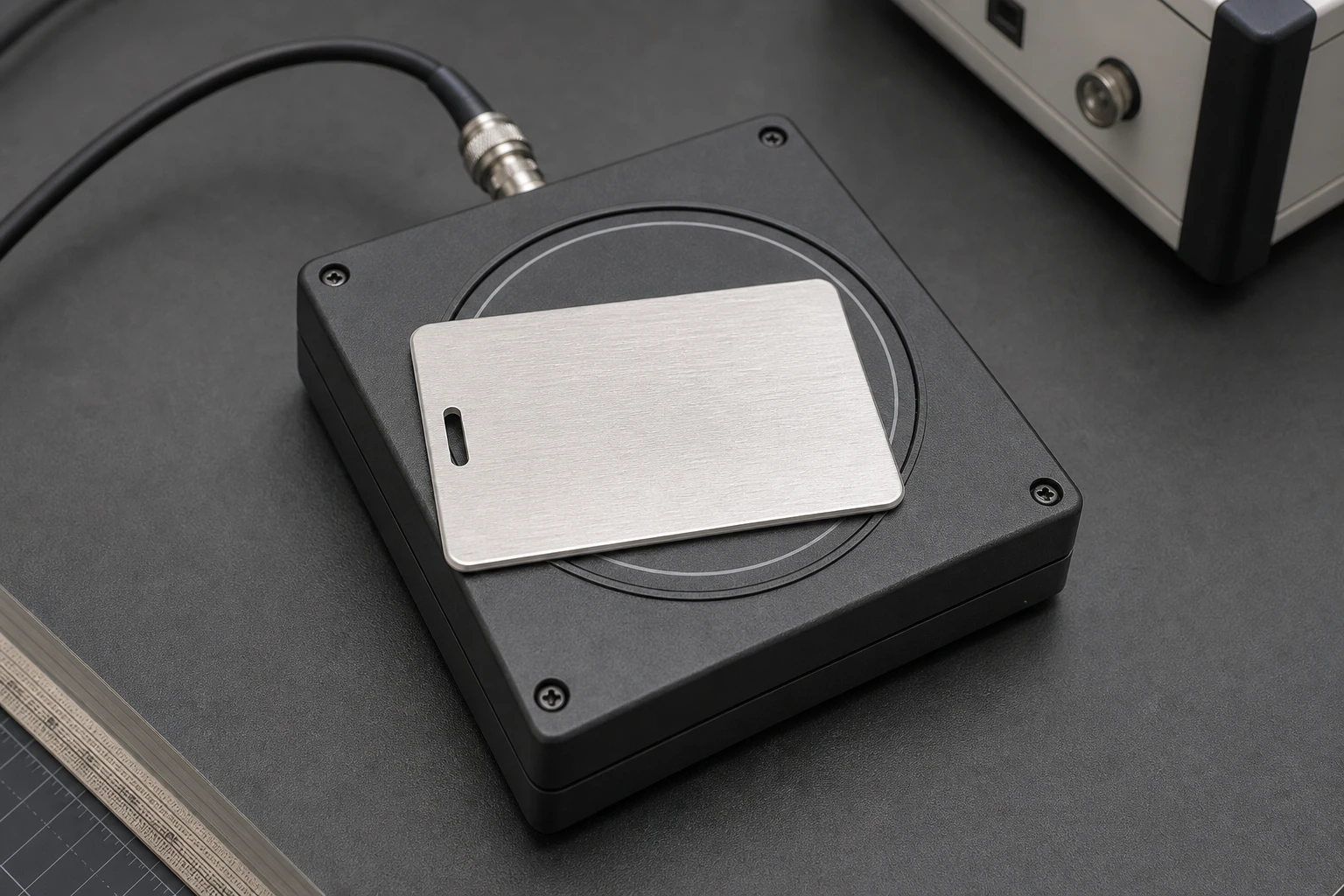
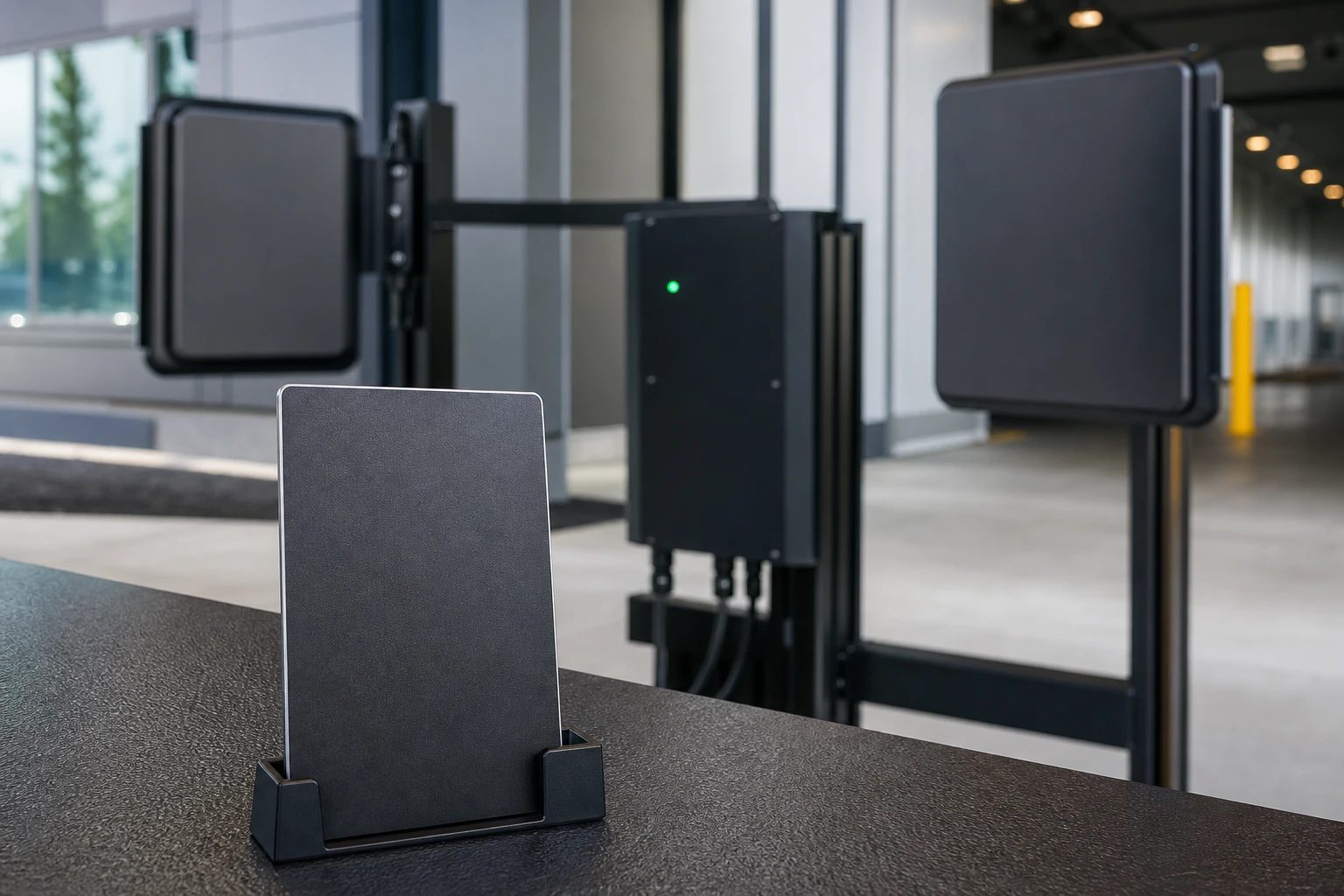
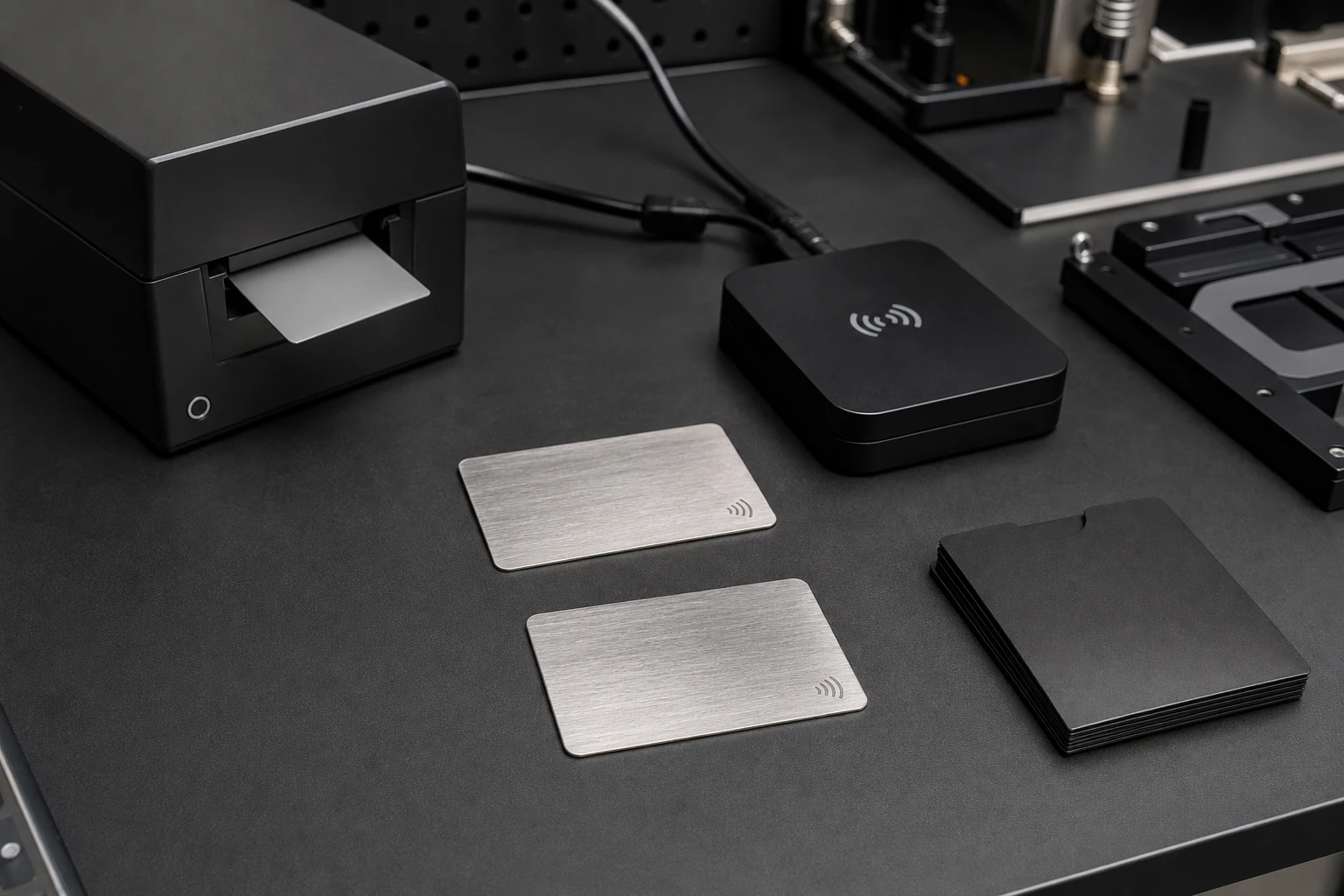
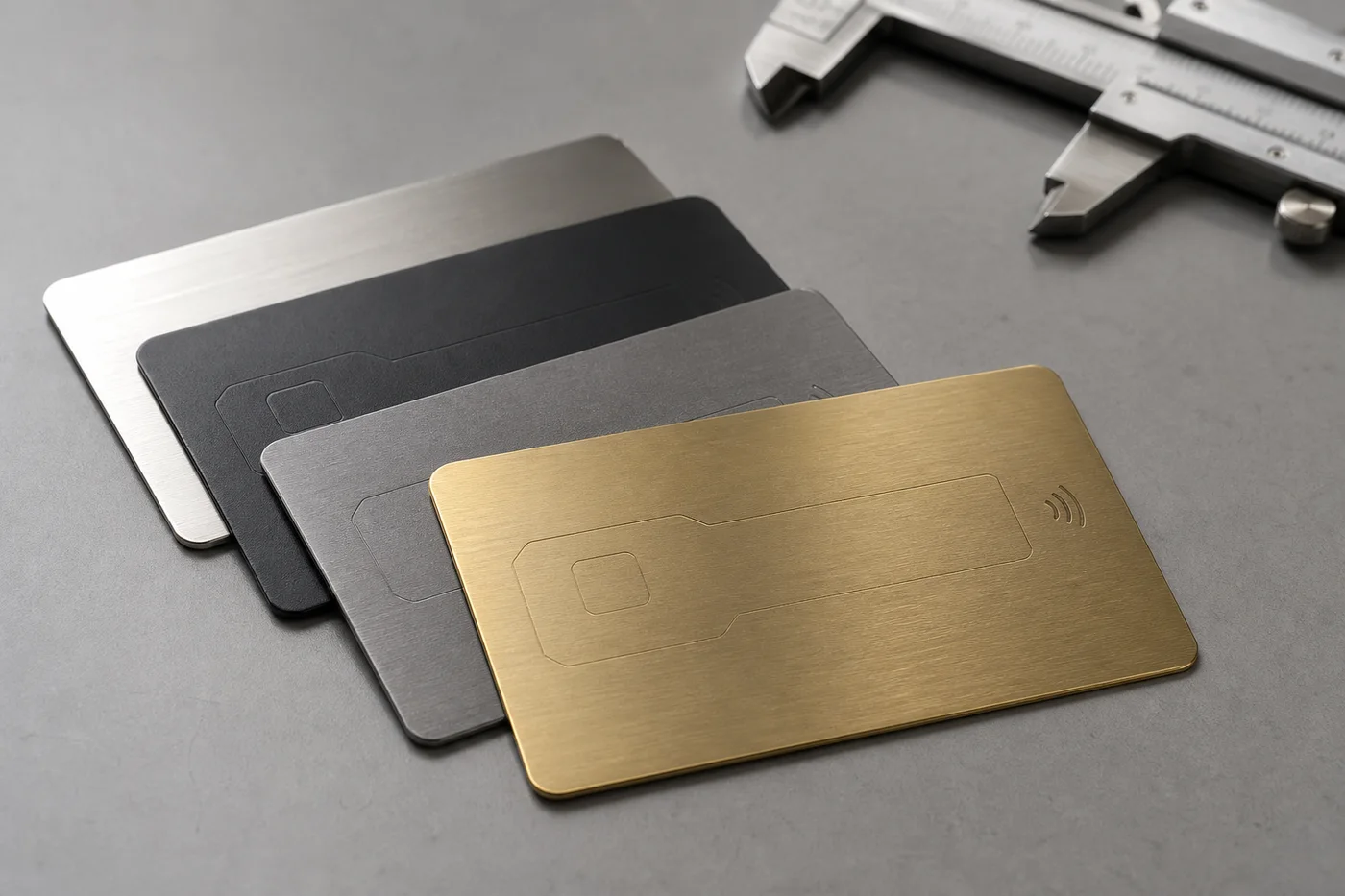
Pick the chip by the record, not the price list.
A redirect URL you control needs little memory and keeps the destination editable after delivery; a locked vCard burns the data into the card permanently. Decide the record, the write-lock state, and who owns the redirect before encoding — changing your mind after five hundred cards ship is an expensive way to learn the difference.
Approve a working sample in the real environment.
Confirm tap zone, record length, redirect behavior, and phone performance in the final metal build.
Best uses
- Public phone-tap experiences: business cards, profiles, menus, loyalty, product authentication, and event pages.
- Metal card programs that can validate a finished encoded sample on the target reader
- Projects that need print, serial, QR, packaging, and data handling reconciled in one approved brief
Frequently asked questions
Which NFC tag chip should a metal NFC card use?
By record size: 144-byte NFC tag (144 bytes) covers short and redirect URLs, 504-byte NFC tag (504 bytes) covers longer records, and 888-byte NFC tag (888 bytes) covers full vCards and richer NDEF data. The tap experience is identical — memory is the real difference.
Can the encoded URL be changed after delivery?
Yes, if the record points to a URL or managed redirect you control — the card then never needs re-encoding. A locked vCard or fixed record, by contrast, is permanent, which is why the write-lock decision is made before production.
Do NFC tag metal cards tap iPhones and Android phones?
Yes, when the shielded metal construction is engineered and then tested on the agreed phone targets. The tap zone and read behaviour are approved on the finished sample, not assumed from the chip datasheet.
Specification
| Format | CR80 85.6 x 54 mm by default; custom outlines after RF review |
|---|---|
| Thickness | 0.3 mm to 0.8 mm depending on construction |
| Minimum order | None — single samples to production runs |
| Production time | About one week after artwork and sample approval |
| RF construction | Antenna, ferrite or hybrid shielding, chip, metal faces, and edge stack specified together |
| Chip routes | NFC tag, standard HF, high-security AES HF, LF compatibility, and selected UHF by reader test |
| Marking options | Laser etch, deep engraving, UV print, white ink, enamel fill, QR, serial, and controlled cut-through |
| Approval flow | Finish sample, encoded working sample, reader check, pre-production approval |
| Frequency | 13.56 MHz NFC |
| Chip route | 144-byte NFC tag (144 B), 504-byte NFC tag (504 B), or 888-byte NFC tag (888 B) selected by memory need and data plan. |
| Phone behavior | The clearest route for broad smartphone tap behavior when the card opens a public URL or record. |
| Encoding | NDEF URL, short URL, profile, vCard, campaign URL, optional QR fallback, and a write-lock decision. |
| Approval check | Confirm tap zone, record length, redirect behavior, and phone performance in the final metal build. |
Related metal RFID card pages
- LF Metal RFID Cards
- HF NFC Metal RFID Cards
- Entry-level HF Metal RFID Cards
- AES-secured HF Metal RFID Cards
- Standard HF Metal RFID Cards
- High-security AES Metal RFID Cards
- UHF Metal RFID Cards
- Programmable 125 kHz Metal RFID Cards
- Metal RFID Card Encoding
- RFID UID Converter & Wiegand 26-bit Calculator