Dealership owner guide · 7 min read
Dealership VIP Cards That Extend the Owner Relationship
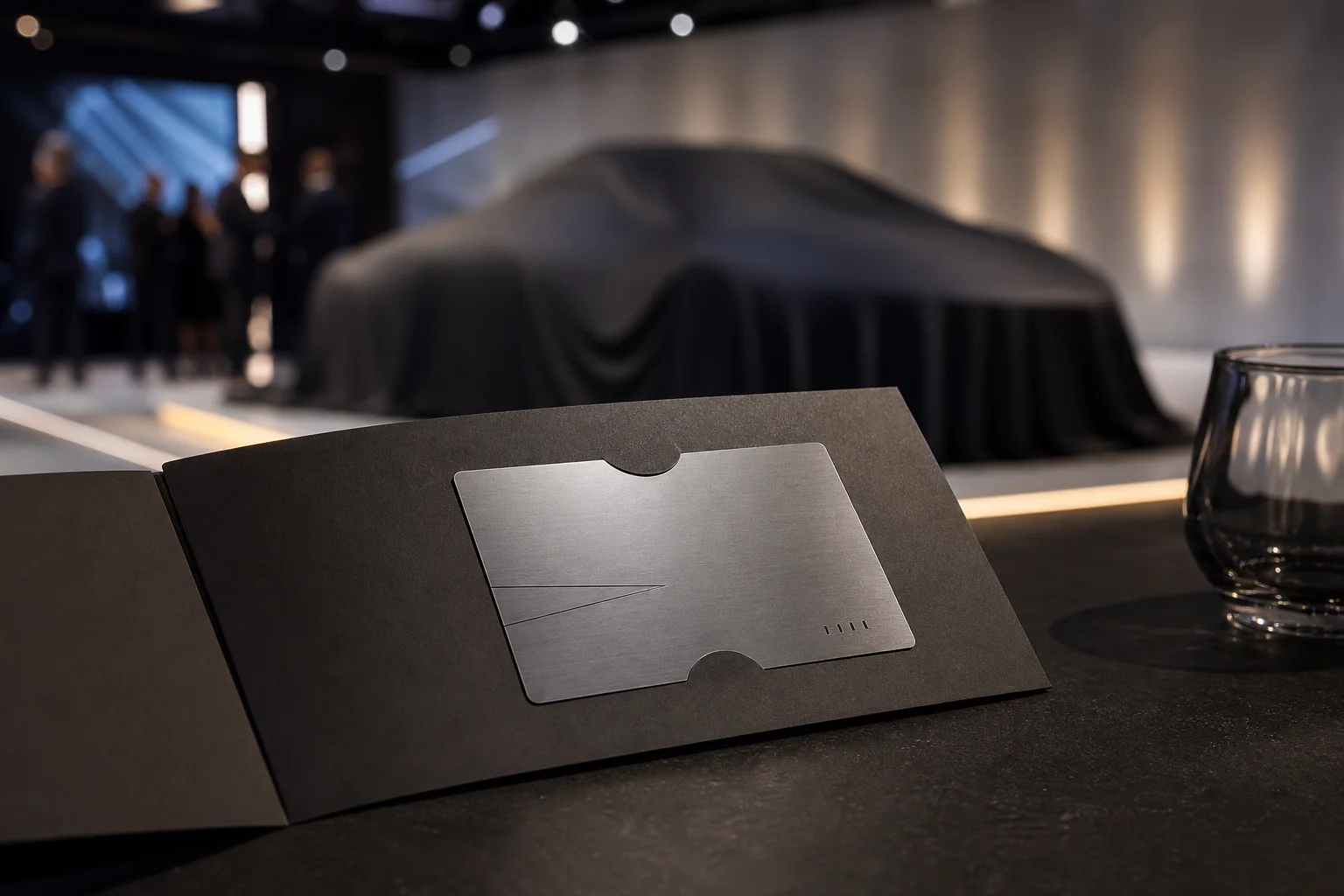
Vehicle delivery is a powerful moment, but the owner relationship continues through servicing, seasonal care, launch invitations, events, and future purchases. A considered metal owner card can connect those moments without pretending to be a payment product.
Industry program views
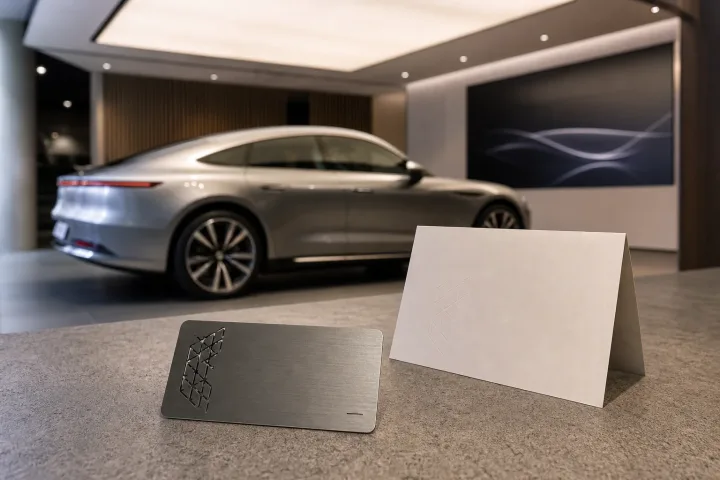
Carry the delivery experience into ownership.
The handover, service portal, owner tier, and private-event invitation should reinforce one relationship rather than operate as disconnected campaigns.
Choose the owner moments the program will improve.
Map the first year after delivery: onboarding, service booking, seasonal checks, accessories, collection support, owner events, new-model previews, and renewal or replacement cycles. Select a small number of privileges the dealership can deliver consistently. The card becomes useful when it points owners to a clear service route or gives staff a reliable way to recognise a defined owner tier.
Keep the card independent from vehicle-key claims.
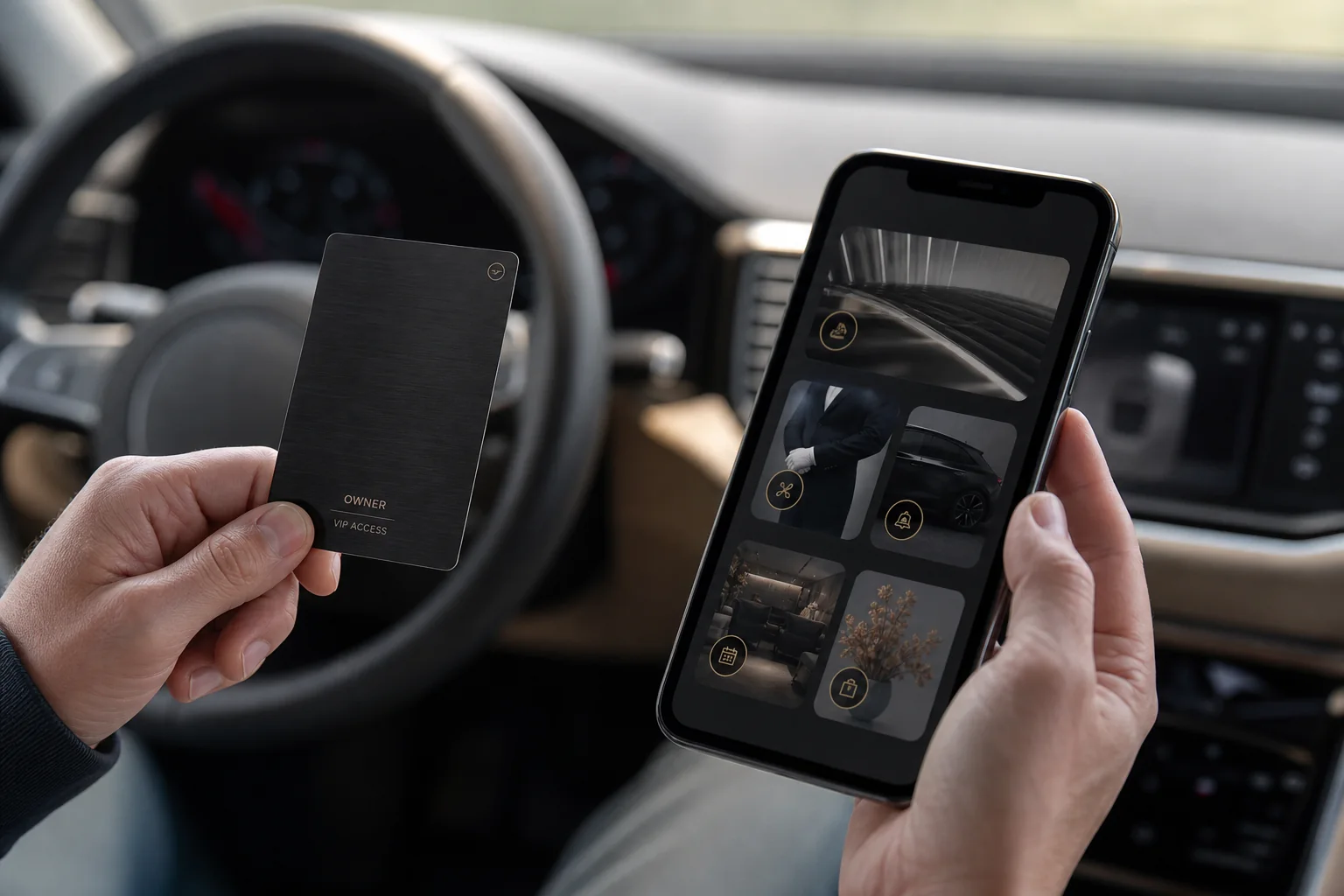
A dealership owner card can identify membership, open a phone portal, support event check-in, or work with a compatible facility reader. It should not imply that it unlocks or starts the vehicle unless a separate qualified integration genuinely does so. Clear scope protects trust and lets the card focus on the relationship it is designed to support.
Use the handover to explain the program.
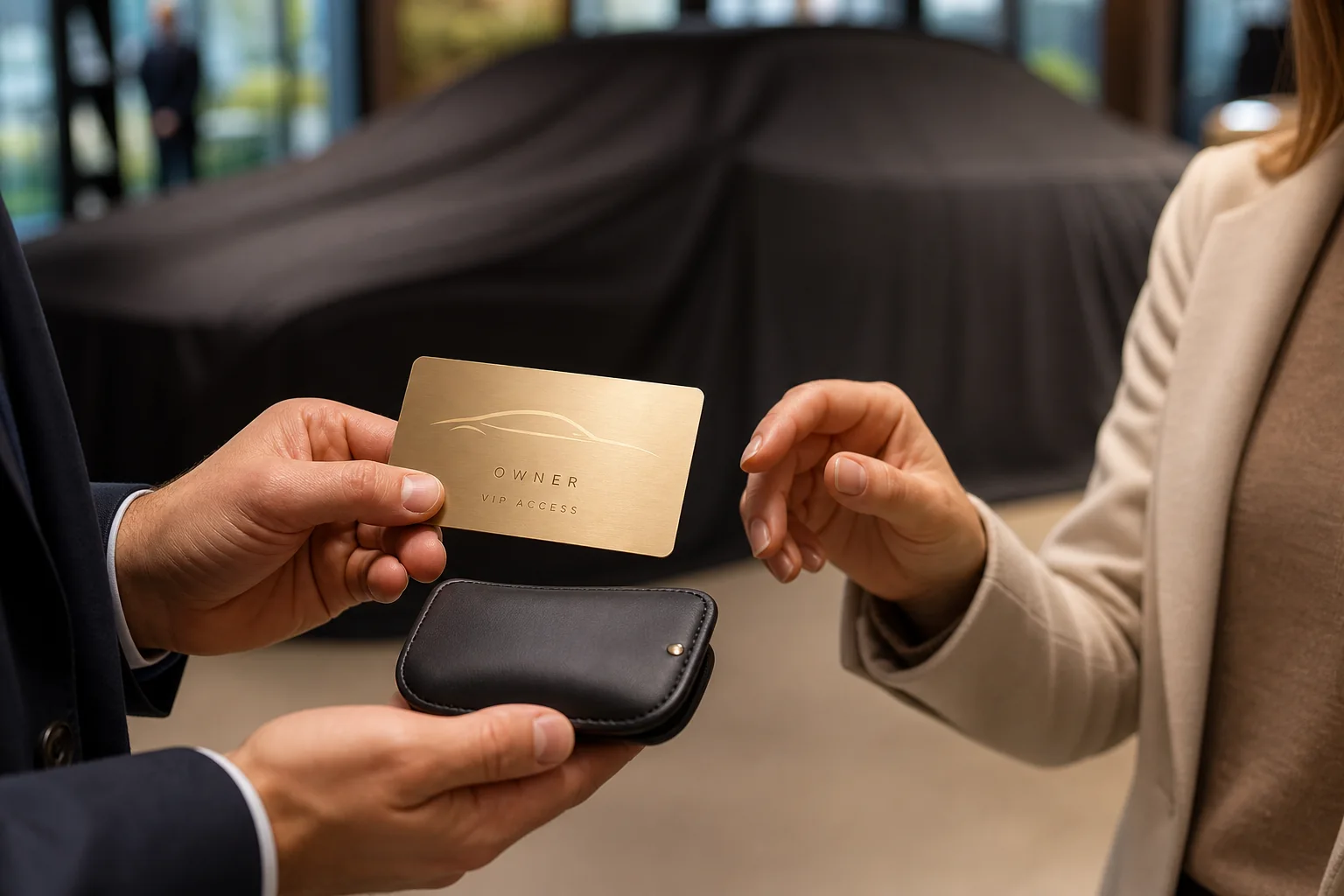
Present the card with the vehicle, but keep onboarding concise. Show how to tap or scan it, which number identifies the owner, where benefits appear, and how replacement works. Match the card, sleeve, welcome insert, and digital record from one data source. The experience should feel like thoughtful service rather than another stack of delivery paperwork.
Build tiers around service behavior, not spend alone.
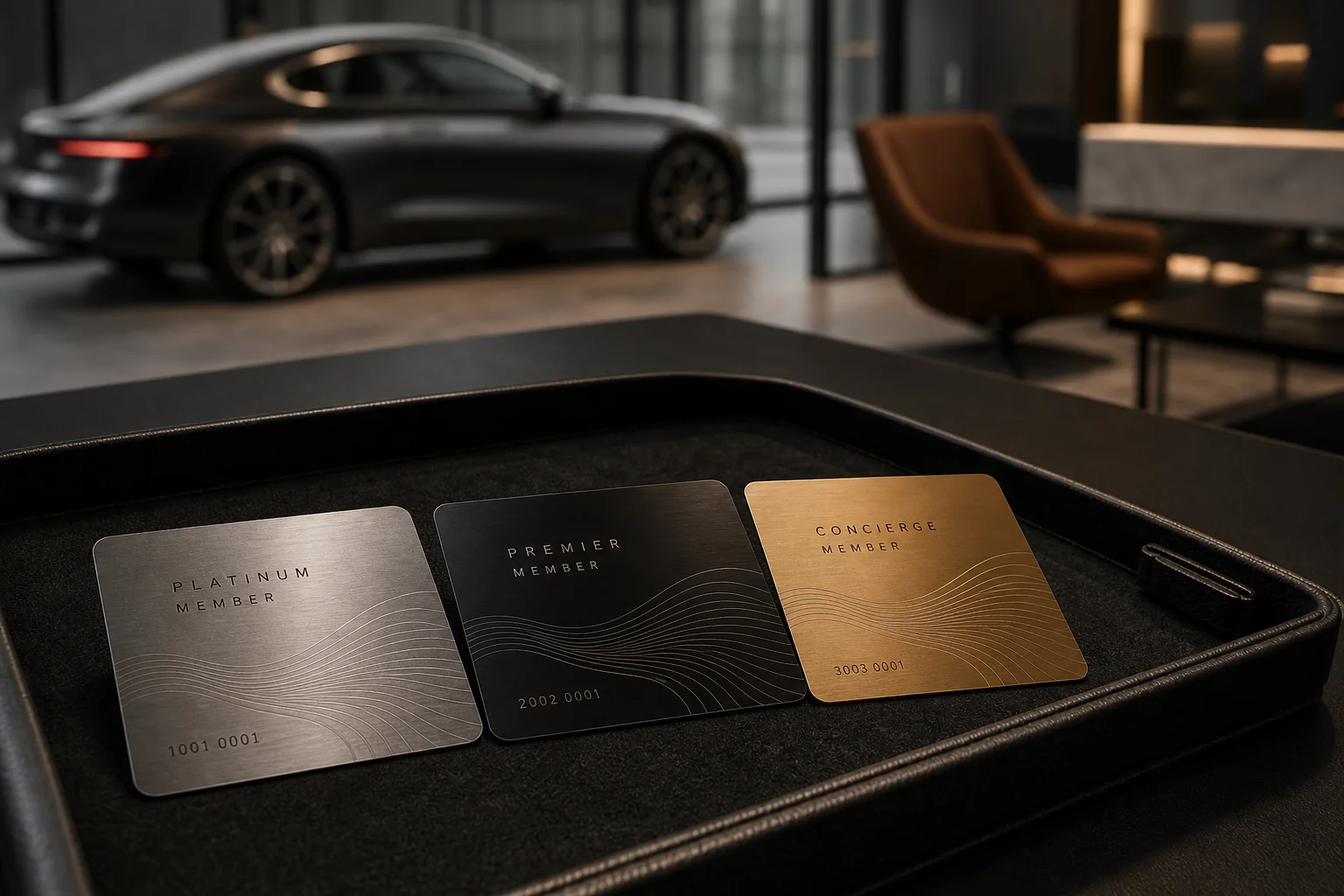
Founder, performance, collection, or heritage-style tiers can reflect participation, vehicle family, ownership history, or an invitation-only service level. Use benefits such as protected booking windows, dedicated contacts, collection events, or technical briefings. A visible metal finish can signal the tier, while the live owner record controls current eligibility.
Connect events and service without creating separate identities.
One stable owner ID can connect invitations, event check-in, service booking, and concierge contact. Temporary event access can still use a separate lanyard pass. Avoid printing too much changing information on the metal card; use NFC or QR to reach a current destination, and keep private details behind authentication.
Best uses
- Premium and specialist vehicle dealerships
- New-owner onboarding and delivery programs
- Service-priority and concierge relationships
- Private launches, owner drives, and technical events
Relevant metal card routes
Frequently asked questions
Can a dealership card link to service booking?
Yes. NFC or QR can open a managed booking or owner portal, with the live dealership system controlling appointments and personal data.
Can the card be personalized for each vehicle owner?
Yes. Names, owner IDs, tier, delivery date, serials, QR codes, and matched packaging can be prepared from one controlled file.
Should the card look like a bank card?
No. Use clear owner-program language, automotive-inspired linework, and brand-controlled finishes without payment chips, bank-number layouts, or misleading payment cues.
Specification
| Card format | CR80 85.6 × 54 mm by default; custom outlines after RF review |
|---|---|
| Thickness | 0.3–0.8 mm depending on construction |
| Minimum order | None — from one approval sample to production runs |
| Production time | About one week after artwork and sample approval |
| Personalization | Member name, ID, tier, serial, expiry, QR, NFC data, and matched packaging |
| Approval path | Finish proof, encoded working sample, reader or phone test, production approval |
| Owner journey | Delivery, service booking, concierge contact, event access, and tier recognition |
| Critical rule | Membership identity only; no vehicle-key or payment implication without a separate qualified system |
Related metal RFID card pages
- Metal RFID Membership Cards for Yacht Clubs and Marinas
- Metal RFID Membership Cards for Private Aviation and FBO Lounges
- Metal RFID Membership Cards for Golf and Country Clubs
- Metal RFID Membership Cards for Luxury Residence Clubs
- Metal RFID Membership Cards for Private Wellness Clubs
- Custom Metal Membership Cards for Car Clubs
- Metal Membership Cards for Car Detailing Studios
- How to Build a Luxury Car Rental VIP Membership Program
- Metal Membership Cards for Private Car Storage Clubs
- VIP Metal Passes for Rallies, Track Days and Car Events
- NFC, RFID or QR for Automotive Membership Cards?
- How to Design Black, Gold and Founder Car Club Tiers
- What Can Be Personalized on a Metal Automotive Card?
- Metal vs Plastic Membership Cards for Automotive Brands
- How NFC Metal Cards Connect Automotive Member Portals
- Seven Benefits an Automotive VIP Card Can Support