13.56 MHz
Entry-level HF Metal RFID Cards
entry-level HF is the light end of the 13.56 MHz family: a small-memory chip built for event tickets, short-lived guest credentials, and simple loyalty programs. The counter-enabled generation adds counters and password protection over the original; the 3DES variant exists for platforms that specifically require its 3DES authentication. None of them carry the sector-key structure of sector-based HF — that simplicity is the point.
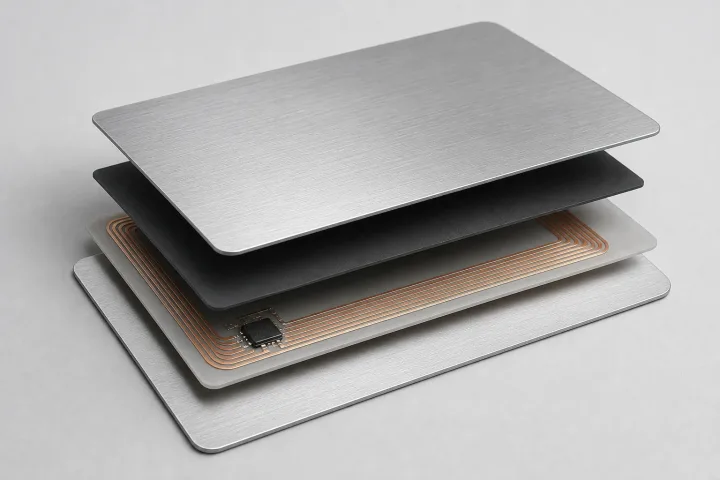
Entry-level HF route brief
| Frequency | 13.56 MHz |
|---|---|
| Best use | Event tickets, simple guest credentials, lightweight loyalty, and platform-specific HF card programs. |
| Chip route | Baseline or counter-enabled entry-level HF; the 3DES variant only where the platform specifically requires that route. |
| Phone behavior | Can be read by NFC phones when formatted for Type 2 behavior, but is usually selected around a reader specification. |
| Encoding | NDEF, UID reference, one-time ticket data, counters, password protection, or a legacy 3DES route. |
| Approval check | Confirm chip generation, memory, authentication, lock bytes, and reader behavior before production. |
Visual references
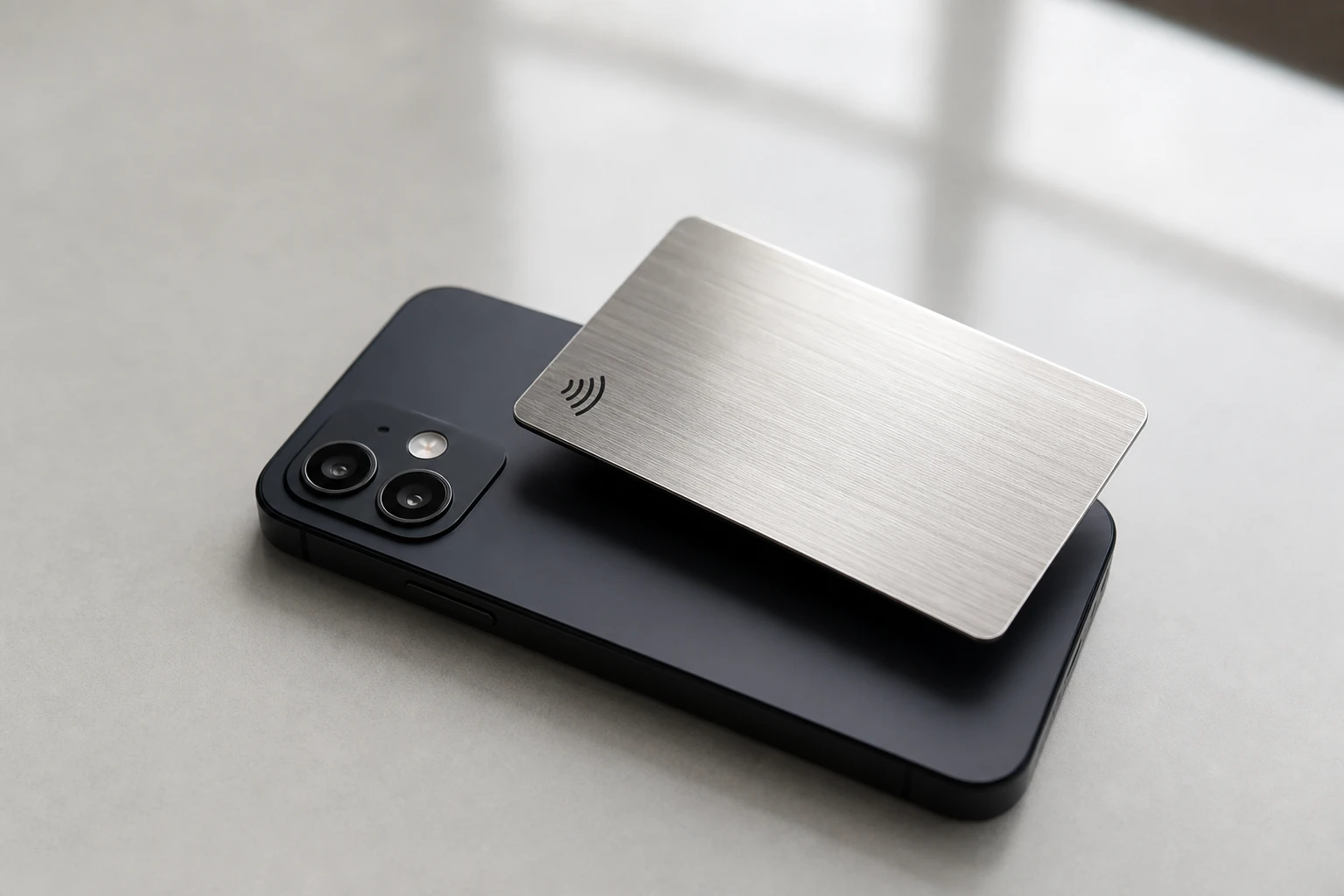
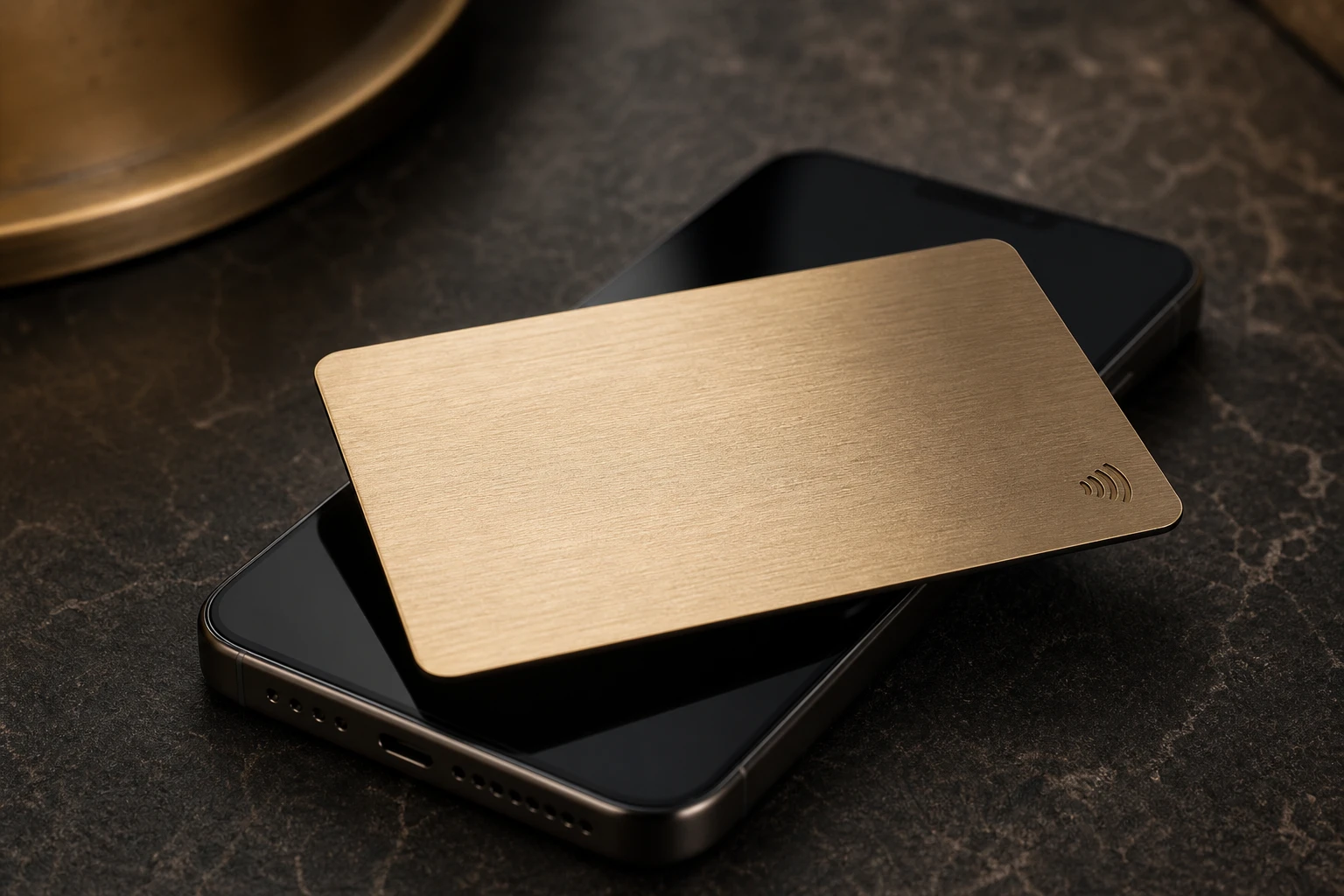
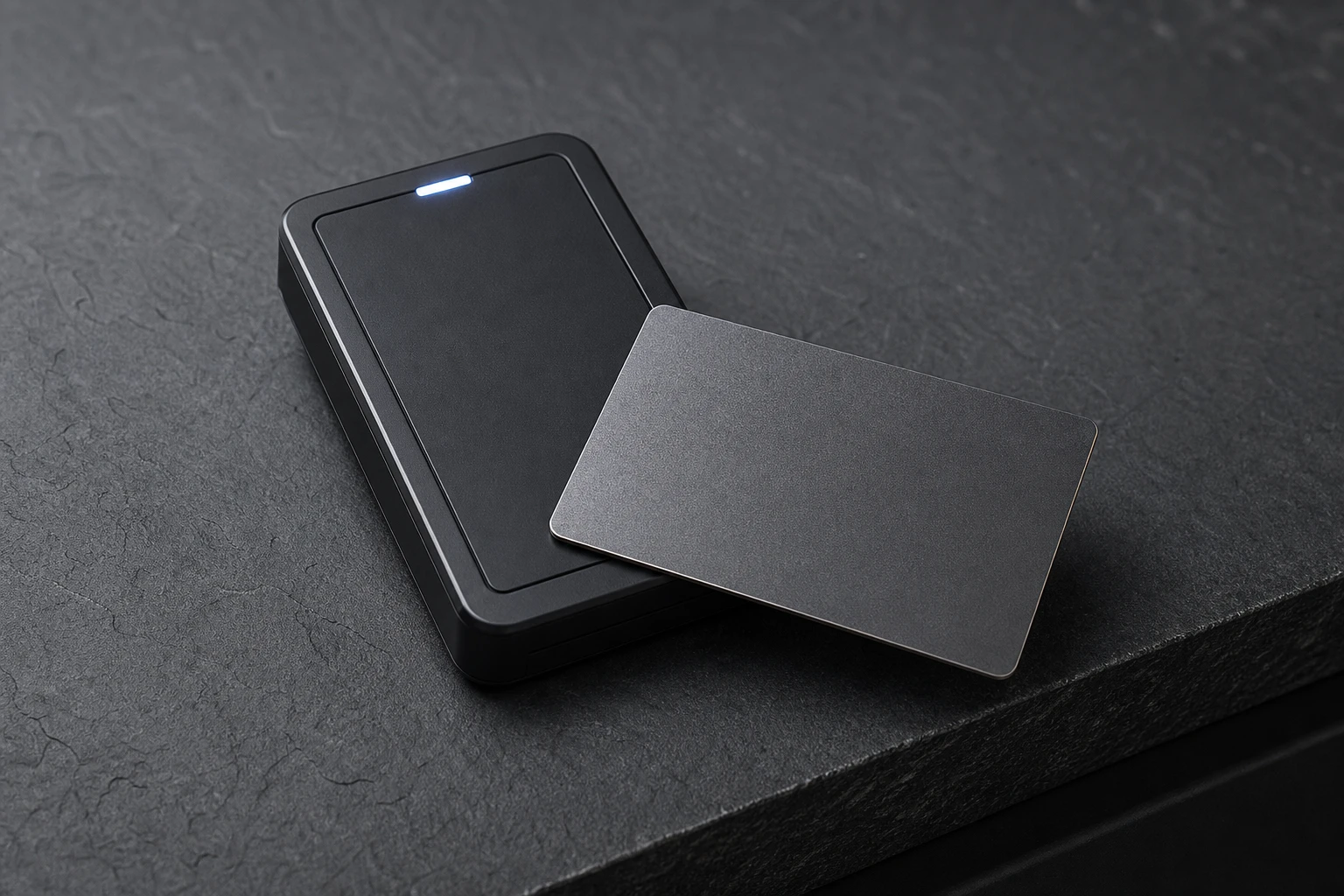
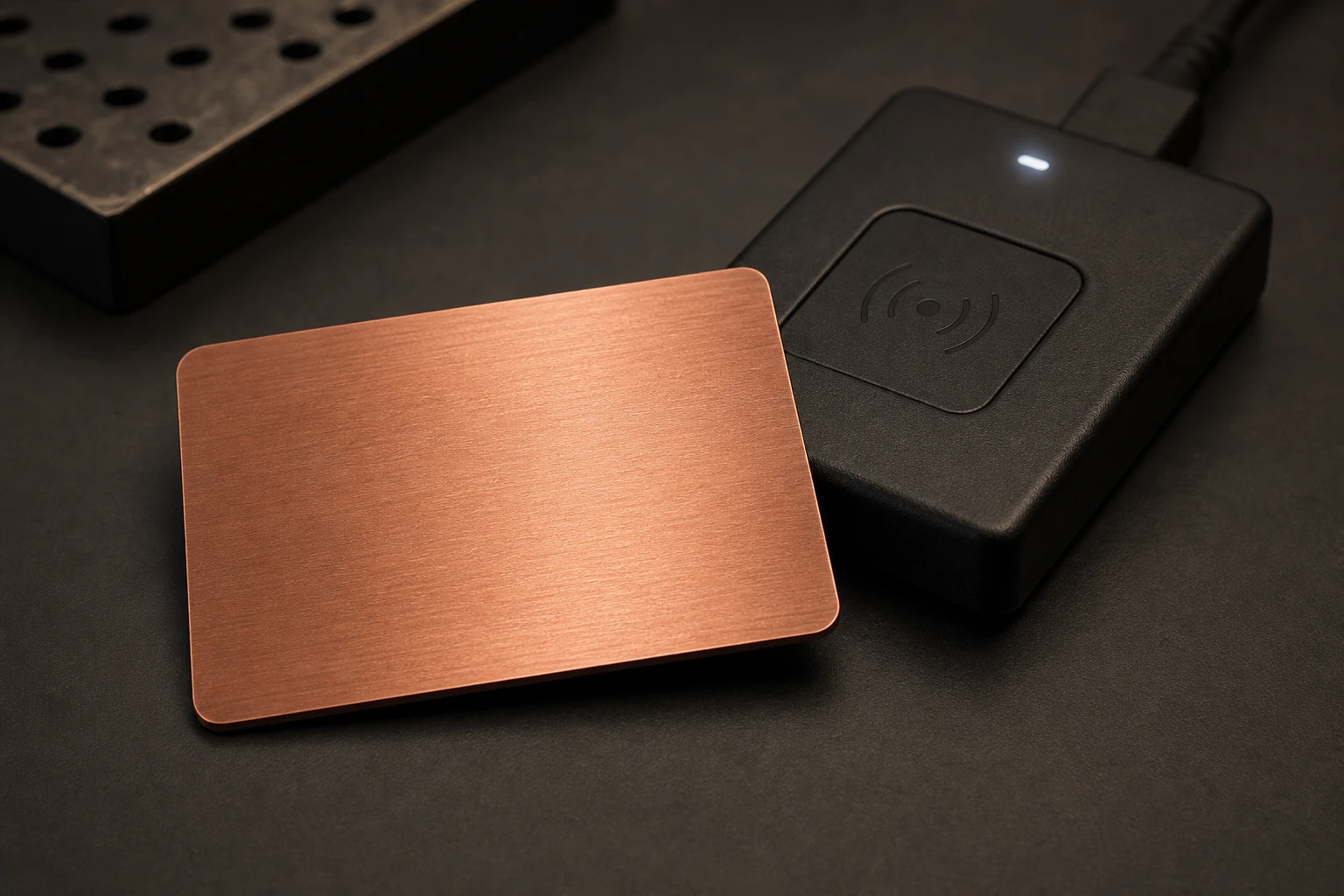
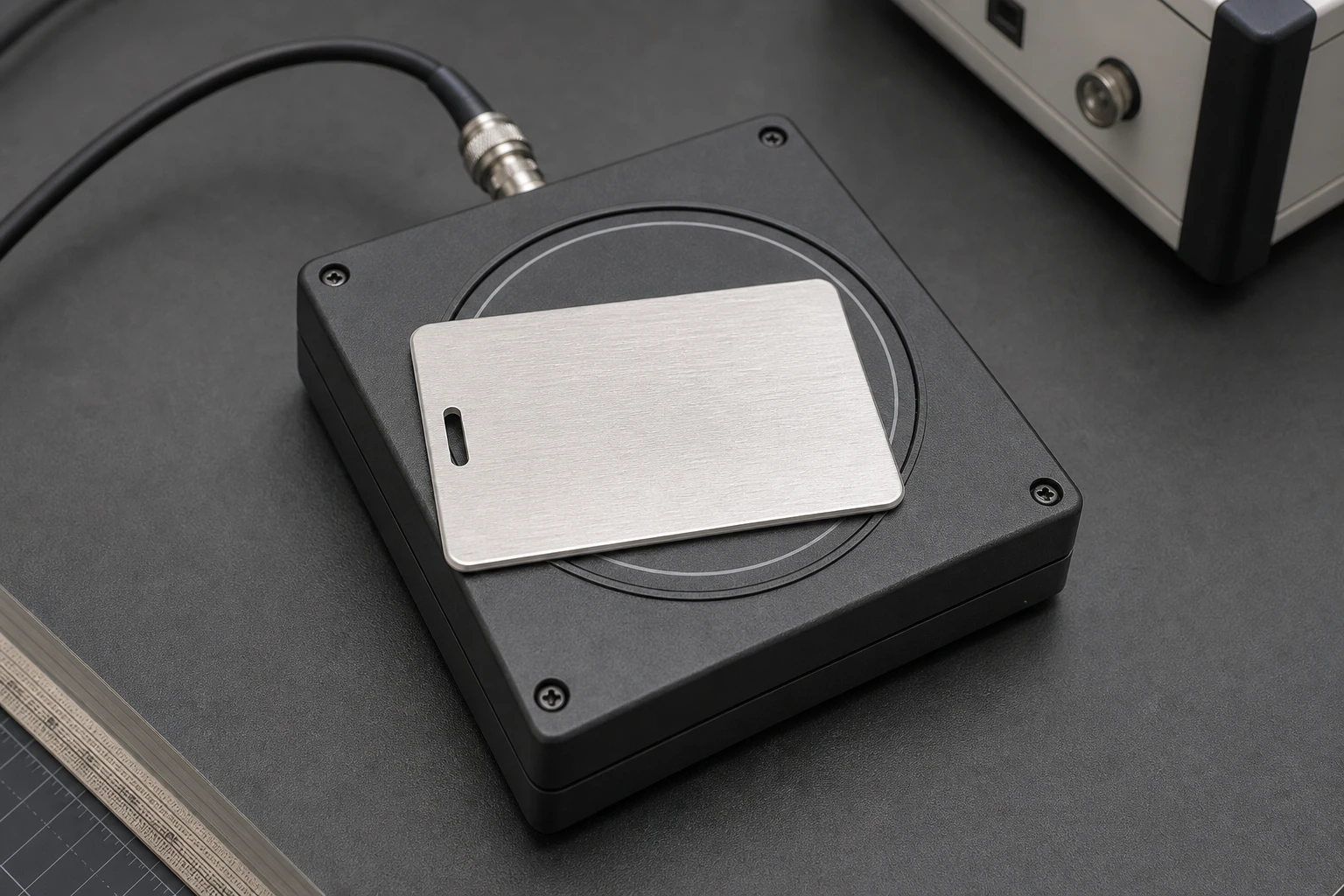
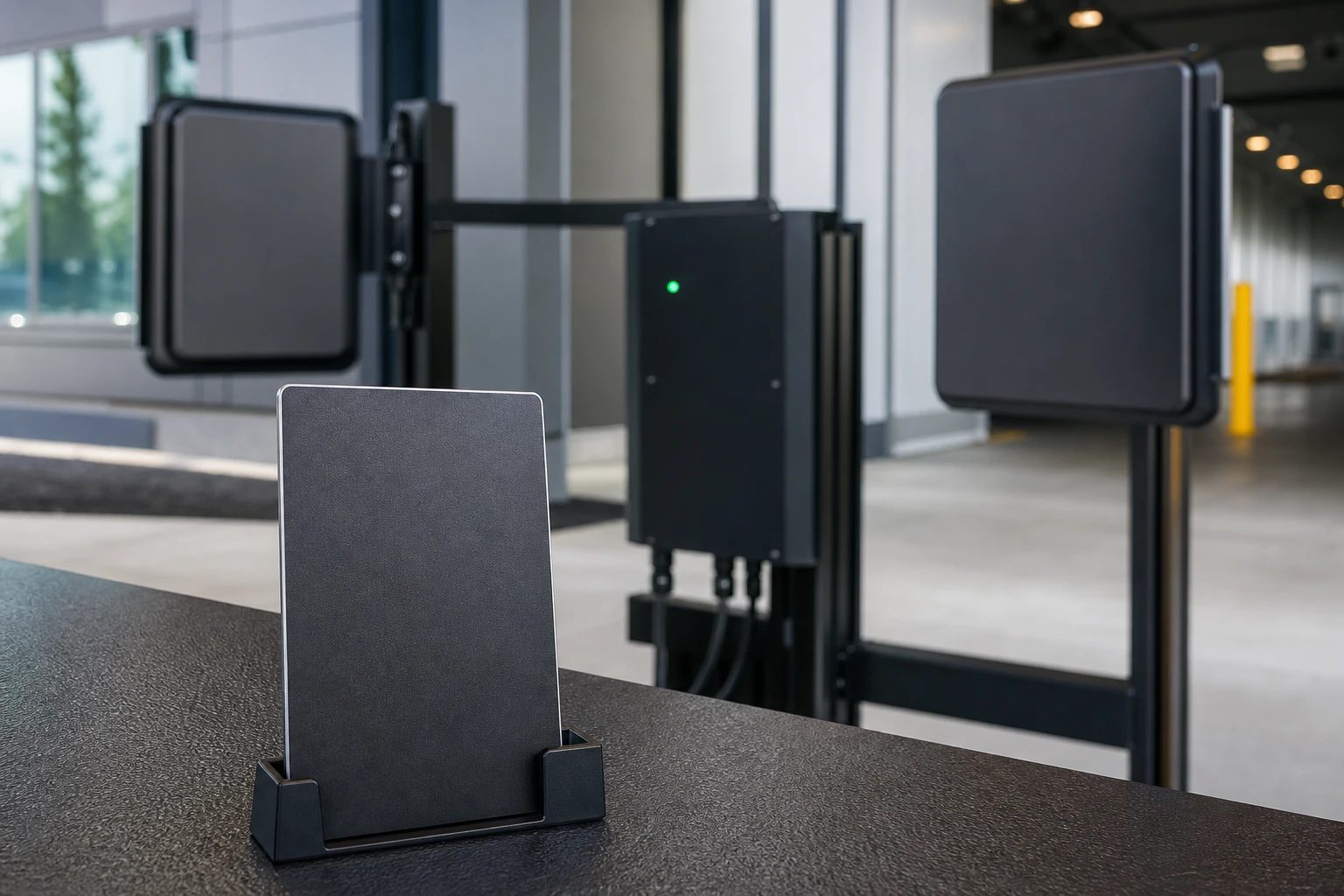
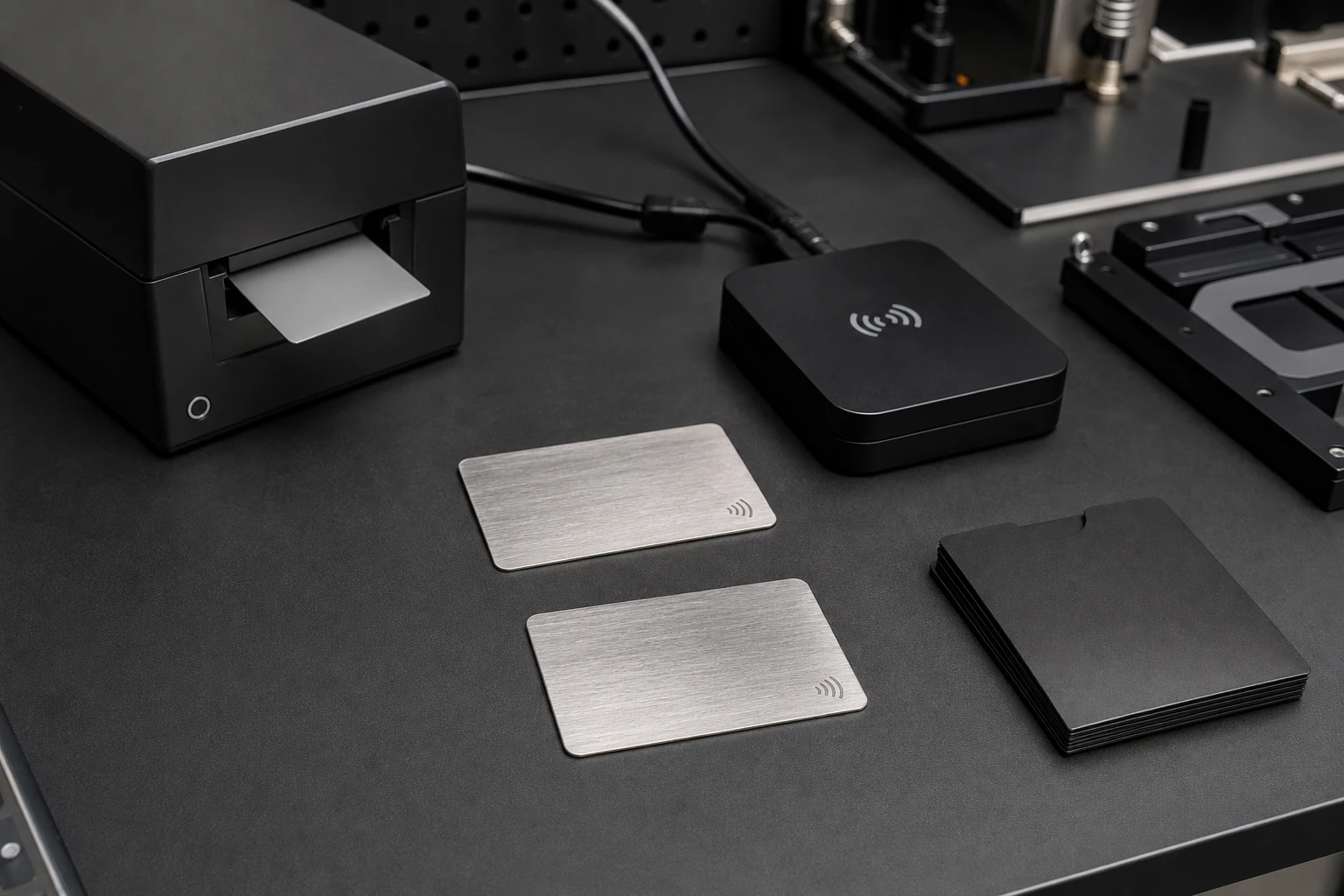
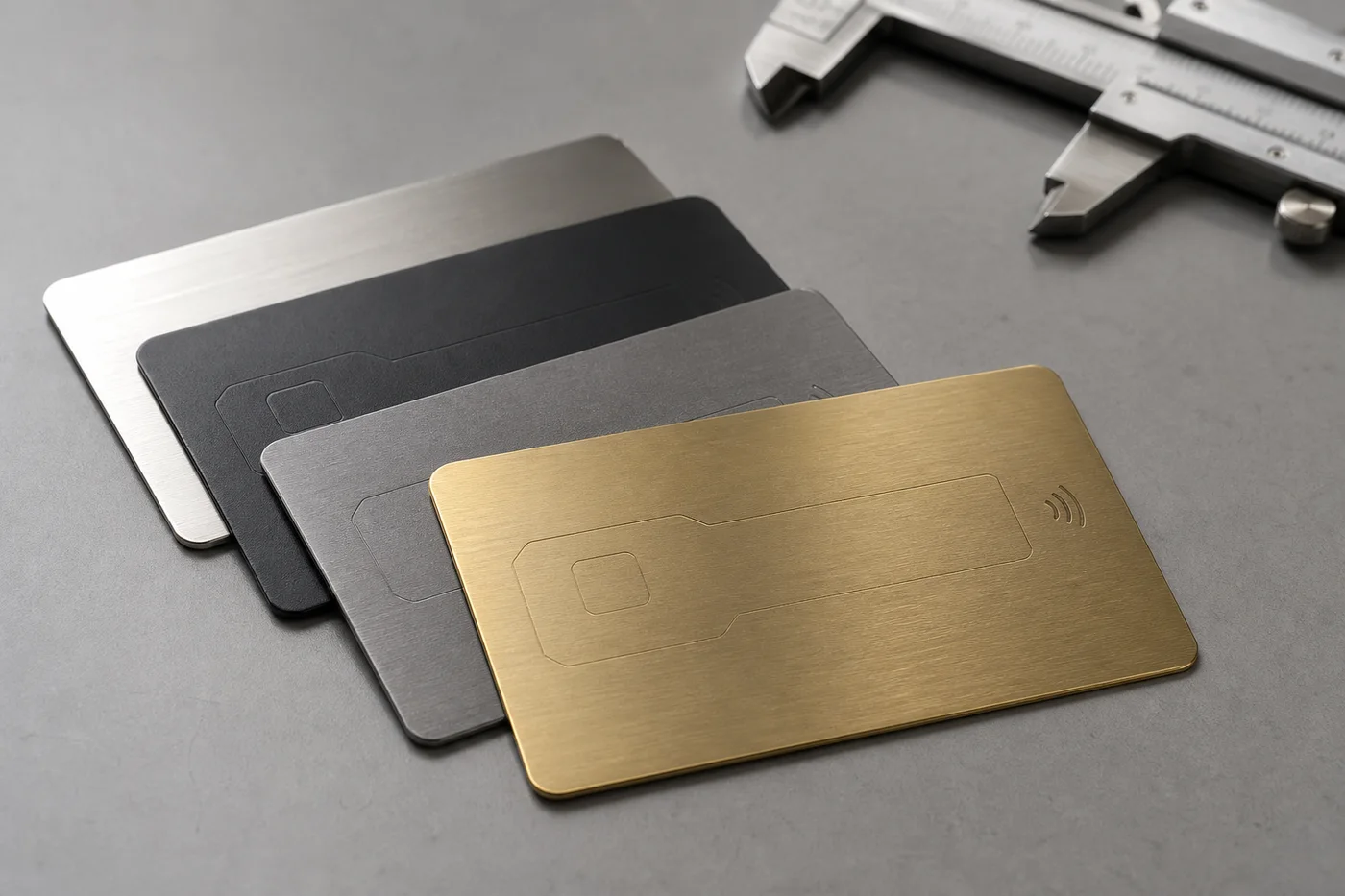
Simple by design — confirm the platform wants simple.
entry-level HF suits high-volume, low-risk credentials where the platform validates against its own database rather than trusting data on the card. If the system expects sector-based memory or high-security AES HF applications, an entry-level HF card will enroll and then fail in service. The chip generation, lock bytes, and any password protection are confirmed in writing before production.
Approve a working sample in the real environment.
Confirm chip generation, memory, authentication, lock bytes, and reader behavior before production.
Best uses
- Event tickets, simple guest credentials, lightweight loyalty, and platform-specific HF card programs.
- Metal card programs that can validate a finished encoded sample on the target reader
- Projects that need print, serial, QR, packaging, and data handling reconciled in one approved brief
Frequently asked questions
When is entry-level HF the right metal card chip?
For tickets, short-lived guest credentials, and light loyalty programs where the platform checks its own database and the card mainly carries an ID. It is deliberately simpler and lighter than sector-based or AES-authenticated HF.
What is the difference between the entry-level HF generations?
The baseline is the simplest; the counter-enabled generation adds counters and password protection; the 3DES variant adds stronger authentication and is chosen only when a platform specifically requires that route. The platform's specification decides — not preference.
Why confirm lock bytes before production?
Lock bytes make parts of the chip permanently read-only. Set correctly they protect the ticket data; set wrongly they brick a feature the platform needed — so the lock state is agreed and tested on samples before the batch.
Specification
| Format | CR80 85.6 x 54 mm by default; custom outlines after RF review |
|---|---|
| Thickness | 0.3 mm to 0.8 mm depending on construction |
| Minimum order | None — single samples to production runs |
| Production time | About one week after artwork and sample approval |
| RF construction | Antenna, ferrite or hybrid shielding, chip, metal faces, and edge stack specified together |
| Chip routes | NFC tag, standard HF, high-security AES HF, LF compatibility, and selected UHF by reader test |
| Marking options | Laser etch, deep engraving, UV print, white ink, enamel fill, QR, serial, and controlled cut-through |
| Approval flow | Finish sample, encoded working sample, reader check, pre-production approval |
| Frequency | 13.56 MHz |
| Chip route | Baseline or counter-enabled entry-level HF; the 3DES variant only where the platform specifically requires that route. |
| Phone behavior | Can be read by NFC phones when formatted for Type 2 behavior, but is usually selected around a reader specification. |
| Encoding | NDEF, UID reference, one-time ticket data, counters, password protection, or a legacy 3DES route. |
| Approval check | Confirm chip generation, memory, authentication, lock bytes, and reader behavior before production. |
Related metal RFID card pages
- LF Metal RFID Cards
- HF NFC Metal RFID Cards
- NFC Tag Metal RFID Cards
- AES-secured HF Metal RFID Cards
- Standard HF Metal RFID Cards
- High-security AES Metal RFID Cards
- UHF Metal RFID Cards
- Programmable 125 kHz Metal RFID Cards
- Metal RFID Card Encoding
- RFID UID Converter & Wiegand 26-bit Calculator