Polished reflective steel
Mirror Stainless RFID Cards
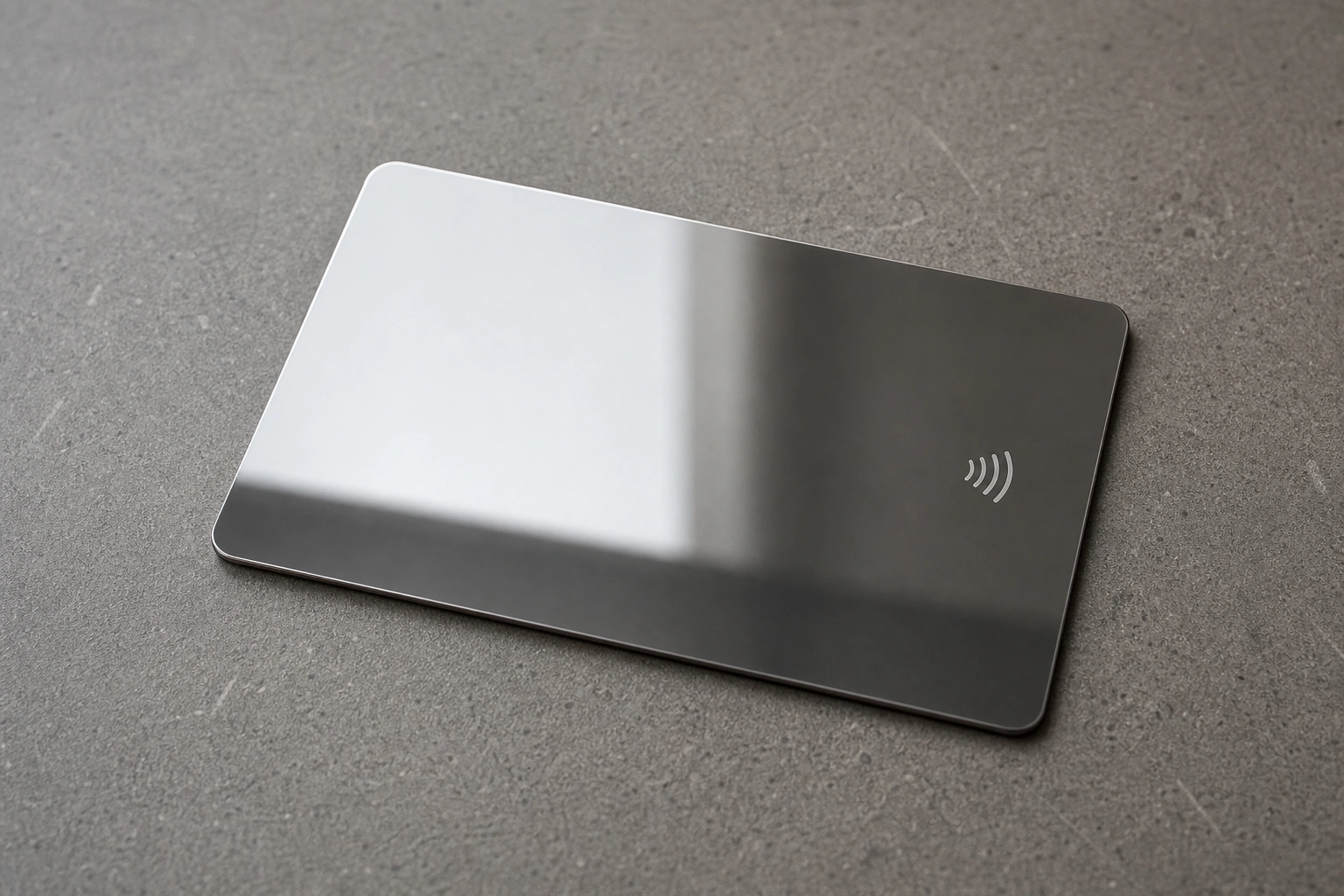
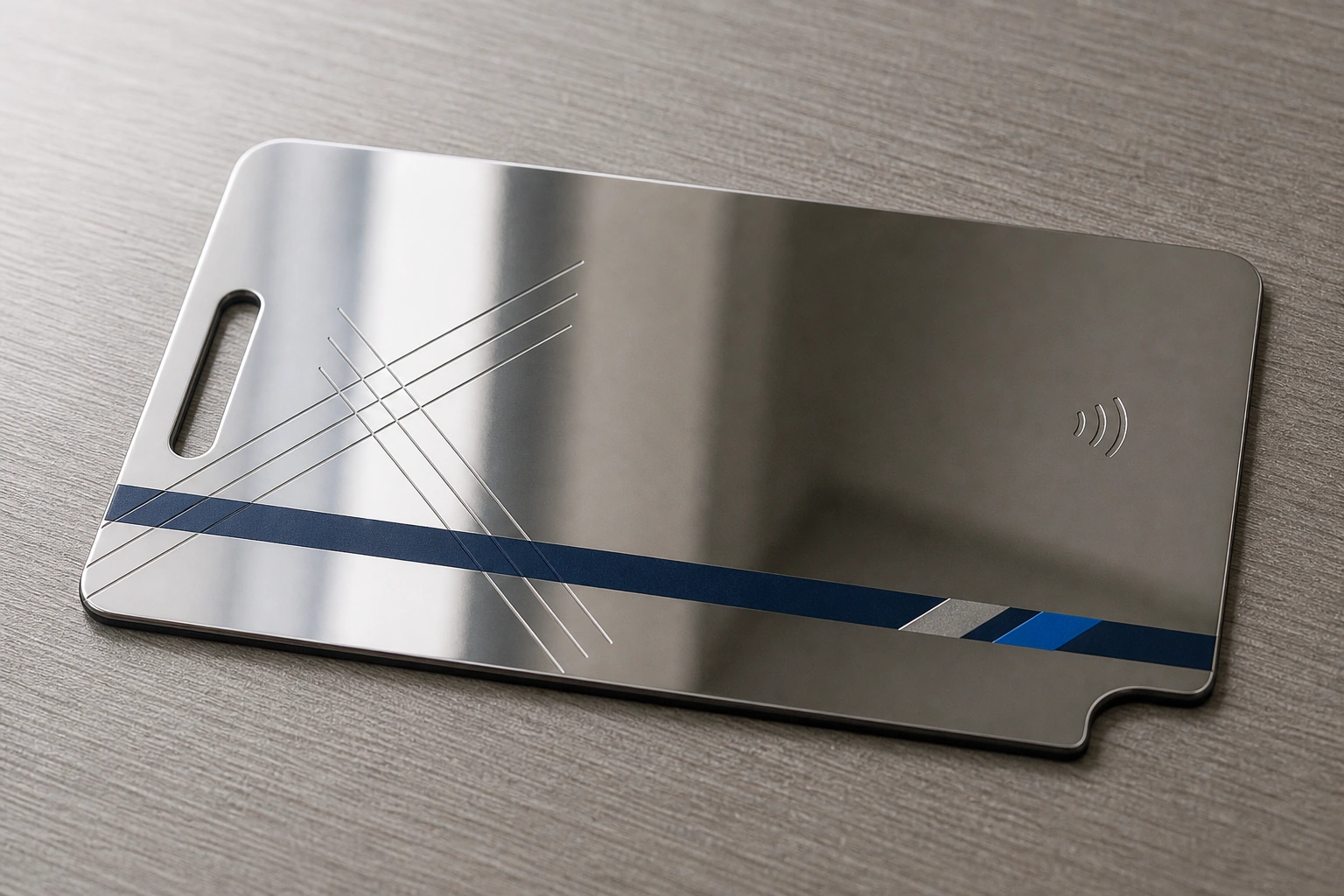
Mirror stainless is the most reflective steel route. It works best when the buyer wants a clean, sharp, high-shine card for premium membership, invitation, VIP, or presentation programs where the card itself is part of the reveal.
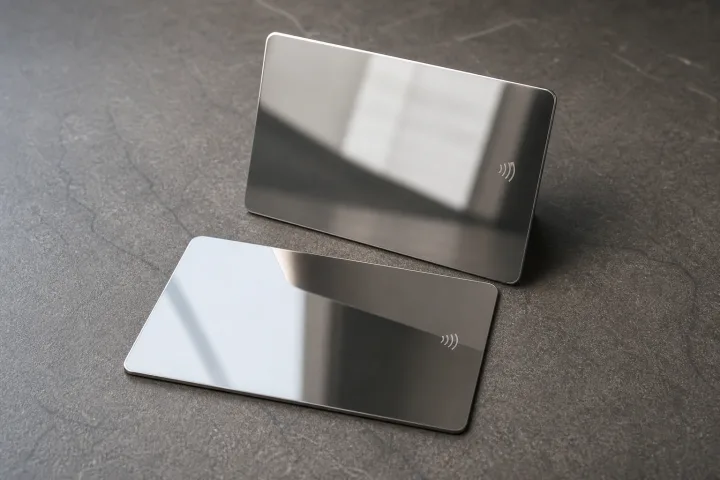
Mirror stainless image set
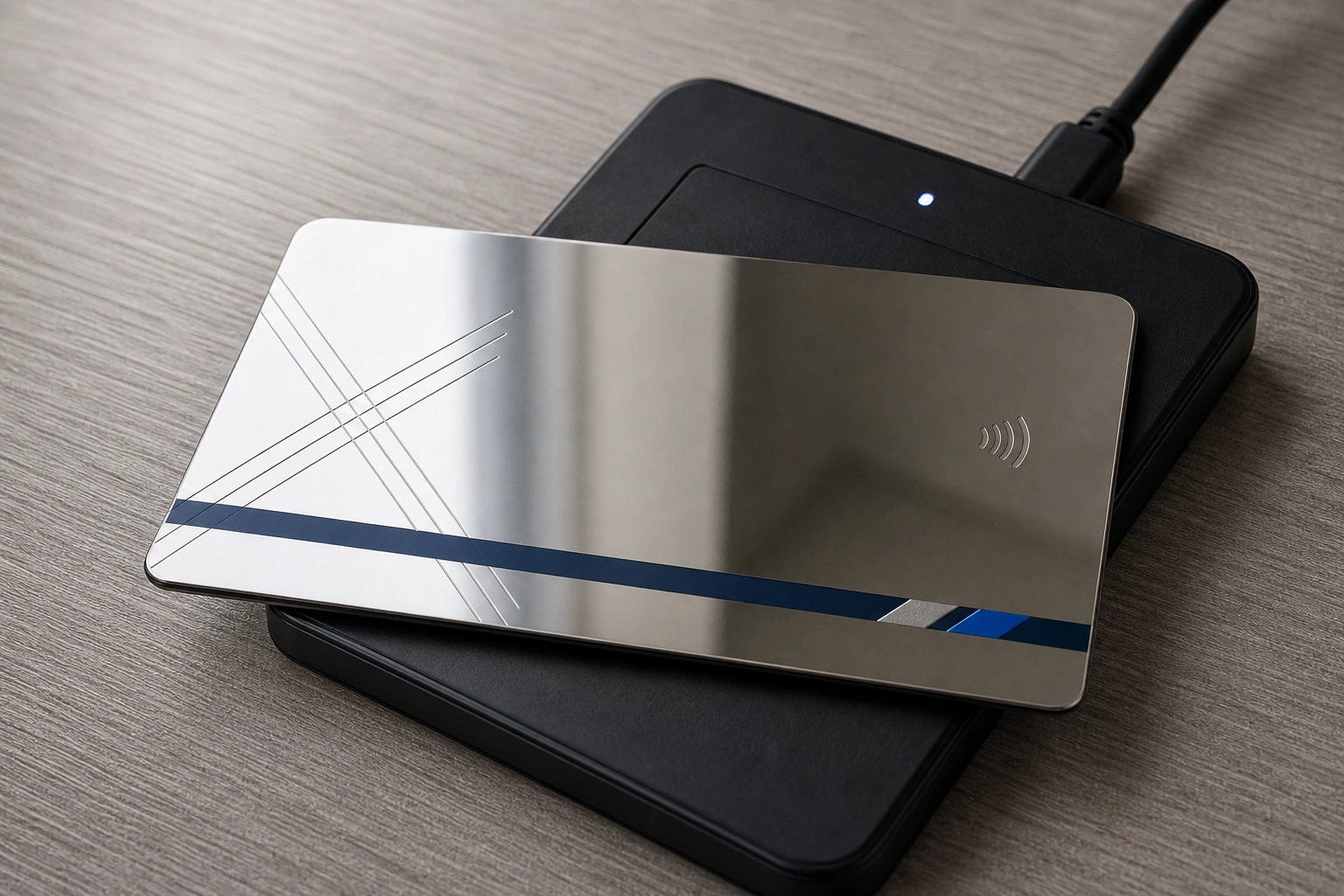
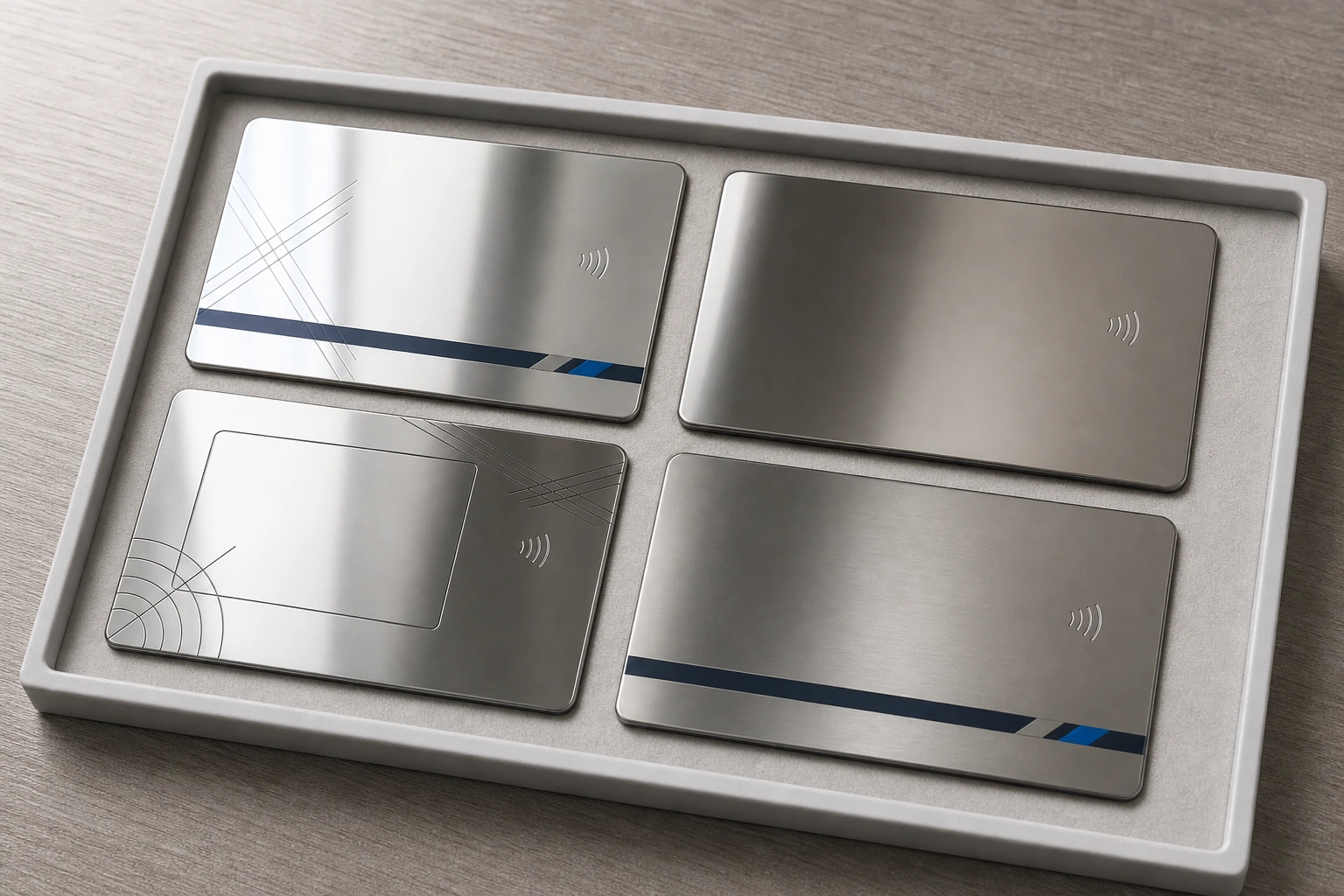
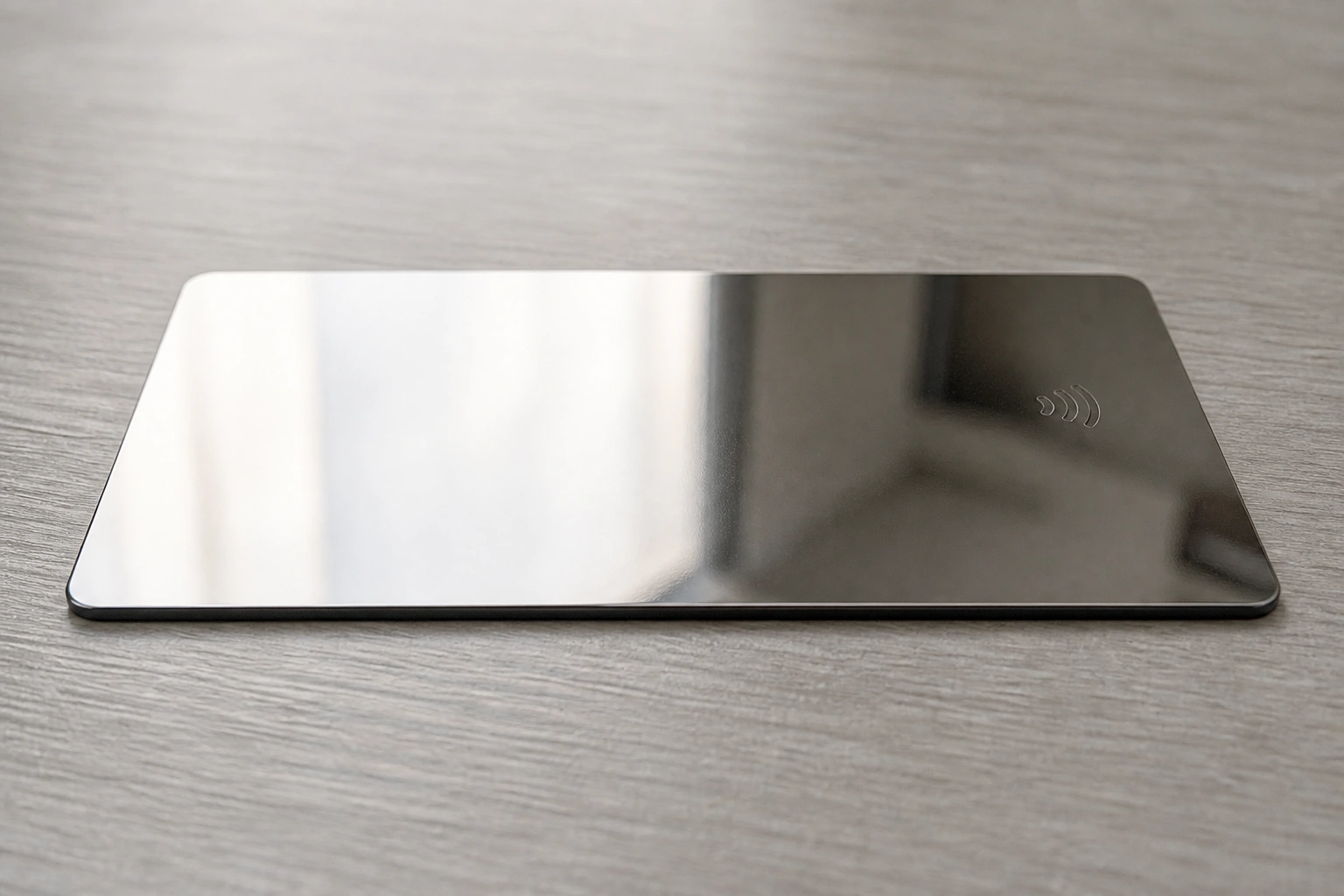
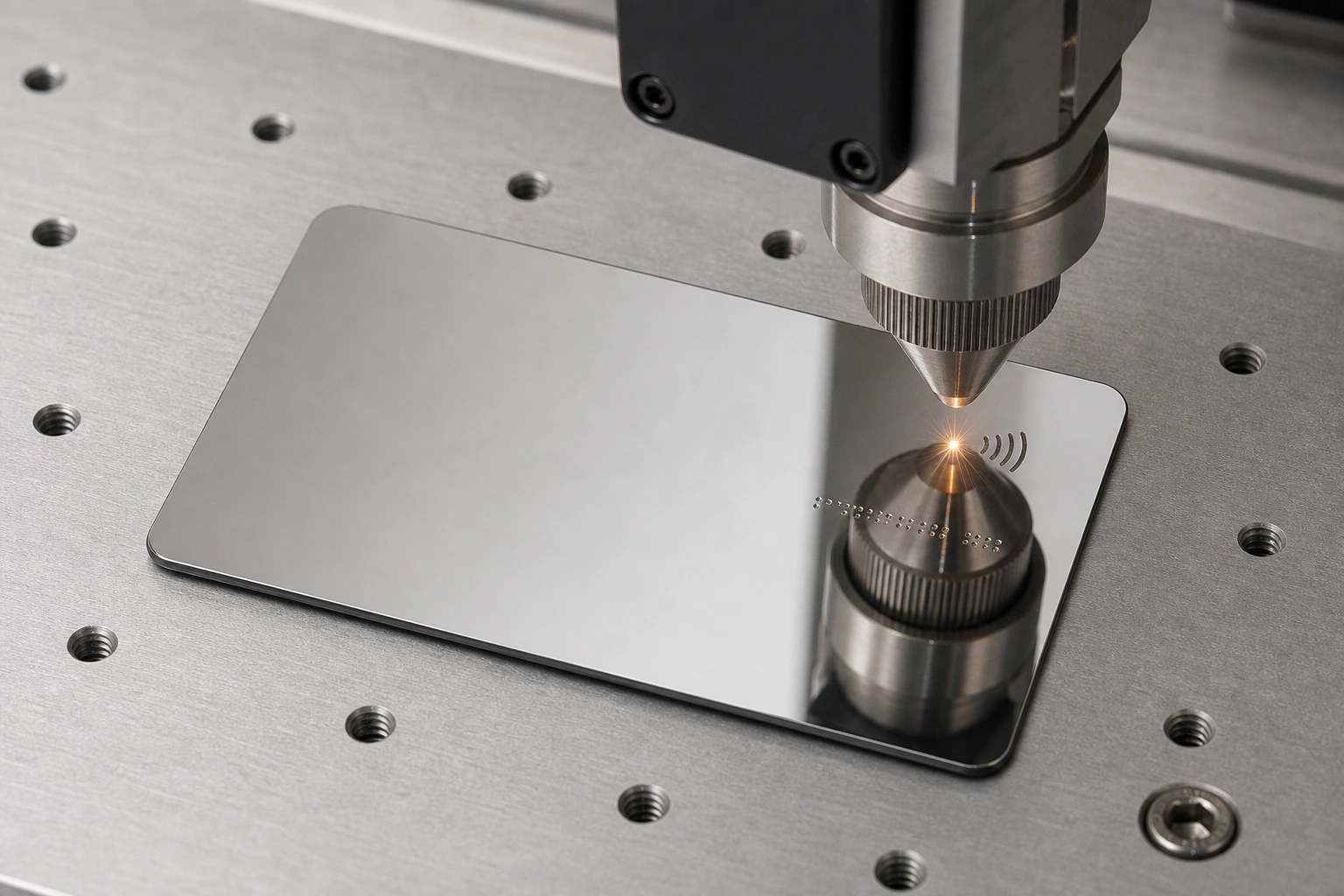
Best uses
- VIP memberships and invitation-only programs
- Premium NFC business cards with restrained marks
- Gift, loyalty, and luxury access credentials
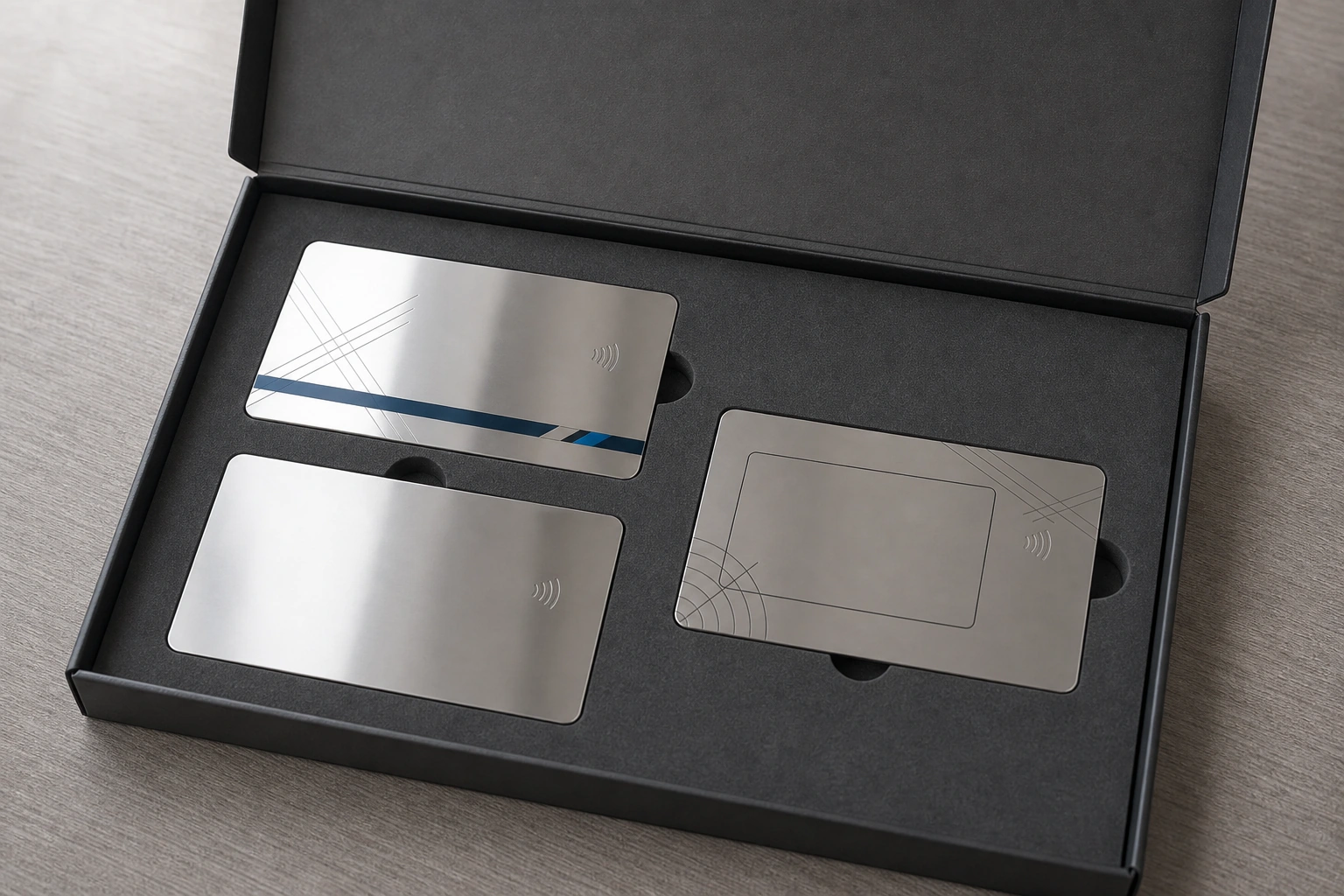
- Sample kits where polished reflection is the hero
- Small batches that need a bright stainless presentation
Finish options
- Mirror-polished stainless face with laser contactless mark
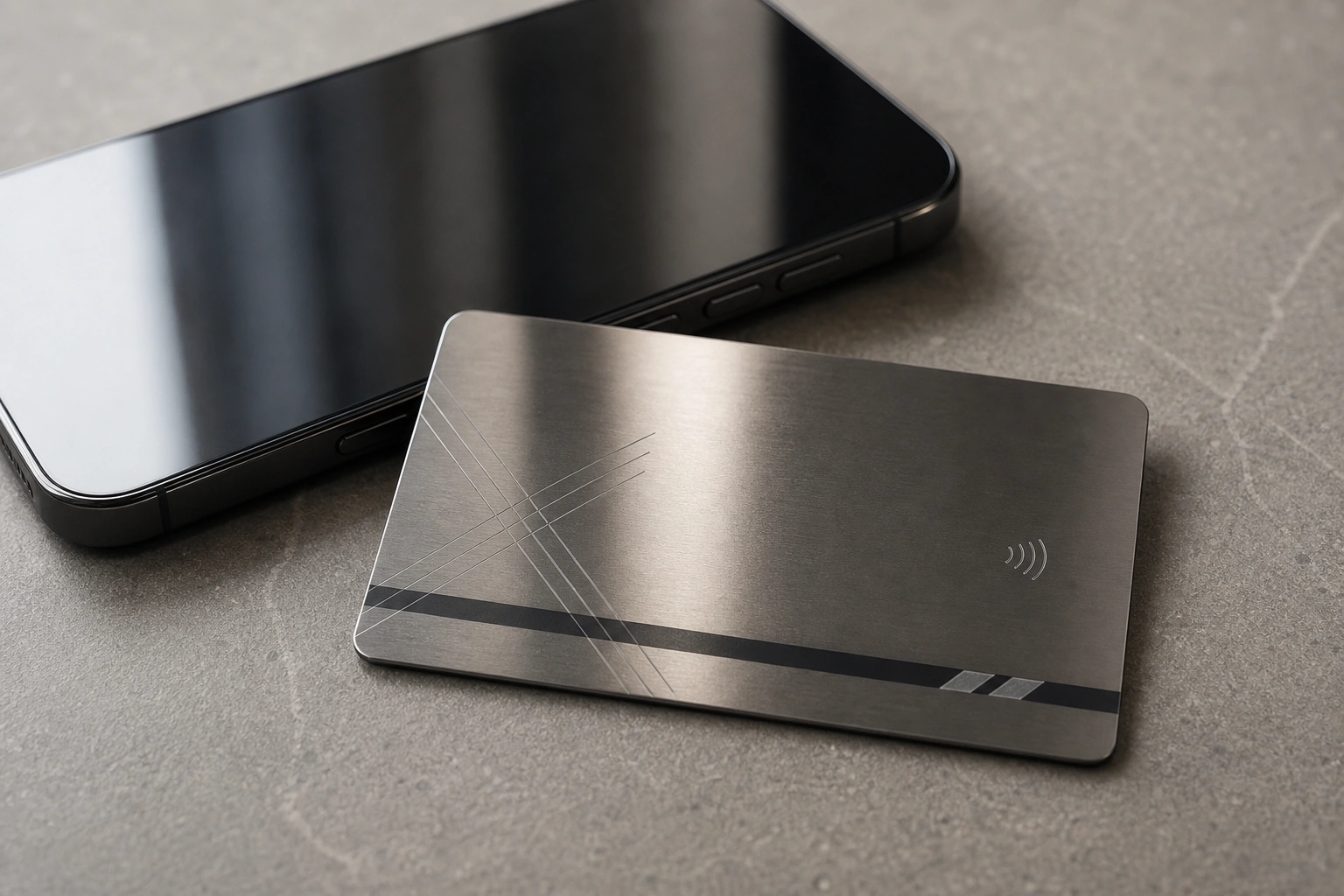
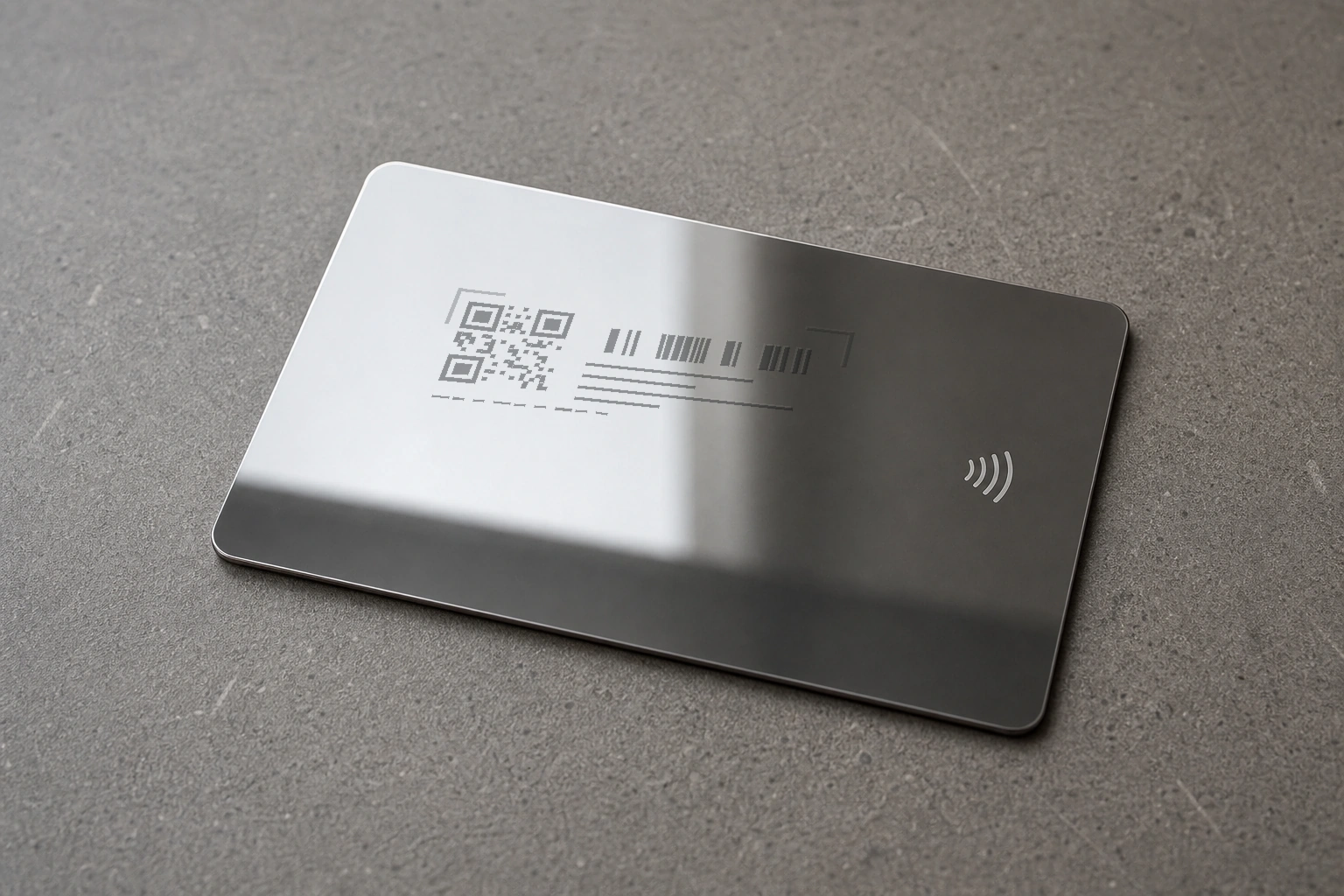
- Black UV print, white ink panels, QR, barcode, and serial zones
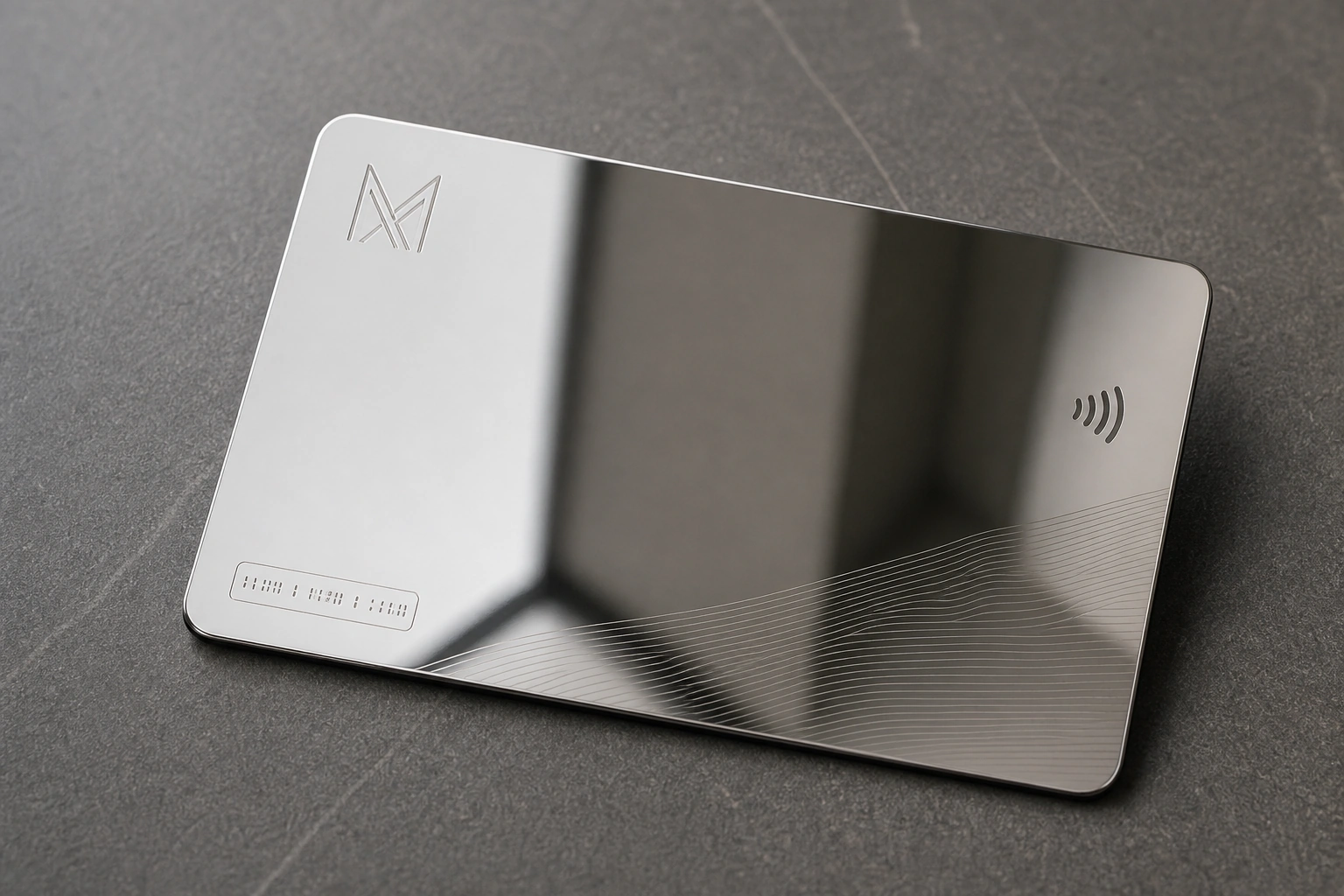
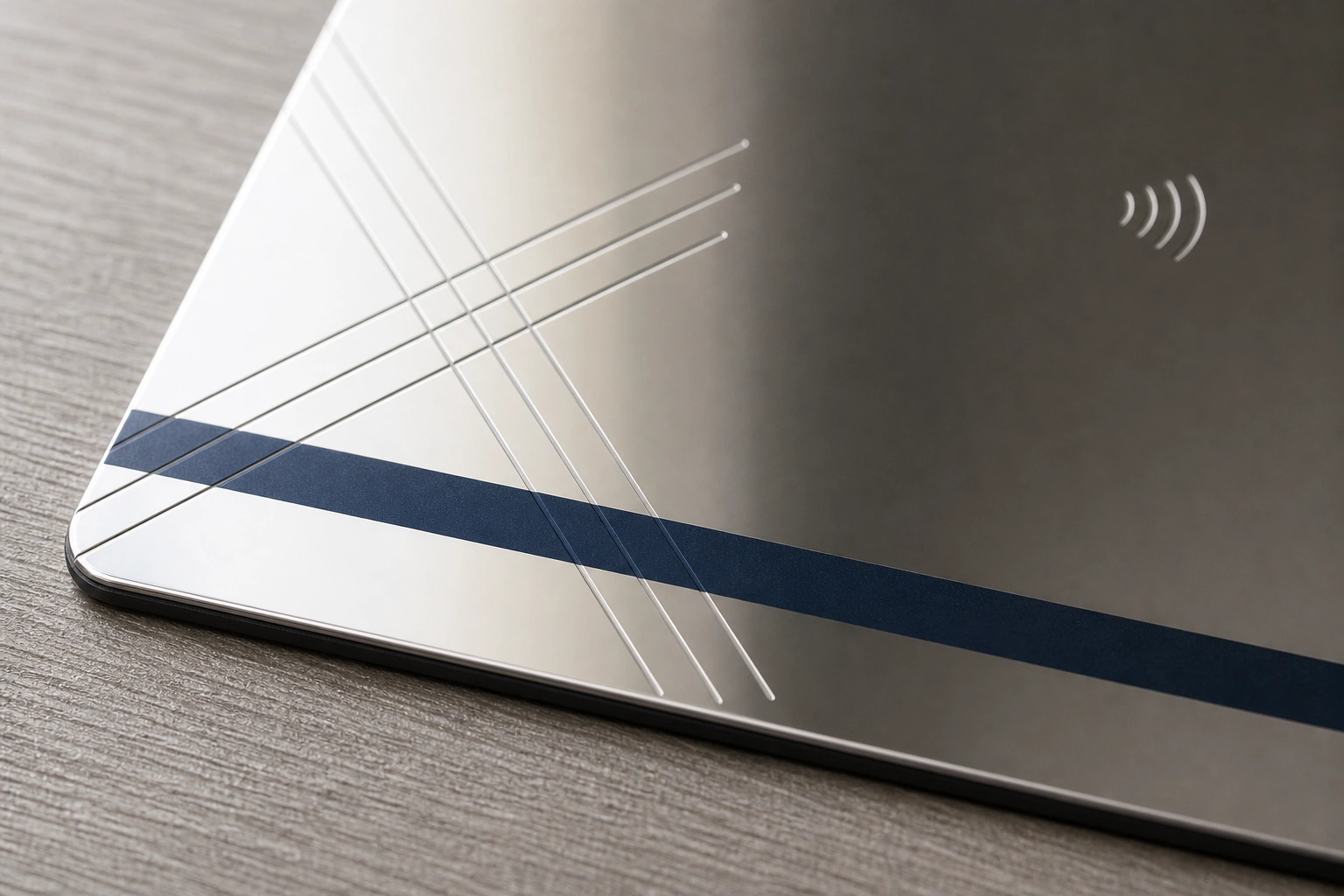
- Subtle line etching, logo marks, and minimal icons
- Optional fingerprint-aware packaging sleeve
- Hybrid ferrite or shielding route for the target reader
RFID construction
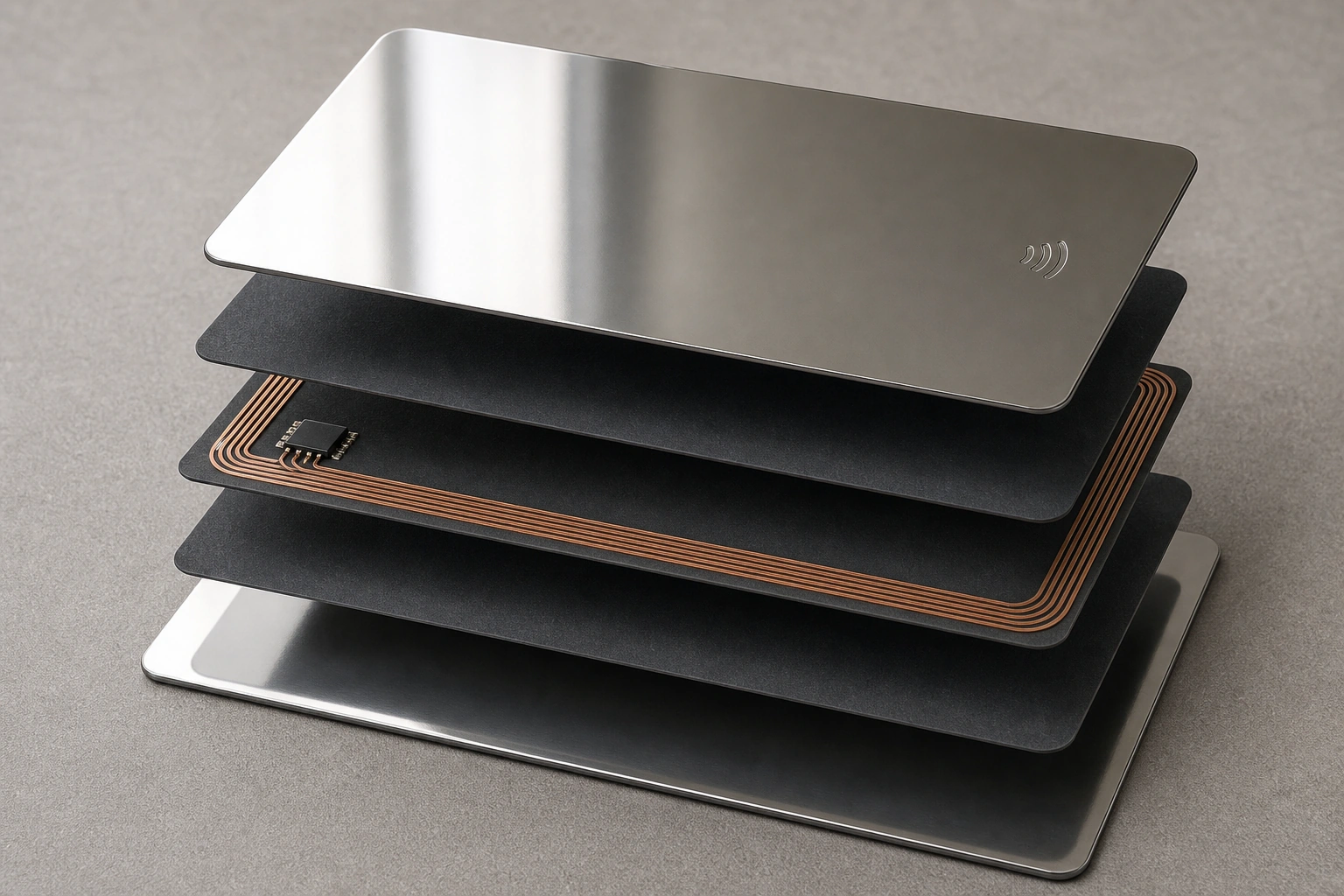
Mirror stainless behaves identically to brushed steel in RF terms — polishing changes the surface, not the shielded construction behind it. That makes the mirror decision purely visual: same ferrite route, same chip options, same reader test. What does change is the approval detail: reflection exaggerates every mark and fingerprint, so the working sample is judged in real light, in hand, alongside the tap test on the target phone or reader.
Print and marking
Mirror steel demands the most restraint in the range. Tiny laser marks, simple line etching, and high-contrast printed panels approve easily; dense graphics fight the reflection and every fingerprint. Artwork is judged on the physical card, in real light, before release.
Frequently asked questions
What are mirror stainless RFID cards best for?
Invitation, VIP, and reveal-led programs where the card is part of the presentation — the polished face reads as an object first and a credential second.
Does polishing change RFID performance?
No. Polishing is a surface treatment; the shielded RF construction underneath is the same as brushed steel, and it is proven the same way — an encoded sample on the target phone or reader.
How do mirror cards handle fingerprints?
They show them, which is part of why artwork stays restrained and why many mirror programs add a sleeve or presentation box. Surface behaviour is judged on the physical sample rather than a screen render.
Specification
| Card size | CR80-style 85.6 x 54 mm, custom shapes by RF review |
|---|---|
| Base build | Polished 304-family stainless face over a ferrite-shielded RF stack |
| Thickness | 0.3 mm to 0.8 mm depending on construction |
| Minimum order | None — single samples to production runs |
| Production time | About one week after artwork and sample approval |
| Visual character | Bright polished stainless with controlled mirror reflection |
| Surface feel | Smooth reflective metal face, high highlight movement |
| Best contrast | Laser etch, black UV print, white panels, minimal logo marks |
| QR / serial | Use printed contrast panels and approve scan distance on the finished sample |
| RF route | LF, HF/NFC, standard and high-security HF routes, selected UHF by reader test |
| Reader approval | Test against the exact phone, lock, gate, or desktop reader |
| Edge options | Rounded CR80 edge, chamfer control, dark RF layer by build |