Metal Card RFID Technology Types
HF NFC Metal RFID Cards
HF NFC metal cards run at 13.56 MHz under ISO/IEC 14443A — the band shared by smartphone NFC, modern access readers, and most membership and event platforms. One frequency, three very different chip families: NFC tag for public phone tap, standard HF for compatible access platforms, high-security AES HF where the integrator requires secure multi-application credentials. The metal construction is the same engineering problem in every case; the chip decision belongs to the system.
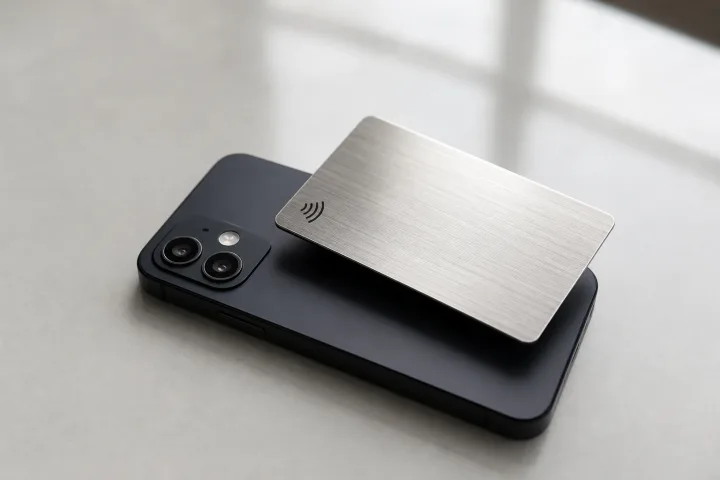
(01) — Route brief
Match the chip, data, and approval path before choosing the finish.
This is the production brief for HF / NFC: what it is for, how it behaves, what needs encoding, and what must pass before the batch starts.
(02) — Visual references
Compare the details that change the finished card.
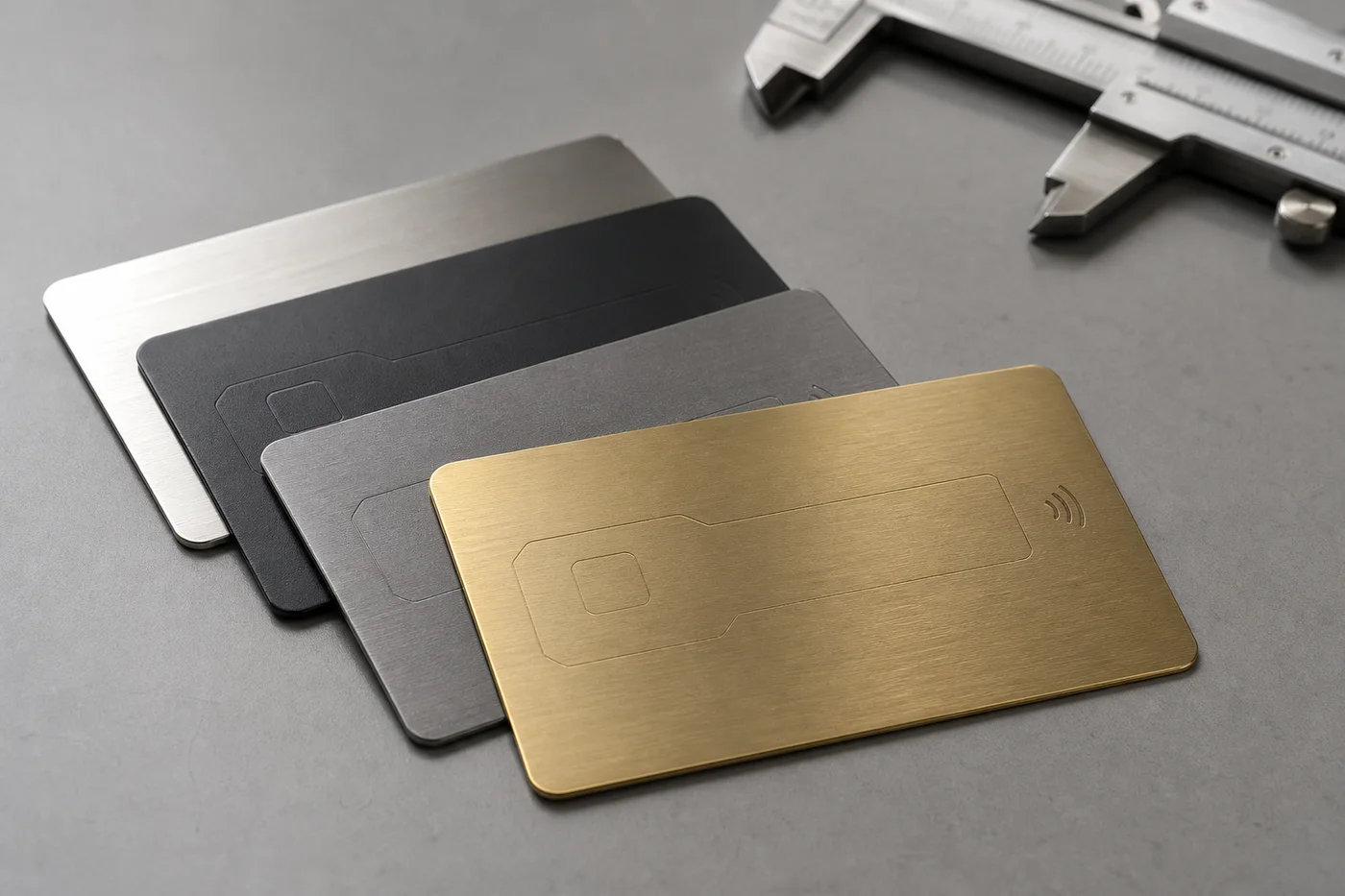
Use this board to read the essentials at a glance: metal finish, marking contrast, edge quality, reader fit, and presentation style.
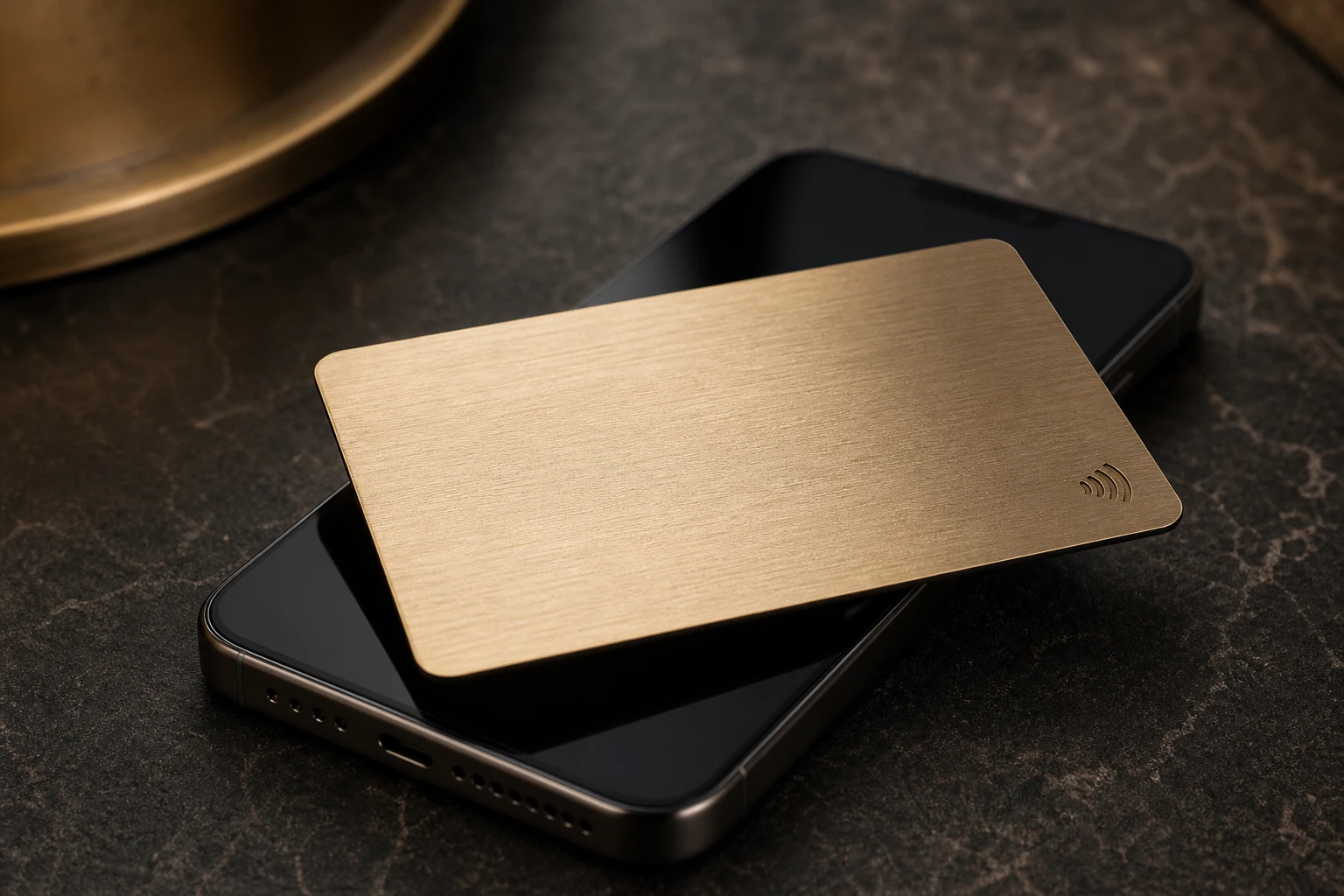
A warm premium finish can still support a reader-tested phone-tap route when the RF stack is approved first.
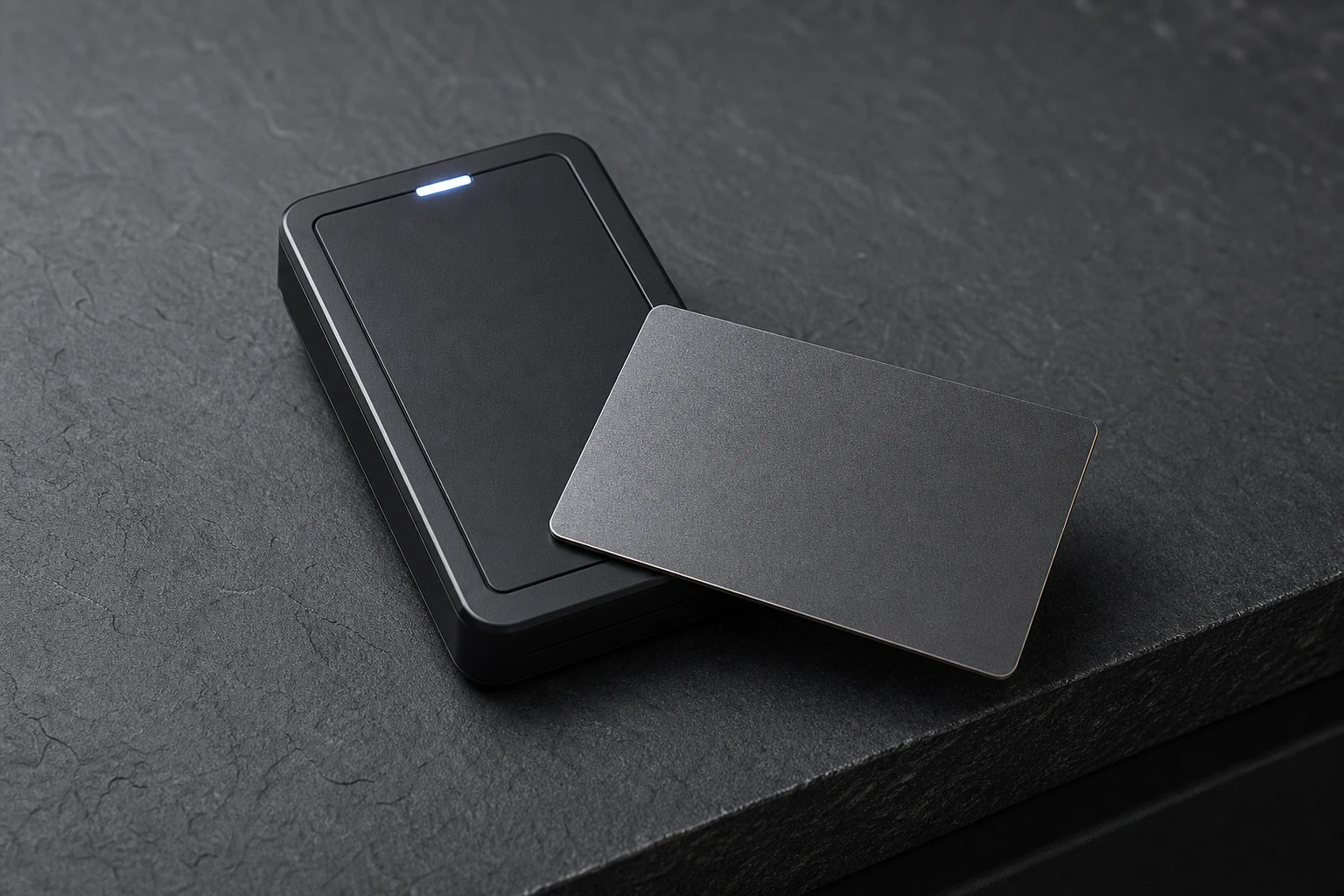
For standard HF, high-security AES HF, and access builds, validate a finished card on the real reader before batch approval.
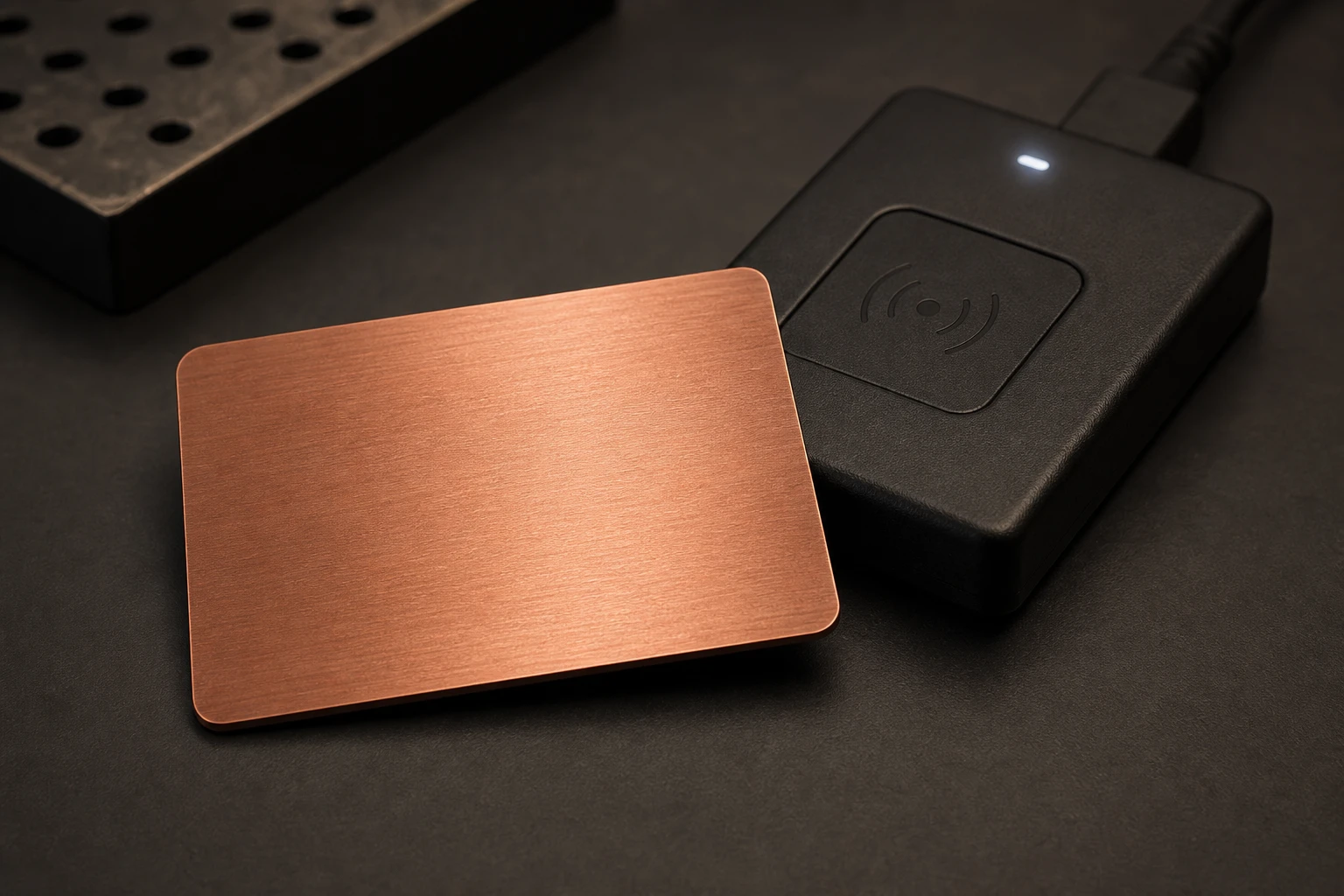
A copper finish direction that preserves the same reader-first approach: shield, antenna, chip, and final surface are tested together.
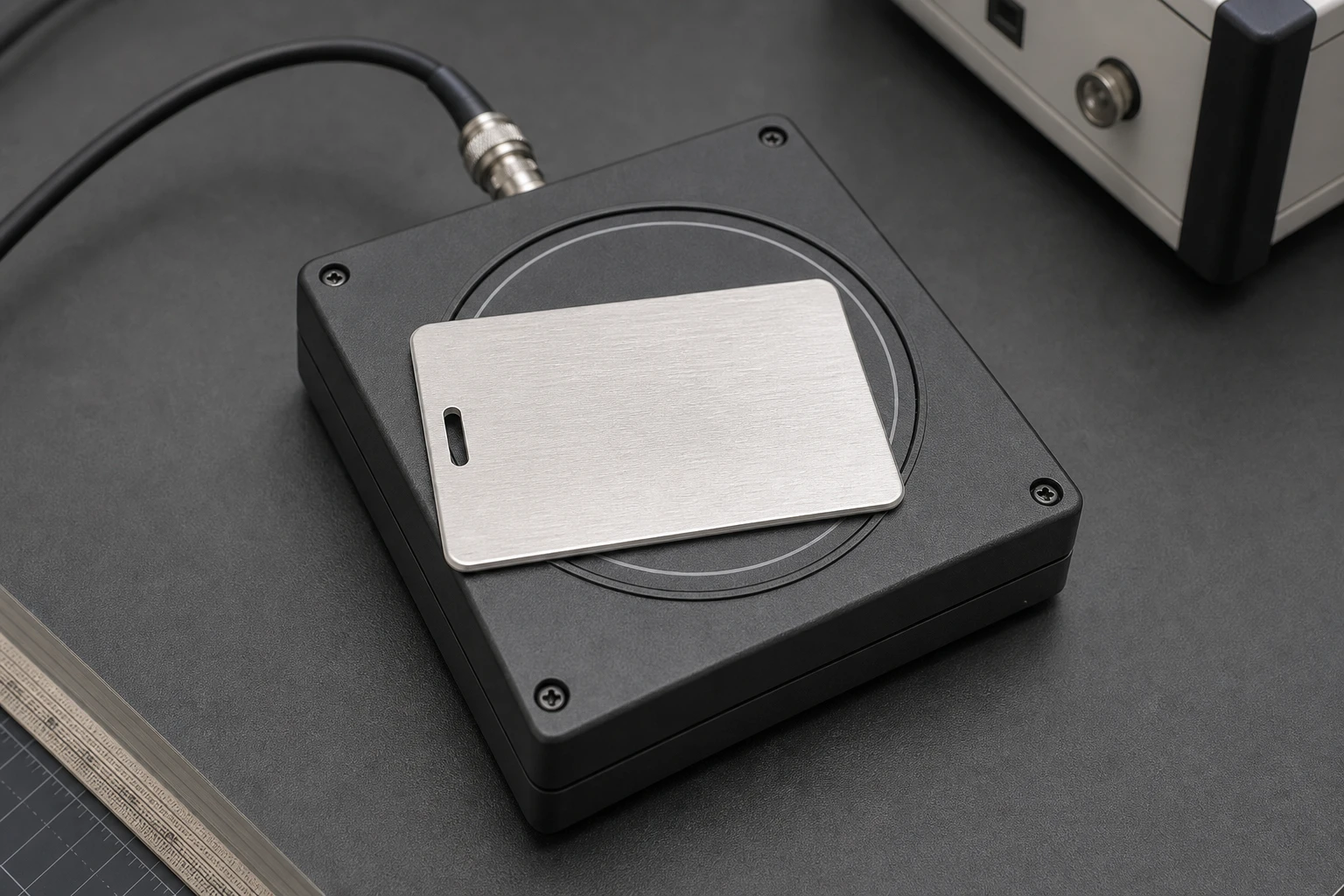
Use a purpose-built test bench for 125 kHz compatibility, legacy reader behavior, and final encoded-card validation.
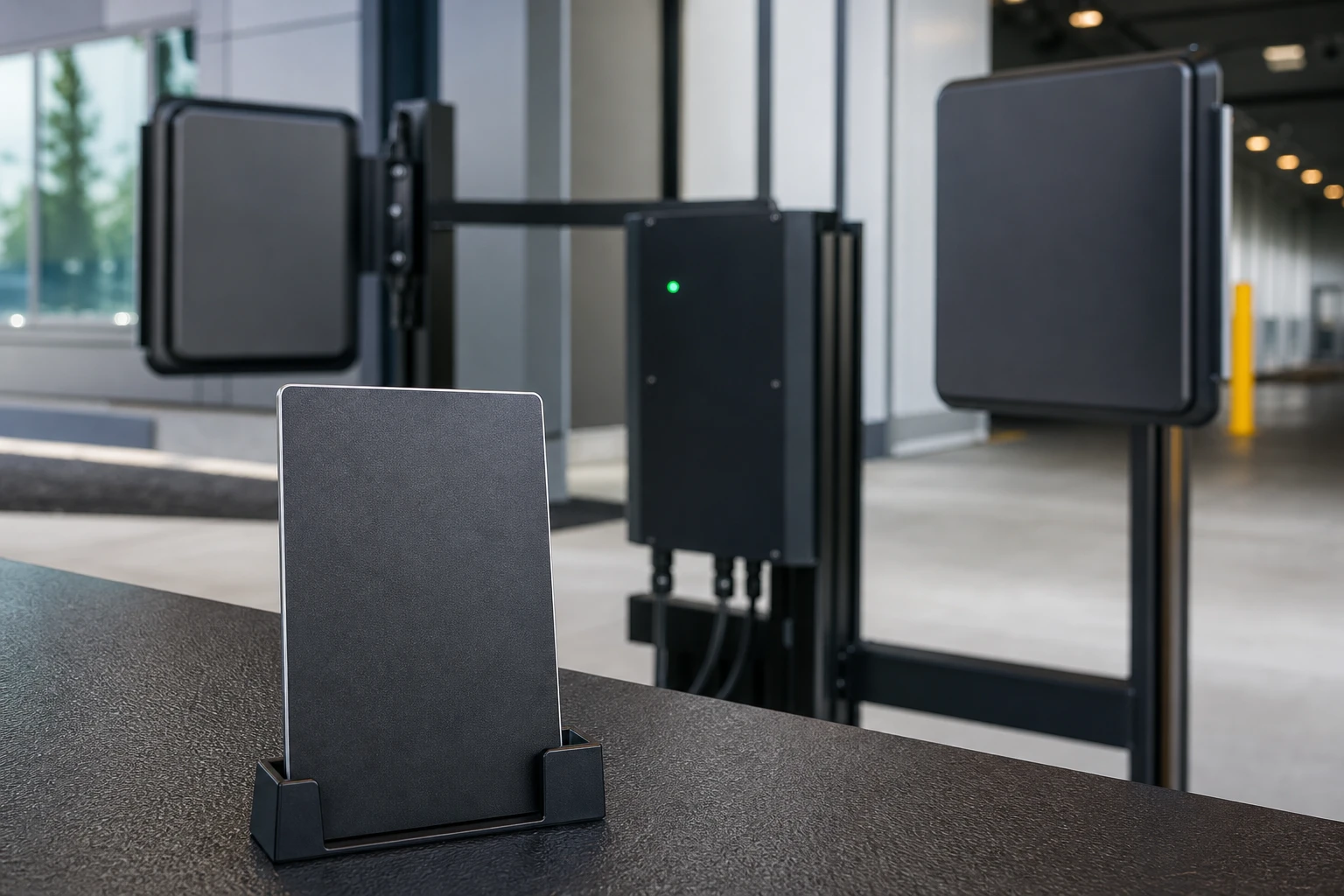
Long-range UHF work needs range, orientation, reader power, nearby materials, and final metal body testing.
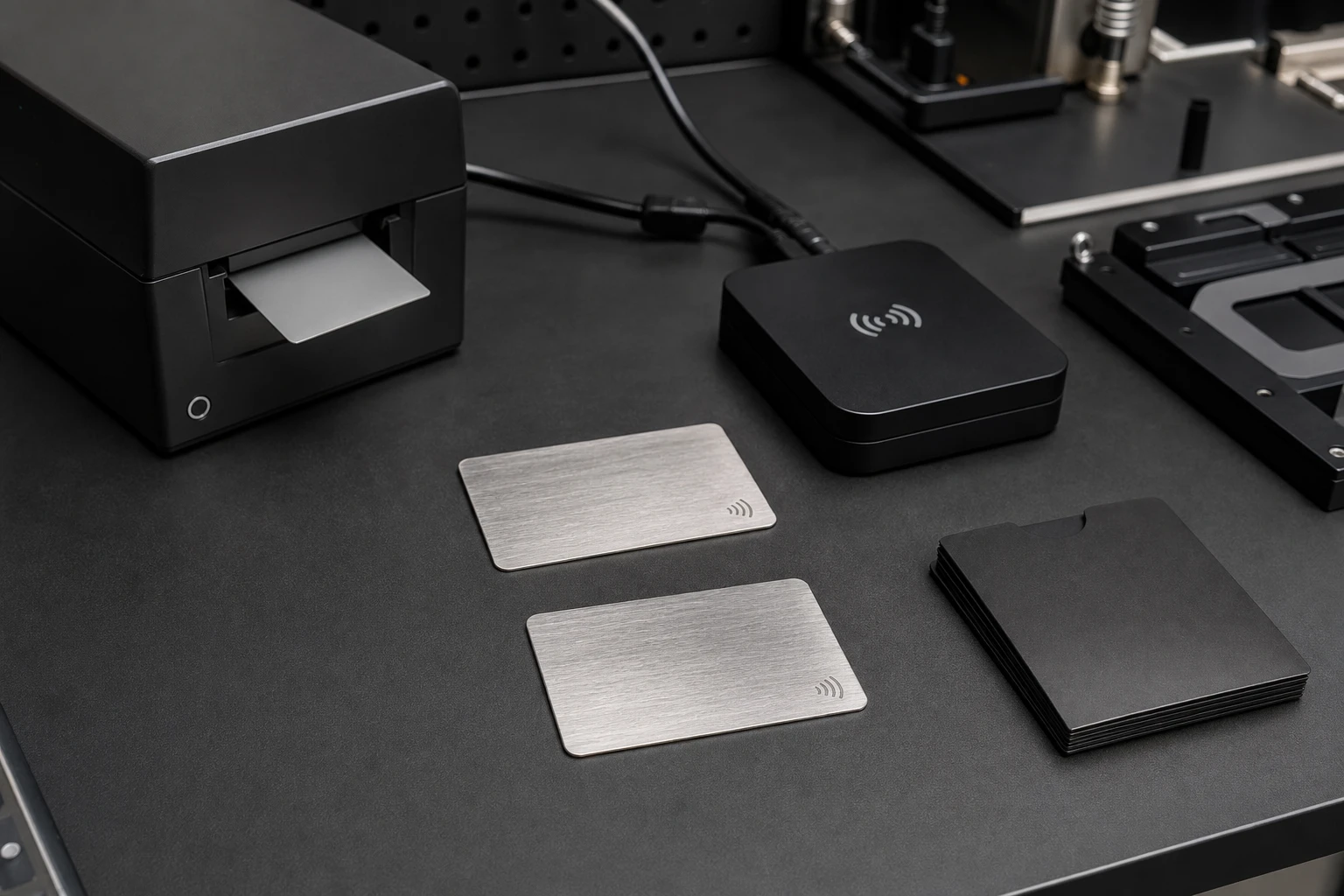
Keep UID exports, NDEF records, QR, serials, packaging labels, and card batches reconciled from one approved source file.
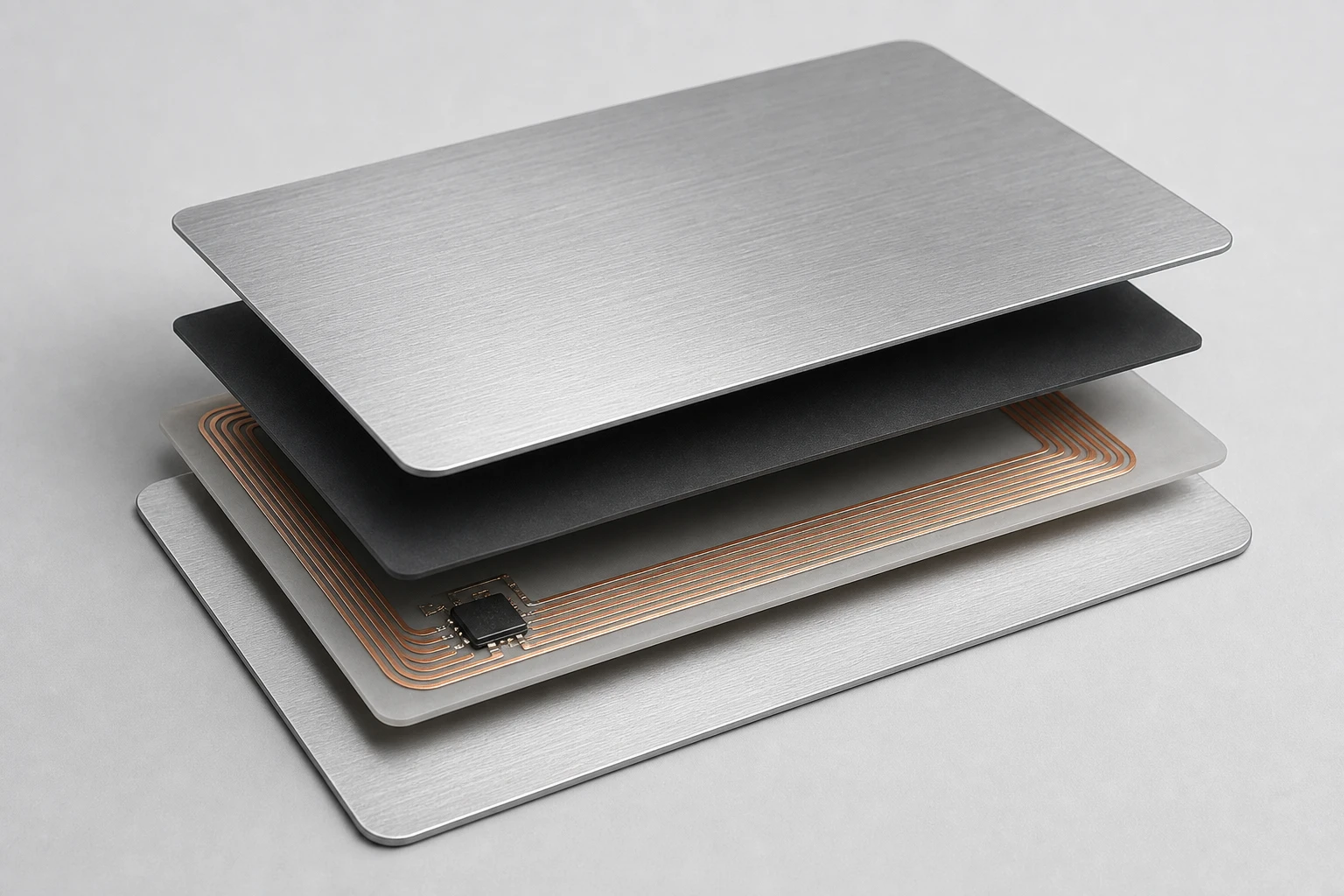
The front face, ferrite layer, antenna, chip, core, and rear face are a single engineered construction—not separate finish choices.
Use this to judge how the wood body, tap area, chip route, and reader test fit together.
One band, three chip families — match the family to the system.
NFC tag is the route when anyone's phone should read the card. Standard HF serves installed access platforms that expect it. High-security AES HF adds AES-secured applications for enterprise and campus estates. Picking the family from the reader specification first, then engineering the shielded metal stack around it, avoids the most common failure: a beautiful card the system cannot read.
Approve a working sample in the real environment.
Test target phones, readers, scanners, or locks in the final ferrite-shielded metal body.
(05) — Applications
Best uses for HF / NFC.
The practical route is selected from the system, audience, and handling context before the final metal finish and mark treatment are approved.
Best for
- Modern access, NFC business cards, loyalty, events, hospitality, member ID, and phone-tap programs.
- Metal card programs that can validate a finished encoded sample on the target reader
- Projects that need print, serial, QR, packaging, and data handling reconciled in one approved brief
Quote details
- Target reader, lock, phone, scanner, or platform
- Metal finish, quantity, and packaging need
- Artwork files, data file, and encoding requirements
- Sample approval and delivery deadline
(06) — Specification
Production details to confirm before sample or batch.
Metal card production should confirm body construction, finish, chip route, data handling, marking layers, and approval samples in one brief.
(FAQ) — Common questions
Questions buyers ask about HF / NFC.
01When should I choose HF for a metal card?
When the program involves smartphone NFC, a modern 13.56 MHz access platform, or an event and membership system built on ISO/IEC 14443. It is the default band for new programs; LF exists mainly for legacy compatibility.
02Are HF metal cards phone-readable?
They can be — that depends on the chip family and the encoded record, not the band alone. NFC tag with an NDEF record taps phones directly; standard and high-security HF are usually reader credentials rather than public tap experiences.
03Why does an HF metal card need a working sample?
Metal detunes a 13.56 MHz antenna, so the ferrite or hybrid shielding, chip, thickness, and final finish are validated together — on the agreed phones, readers, or locks — before any batch is released.
(09) — Quote HF / NFC
Send quantity, chip, material, print and encoding requirements.
Engineered antenna pathFerrite or hybrid RF structureLaser and deep engravingBrushed, plated, coated finishesUID, NDEF, and access encodingSample kits and production approval