Automotive event guide · 8 min read
VIP Metal Passes for Rallies, Track Days and Car Events
A metal pass is most effective in the event layers where the credential itself should feel collectible: driver, paddock, sponsor, hospitality, media, or host access. Its format, data, reader route, and traffic flow must be designed together.
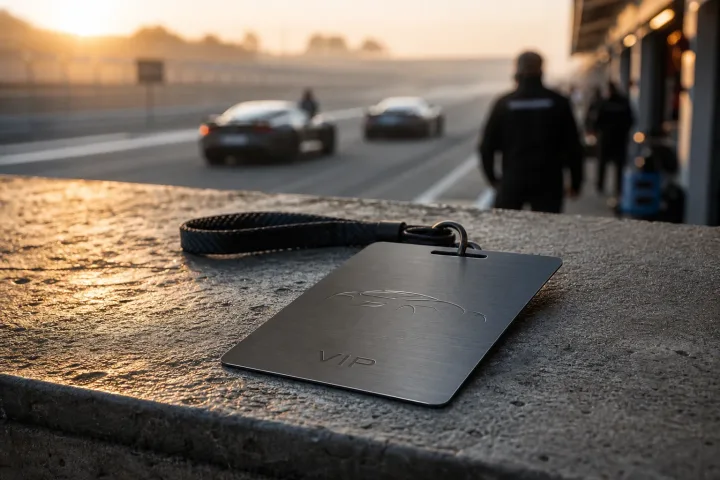
Industry program views
Design the pass around movement through the event.
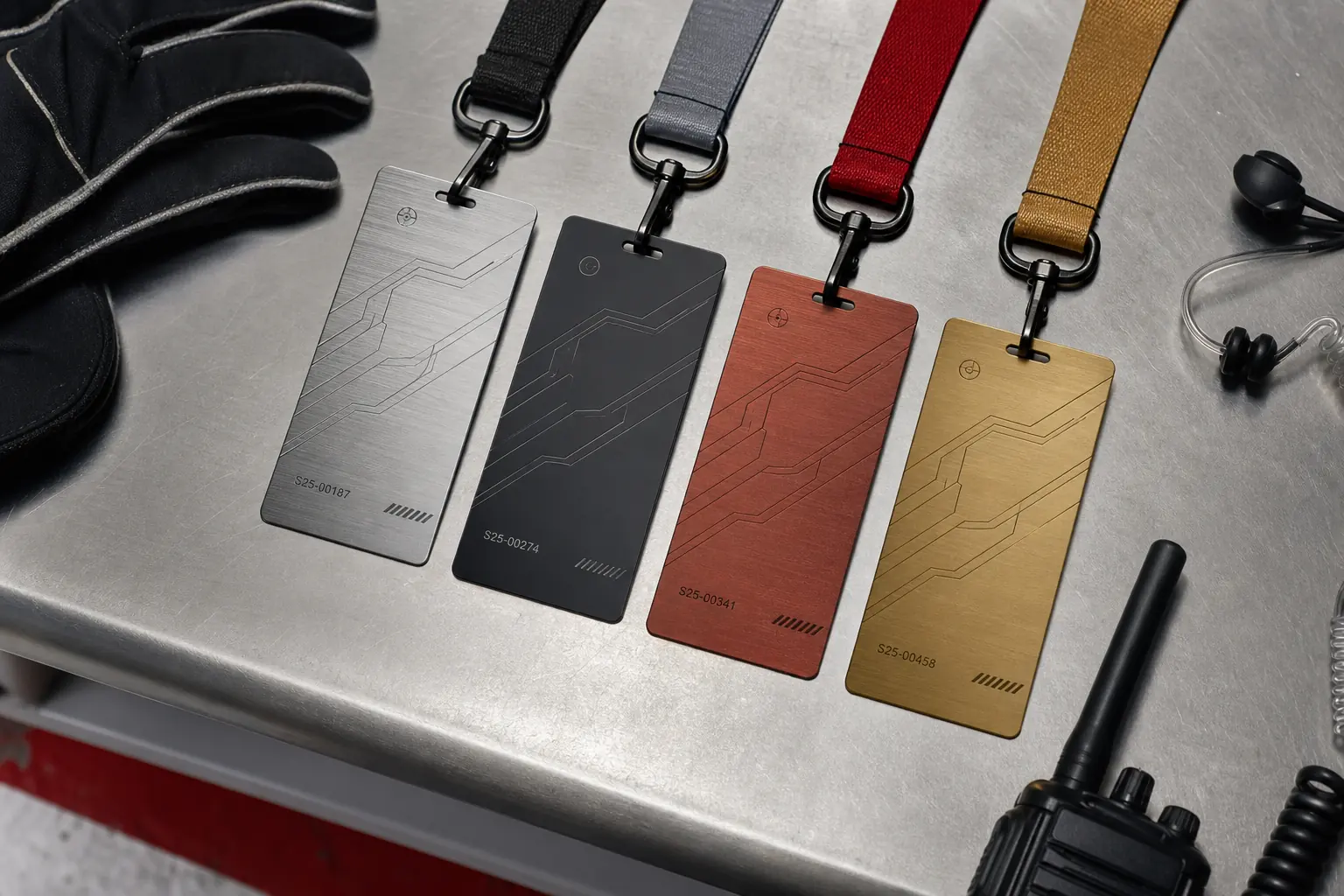
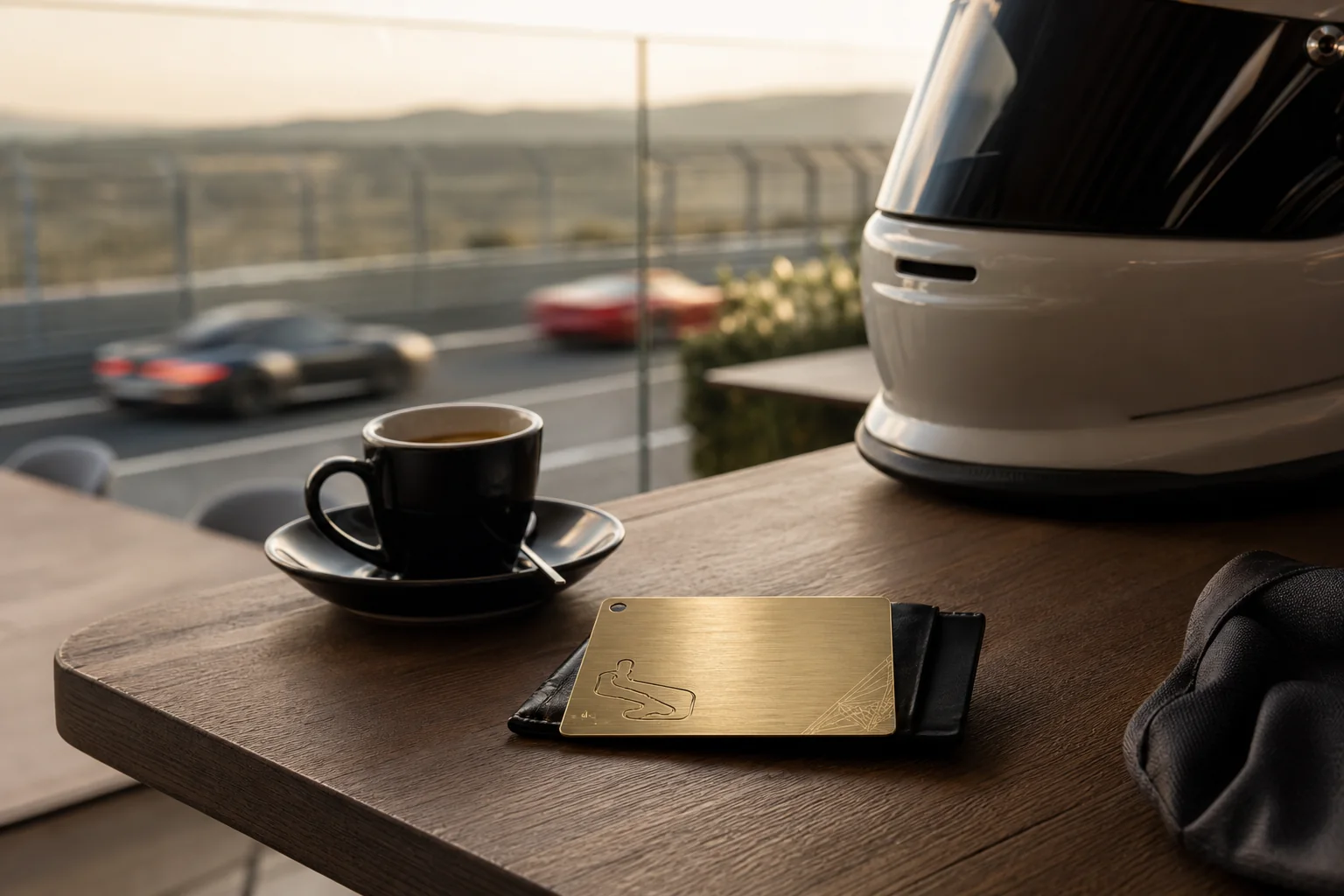
Pit lane, check-in, tier recognition, hospitality, and a collectible issue pack each expose different design and operational requirements.
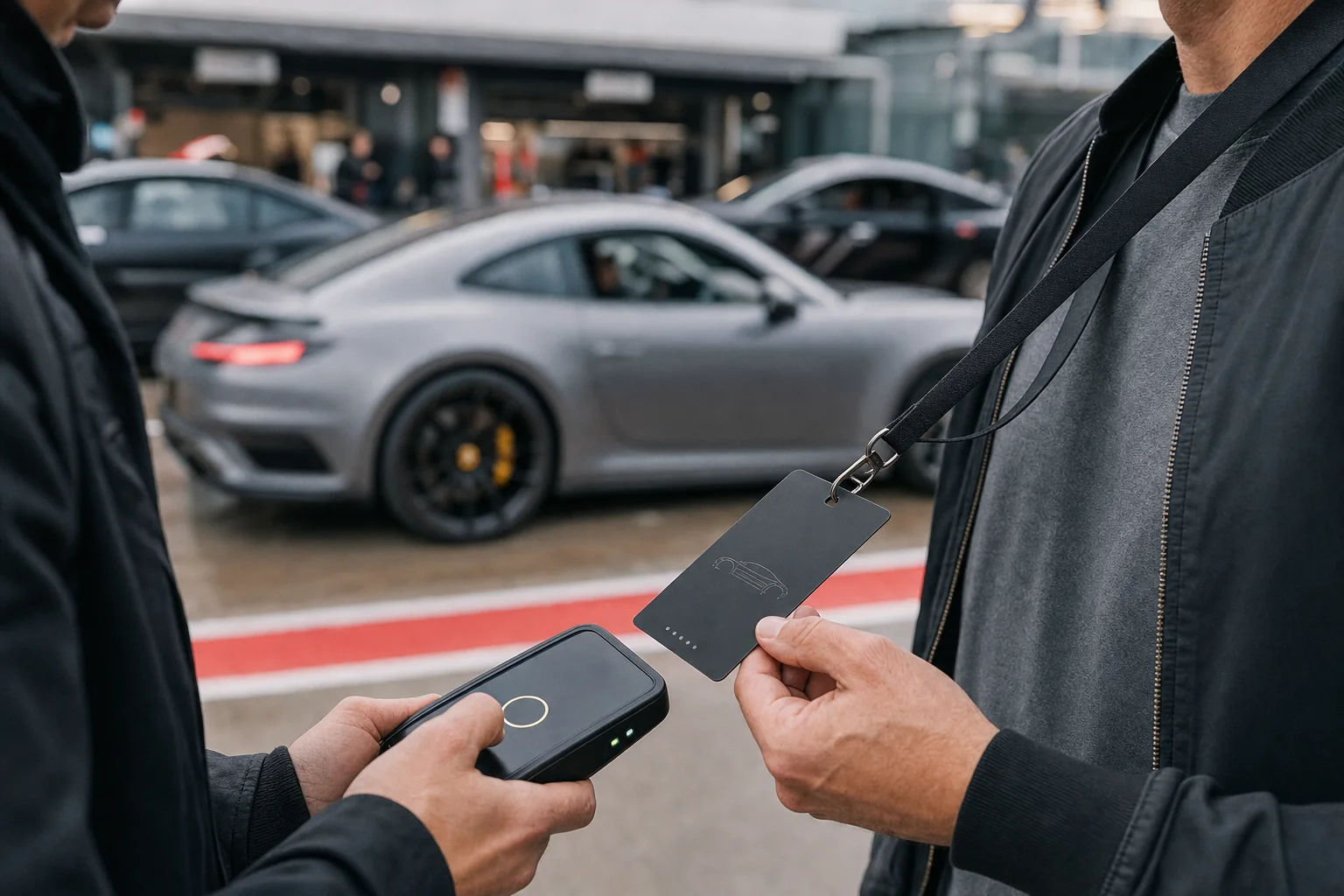
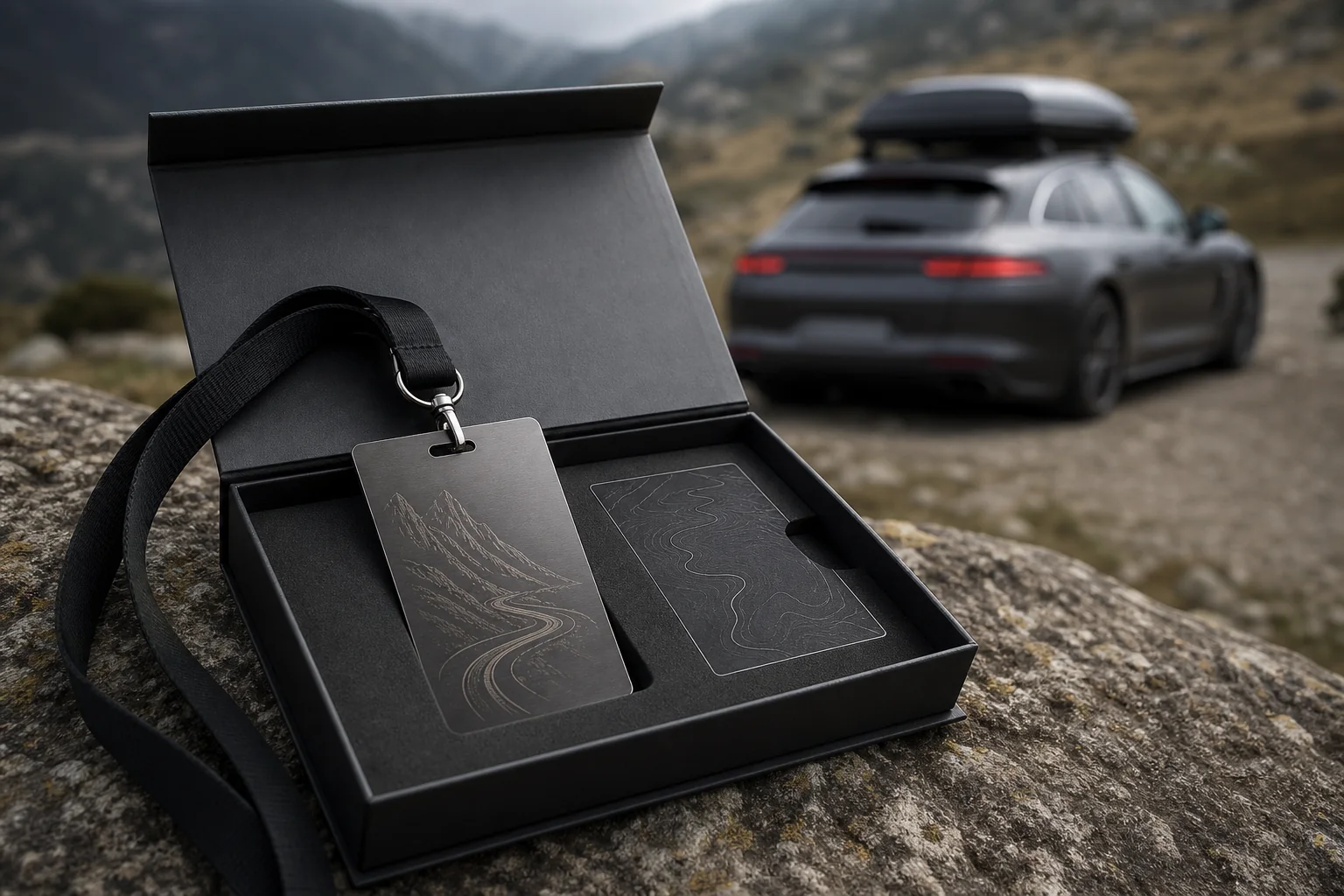
Start with the access map and traffic plan.
List every zone, entrance, operating hour, and role before drawing the pass. Driver, team, paddock, media, sponsor, hospitality, and guest access often overlap but are not identical. Decide what gate staff must see instantly and what a scanner or reader must validate. A beautiful credential cannot compensate for unclear zones or a slow check-in flow.
Choose wallet card, lanyard pass, or both.
A lanyard format improves visible identification and can include a controlled slot or hole, but every cut must be reviewed against the antenna path and mechanical stress. A club may keep its normal CR80 member card for identity and issue a separate metal pass for a flagship event. This protects the long-term membership credential while making the event object collectible.
Use two validation routes where failure is costly.
RFID or NFC may support fast reader validation, while QR or serial provides a practical fallback. Confirm lighting, reflection, scanning distance, connectivity, staff device type, and offline procedure at the real entrance. Dark or mirror metal needs a high-contrast code zone. Every printed or engraved identifier should reconcile with the registration file.
Make tiers obvious without making them noisy.
Use metal tone, edge color, lanyard color, one large role mark, or controlled engraving to distinguish access levels. Avoid tiny text and decorative complexity that slows recognition. The visible tier helps staff route guests, while the live event system remains the authority for current access and revocation.
Plan fulfilment, late changes, and recovery.
Events change until the final day. Set a data cutoff, reserve blank or generic credentials for controlled on-site issue, and define how lost passes are disabled or marked. Package premium passes for invited guests, but keep bulk staff handling simple. Scan-test the complete batch and keep a reconciliation report before dispatch.
Best uses
- Paddock, driver, sponsor, media, and hospitality access
- Private rallies, tours, launches, and track days
- Collectible annual or limited-edition credentials
- Programs needing QR, serial, NFC, or reader-based validation
Relevant metal card routes
Frequently asked questions
Can metal event passes have lanyard slots?
Yes. Slot size and position must be reviewed against the antenna route, card thickness, edge finish, and pulling stress before the outline is approved.
Can one pass show several access levels?
The visual tier can indicate a broad role, while the event system holds detailed permissions. Keep the visible hierarchy simple enough for gate staff to recognise quickly.
Should an event use RFID, NFC, or QR?
Choose from the installed scanners, phone journey, traffic volume, connectivity, and security need. High-risk entrances should have a tested fallback rather than depending on one method.
Specification
| Card format | CR80 85.6 × 54 mm by default; custom outlines after RF review |
|---|---|
| Thickness | 0.3–0.8 mm depending on construction |
| Minimum order | None — from one approval sample to production runs |
| Production time | About one week after artwork and sample approval |
| Personalization | Member name, ID, tier, serial, expiry, QR, NFC data, and matched packaging |
| Approval path | Finish proof, encoded working sample, reader or phone test, production approval |
| Format | CR80 wallet card or custom lanyard pass after antenna and stress review |
| Validation options | QR, serial, NFC, compatible RFID access, or combined fallback |
| Critical test | Gate throughput, scan contrast, reader behavior, lanyard stress, and offline recovery |
Related metal RFID card pages
- Metal RFID Membership Cards for Yacht Clubs and Marinas
- Metal RFID Membership Cards for Private Aviation and FBO Lounges
- Metal RFID Membership Cards for Golf and Country Clubs
- Metal RFID Membership Cards for Luxury Residence Clubs
- Metal RFID Membership Cards for Private Wellness Clubs
- Custom Metal Membership Cards for Car Clubs
- Metal Membership Cards for Car Detailing Studios
- How to Build a Luxury Car Rental VIP Membership Program
- Metal Membership Cards for Private Car Storage Clubs
- Dealership VIP Cards That Extend the Owner Relationship
- NFC, RFID or QR for Automotive Membership Cards?
- How to Design Black, Gold and Founder Car Club Tiers
- What Can Be Personalized on a Metal Automotive Card?
- Metal vs Plastic Membership Cards for Automotive Brands
- How NFC Metal Cards Connect Automotive Member Portals
- Seven Benefits an Automotive VIP Card Can Support