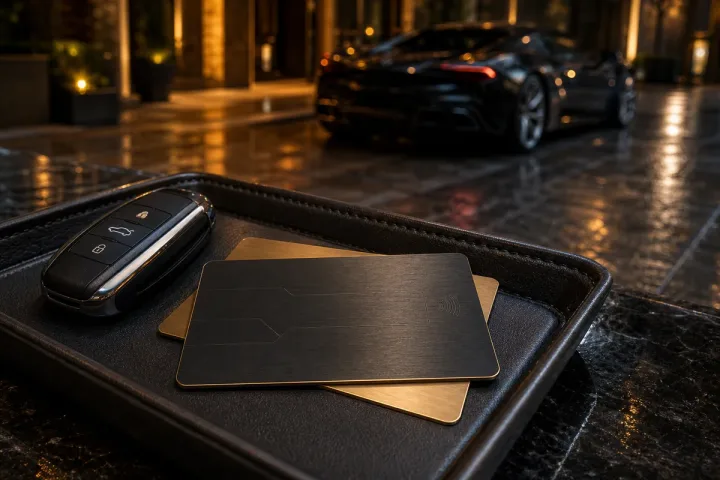
Metal event passes are for the layers of an event where the credential itself should feel collectable: VIP, backstage, sponsor, artist, hospitality, launch, or host access. The final outline, lanyard or sleeve route, data, reader behavior, and traffic plan need to be checked before production.
Make every high-value entry feel intentional—from the first invitation to the final scan.
Concerts, VIP meetings, trade shows, private dinners, launches, and invitation-only events need a pass that carries the right visual signal while remaining practical at check-in, on the floor, and after the event.
01 / What this showsConcert and backstage access
A premium pass can become part of the live experience when its lanyard route, finish, access technology, and stage-side handling are approved together.
02 / What this showsTrade-show credential
For high-value exhibitions, the credential must remain legible and durable across registration desks, hosted meetings, controlled zones, and packed show floors.
03 / What this showsPrivate meeting invitation
Executive meetings, investor sessions, and hosted client events can use the pass as a discreet arrival object before it becomes a working access credential.
04 / What this showsInvitation-only private event
Rose-gold metal, warm engraving, and a tactile lanyard slot suit dinner, gala, brand, and collectors' events where the pass should stay worth keeping.
05 / What this showsCustom pass form
Slots, holes, and cut-through details need RF review before the lanyard, key ring, or pass holder is approved.
06 / What this showsFast visual verification
High-contrast QR and serial zones give gate teams a clear fallback to NFC or RFID when the check-in route needs visual confirmation.
07 / What this showsSponsor and VIP presentation
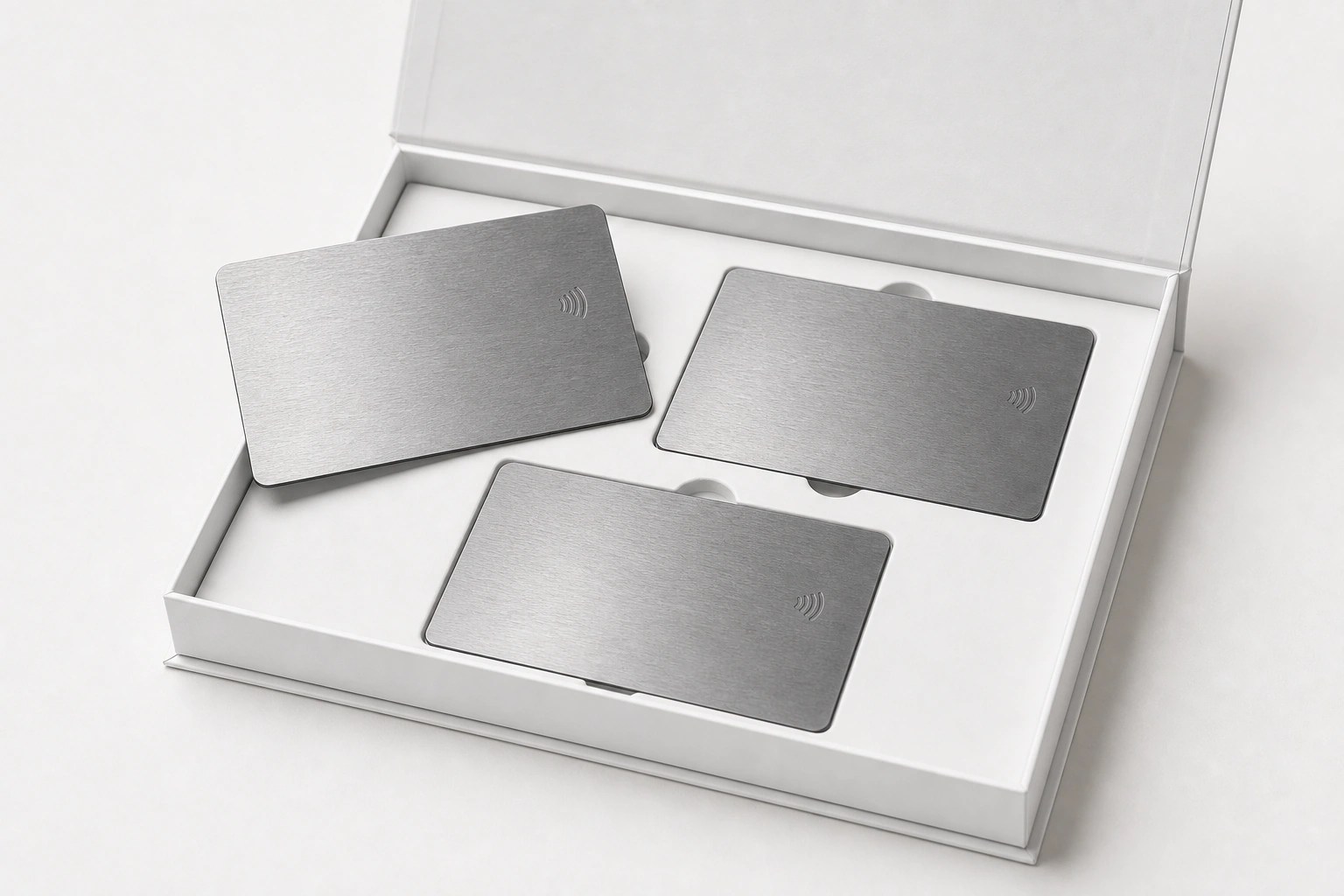
A sleeve, box, or host kit can raise the invitation experience while protecting the pass in transit.
08 / What this showsPremium visual hierarchy
Laser, foil-style details, tier markers, and minimal type create a visible access signal without payment-card styling.
(04) — Metal Card Types
Start from the check-in moment.
Confirm whether staff will use phone taps, handheld scanners, gates, desktop readers, visual tier checking, or a combination. That choice defines the chip, QR dimensions, serial rules, reader test, and the safest position for variable data.
(05) — Metal Card Types
Protect the antenna before cutting the pass.
Lanyard holes, slots, apertures, clipped corners, and custom contours can interfere with a metal RFID construction. The final outline should be reviewed with the antenna and edge stack before a die line is released.
(06) — Metal Card Types
Keep guest data operationally simple.
Use a clean source file for pass IDs, tier names, access zones, serials, QR payloads, envelope labels, and any attendee personalization. The same file should be reconciled against the event platform before dispatch.
(04) — Applications
Best uses for Event passes.
The practical route is selected from the system, audience, and handling context before the final metal finish and mark treatment are approved.
Best for
VIP, backstage, artist, sponsor, speaker, and host credentials
Luxury hospitality, automotive, launch, gala, and invitation-only events
Small premium events that can test the actual scanner or reader flow
Limited editions intended to become a keepsake after the event
Quote details
Target reader, lock, phone, scanner, or platform
Metal finish, quantity, and packaging need
Artwork files, data file, and encoding requirements
Sample approval and delivery deadline
(07) — Specification
Production details to confirm before sample or batch.
Metal card production should confirm body construction, finish, chip route, data handling, marking layers, and approval samples in one brief.
FormatCR80 85.6 x 54 mm by default; custom outlines after RF reviewThickness0.3 mm to 0.8 mm depending on constructionMinimum orderNone — single samples to production runsProduction timeAbout one week after artwork and sample approvalRF constructionAntenna, ferrite or hybrid shielding, chip, metal faces, and edge stack specified togetherChip routesNFC tag, standard HF, high-security AES HF, LF compatibility, and selected UHF by reader testMarking optionsLaser etch, deep engraving, UV print, white ink, enamel fill, QR, serial, and controlled cut-throughApproval flowFinish sample, encoded working sample, reader check, pre-production approvalPass formatsCR80, vertical pass, lanyard slot, key tag, cut-through detail, boxed invitationEvent dataPass ID, tier, QR, serial, zone, attendee name, NFC or RFID payloadFinish fitMatte black, gunmetal, brushed steel, gold, brass, carbon hybridCritical checkReader or scanner flow, variable data proof, attachment strength, and on-site fallback
Yes, but the slot or hole must be planned around the antenna and the final attachment method. It is checked during the prototype and reader test.
02Can each pass have a unique QR and serial number?
Yes. Unique QR payloads, serials, tiers, and attendee data can be matched in the production file and verified before dispatch.
(08) — Quote Event passes
Send quantity, chip, material, print and encoding requirements.
Engineered antenna pathFerrite or hybrid RF structureLaser and deep engravingBrushed, plated, coated finishesUID, NDEF, and access encodingSample kits and production approval