Full-colour print
UV Printed Metal RFID Cards
UV printing turns a metal card into a vivid brand surface while retaining the weight and edge quality of metal. The ink is laid onto the surface and cured instantly under UV light — which is why full colour on metal needs an opaque white underbase, and why colour, adhesion, and scan zones are proofed on the selected finish rather than on screen.
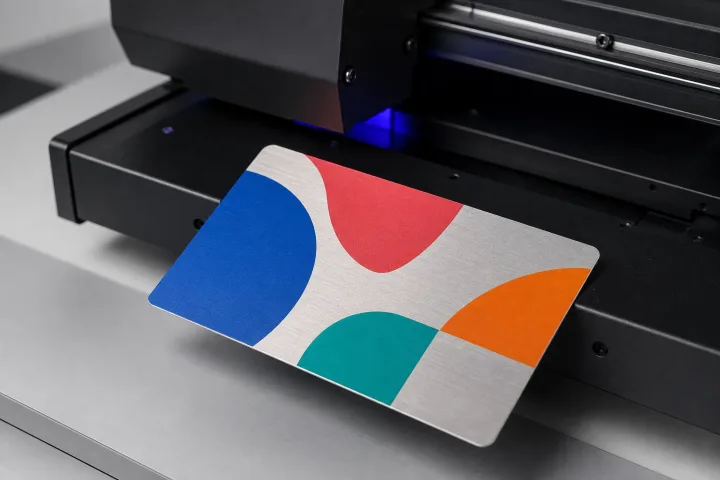
Production detail views
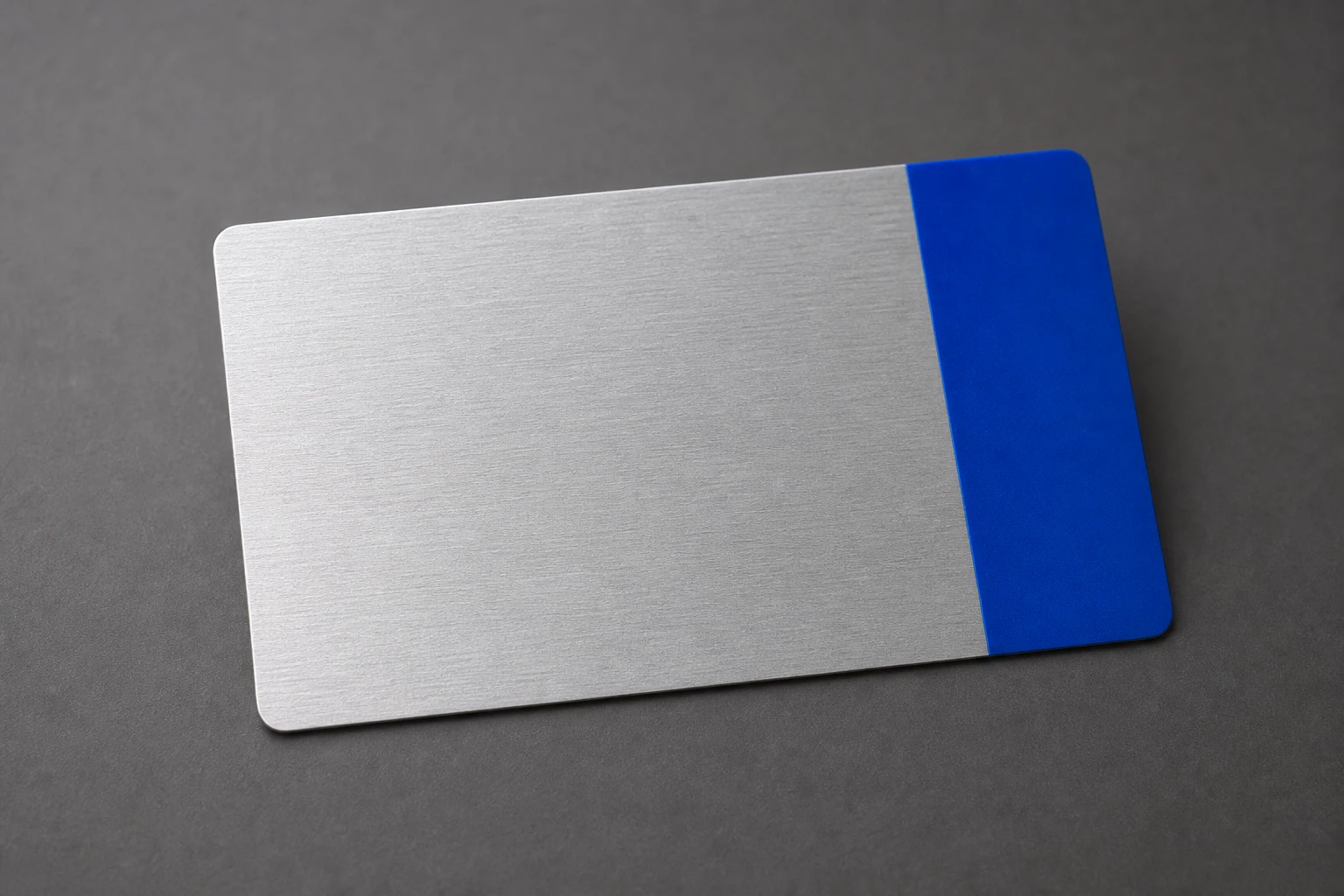
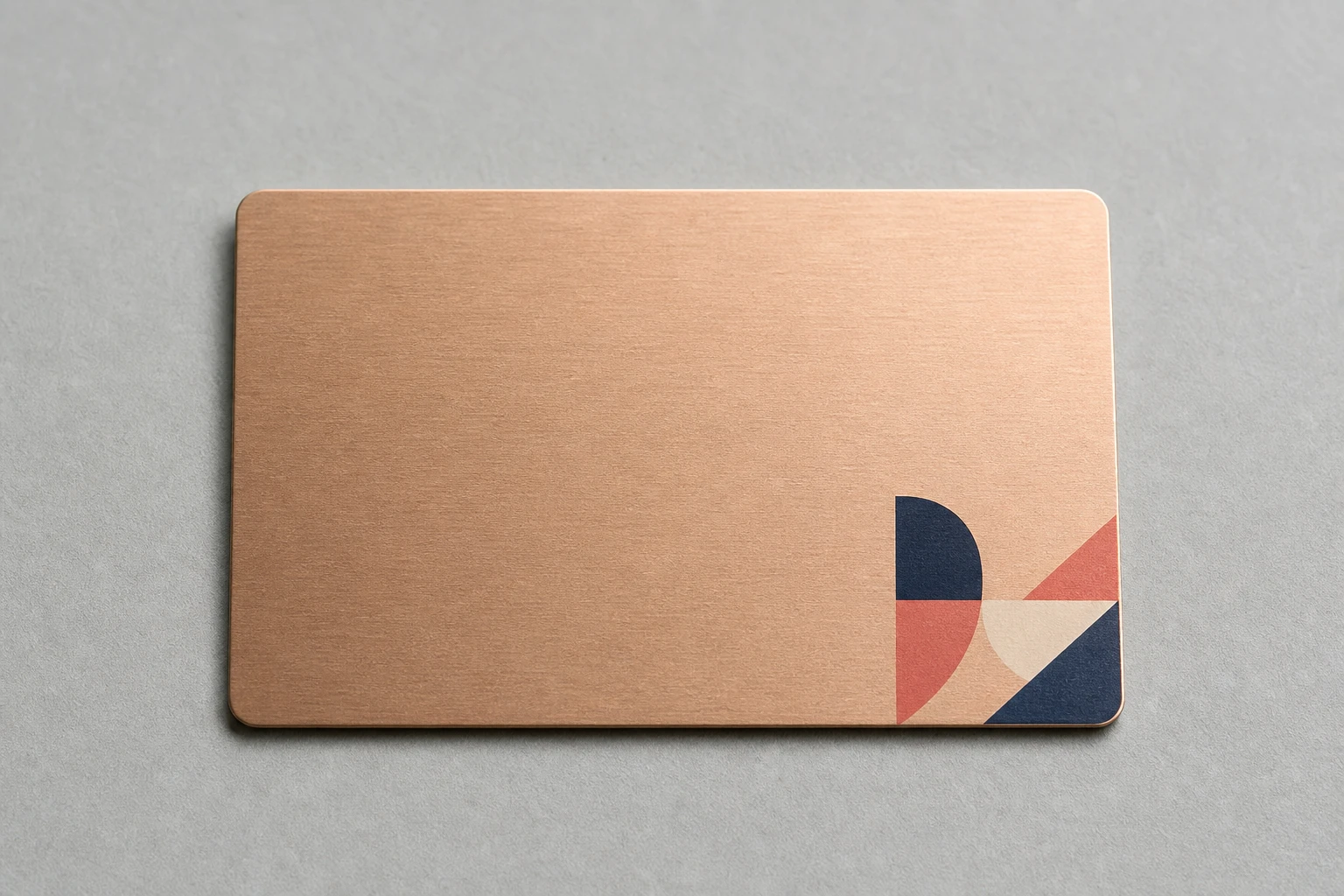
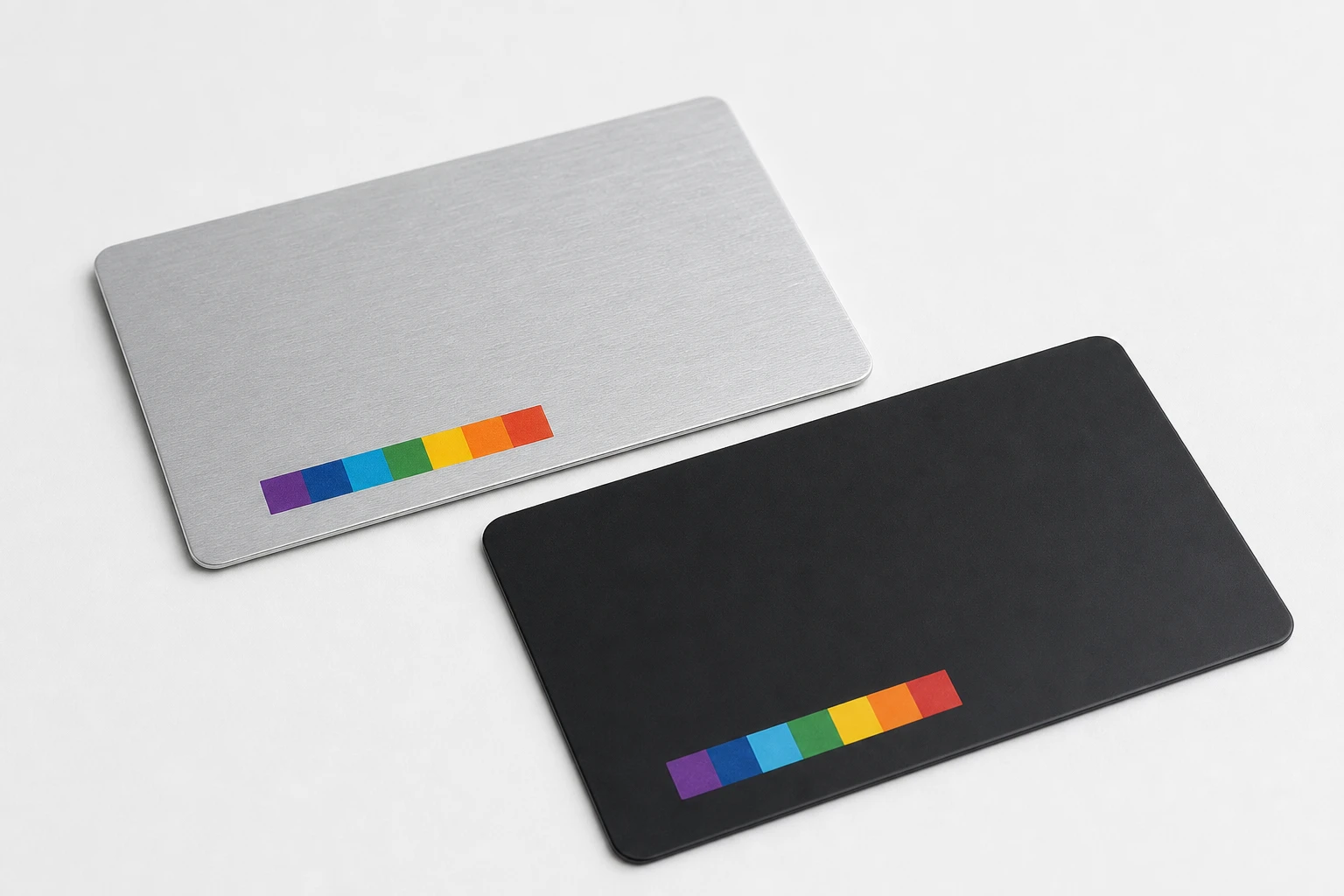
Four uv colour print references for planning the finished metal card.
Cobalt panels, small colour accents, proof strips, and underbase registration — how UV colour behaves on metal faces.
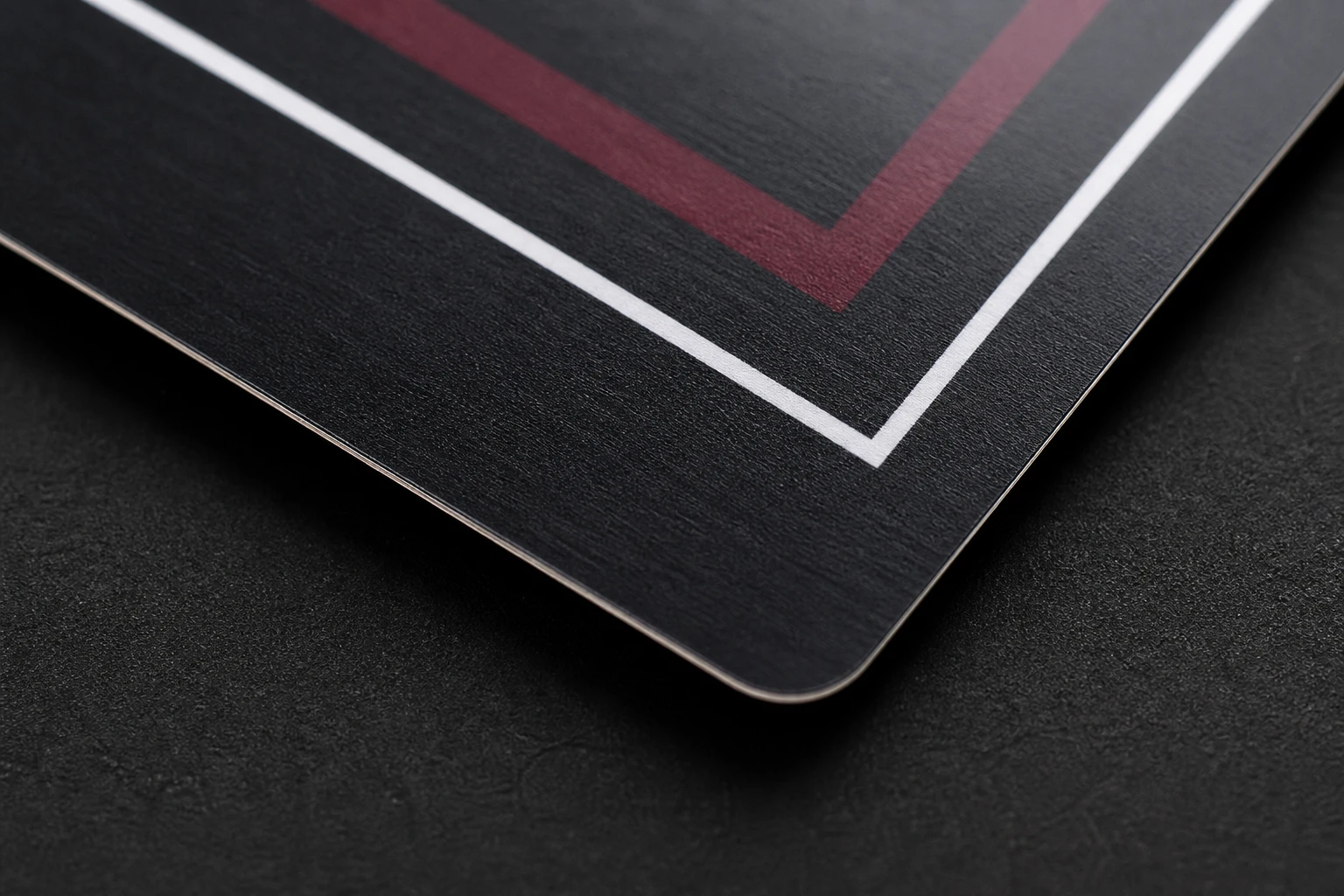
Why metal print starts with a white underbase.
UV inks are translucent and metal is non-absorbent. Printed directly onto the face, colours go dull and the metal tone shifts every hue above it — so full-colour artwork sits on an opaque white base, cured layer by layer. Adhesion is proofed on the actual finish, because a mirror face and a matte coating hold ink differently.
Prove visual and technical performance together.
Approve colour proof, white underbase, edge registration, scan contrast, and final reader behavior.
Best uses
- Full-colour branding, gradients, hospitality artwork, campaign cards, clear data zones, and controlled variable print.
- Premium metal card programs where the finish, data zones, and RF construction need coordinated approval
- Projects with a defined artwork file, variable-data need, and reader or scan validation route
Frequently asked questions
Why does metal UV printing need a white underbase?
UV inks are translucent. Printed directly onto metal, colours turn dull and shift with the surface tone; an opaque white base under the artwork restores true colour. The underbase is part of every full-colour metal proof.
Can UV print carry gradients and photographic artwork?
Yes — gradients, full-colour illustration, and campaign artwork all print, with the white underbase carrying the colour. Edge registration and the smallest readable detail are approved on the physical proof.
Does UV ink affect the card's RFID behaviour?
Ink itself has no RF effect. What matters is that print proofs happen on the final approved construction — switching metal face or thickness after colour approval restarts the RF check.
Specification
| Format | CR80 85.6 x 54 mm by default; custom outlines after RF review |
|---|---|
| Thickness | 0.3 mm to 0.8 mm depending on construction |
| Minimum order | None — single samples to production runs |
| Production time | About one week after artwork and sample approval |
| RF construction | Antenna, ferrite or hybrid shielding, chip, metal faces, and edge stack specified together |
| Chip routes | NFC tag, standard HF, high-security AES HF, LF compatibility, and selected UHF by reader test |
| Marking options | Laser etch, deep engraving, UV print, white ink, enamel fill, QR, serial, and controlled cut-through |
| Approval flow | Finish sample, encoded working sample, reader check, pre-production approval |
| Primary route | UV colour print |
| Best use | Full-colour branding, gradients, hospitality artwork, campaign cards, clear data zones, and controlled variable print. |
| Approval check | Approve colour proof, white underbase, edge registration, scan contrast, and final reader behavior. |
Related metal RFID card pages
- Laser Engraved Metal RFID Cards
- Deep Engraved Metal RFID Cards
- White Ink Metal RFID Cards
- Enamel Filled Metal RFID Cards
- QR and Serial Metal RFID Cards
- Metal Card Edge Finishing
- Metal RFID Card Artwork Specs