125 kHz
LF Metal RFID Cards
LF metal RFID cards operate at 125 kHz — the band most legacy access systems, older hotel locks, and staff ID estates still run on. The chip is usually EM-compatible read-only or a rewritable programmable 125 kHz, chosen by what the installed reader expects. And because low-frequency antennas are coils, the metal body needs a ferrite layer engineered behind the face before the card will read at all.
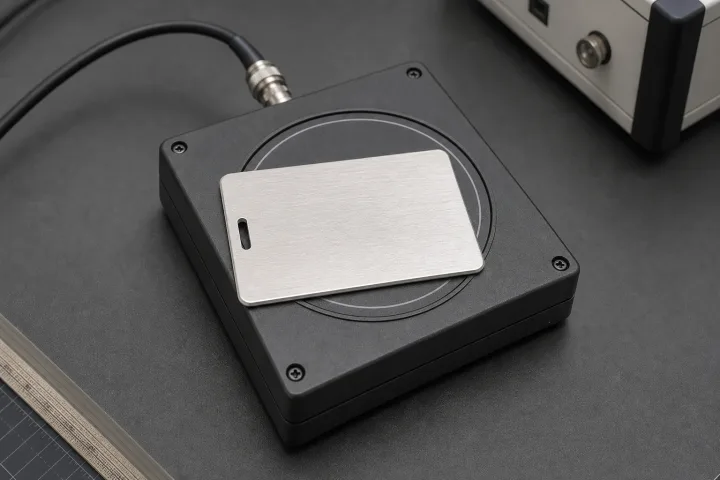
LF RFID route brief
| Frequency | 125 kHz |
|---|---|
| Best use | Legacy access control, selected hotel locks, staff ID, and replacement credentials where the installed reader requires LF. |
| Chip route | programmable 125 kHz, EM-compatible, or exact system-specific LF chip selected by the reader requirement. |
| Phone behavior | Not phone-readable for normal smartphone NFC use. |
| Encoding | Facility code, card number, clone or emulation route, or blank supply depending on the access provider. |
| Approval check | Test an encoded finished metal sample on the exact door reader, enrollment reader, or lock. |
Visual references
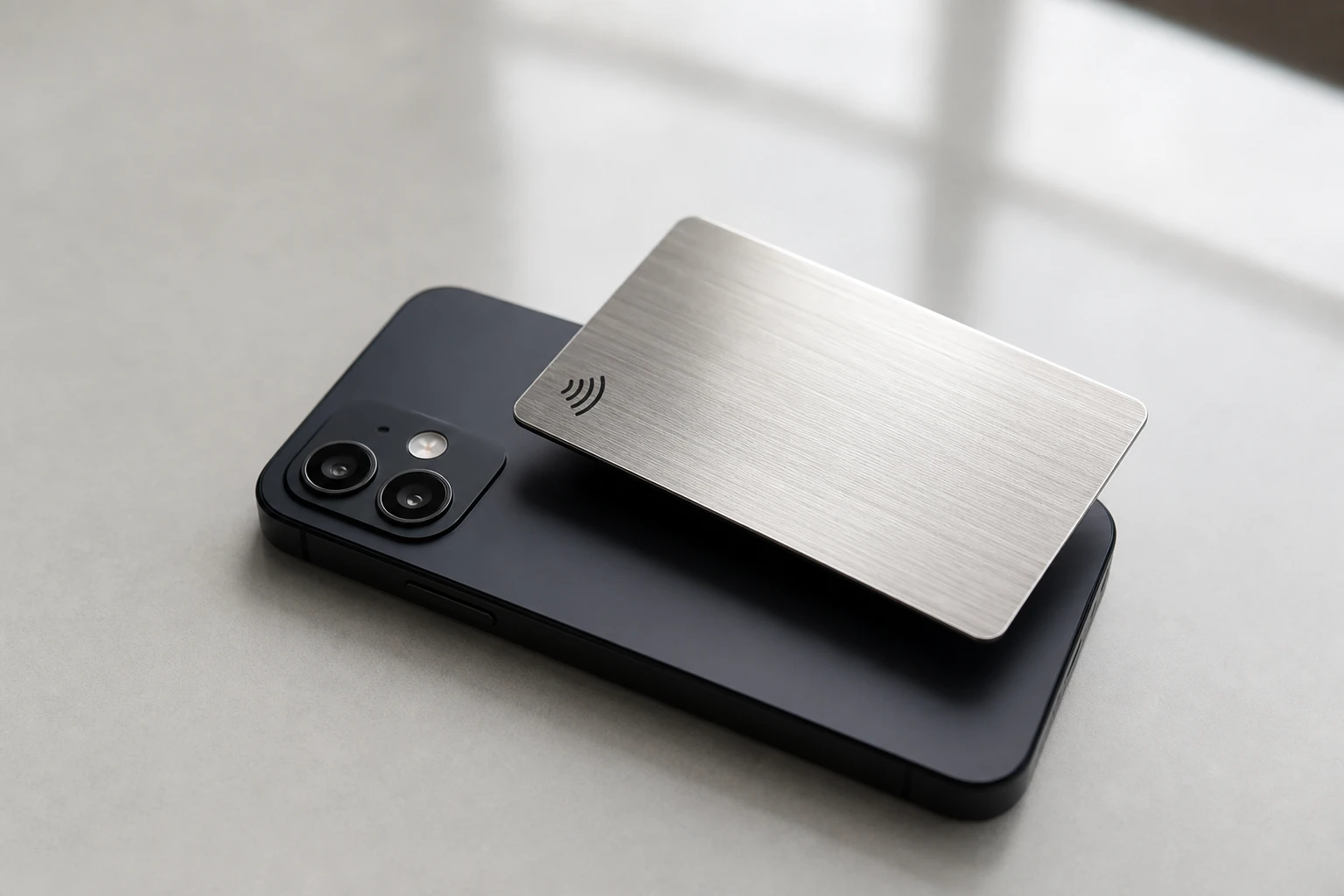
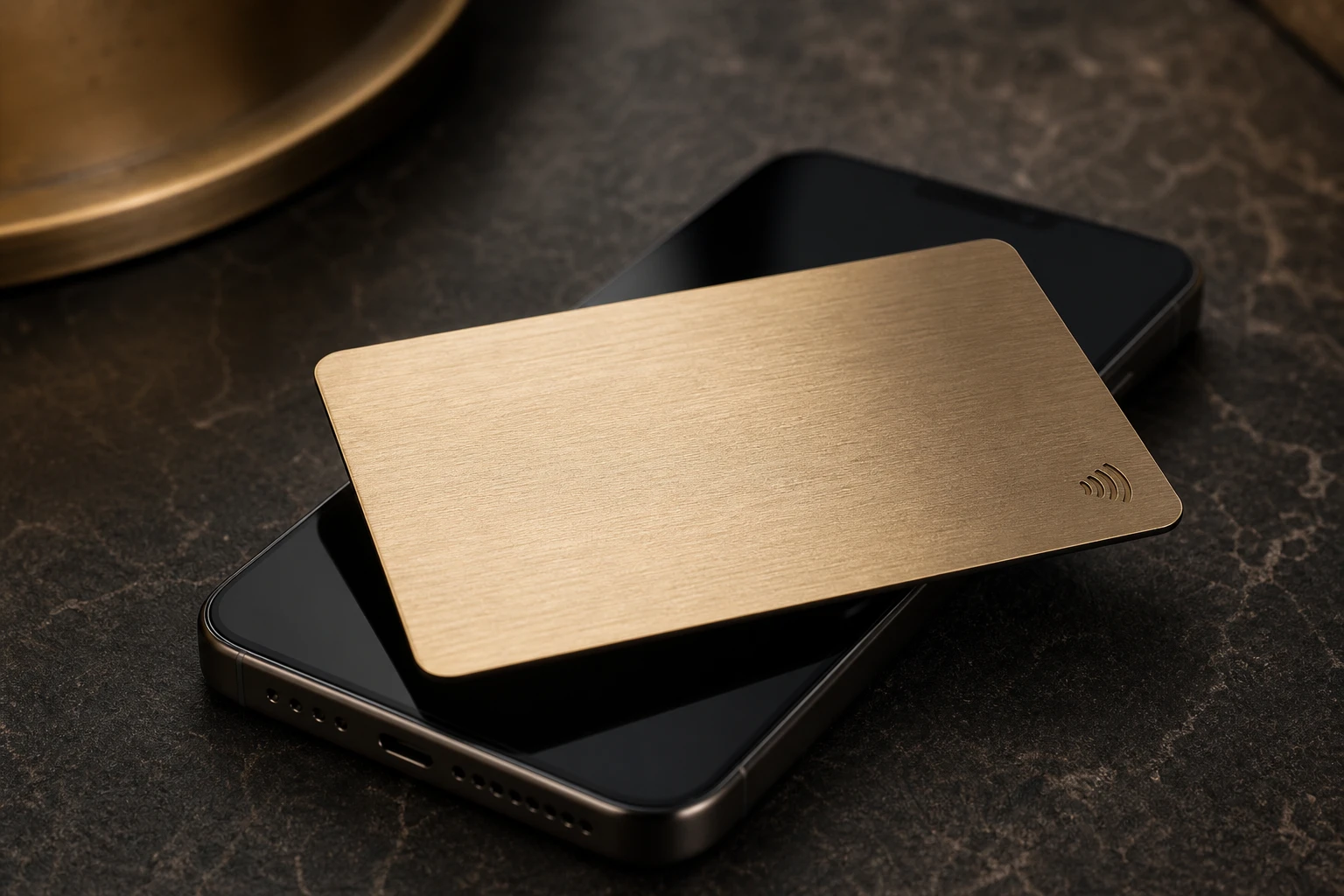
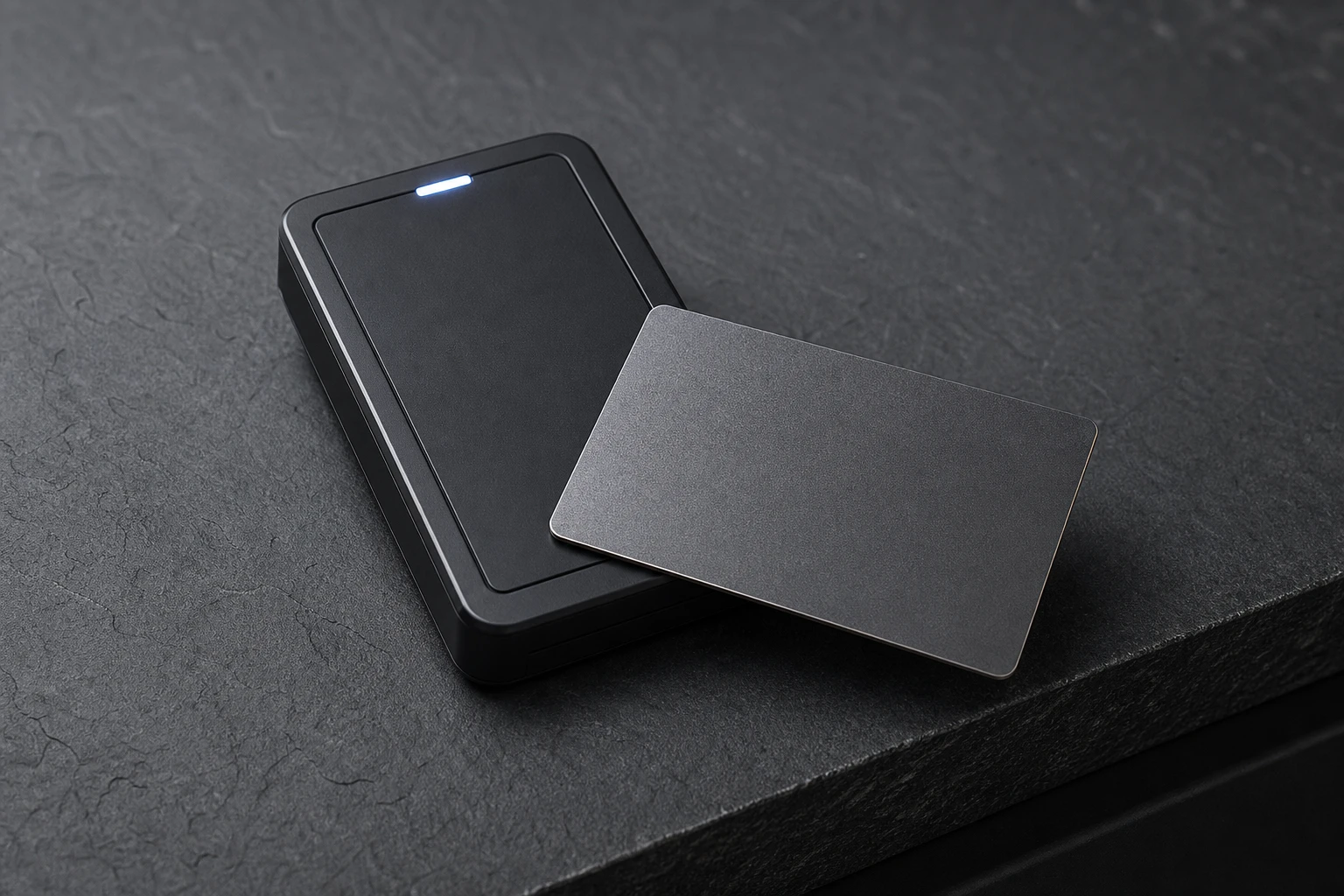
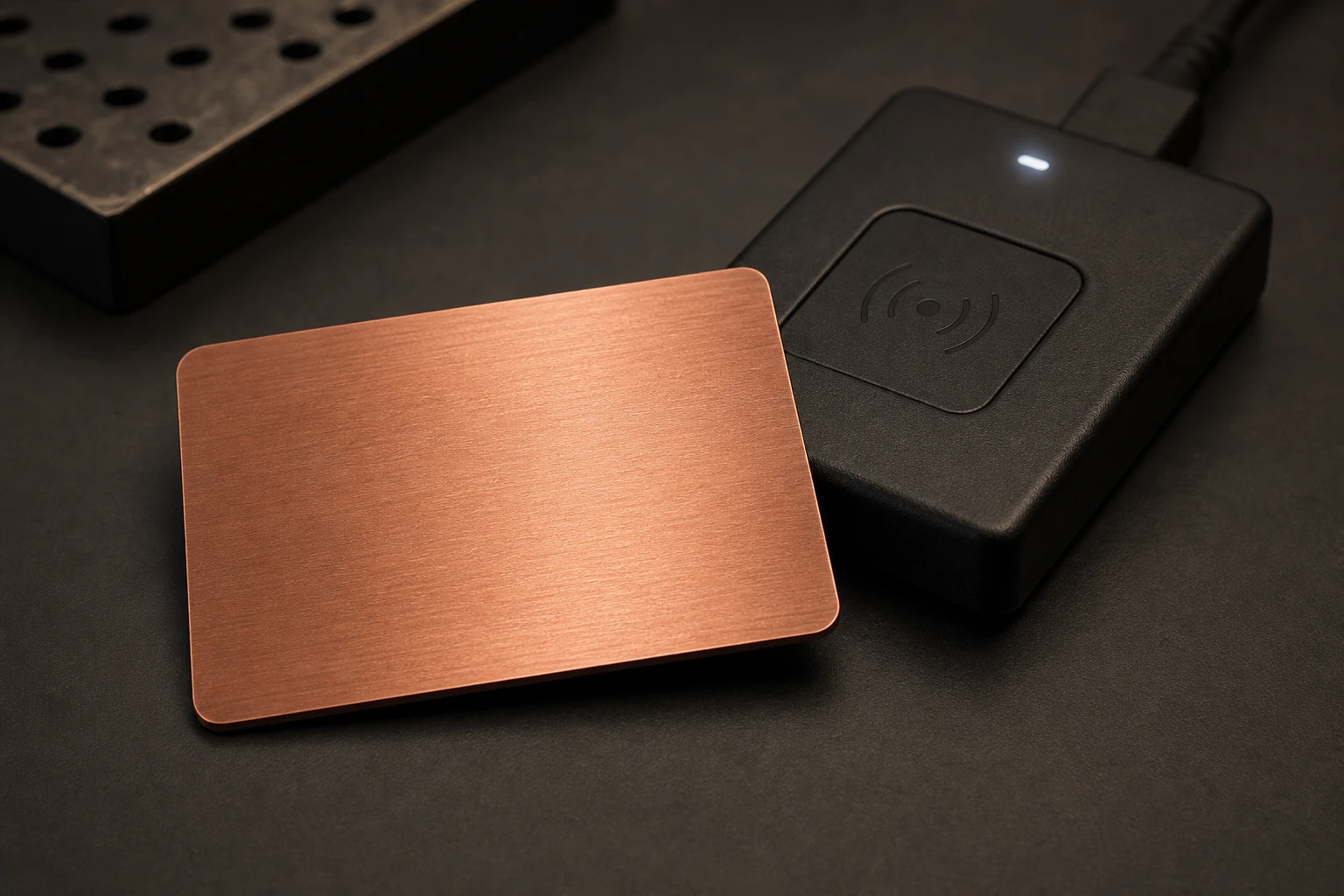
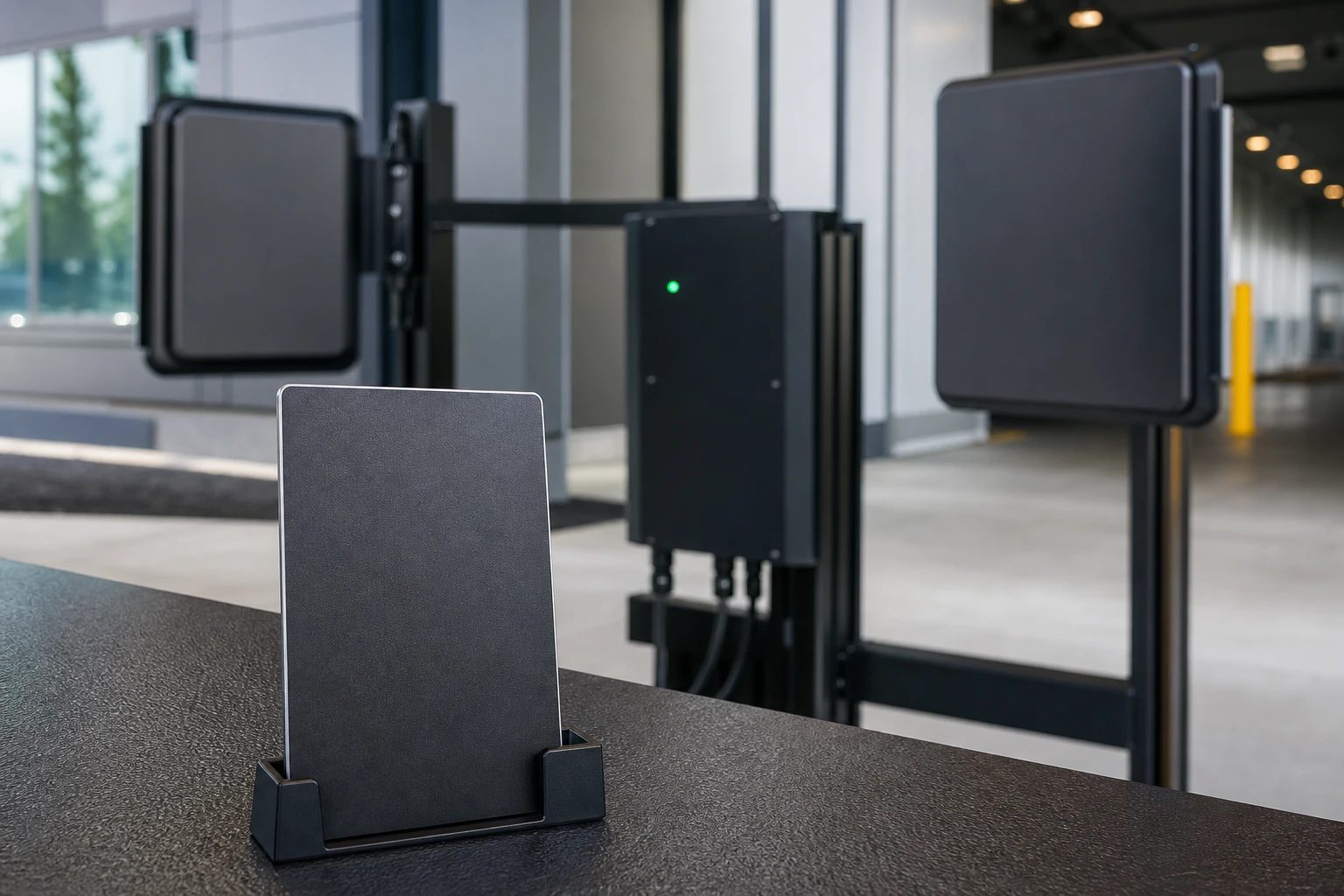
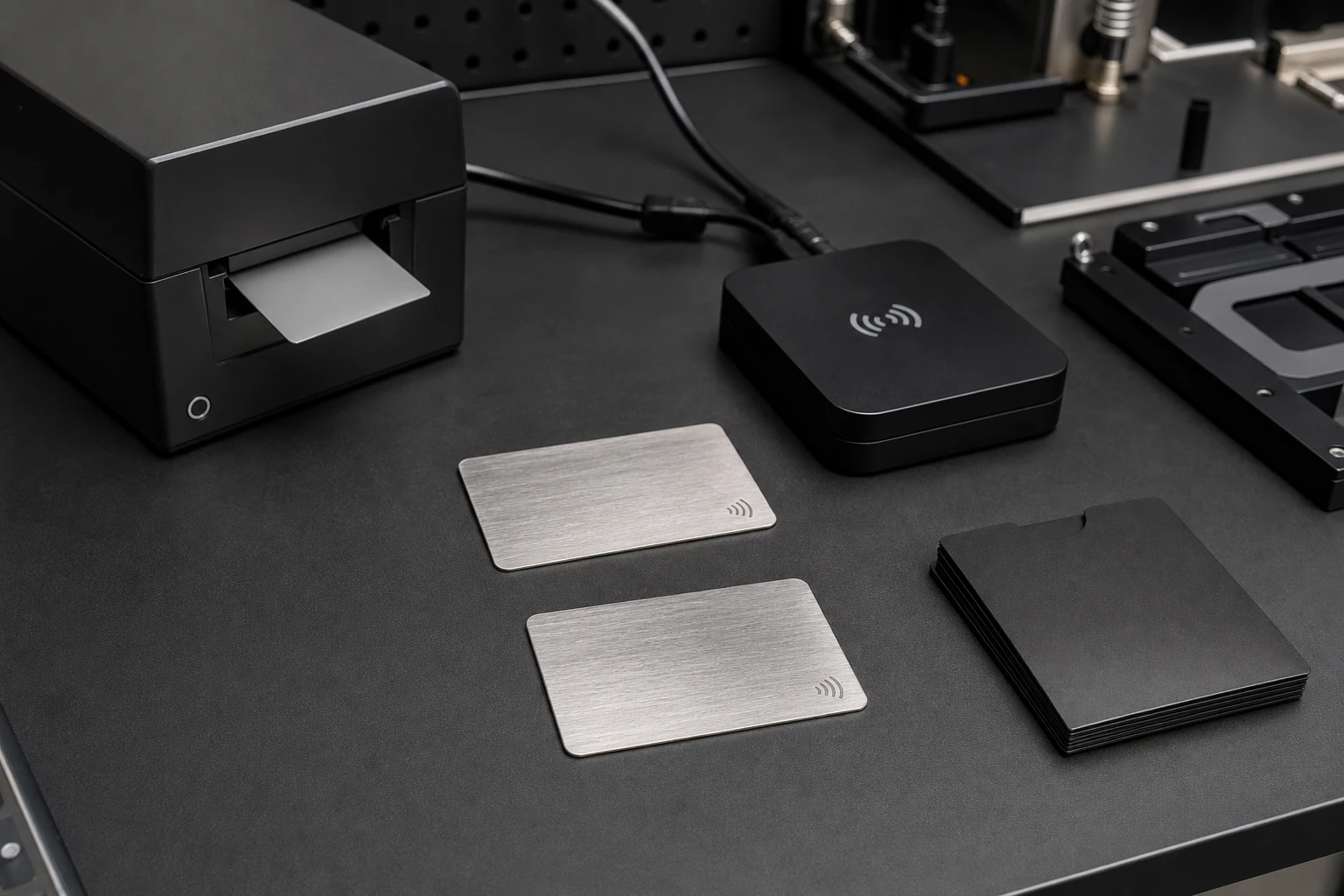
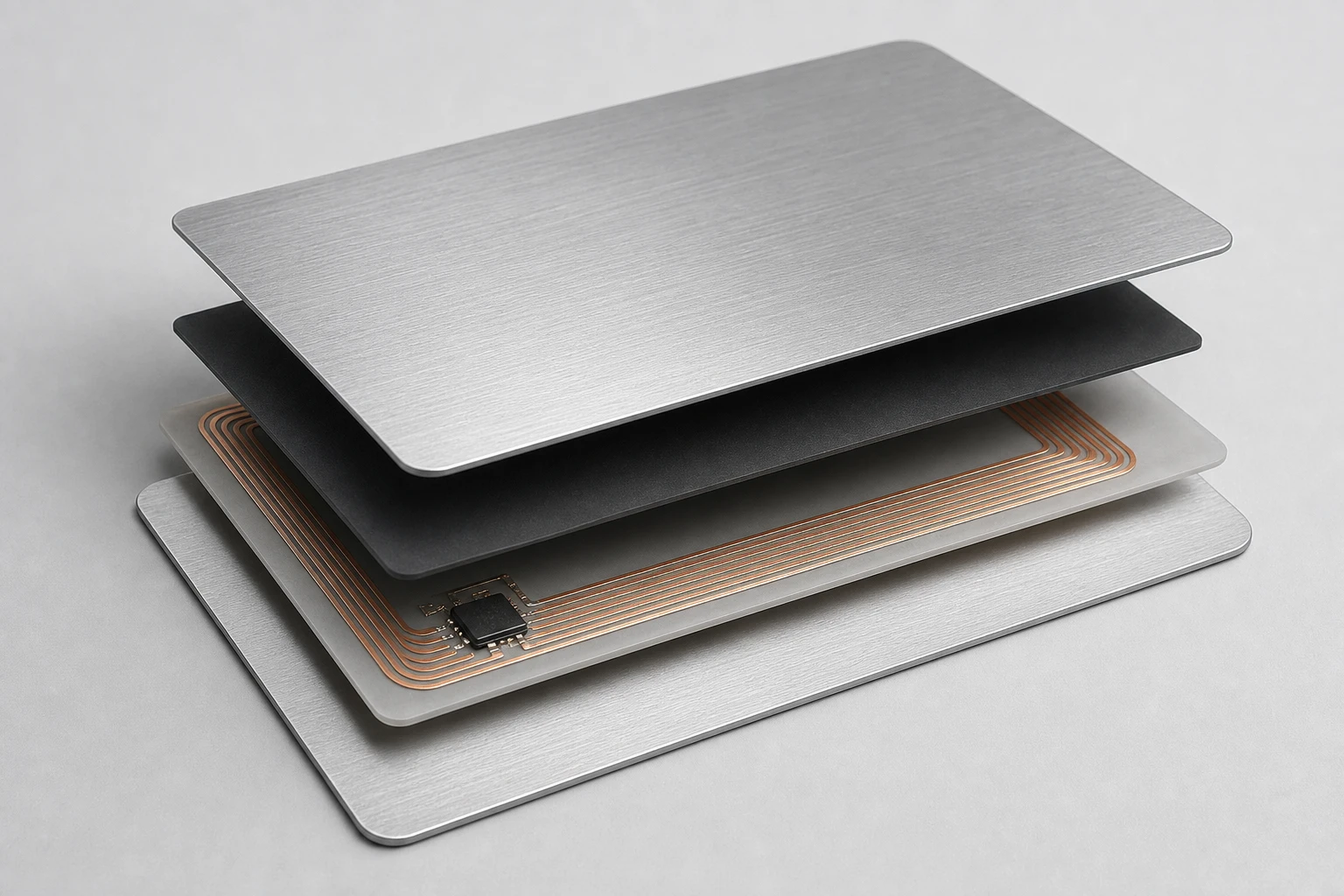
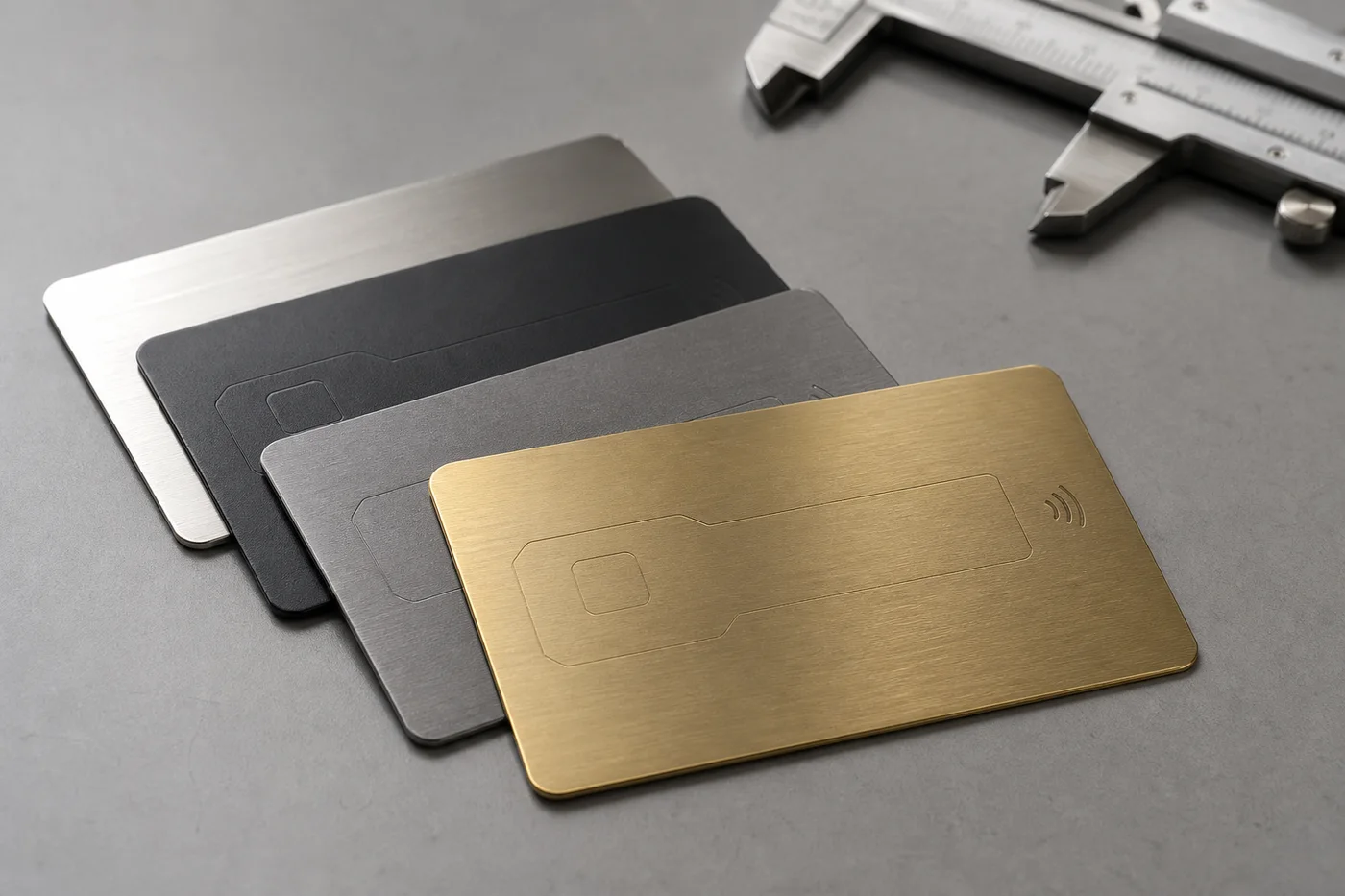
Read-only or rewritable — the installed system decides.
EM-style LF chips carry a fixed ID that the access platform enrolls; programmable 125 kHz is rewritable and can be programmed to match an existing format. Neither is phone-readable — 125 kHz is a reader-only band. If the goal is phone tap, this is the wrong route; if the goal is working with the reader already on the wall, it is often the only one.
Approve a working sample in the real environment.
Test an encoded finished metal sample on the exact door reader, enrollment reader, or lock.
Best uses
- Legacy access control, selected hotel locks, staff ID, and replacement credentials where the installed reader requires LF.
- Metal card programs that can validate a finished encoded sample on the target reader
- Projects that need print, serial, QR, packaging, and data handling reconciled in one approved brief
Frequently asked questions
When should I choose LF for a metal card?
When the installed reader, lock, or ID platform runs at 125 kHz. Send the reader model or an existing working credential — the LF route is confirmed by testing an encoded metal sample on that exact device, not by the datasheet.
Are LF metal cards phone-readable?
No. Smartphone NFC operates at 13.56 MHz, a different band. LF cards serve door readers, enrollment readers, and locks; a printed QR zone can be added where staff also need a visual or phone-checkable fallback.
Why does an LF metal card need a working sample?
A 125 kHz antenna is a coil, and a metal face detunes it. The ferrite layer, coil geometry, body thickness, and final finish are proven together on the real reader before production.
Specification
| Format | CR80 85.6 x 54 mm by default; custom outlines after RF review |
|---|---|
| Thickness | 0.3 mm to 0.8 mm depending on construction |
| Minimum order | None — single samples to production runs |
| Production time | About one week after artwork and sample approval |
| RF construction | Antenna, ferrite or hybrid shielding, chip, metal faces, and edge stack specified together |
| Chip routes | NFC tag, standard HF, high-security AES HF, LF compatibility, and selected UHF by reader test |
| Marking options | Laser etch, deep engraving, UV print, white ink, enamel fill, QR, serial, and controlled cut-through |
| Approval flow | Finish sample, encoded working sample, reader check, pre-production approval |
| Frequency | 125 kHz |
| Chip route | programmable 125 kHz, EM-compatible, or exact system-specific LF chip selected by the reader requirement. |
| Phone behavior | Not phone-readable for normal smartphone NFC use. |
| Encoding | Facility code, card number, clone or emulation route, or blank supply depending on the access provider. |
| Approval check | Test an encoded finished metal sample on the exact door reader, enrollment reader, or lock. |
Related metal RFID card pages
- HF NFC Metal RFID Cards
- NFC Tag Metal RFID Cards
- Entry-level HF Metal RFID Cards
- AES-secured HF Metal RFID Cards
- Standard HF Metal RFID Cards
- High-security AES Metal RFID Cards
- UHF Metal RFID Cards
- Programmable 125 kHz Metal RFID Cards
- Metal RFID Card Encoding
- RFID UID Converter & Wiegand 26-bit Calculator