Private garage guide · 8 min read
Metal Membership Cards for Private Car Storage Clubs
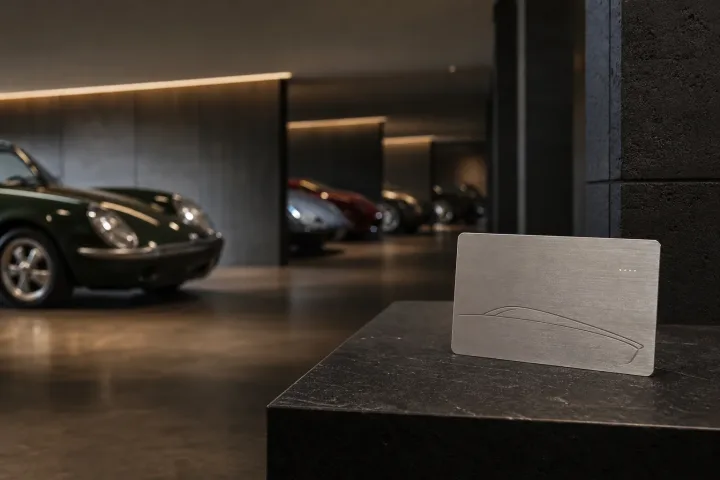
Private vehicle storage is increasingly a membership experience: secure bays, collection preparation, detailing coordination, lounges, events, and a trusted team. A metal card can make that relationship visible while supporting access or service requests where the installed systems allow it.
Industry program views
Connect access, care, and collection without confusing their roles.
A storage credential may identify a member, operate a compatible reader, or open a service portal. Each function needs its own approval path and fallback.
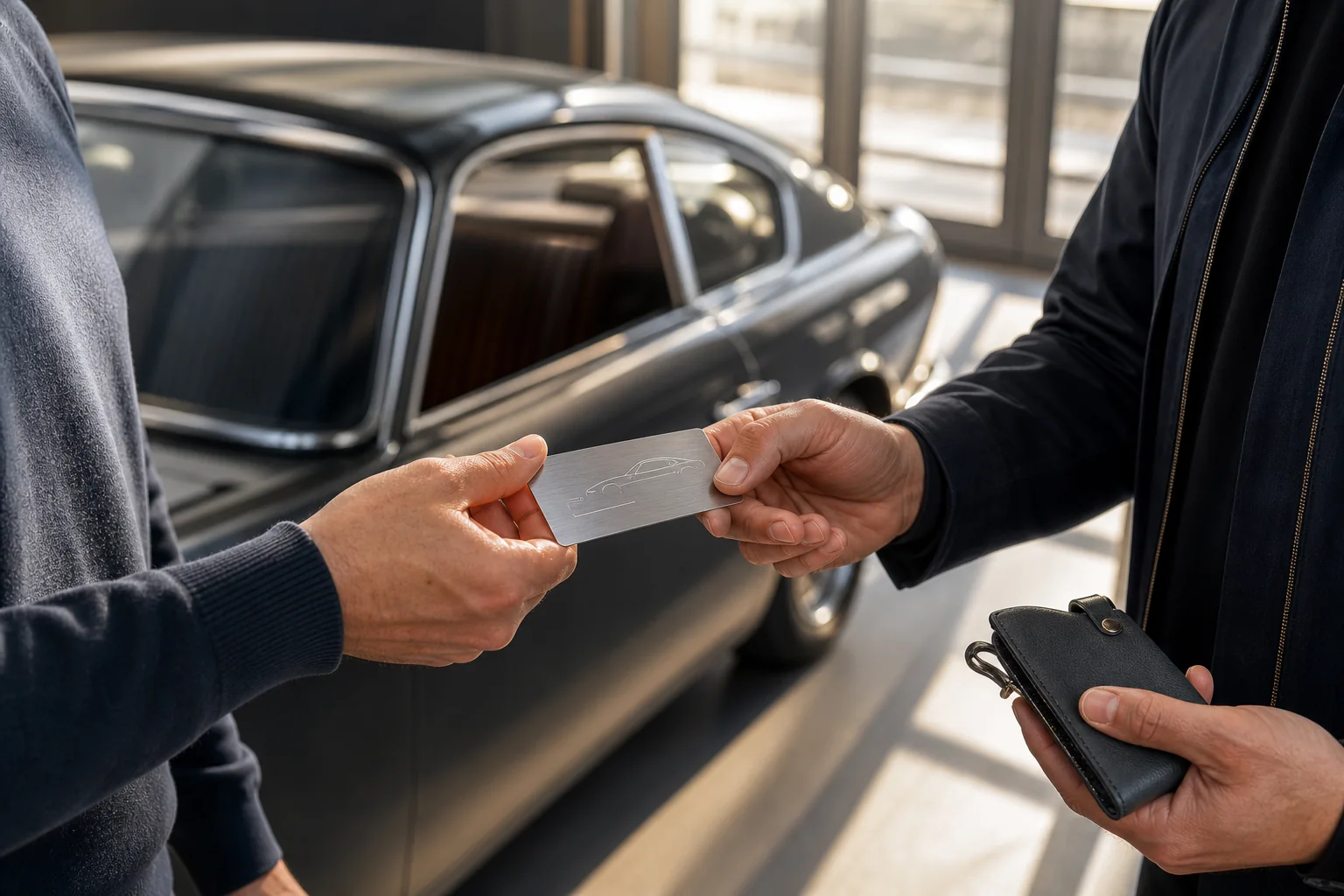
Map every place the member is recognised.
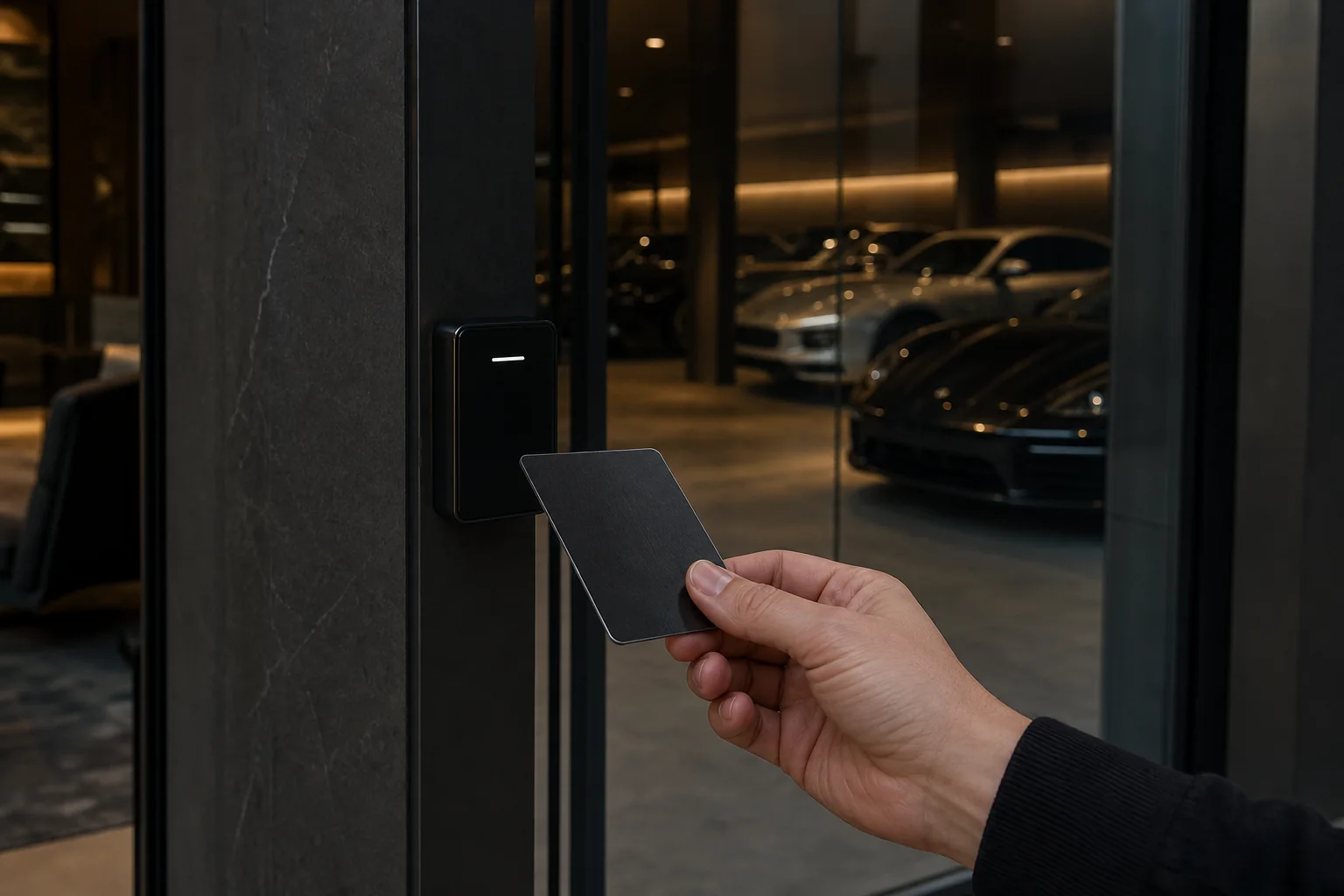
List the entrance gate, pedestrian door, lounge, elevator, key desk, vehicle-request process, and event check-in. Some locations may use an installed access reader; others only need visual recognition or a phone portal. Do not force one technology into every touchpoint. The card should make the member journey simpler while the facility keeps appropriate security controls behind it.
Match access to the installed reader system.
Metal changes radio performance, so an access credential must be engineered around the exact frequency, antenna, shielding stack, card thickness, and reader. A phone-readable NFC card is not automatically a garage-access card. Supply the reader model or a working credential, then approve an encoded sample at every important entry before producing the member batch.
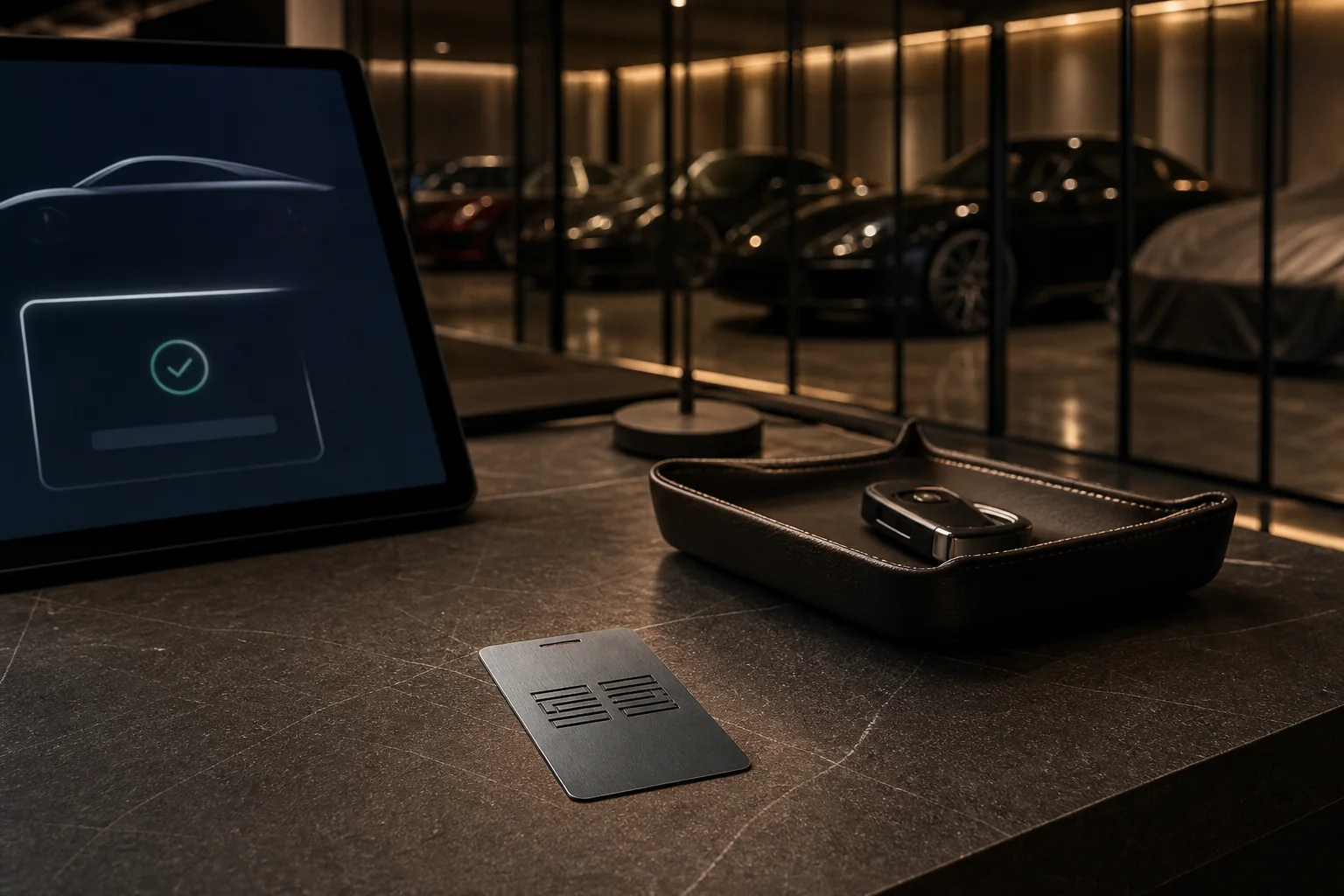
Use NFC or QR for service requests.
A separate phone journey can let members request collection, confirm timing, book detailing, review upcoming maintenance, or contact the concierge. Keep the destination editable and authenticated when personal or vehicle information is involved. The public surface of the card should reveal no more than necessary: usually the member identity, tier, and a controlled validation route.
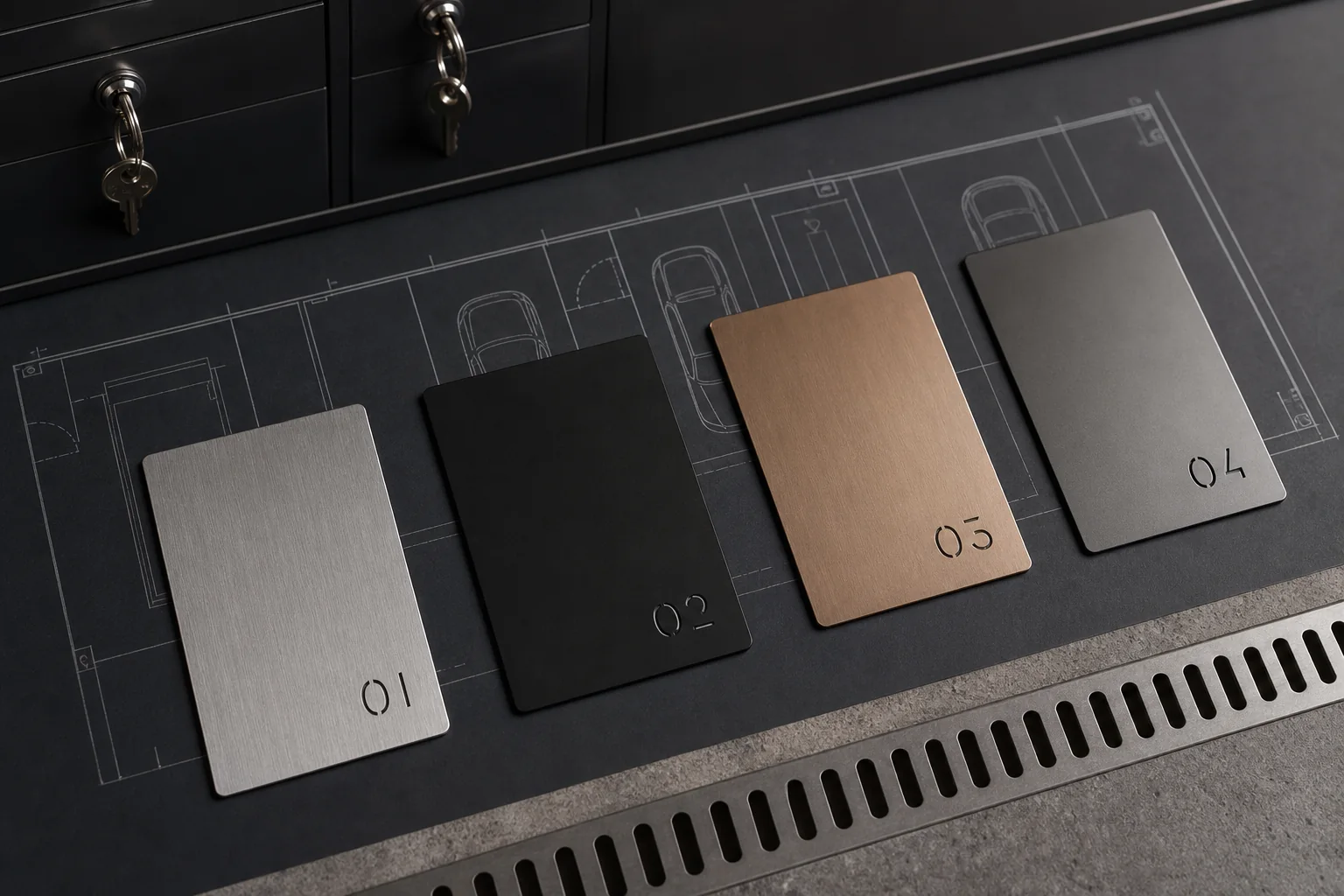
Design tiers around facilities and service.
Storage tiers might reflect bay type, access hours, preparation service, collection lead time, lounge access, event invitations, or detailing coordination. Translate those differences into a restrained card family. Tier recognition should help staff serve members correctly; it should never override the live access permissions held in the facility system.
Plan lost-card handling before opening access.
Define who can disable a credential, how quickly it happens, how identity is reverified, and whether a temporary pass is issued. Keep a controlled mapping between member ID, encoded identifier, physical serial, and replacement history. Premium material does not reduce security risk; disciplined issuance and revocation do.
Best uses
- Private vehicle-storage facilities and collector garages
- Automotive lounges with member-only areas
- Vehicle preparation, collection, and concierge services
- Founder, storage, lounge, and event-access tiers
Relevant metal card routes
Frequently asked questions
Can a metal card open a private garage door?
It can work with compatible access systems when the exact reader, frequency, encoding, antenna, shielding, and final card construction are tested together. Never assume compatibility from the card appearance alone.
Can members request their vehicle by tapping the card?
Yes. An NFC or QR route can open an authenticated request page, but the storage team should still verify the member and vehicle release process inside its own system.
What happens when an access card is lost?
The facility should be able to identify and disable the encoded credential, verify the member, issue a replacement, and preserve a record of the old and new identifiers.
Specification
| Card format | CR80 85.6 × 54 mm by default; custom outlines after RF review |
|---|---|
| Thickness | 0.3–0.8 mm depending on construction |
| Minimum order | None — from one approval sample to production runs |
| Production time | About one week after artwork and sample approval |
| Personalization | Member name, ID, tier, serial, expiry, QR, NFC data, and matched packaging |
| Approval path | Finish proof, encoded working sample, reader or phone test, production approval |
| Access route | Installed-system credential only after exact reader and encoded-sample approval |
| Service route | NFC or QR link to authenticated vehicle request, booking, or concierge journey |
Related metal RFID card pages
- Metal RFID Membership Cards for Yacht Clubs and Marinas
- Metal RFID Membership Cards for Private Aviation and FBO Lounges
- Metal RFID Membership Cards for Golf and Country Clubs
- Metal RFID Membership Cards for Luxury Residence Clubs
- Metal RFID Membership Cards for Private Wellness Clubs
- Custom Metal Membership Cards for Car Clubs
- Metal Membership Cards for Car Detailing Studios
- How to Build a Luxury Car Rental VIP Membership Program
- Dealership VIP Cards That Extend the Owner Relationship
- VIP Metal Passes for Rallies, Track Days and Car Events
- NFC, RFID or QR for Automotive Membership Cards?
- How to Design Black, Gold and Founder Car Club Tiers
- What Can Be Personalized on a Metal Automotive Card?
- Metal vs Plastic Membership Cards for Automotive Brands
- How NFC Metal Cards Connect Automotive Member Portals
- Seven Benefits an Automotive VIP Card Can Support