Hospitality access
Metal Hotel Key Cards
Metal hotel key cards are a specialist access build, not a standard finish swap. The lock system, chip, antenna path, ferrite or hybrid layer, card thickness, room-zone data, and metal surface need to be tested together on the actual door before a guest batch is approved.
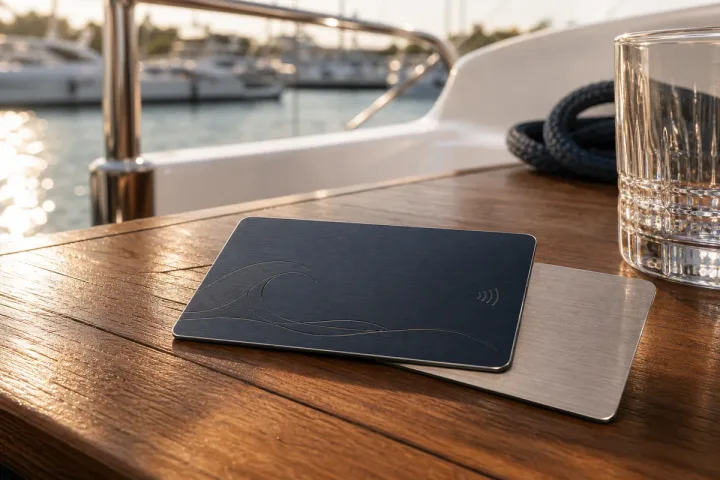
Hotel key card applications
A metal key card has to work at the door and earn its place at arrival.
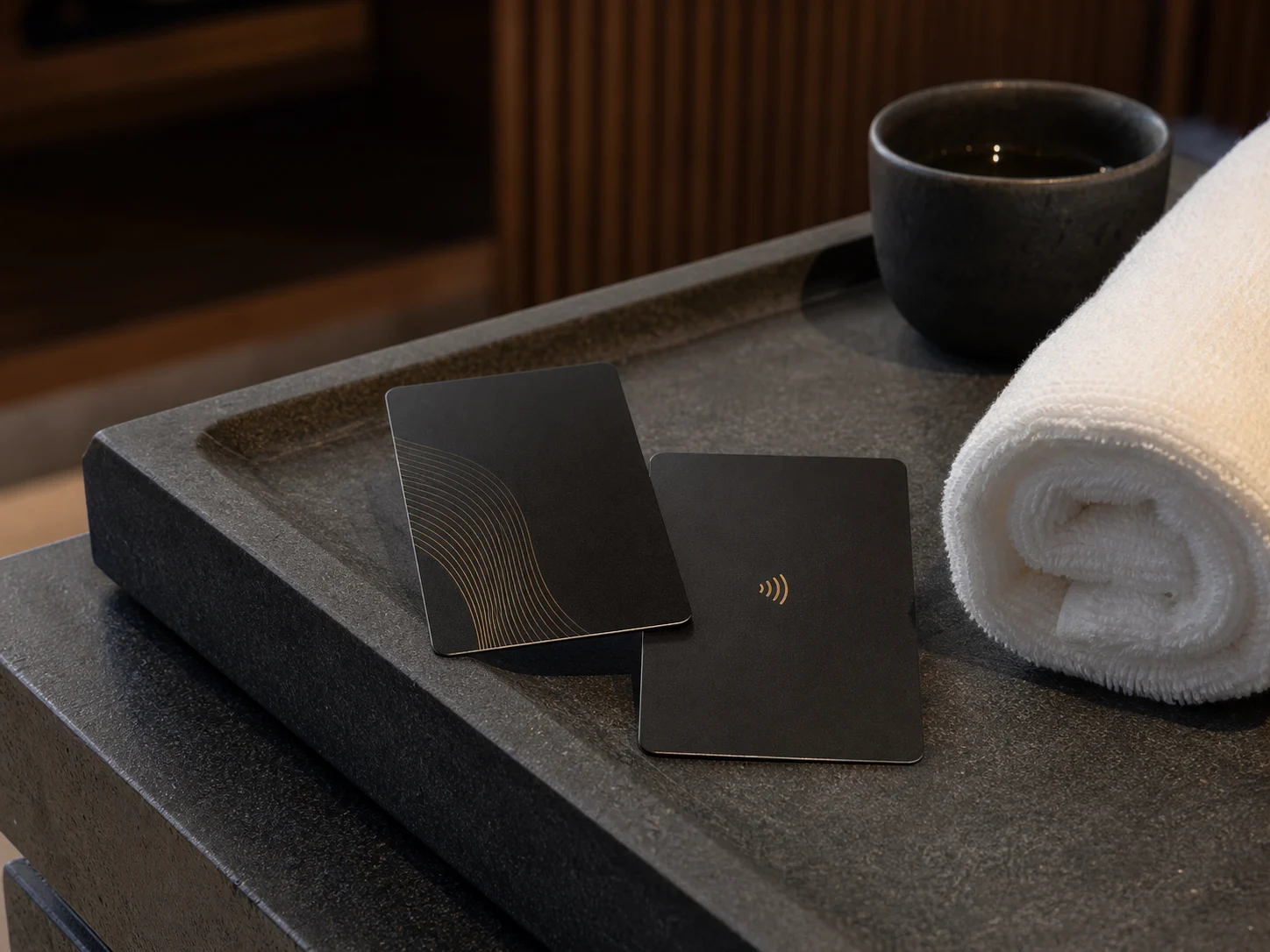
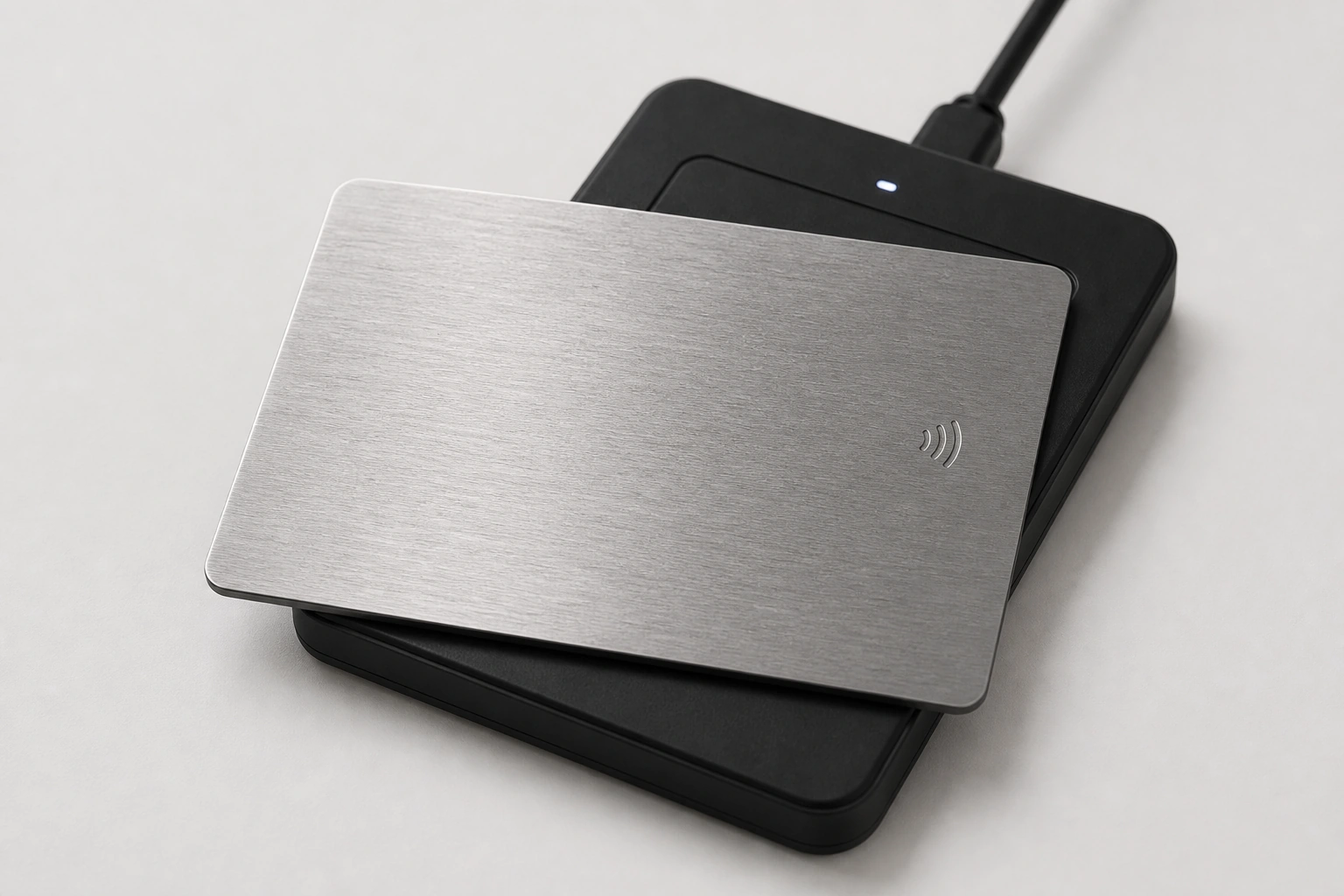
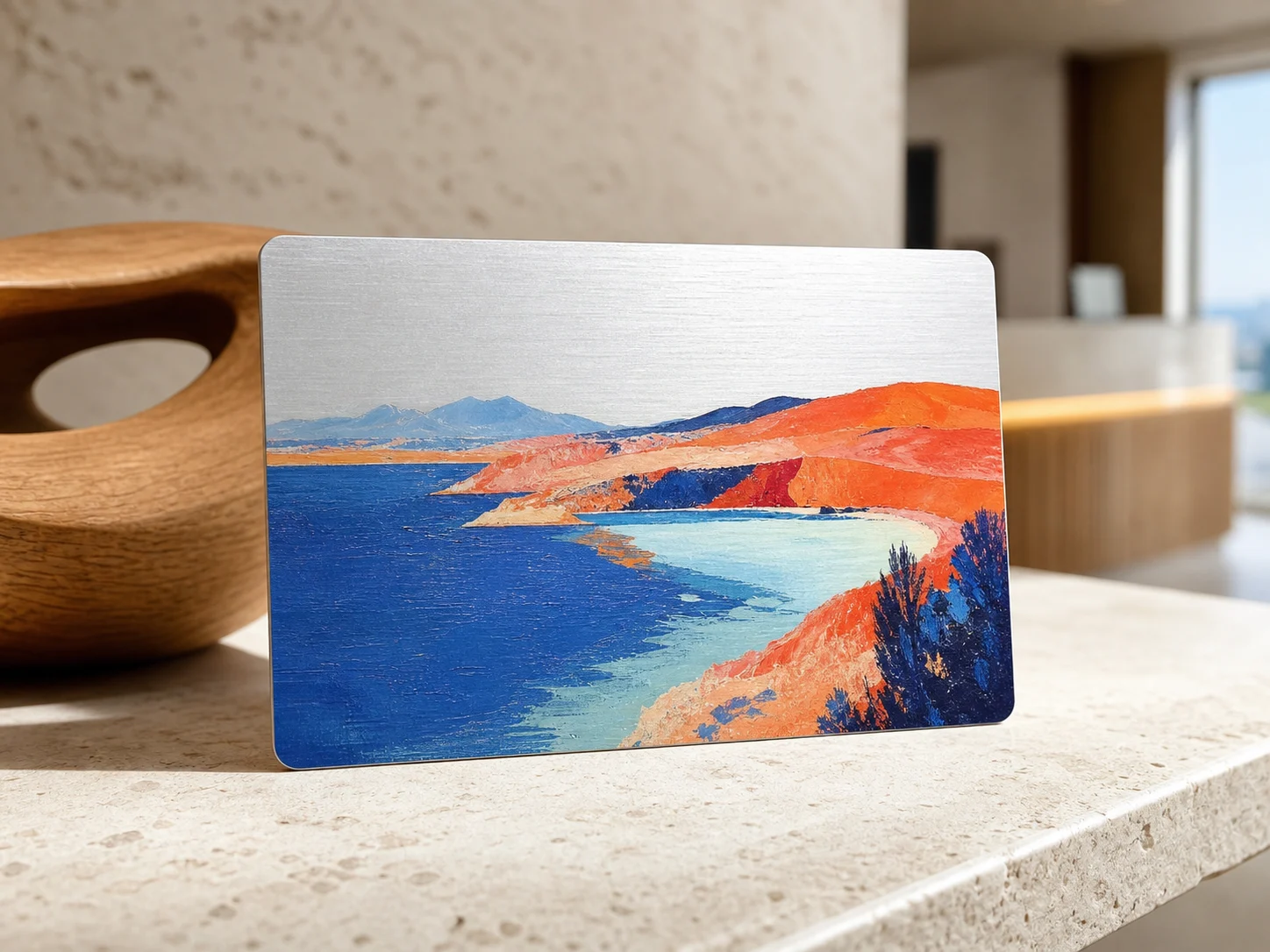
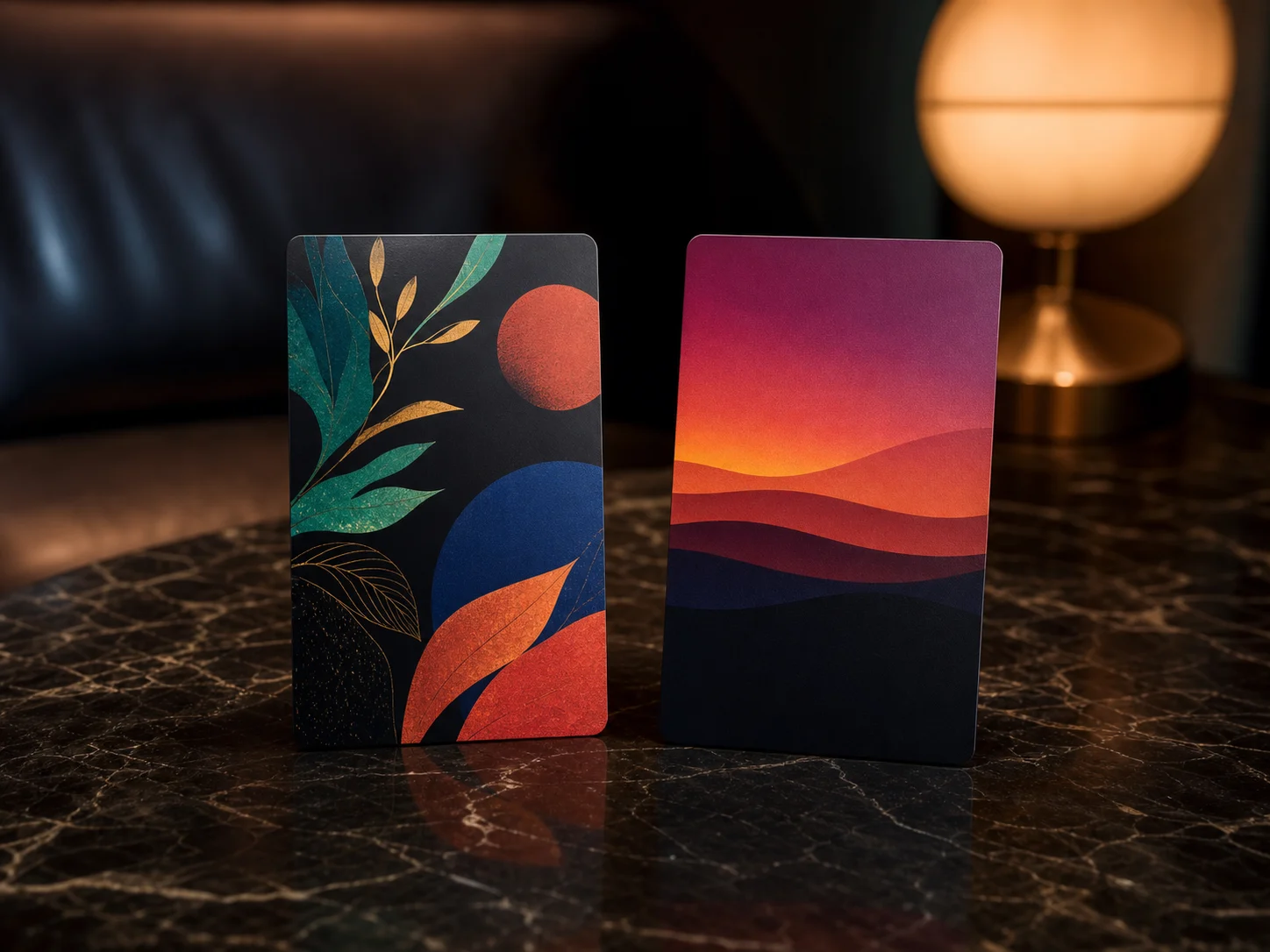
Compare reception handover, real-door access, villa arrival, wellness packages, vivid print routes, reader testing, and final presentation before selecting a finish. Every route still starts with a working sample on the exact lock estate.
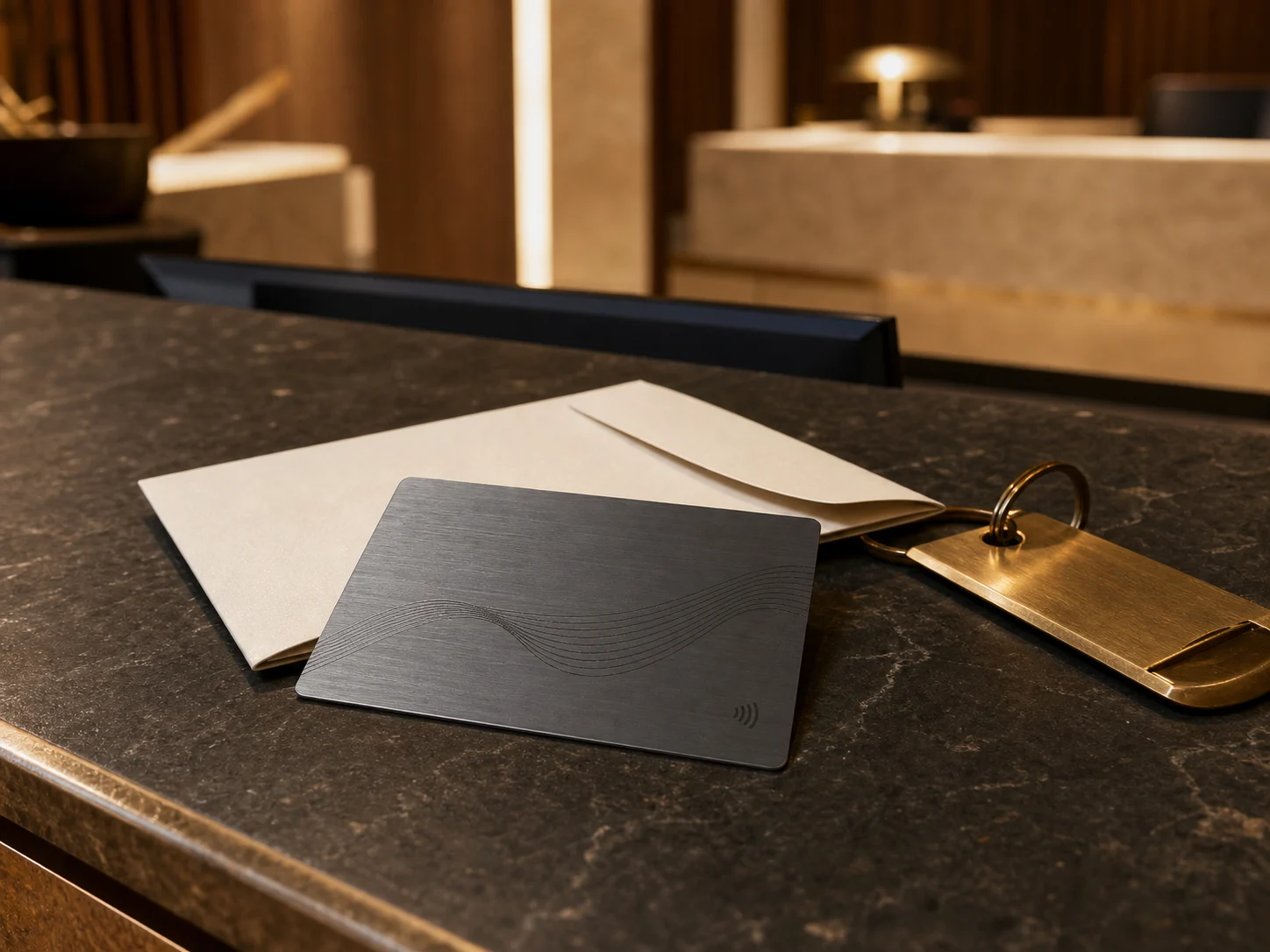
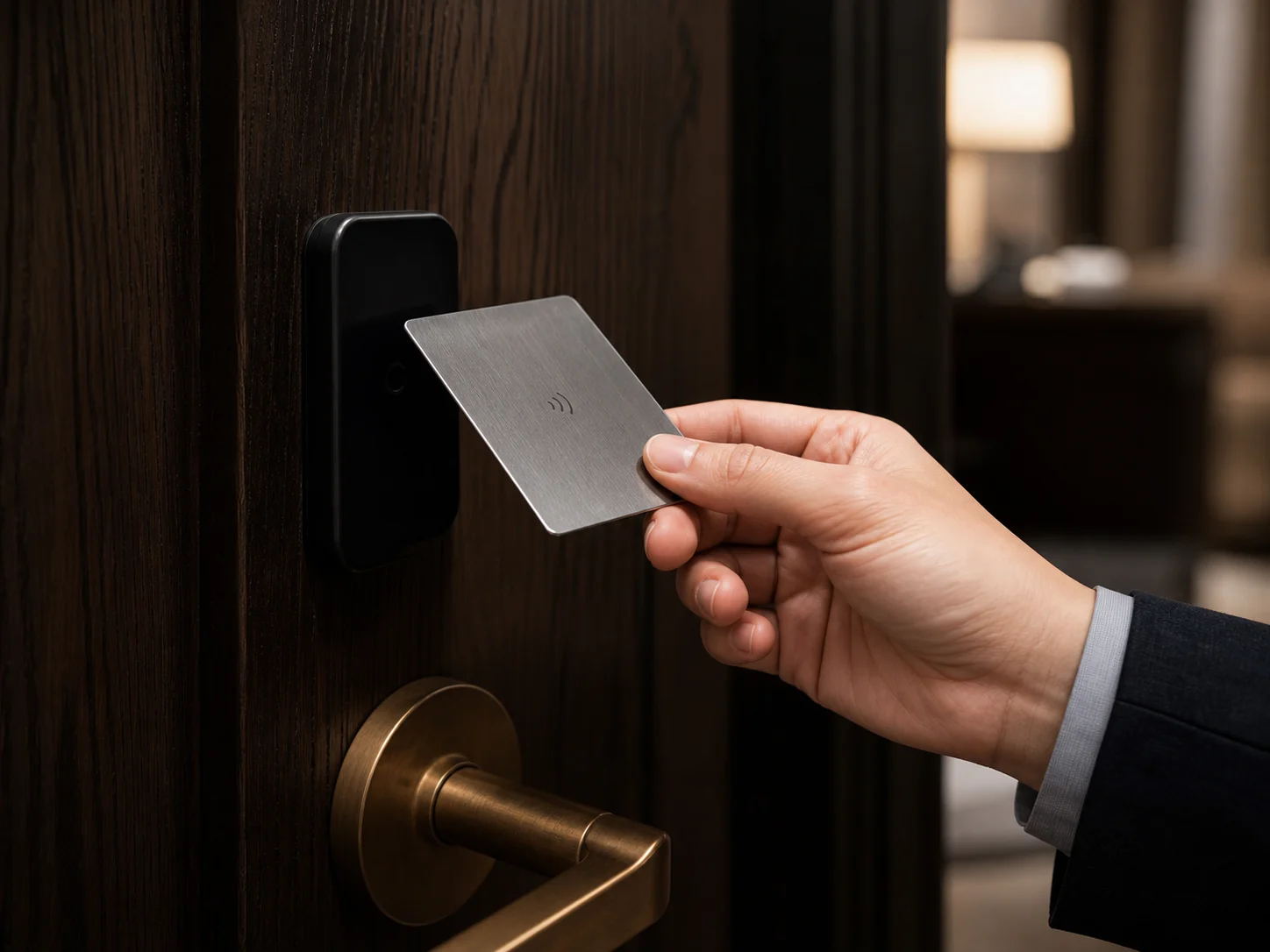
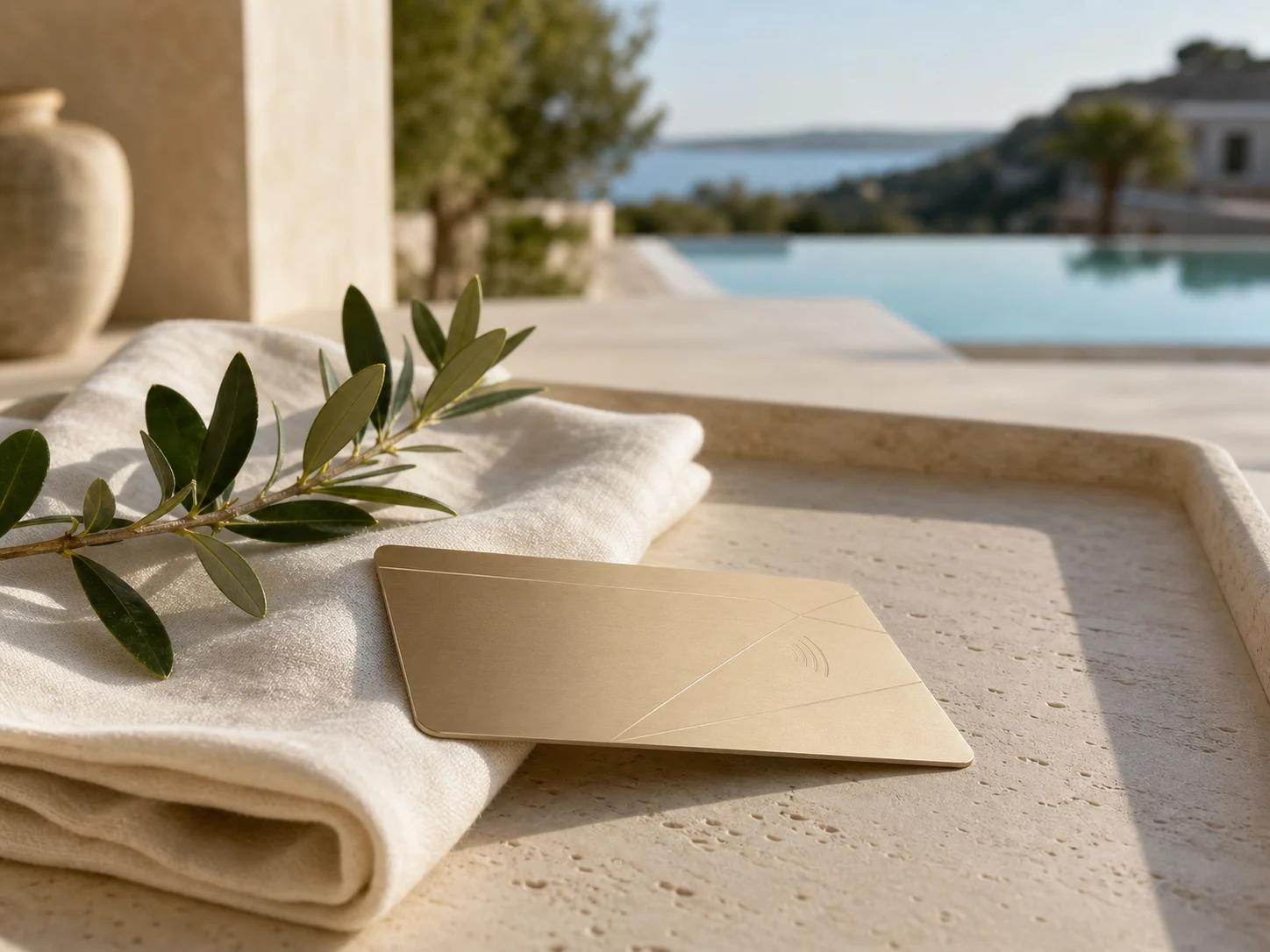
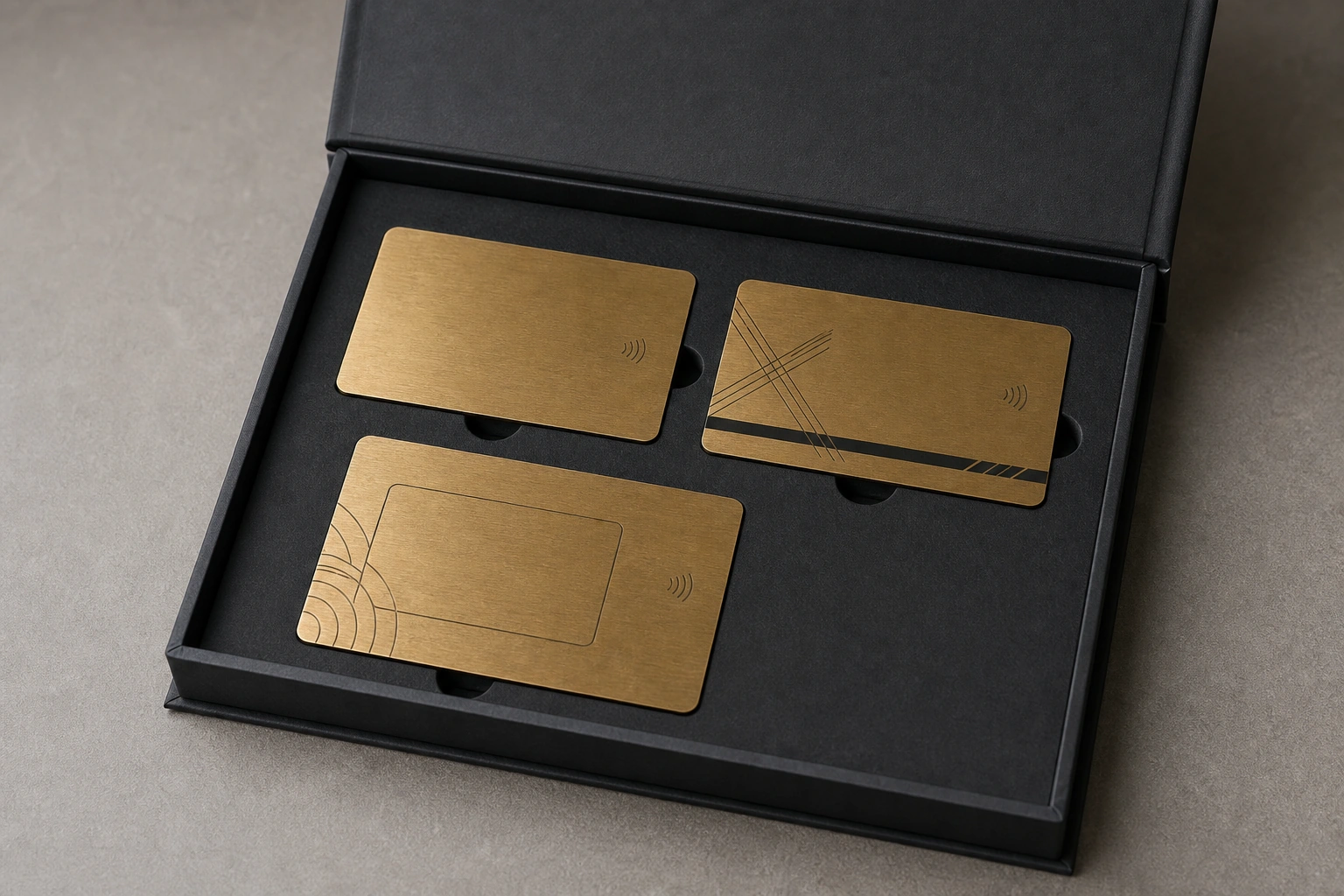
Start with the lock, not the finish.
A metal hotel card must be matched to the specific lock system and reader behavior. Share the lock brand, reader model, existing card or chip family, encoding approach, room-zone requirement, and desired read distance before a metal construction is proposed.
Use metal where the guest experience earns it.
Metal is most convincing for elite guest tiers, villas, private residences, club floors, spa memberships, and launch-led stays. A standard high-volume room-key program may need a different construction or a mixed credential strategy.
Keep encoded data and presentation matched.
Room-zone data, keycard IDs, sleeve labels, and any guest-facing numbering should be reconciled in one production file so the credential and its presentation pack remain traceable.
Build a replacement and recovery route into the programme.
A premium credential still needs a practical replacement plan. Define how lost cards are voided, how spare stock is labelled, what data is retained, and whether a standard backup key card is held for late-night issue or high-volume check-in.
Best uses
- Luxury hotels, resorts, villas, and private residences
- Elite, suite, spa, club, and concierge guest tiers
- Hospitality programs where the key card is part of the arrival experience
- Small premium batches that can be tested on the live lock estate
Frequently asked questions
Can a metal hotel key card work with an existing lock?
It can when the RF construction is designed around the target lock and proven with an encoded sample. Metal affects radio performance, so existing lock compatibility must be tested rather than assumed.
Which hotel programs suit metal cards?
They are best suited to elite guest, suite, villa, residence, club, spa, and concierge programs where the card is part of the presentation.
Can a metal hotel key card use full-colour artwork?
Yes. Full-colour UV artwork, property illustration, gradients, and seasonal visual systems can be printed onto approved metal constructions. A physical print proof confirms colour, edge quality, and how the artwork sits beside the access hardware.
Why is a production sample necessary for metal hotel key cards?
A metal surface changes radio behaviour. The final material, ferrite or shielding route, antenna, chip, thickness, and encoding must all be proven together on a real target door—not assumed from a standard plastic key card.
Specification
| Format | CR80 85.6 x 54 mm by default; custom outlines after RF review |
|---|---|
| Thickness | 0.3 mm to 0.8 mm depending on construction |
| Minimum order | None — single samples to production runs |
| Production time | About one week after artwork and sample approval |
| RF construction | Antenna, ferrite or hybrid shielding, chip, metal faces, and edge stack specified together |
| Chip routes | NFC tag, standard HF, high-security AES HF, LF compatibility, and selected UHF by reader test |
| Marking options | Laser etch, deep engraving, full-colour UV print, white ink, enamel fill, and controlled cut-through |
| Approval flow | Finish sample, encoded working sample, reader check, pre-production approval |
| System inputs | Lock make/model, existing keycard sample or chip requirement, room-zone rules, encoding format |
| Finish fit | Brushed stainless, matte black, gold, brass, gunmetal, or carbon hybrid by reader test |
| Data options | Room-zone encoding, keycard ID, serials, UID matching, sleeve labels |
| Colour routes | Full-colour UV artwork, opaque white underbase, gradients, property illustration, and controlled print proofs |
| Critical check | Working encoded sample on a real door and expected guest tap behavior |
Related metal RFID card pages
- Metal NFC Business Cards
- Metal Membership Cards
- Metal Event Passes
- Metal Loyalty Cards
- Metal RFID ID Badges
- Metal Gift Cards
- Custom Metal RFID Cards