13.56 MHz
Standard HF Metal RFID Cards
Standard HF metal RFID cards serve gyms, clubs, campuses, workplaces, and venues whose access platform already speaks standard HF. The family runs from the legacy 1K and 4K generations — sector-based memory with Crypto1 encryption, still everywhere in installed estates — to the current secure variants. The family name alone is not enough: the exact chip must match what the installed system enrolls.
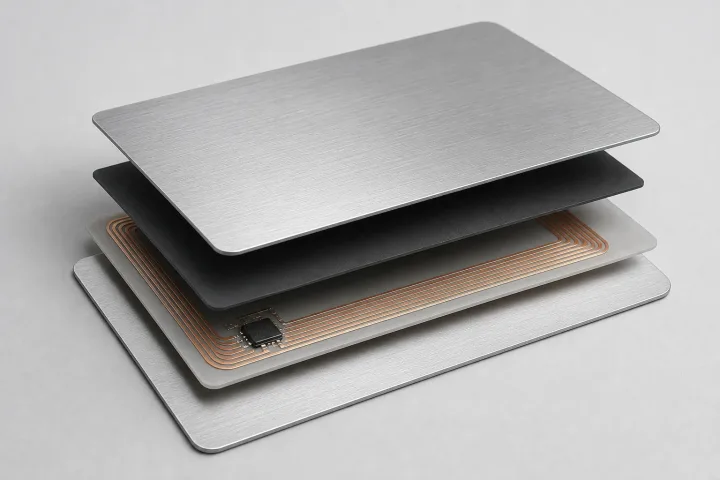
Standard HF route brief
| Frequency | 13.56 MHz |
|---|---|
| Best use | Membership access, gyms, clubs, campuses, workplaces, hospitality, venues, and compatible access systems. |
| Chip route | The exact standard HF chip must match the installed system; the family name alone is not enough. |
| Phone behavior | Usually selected for readers rather than public phone tap; behavior depends on chip and data model. |
| Encoding | UID, memory sectors, access keys, card number, member record, or integrator-defined data. |
| Approval check | Confirm chip generation, key handling, metal RF stack, and the real access reader. |
Visual references
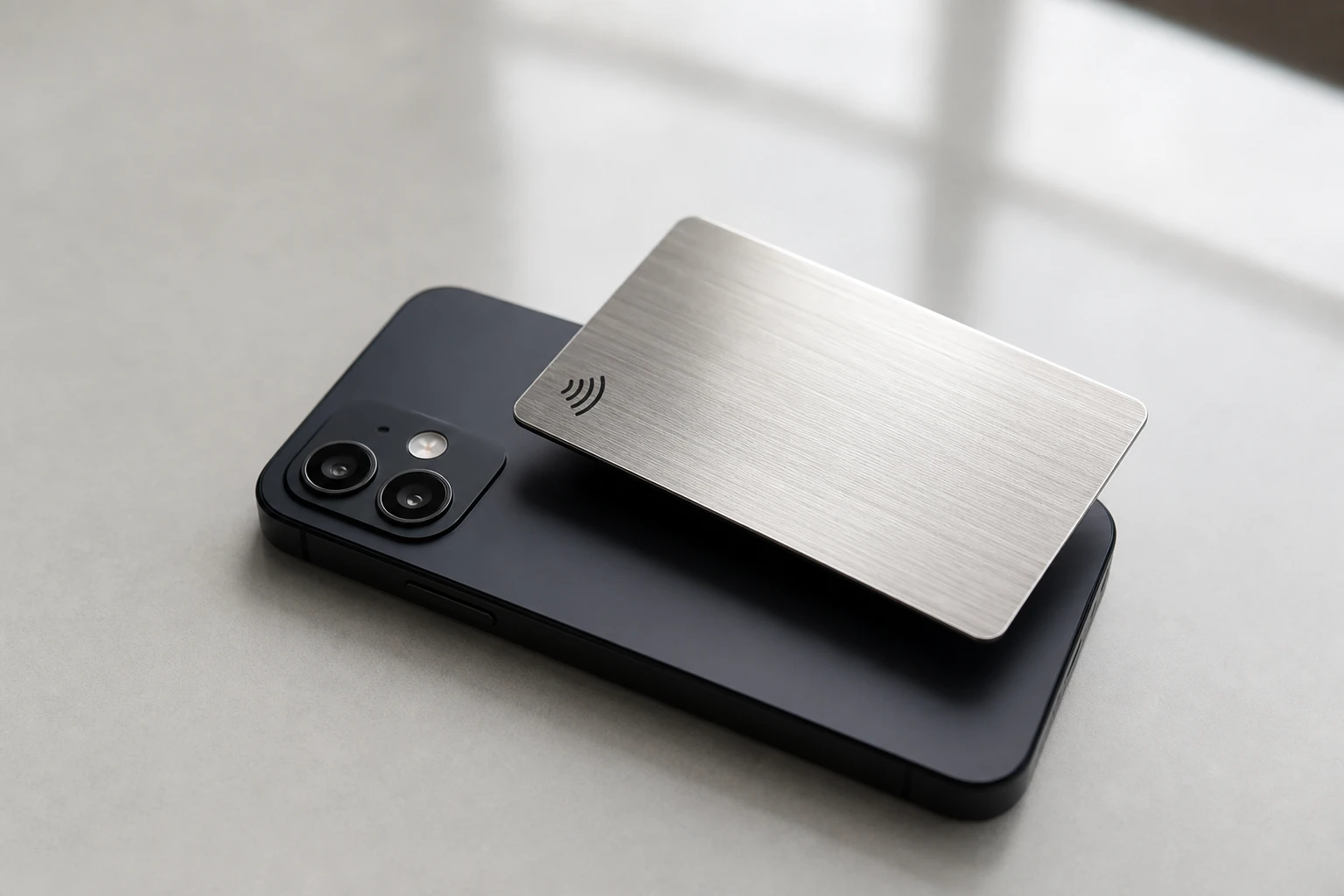
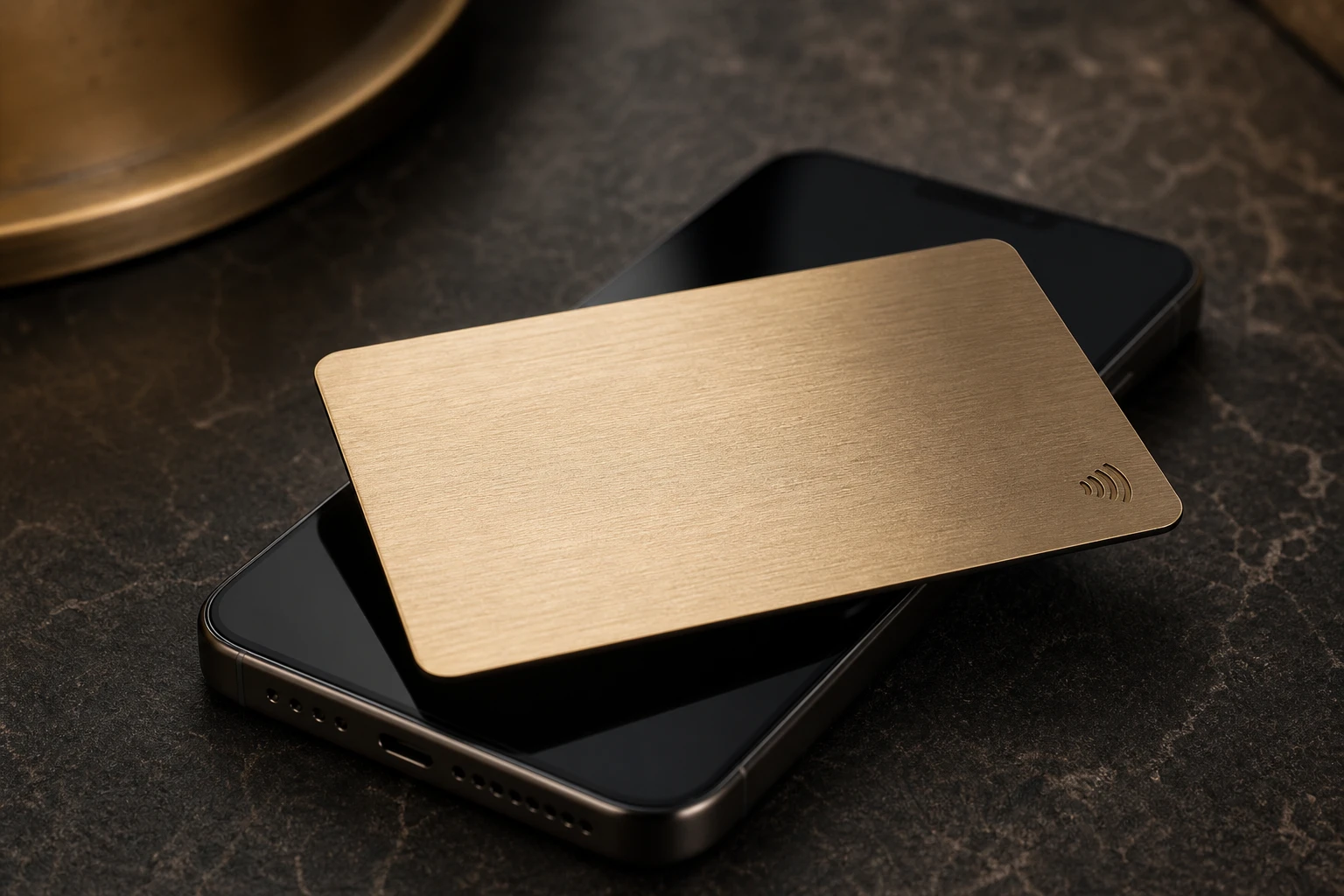
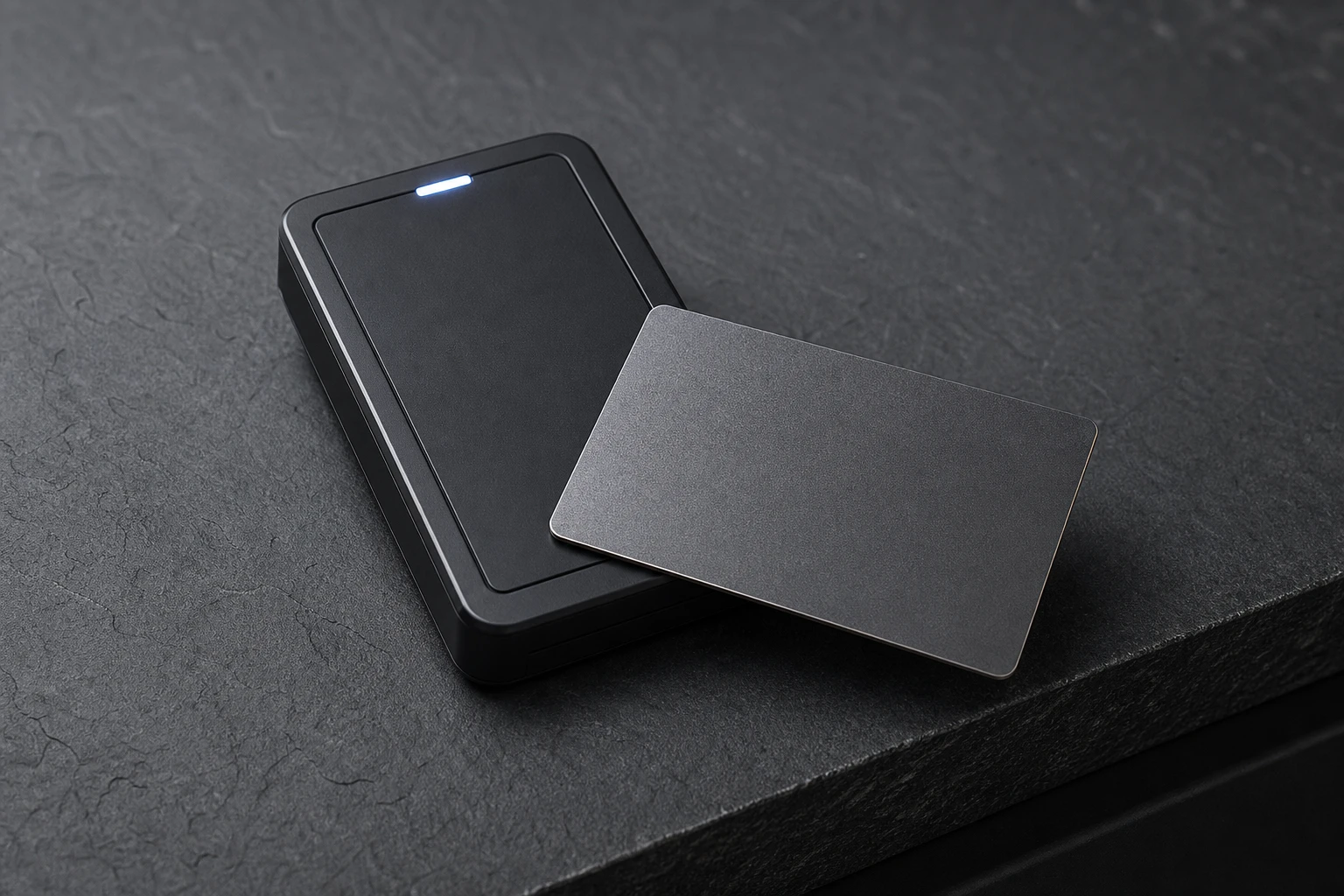
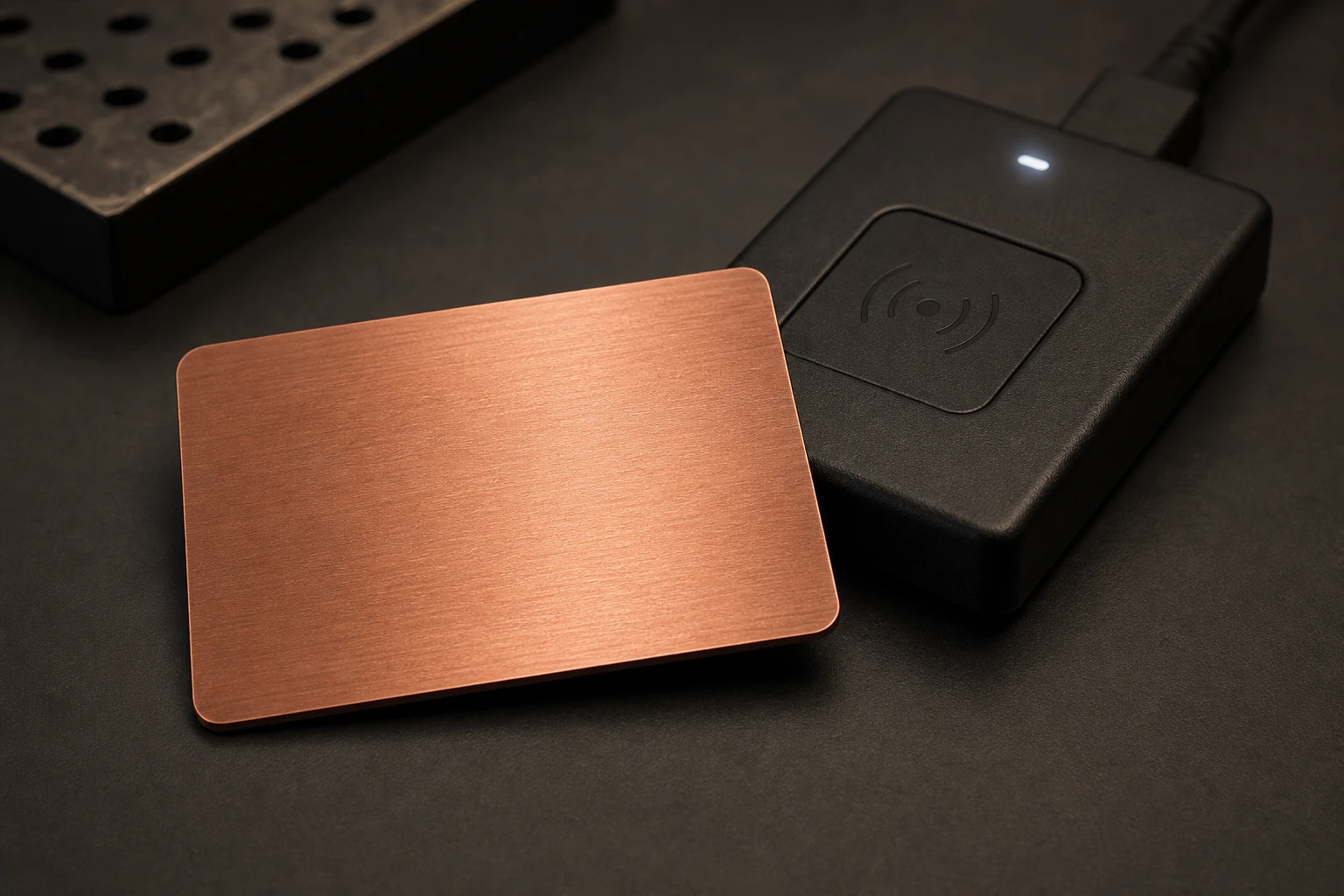
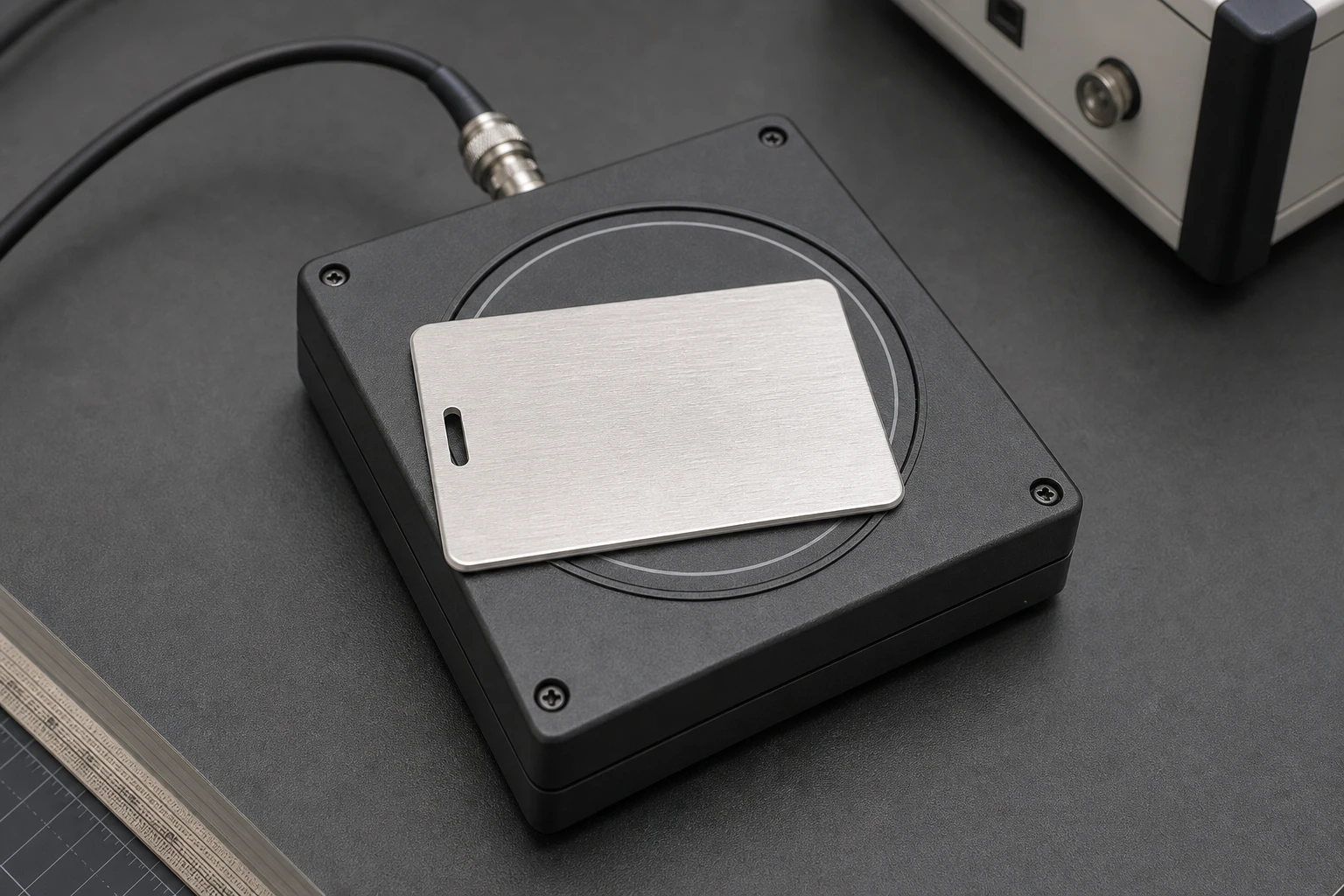
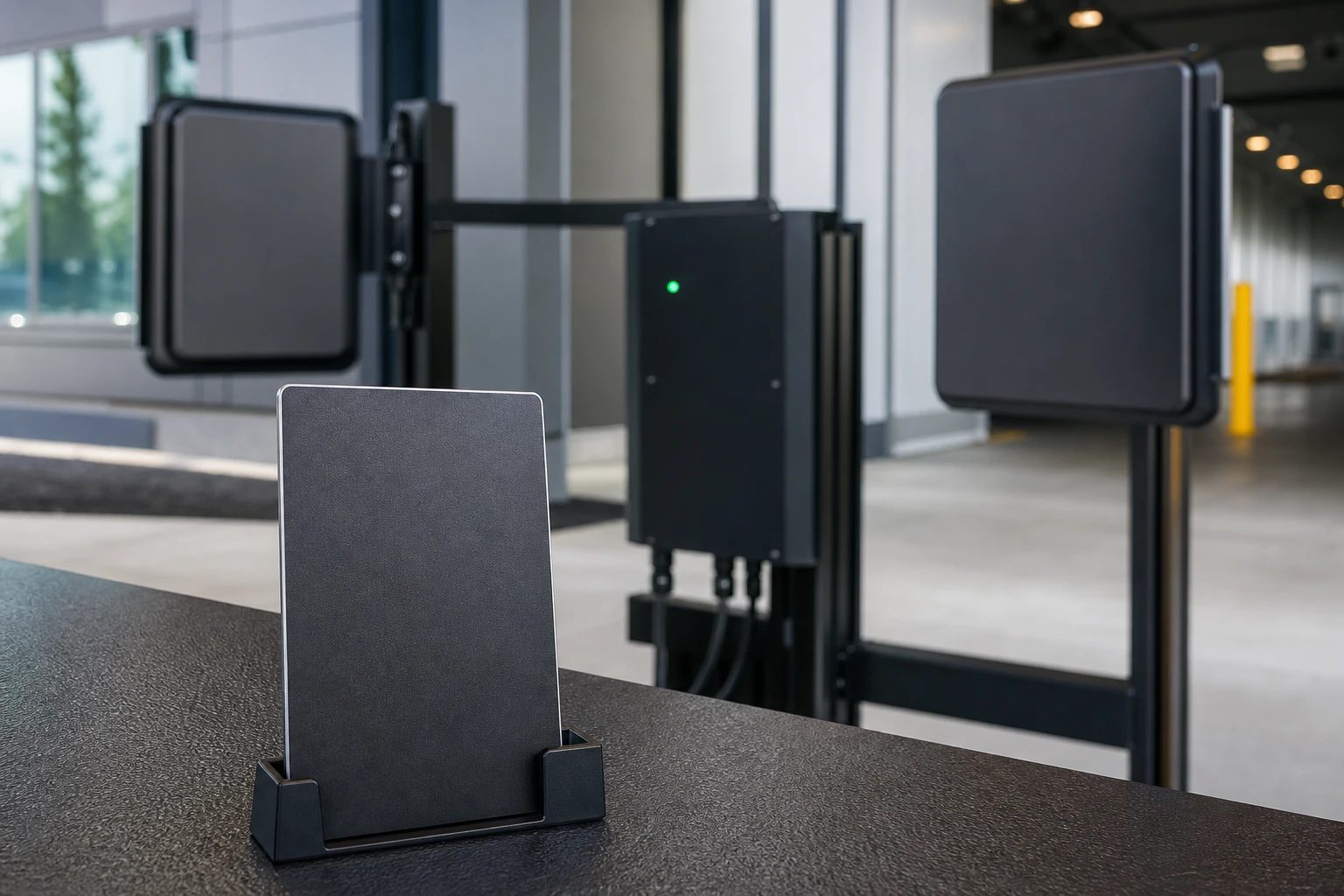
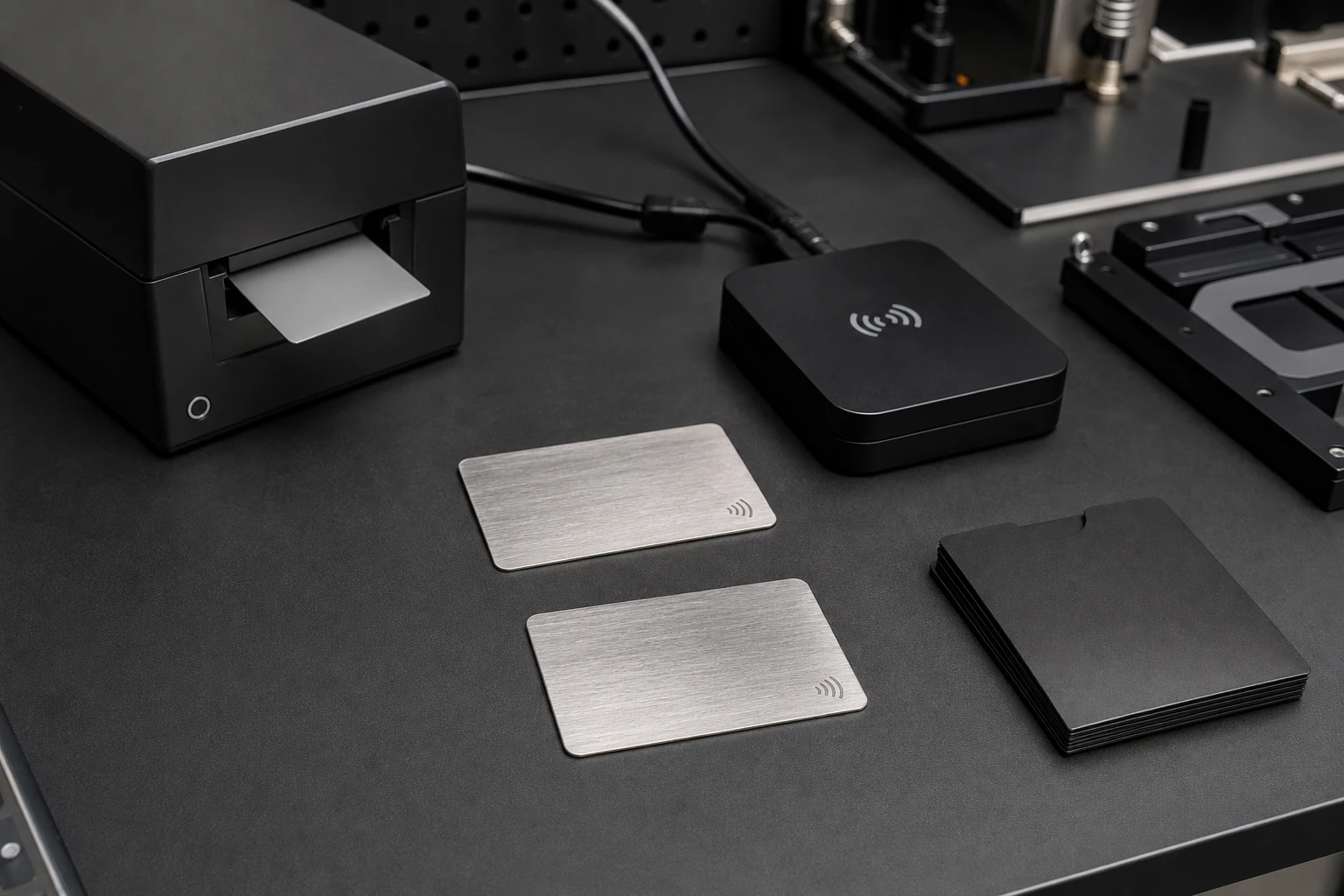
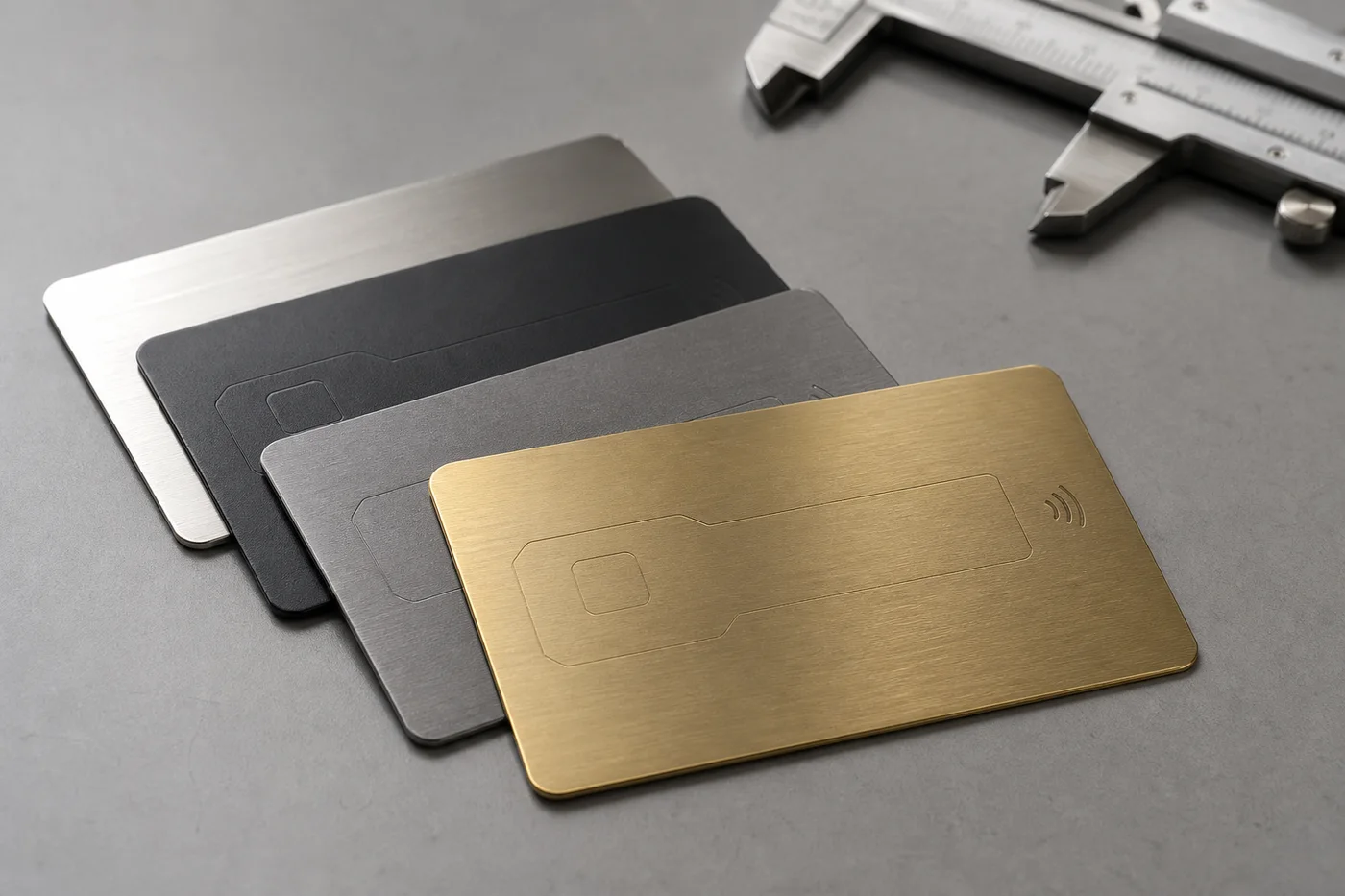
'standard HF' is a family, not a specification.
Legacy 1K, legacy 4K, entry-level HF, and high-security AES HF all answer to the standard HF name and are not interchangeable. Crypto1 in the legacy generation is decades old and best treated as compatibility rather than security — platforms that need real cryptography specify high-security AES HF or AES-secured lightweight HF instead. Send the reader model or a working current card, and the chip is matched to it in writing before sampling.
Approve a working sample in the real environment.
Confirm chip generation, key handling, metal RF stack, and the real access reader.
Best uses
- Membership access, gyms, clubs, campuses, workplaces, hospitality, venues, and compatible access systems.
- Metal card programs that can validate a finished encoded sample on the target reader
- Projects that need print, serial, QR, packaging, and data handling reconciled in one approved brief
Frequently asked questions
Which standard HF chip does a metal access card need?
The one the installed platform enrolls — legacy 1K, legacy 4K, or a current variant. Send the reader model or an existing working card; requesting 'standard HF' without the exact chip is the most common way access projects go wrong.
Is legacy standard HF secure?
Its Crypto1 encryption is decades old, so treat the legacy generation as compatibility with an installed estate rather than as security. Where genuine cryptography is required, platforms specify high-security AES HF or AES-secured lightweight HF.
Why test a standard HF metal card on the real reader?
Because two things must hold at once: the chip must match the platform's data model, and the shielded metal construction must read at the real distance. An encoded sample on the actual access reader proves both before production.
Specification
| Format | CR80 85.6 x 54 mm by default; custom outlines after RF review |
|---|---|
| Thickness | 0.3 mm to 0.8 mm depending on construction |
| Minimum order | None — single samples to production runs |
| Production time | About one week after artwork and sample approval |
| RF construction | Antenna, ferrite or hybrid shielding, chip, metal faces, and edge stack specified together |
| Chip routes | NFC tag, standard HF, high-security AES HF, LF compatibility, and selected UHF by reader test |
| Marking options | Laser etch, deep engraving, UV print, white ink, enamel fill, QR, serial, and controlled cut-through |
| Approval flow | Finish sample, encoded working sample, reader check, pre-production approval |
| Frequency | 13.56 MHz |
| Chip route | The exact standard HF chip must match the installed system; the family name alone is not enough. |
| Phone behavior | Usually selected for readers rather than public phone tap; behavior depends on chip and data model. |
| Encoding | UID, memory sectors, access keys, card number, member record, or integrator-defined data. |
| Approval check | Confirm chip generation, key handling, metal RF stack, and the real access reader. |
Related metal RFID card pages
- LF Metal RFID Cards
- HF NFC Metal RFID Cards
- NFC Tag Metal RFID Cards
- Entry-level HF Metal RFID Cards
- AES-secured HF Metal RFID Cards
- High-security AES Metal RFID Cards
- UHF Metal RFID Cards
- Programmable 125 kHz Metal RFID Cards
- Metal RFID Card Encoding
- RFID UID Converter & Wiegand 26-bit Calculator