Golf and country club guide · 8 min read
Metal RFID Membership Cards for Golf and Country Clubs
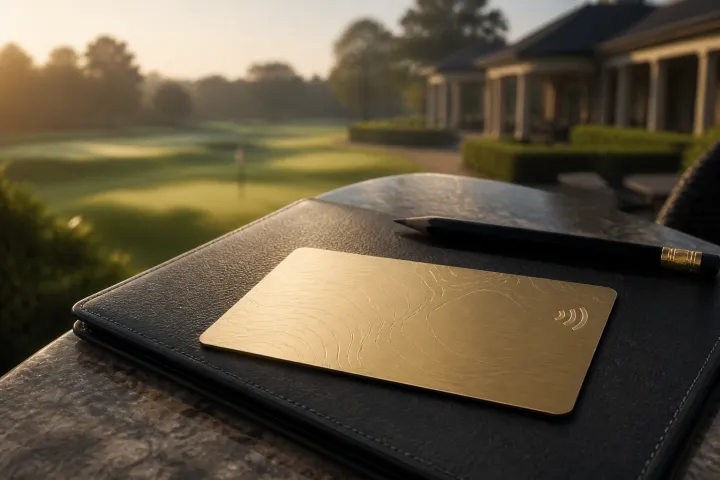
A golf or country-club card can make membership easier to recognise across arrival, tee times, practice areas, dining, events, and guest hosting. The card works best when it points to a clear member record and each benefit has a practical validation method rather than relying on appearance alone.
Industry program views
Connect the member record to the places the club actually serves.
Arrival, booking, dining, family privileges, events, and access should use one consistent identity while retaining the controls appropriate to each area.

Start with membership rules, not black and gold tiers.
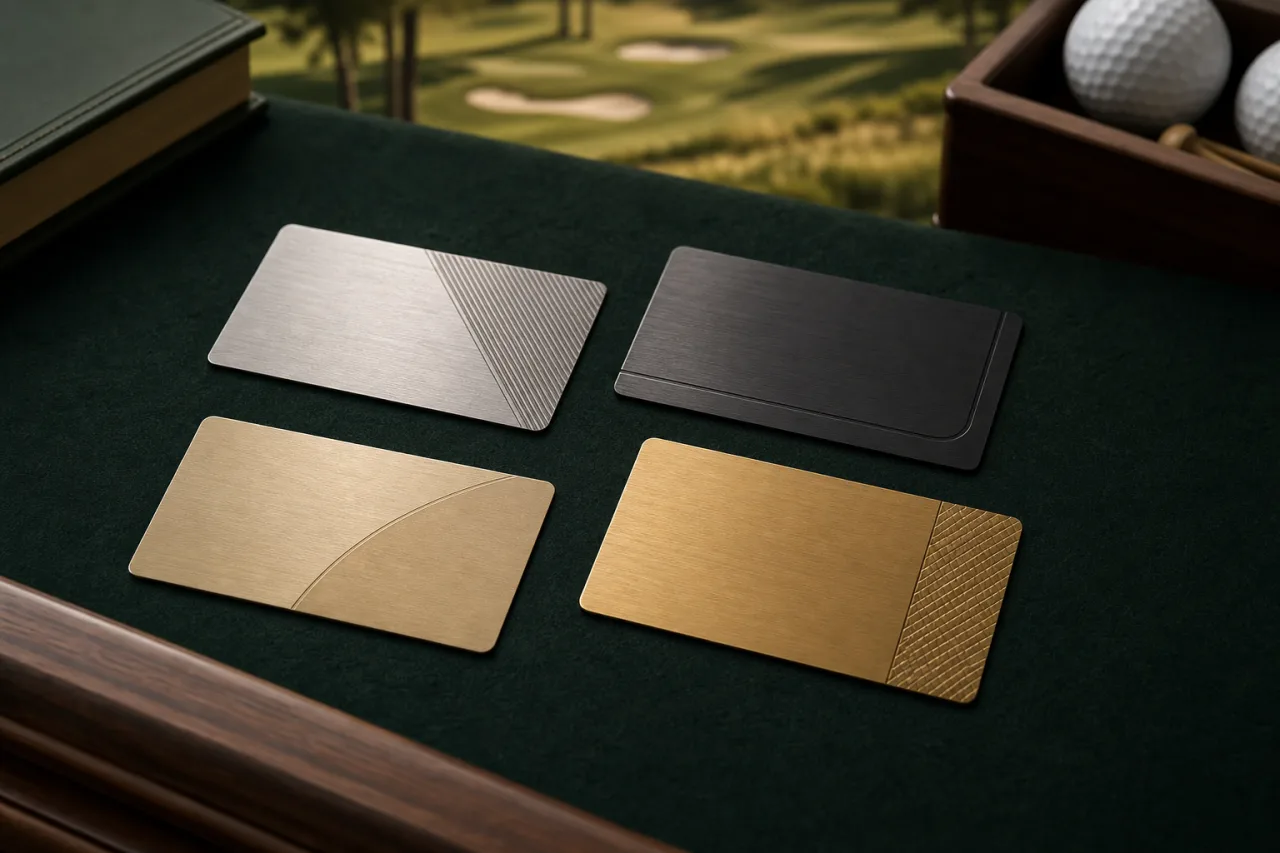
Define who can book, host guests, use practice or wellness facilities, attend private events, charge eligible services, or enter restricted areas. A metal finish can help staff recognise a tier, but current privileges must come from the live member record and documented club policy.
A useful workshop starts with a full day in the club rather than a color palette. Follow arrival, bag drop, practice, tee-time confirmation, halfway service, dining, wellness, events and departure. Note which team owns each interaction and where the member already uses a phone or account. The resulting map shows where one identity removes friction and where a specialist access or payment system should remain separate.
Give each touchpoint the lightest useful validation.
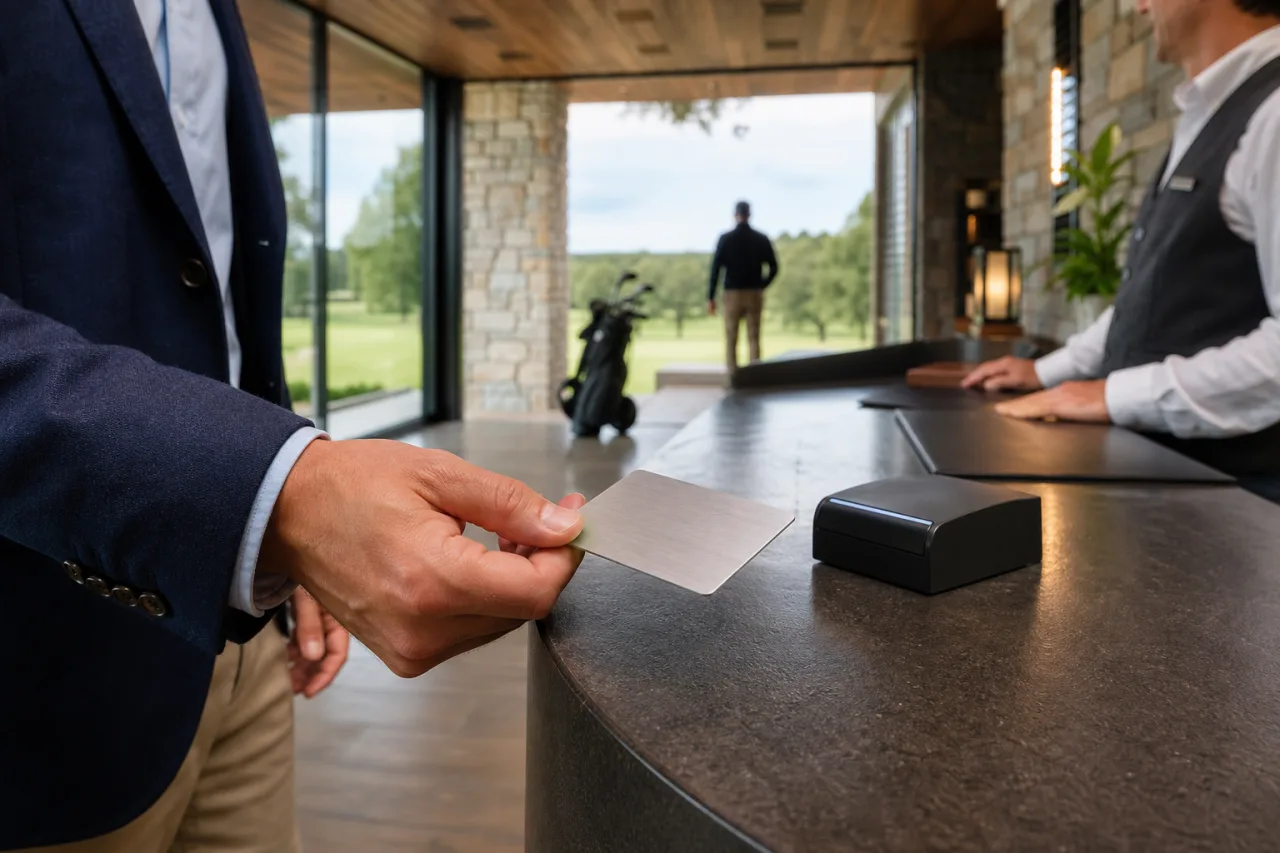
Reception may use visual identity and member lookup; a compatible reader may control a door or gate; NFC or QR may open tee-time, dining, event, or lesson booking. Do not force secure RFID into a journey that only needs a managed phone link, and do not use a public link where an access credential is required.
Design the digital destination around common member intent. A tap before play may need today's booking and course notices; after play it may need dining, lessons or an event calendar. Private balances, family details and charging permissions stay behind sign-in. Use a managed URL so the route can change through the season while the issued metal card remains stable and familiar.
Handle family, guest, and reciprocal-club access explicitly.
Primary members, partners, dependants, guests, and reciprocal visitors may have different rights and expiry. Decide whether each person receives a unique credential, how sponsors are recorded, and how temporary access is revoked. Shared cards weaken accountability and make lost-card response difficult.
Family and reciprocal membership works best when every person has an accountable record. Define age rules, booking limits, guest allowances, sponsorship and expiry, then issue a unique credential where practical. The primary member's visible tier should not silently grant the same rights to everyone carrying the card. A clear forgotten-card and temporary-guest procedure prevents staff from improvising at busy arrival times.
Design for repeated handling and outdoor routines.
The card may move between wallet, bag, reception desk, restaurant, and practice facility. Approve edge comfort, fingerprints, scratch behavior, laser contrast, QR scanning, sleeve use, and reader orientation on the final metal construction. A restrained finish generally ages more honestly than a highly polished surface.
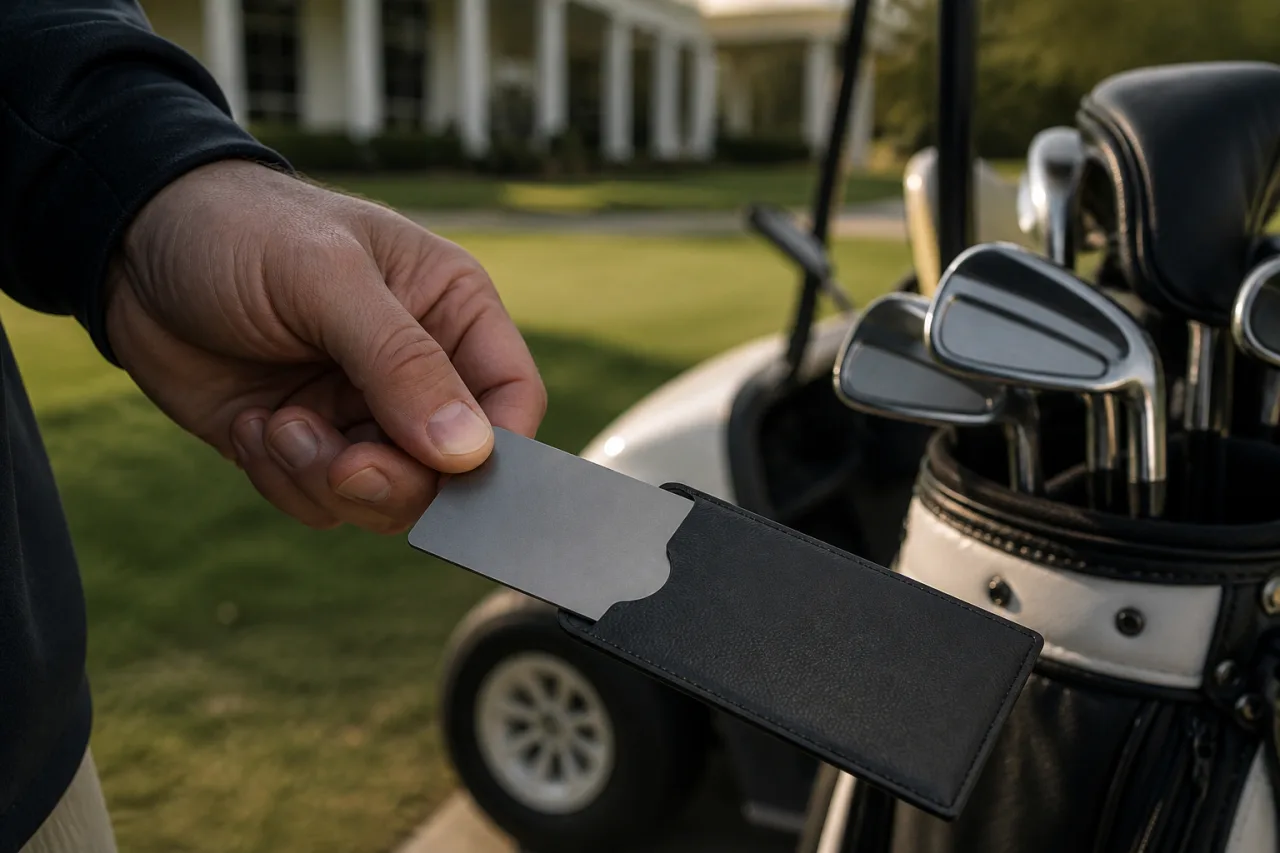
Outdoor use makes physical approval important. Handle the sample with sunscreen, damp hands, gloves, a wallet and the proposed sleeve; inspect corners and coatings after repeated use. Verify QR codes under sun and shade, and test any reader at the actual gate or facility. The goal is not an indestructible claim, but a finish whose wear, readability and hand-feel are understood before production.
Make renewal and tier changes operationally clean.
Use one data source for member name, number, category, issue or expiry date, access reference, and packaging. Define whether an upgrade requires a new card, whether the former credential is revoked or retained as a keepsake, and how staff sees the current entitlement when the visible tier is no longer current.
Plan upgrades and renewals without turning the visible tier into the database. Staff should see current status in the club system, while the card supports recognition and selected functions. Decide whether old cards are revoked, returned or kept as souvenirs, how serials are retired, and how replacements inherit the member record. This keeps a premium keepsake from becoming an active credential by accident.
Best uses
- Golf, country, racquet, and multi-sport clubs
- Family, corporate, founder, and invitation tiers
- Arrival, booking, dining, events, and selected access
- Clubs replacing fragmented member cards with one identity
Relevant metal card routes
Frequently asked questions
Can the card link to tee-time and dining reservations?
Yes. NFC or QR can open a managed member destination, with authentication where account details or booking rights are private.
Should every family member have a separate card?
Usually yes. Unique credentials improve recognition, permissions, guest rules, loss handling, and auditability.
Can a metal card replace an existing club access credential?
Only after matching the installed reader, chip, encoding, thickness, and RF construction and approving a working sample on site.
Specification
| Card format | CR80 85.6 × 54 mm by default; custom outlines after RF review |
|---|---|
| Thickness | 0.3–0.8 mm depending on the metal and RF construction |
| Minimum order | None — from one working approval sample to production runs |
| Production time | About one week after artwork, data, and sample approval |
| Personalization | Member name, ID, tier, serial, expiry, QR, NFC data, and matched packaging |
| Approval path | Program brief, artwork proof, encoded sample, device test, and production approval |
| Member model | Unique record for primary member, partner, dependant, guest, or reciprocal visitor |
| Critical test | Booking journey, staff recognition, QR/NFC behavior, and every intended gate or door reader |
Related metal RFID card pages
- Metal RFID Membership Cards for Yacht Clubs and Marinas
- Metal RFID Membership Cards for Private Aviation and FBO Lounges
- Metal RFID Membership Cards for Luxury Residence Clubs
- Metal RFID Membership Cards for Private Wellness Clubs
- Custom Metal Membership Cards for Car Clubs
- Metal Membership Cards for Car Detailing Studios
- How to Build a Luxury Car Rental VIP Membership Program
- Metal Membership Cards for Private Car Storage Clubs
- Dealership VIP Cards That Extend the Owner Relationship
- VIP Metal Passes for Rallies, Track Days and Car Events
- NFC, RFID or QR for Automotive Membership Cards?
- How to Design Black, Gold and Founder Car Club Tiers
- What Can Be Personalized on a Metal Automotive Card?
- Metal vs Plastic Membership Cards for Automotive Brands
- How NFC Metal Cards Connect Automotive Member Portals
- Seven Benefits an Automotive VIP Card Can Support