Custom shape builds
Custom Metal RFID Cards
Custom metal RFID cards start with the final outline, not the decoration. Slots, holes, cut-through areas, edge treatments, chip position, antenna geometry, ferrite or shielding layers, marking, data zones, and packaging are reviewed together so the finished card looks intentional and still reads reliably.
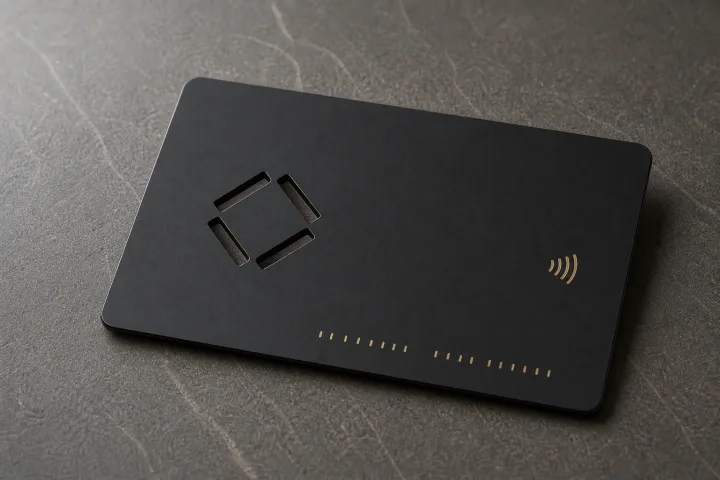
Custom metal form factors
Resolve the outline, RF path, and physical use before committing to a finish.
Custom shapes can create a memorable pass, tag, invitation, keycard, or product-authentication object—but each new cut, hole, and edge detail has to respect the RF construction.

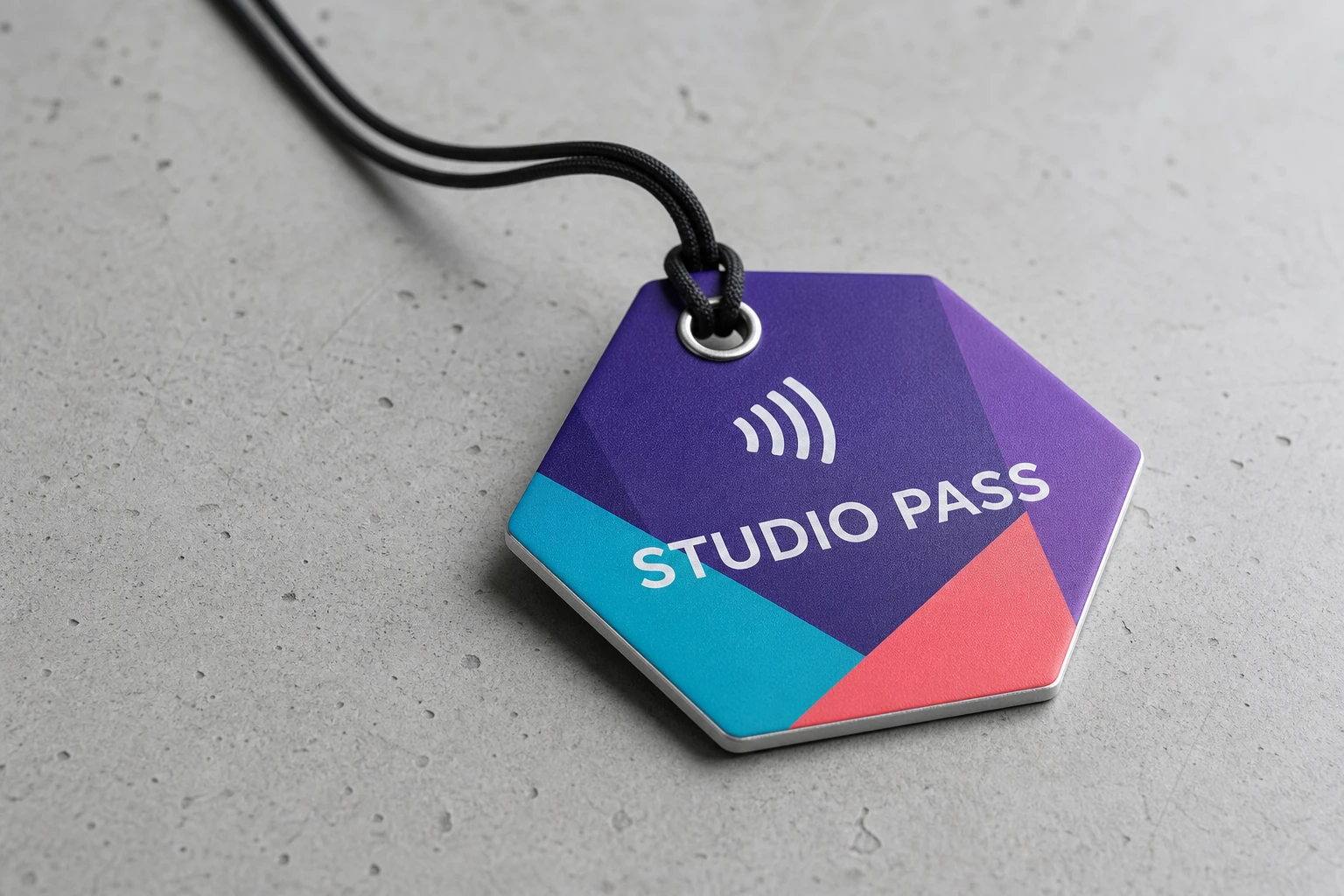
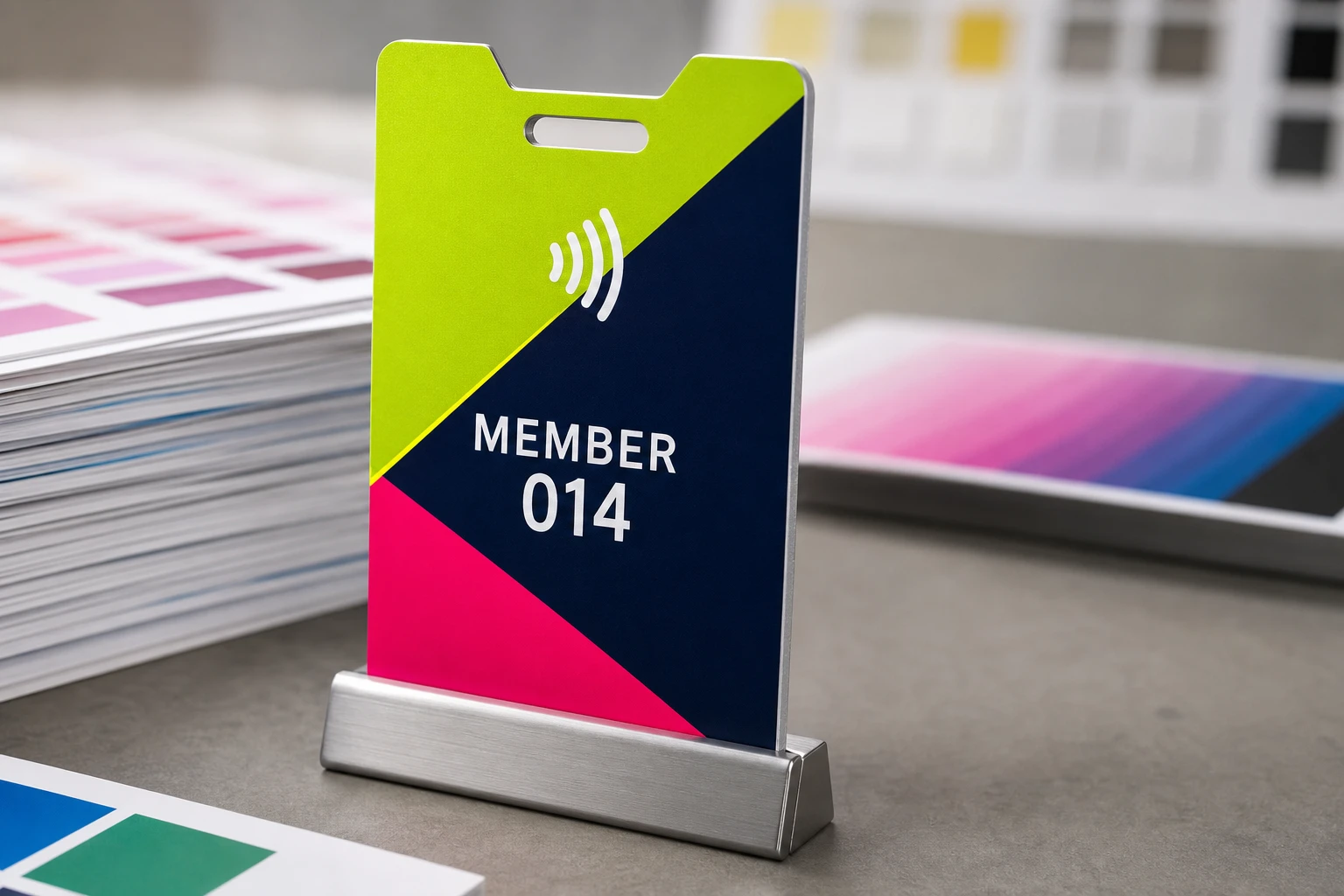
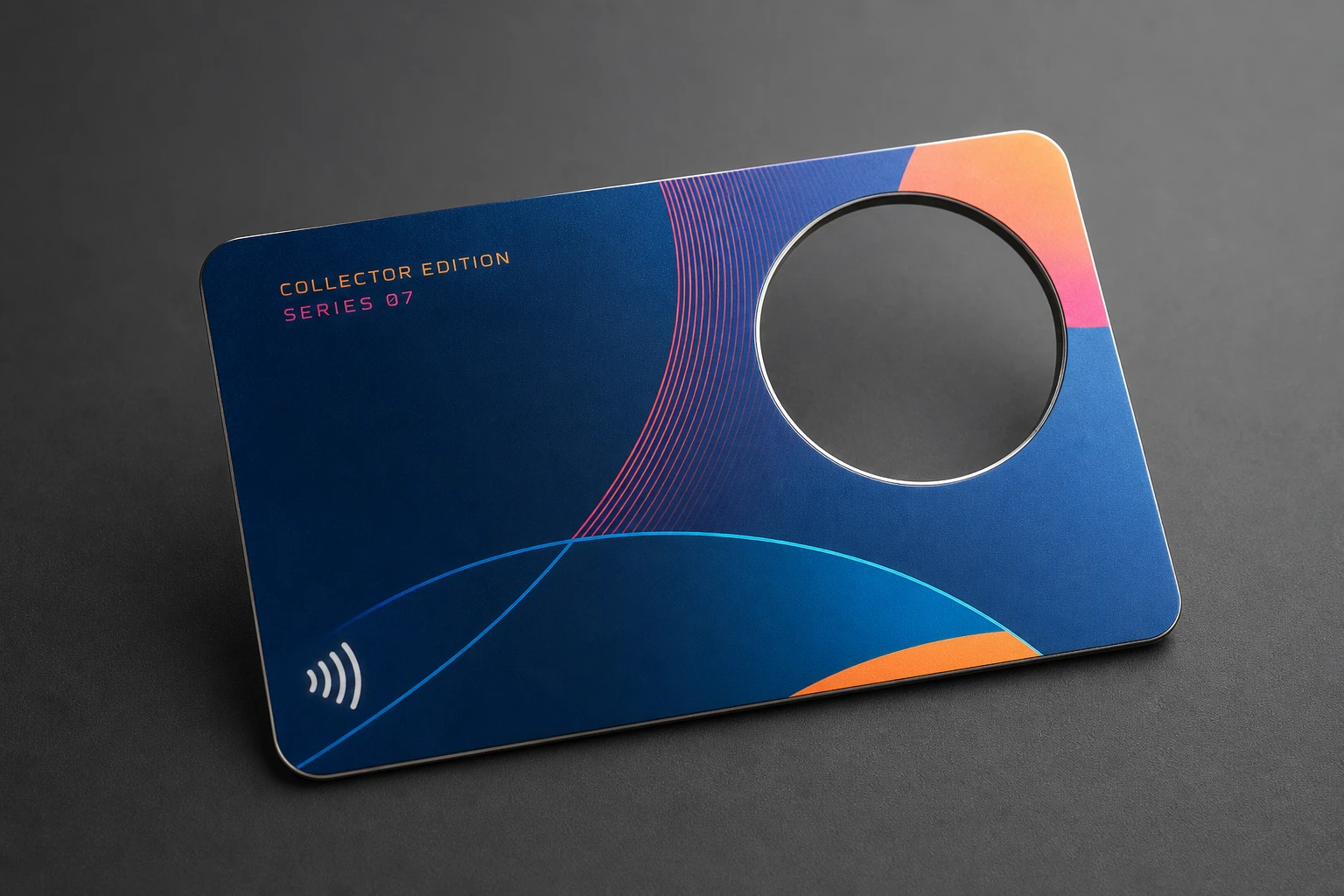
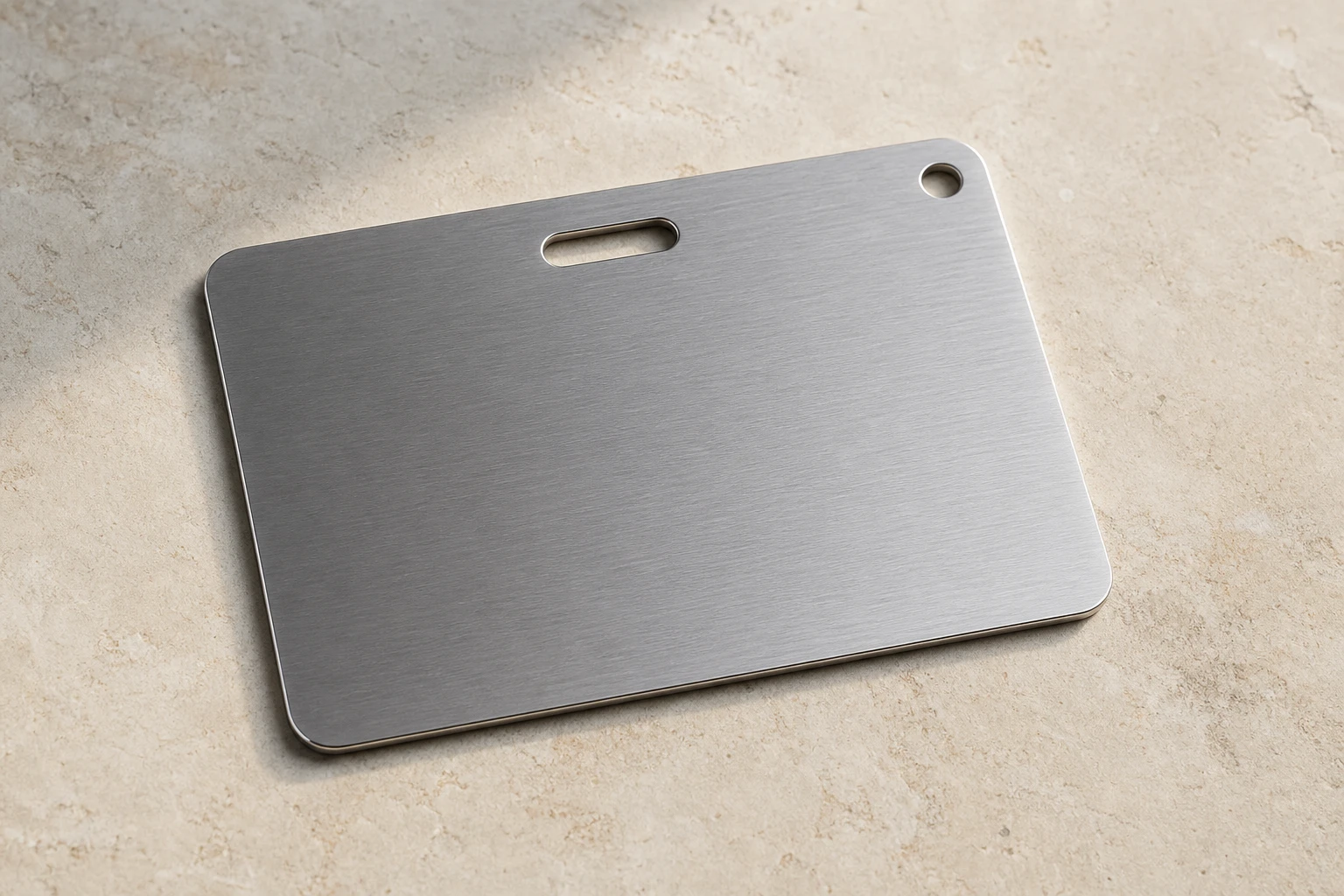
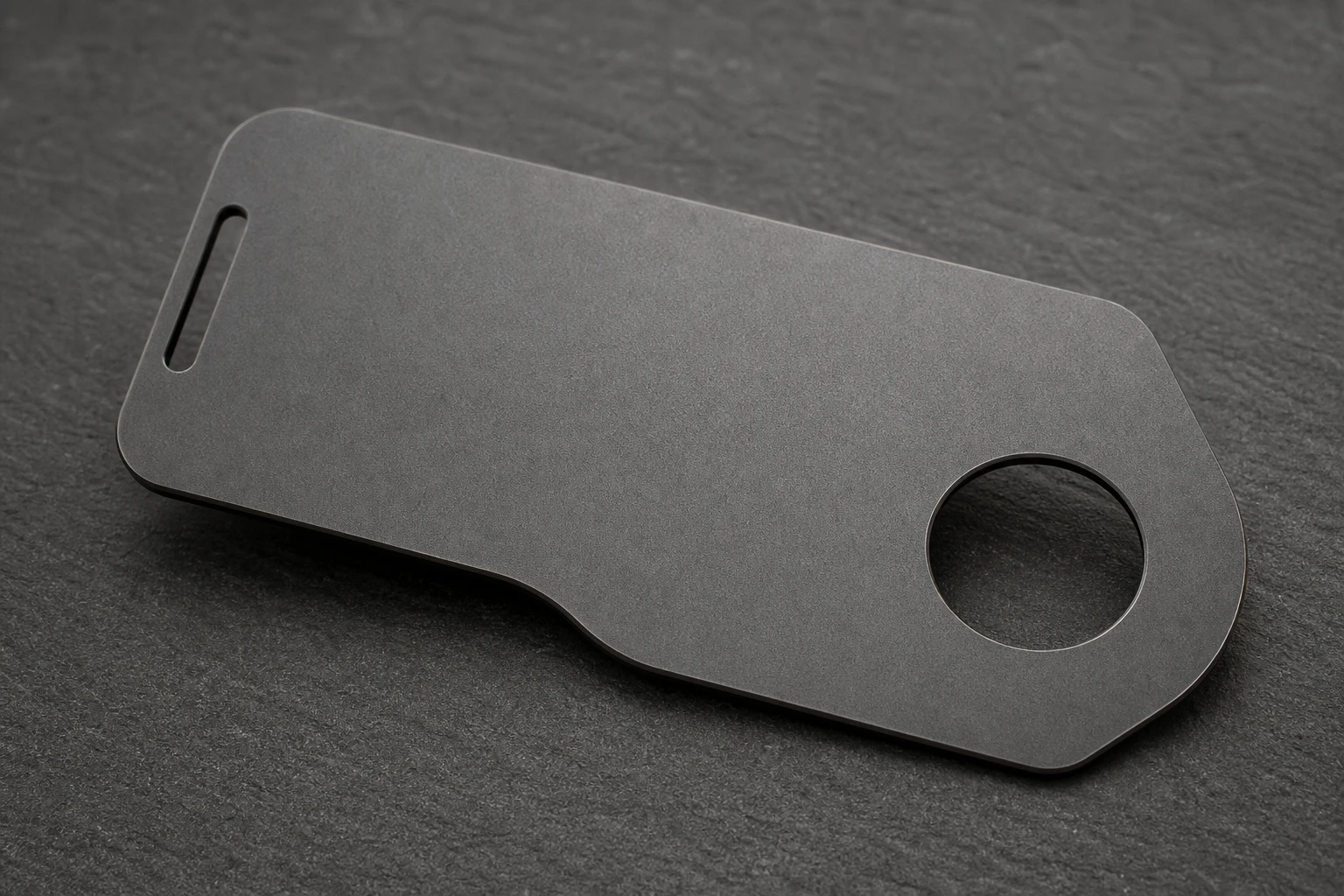
Begin with the real dieline.
Supply the actual intended outline, dimensions, slots, holes, corner radii, cut-through areas, attachment method, and handling scenario. That drawing lets the RF route be planned around the final object rather than patched after design approval.
Choose a controlled feature stack.
The best custom metal cards use a small set of clear decisions: a distinctive outline, one reliable finish, a precise mark, a readable data zone, and a considered package. Adding every possible effect makes both RF approval and repeat production harder.
Prototype the finished construction.
A serious custom build gets a physical sample that proves edge feel, attachment strength, mark contrast, data readability, and reader or phone performance in the final material stack. Once signed off, the approved construction becomes the production reference.
Best uses
- Limited-edition member, launch, invitation, and event credentials
- Key tags, lanyard passes, product-authentication tags, and premium gift objects
- Automotive, hospitality, collector, technology, and culture-led special projects
- Projects able to approve a physical prototype before production volume
Frequently asked questions
Can a custom-shaped metal card still use RFID or NFC?
Yes, when the antenna, chip, shielding, and cut geometry are engineered around the final outline and tested in a physical sample.
Can a custom card include slots or holes?
Often, yes. Their size and location are subject to RF and strength review because they can affect the antenna route and handling durability.
Specification
| Format | CR80 85.6 x 54 mm by default; custom outlines after RF review |
|---|---|
| Thickness | 0.3 mm to 0.8 mm depending on construction |
| Minimum order | None — single samples to production runs |
| Production time | About one week after artwork and sample approval |
| RF construction | Antenna, ferrite or hybrid shielding, chip, metal faces, and edge stack specified together |
| Chip routes | NFC tag, standard HF, high-security AES HF, LF compatibility, and selected UHF by reader test |
| Marking options | Laser etch, deep engraving, UV print, white ink, enamel fill, QR, serial, and controlled cut-through |
| Approval flow | Finish sample, encoded working sample, reader check, pre-production approval |
| Formats | CR80, vertical pass, key tag, lanyard slot, custom outline, cut-through detail, shaped invitation |
| Drawing inputs | Final dieline, hole/slot dimensions, safe RF area, edge treatment, attachment and packaging route |
| Finish features | Laser, engraving, enamel fill, UV, white ink, QR, serial, controlled metallic or PVD finish |
| Critical check | Prototype strength, antenna-safe geometry, reader result, scan contrast, and final art proof |
Related metal RFID card pages
- Metal Hotel Key Cards
- Metal NFC Business Cards
- Metal Membership Cards
- Metal Event Passes
- Metal Loyalty Cards
- Metal RFID ID Badges
- Metal Gift Cards