Metal loyalty cards work best when the program earns the permanence of the material: a high-value repeat customer, a founder tier, a concierge benefit, or a collectible reward. The card needs a clear redemption or recognition path—not simply a decorative QR code.
Make loyalty feel like recognition—not a generic rewards scheme.
The strongest metal loyalty cards belong to a valuable relationship: a luxury retail client, restaurant regular, wellness member, concierge guest, or invitation-only top tier. The benefit and redemption route stay clear; the card makes the recognition tangible.
01 / What this showsLuxury retail recognition
A metal loyalty card can become a meaningful clienteling object for top customers, private shopping, high-value launches, and service-led retail.
02 / What this showsRestaurant regulars and hosts
Warm brass gives chef-led restaurants, wine programs, galleries, and culture-led loyalty schemes a tactile alternative to a generic plastic rewards card.
03 / What this showsWellness and repeat-visit tiers
A quiet black metal base with a warm accent suits treatment packages, private wellness memberships, and regular guest recognition without feeling promotional.
04 / What this showsConcierge-level benefits
For hospitality loyalty and repeat-guest programmes, the card can signal access to a more personal service level at the front desk, lounge, or concierge.
05 / What this showsLifestyle tier presentation
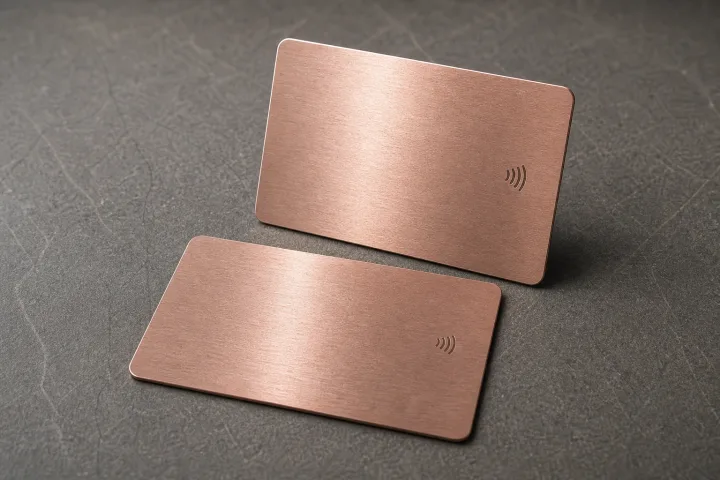
Rose gold gives wellness, hospitality, and boutique clienteling programs a softer premium direction.
06 / What this showsWarm crafted finish
Brass suits restaurant, gallery, retail, and cultural loyalty programs that need a less generic finish.
07 / What this showsReward-route fallback
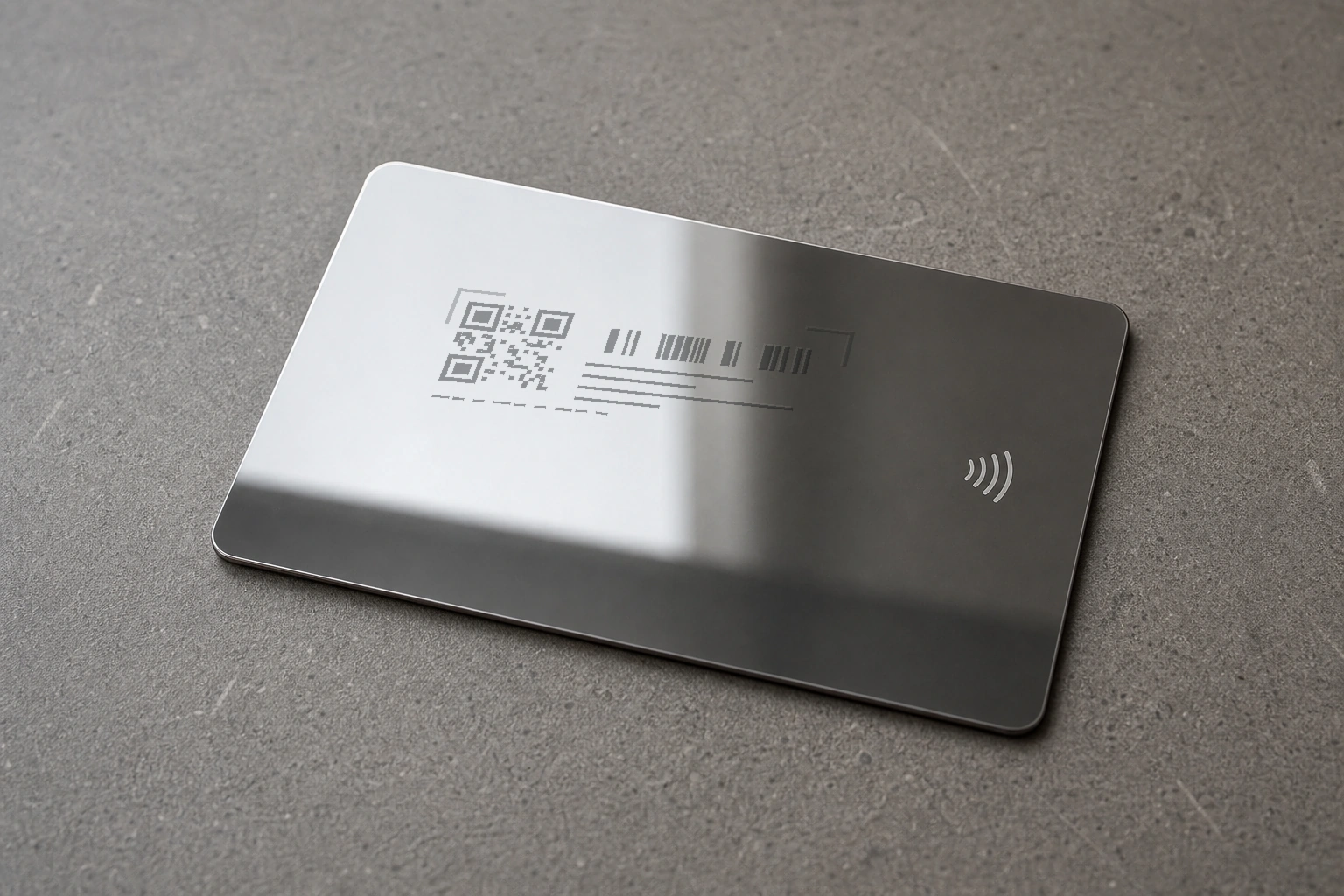
Where the counter workflow needs it, QR, serial, and member markers are sized and contrasted for reliable scanning and staff recognition.
08 / What this showsClear tier detail
High-contrast names, tiers, and short benefit cues can remain readable without overwhelming the metal surface.
(04) — Metal Card Types
Choose the benefit before the finish.
The card might identify a tier to staff, open a rewards page, hold a member ID, trigger a phone tap, or reconcile against a POS or CRM platform. State the benefit and the person who will use it before defining the card's data fields.
(05) — Metal Card Types
Metal should communicate a real level of recognition.
A metal card feels credible when it represents a relationship that already has weight: a top customer, a paid membership, a high-value experience, or a limited loyalty tier. It is less persuasive as a generic mass rewards card.
(06) — Metal Card Types
Make redemption friction-free.
If the program relies on QR, NFC, a serial, or visual tier recognition, test the exact counter, phone, or staff workflow. A premium card does not compensate for an unclear redemption path.
(04) — Applications
Best uses for Loyalty cards.
The practical route is selected from the system, audience, and handling context before the final metal finish and mark treatment are approved.
Best for
Luxury retail, hospitality, wellness, and dining loyalty programs
Founder, VIP, lifetime, and top-spend customer tiers
Invitation-only clienteling programs with a personal account relationship
Programs where a durable keepsake card supports retention or referrals
Quote details
Target reader, lock, phone, scanner, or platform
Metal finish, quantity, and packaging need
Artwork files, data file, and encoding requirements
Sample approval and delivery deadline
(07) — Specification
Production details to confirm before sample or batch.
Metal card production should confirm body construction, finish, chip route, data handling, marking layers, and approval samples in one brief.
FormatCR80 85.6 x 54 mm by default; custom outlines after RF reviewThickness0.3 mm to 0.8 mm depending on constructionMinimum orderNone — single samples to production runsProduction timeAbout one week after artwork and sample approvalRF constructionAntenna, ferrite or hybrid shielding, chip, metal faces, and edge stack specified togetherChip routesNFC tag, standard HF, high-security AES HF, LF compatibility, and selected UHF by reader testMarking optionsLaser etch, deep engraving, UV print, white ink, enamel fill, QR, serial, and controlled cut-throughApproval flowFinish sample, encoded working sample, reader check, pre-production approvalProgram dataMember ID, tier, QR or serial, NFC URL, CRM or POS reference, issue and expiry rulesFinish fitRose gold, brass, gold, matte black, mirror, brushed steel, carbon hybridPackagingSleeve, gift envelope, member box, tier insert, activation or onboarding messageCritical checkCounter or phone behavior, readable tier mark, high-contrast reward fallback
01Can a metal loyalty card work with a POS system?
It can carry the member ID, QR, serial, or NFC destination your POS or CRM needs. The exact redemption and lookup workflow should be tested before production.
02Can loyalty tiers use different metal finishes?
Yes. A controlled material and marking system can separate tiers while keeping the program visually consistent.
(08) — Quote Loyalty cards
Send quantity, chip, material, print and encoding requirements.
Engineered antenna pathFerrite or hybrid RF structureLaser and deep engravingBrushed, plated, coated finishesUID, NDEF, and access encodingSample kits and production approval