13.56 MHz secure HF
AES-secured HF Metal RFID Cards
AES-secured lightweight HF keeps the small, ticket-friendly footprint of the entry-level HF family and replaces its weak points with AES-128 authentication. It sits between plain entry-level HF and high-security AES HF: enough cryptography to stop casual cloning, without the application structure and key ceremony a full high-security AES HF estate demands.
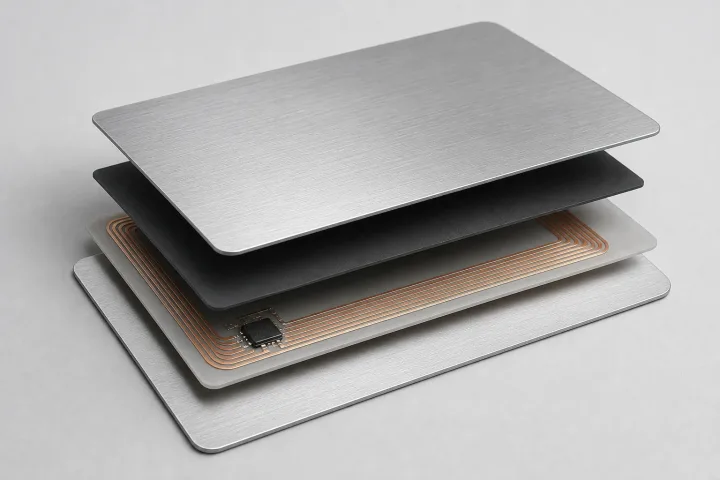
AES-secured HF route brief
| Frequency | 13.56 MHz secure HF |
|---|---|
| Best use | Lightweight secure ticketing, controlled membership, event access, and loyalty needing stronger authentication. |
| Chip route | AES-secured lightweight HF or the platform-specified AES-authenticated lightweight HF chip. |
| Phone behavior | Not a generic tap-to-URL choice; phone behavior depends on the app, NDEF setup, and AES flow. |
| Encoding | AES keys, authenticated pages, counters, UID mapping, access rights, and app-specific payloads. |
| Approval check | Define key ownership, personalization responsibility, app or reader support, and sample validation. |
Visual references
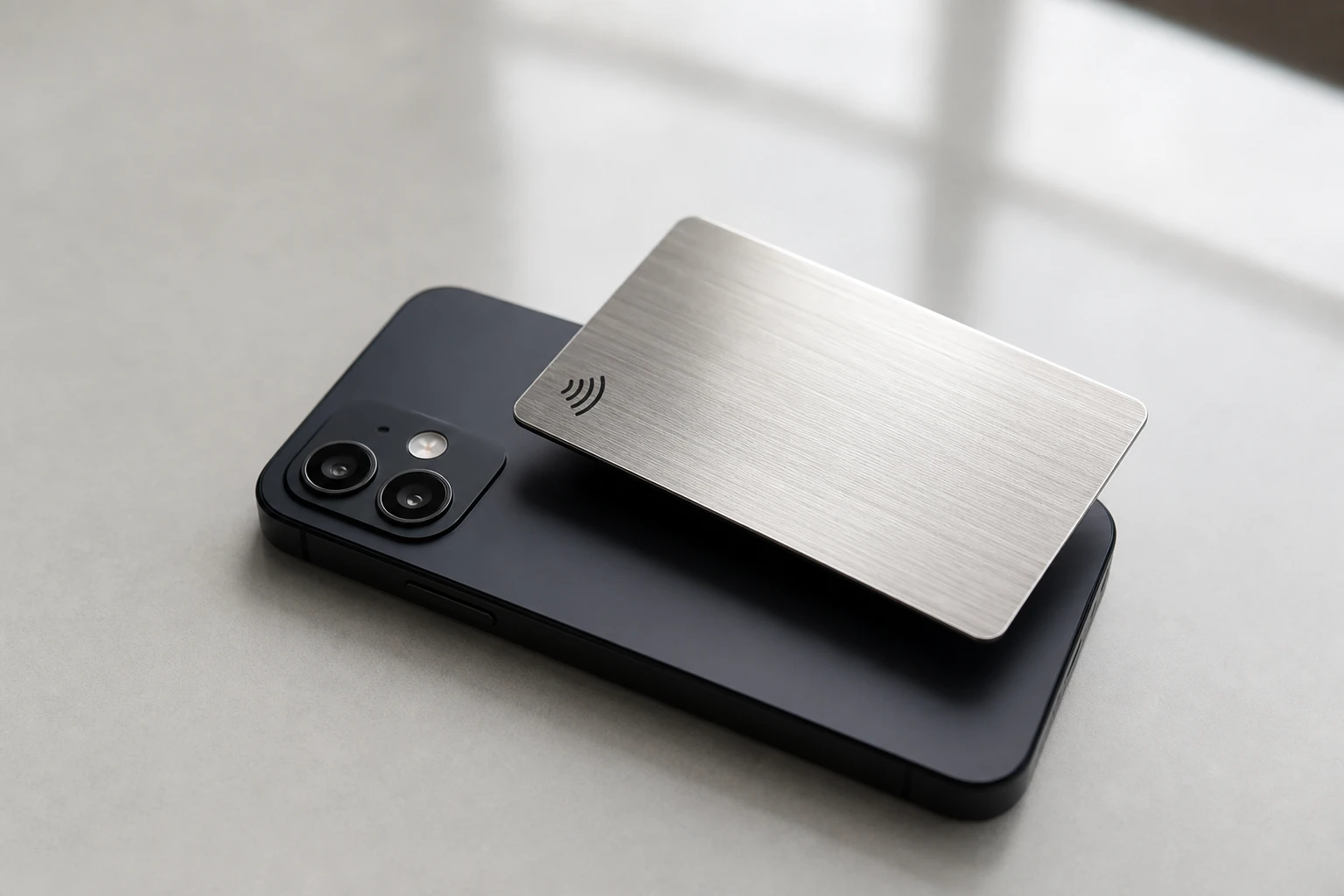
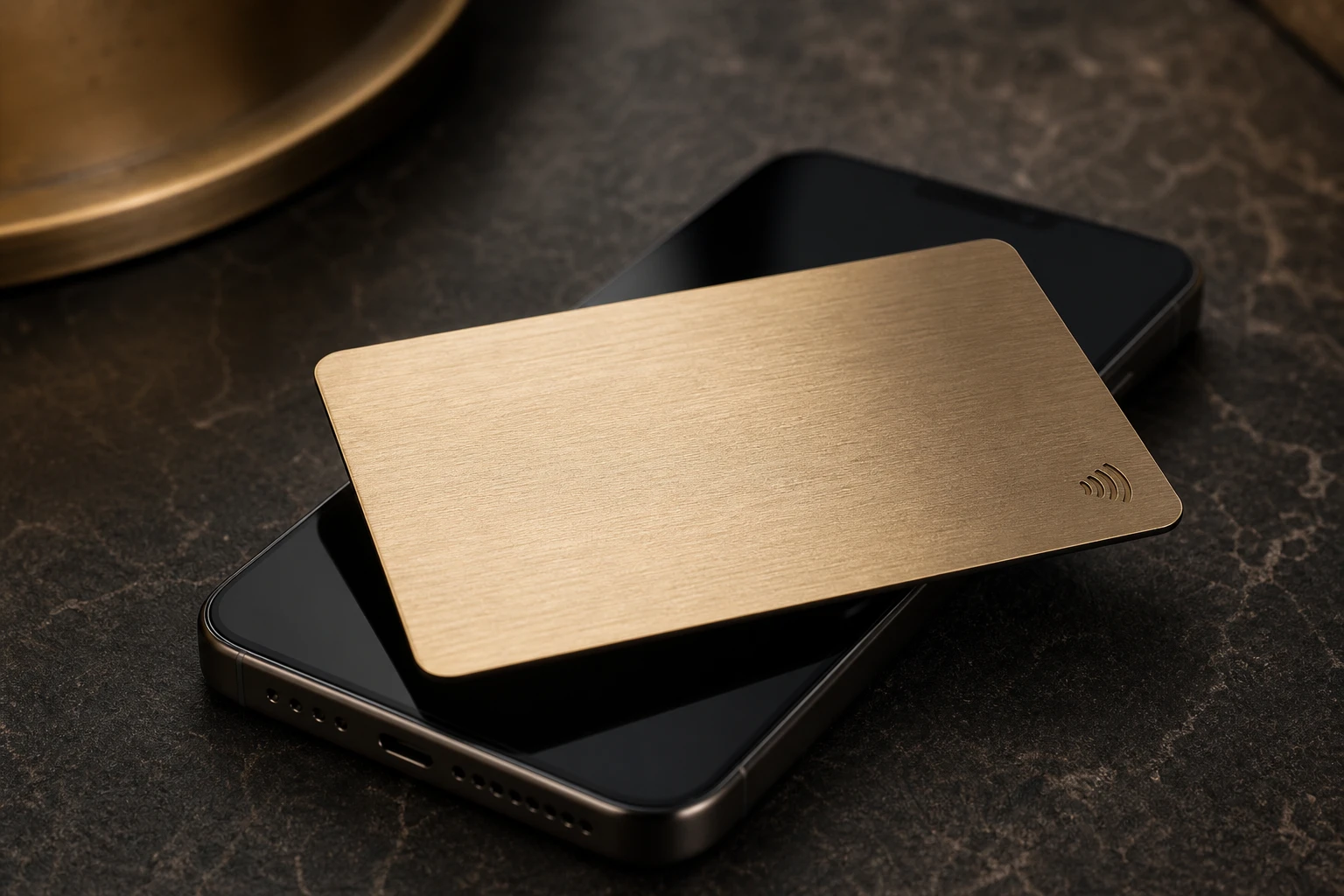
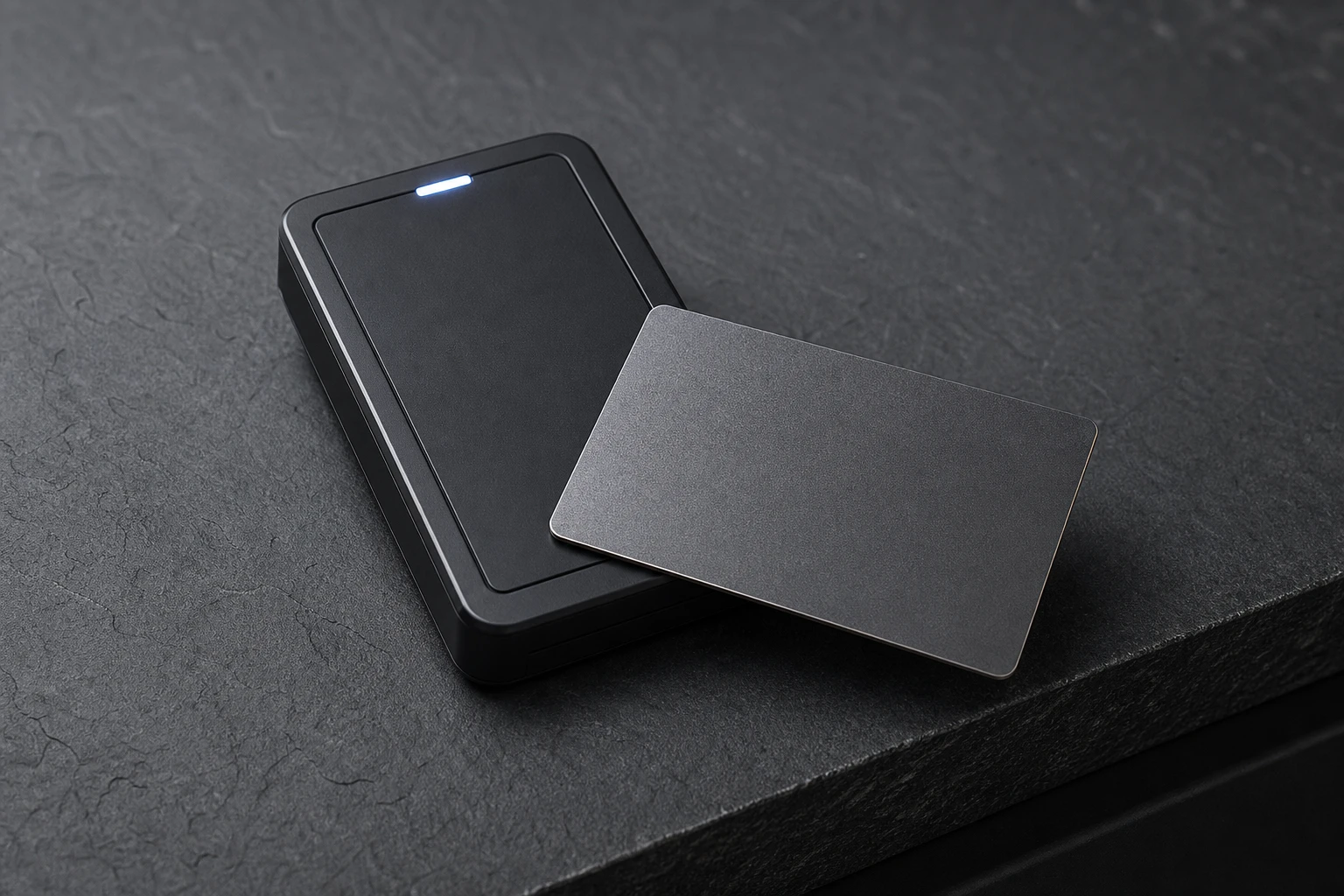
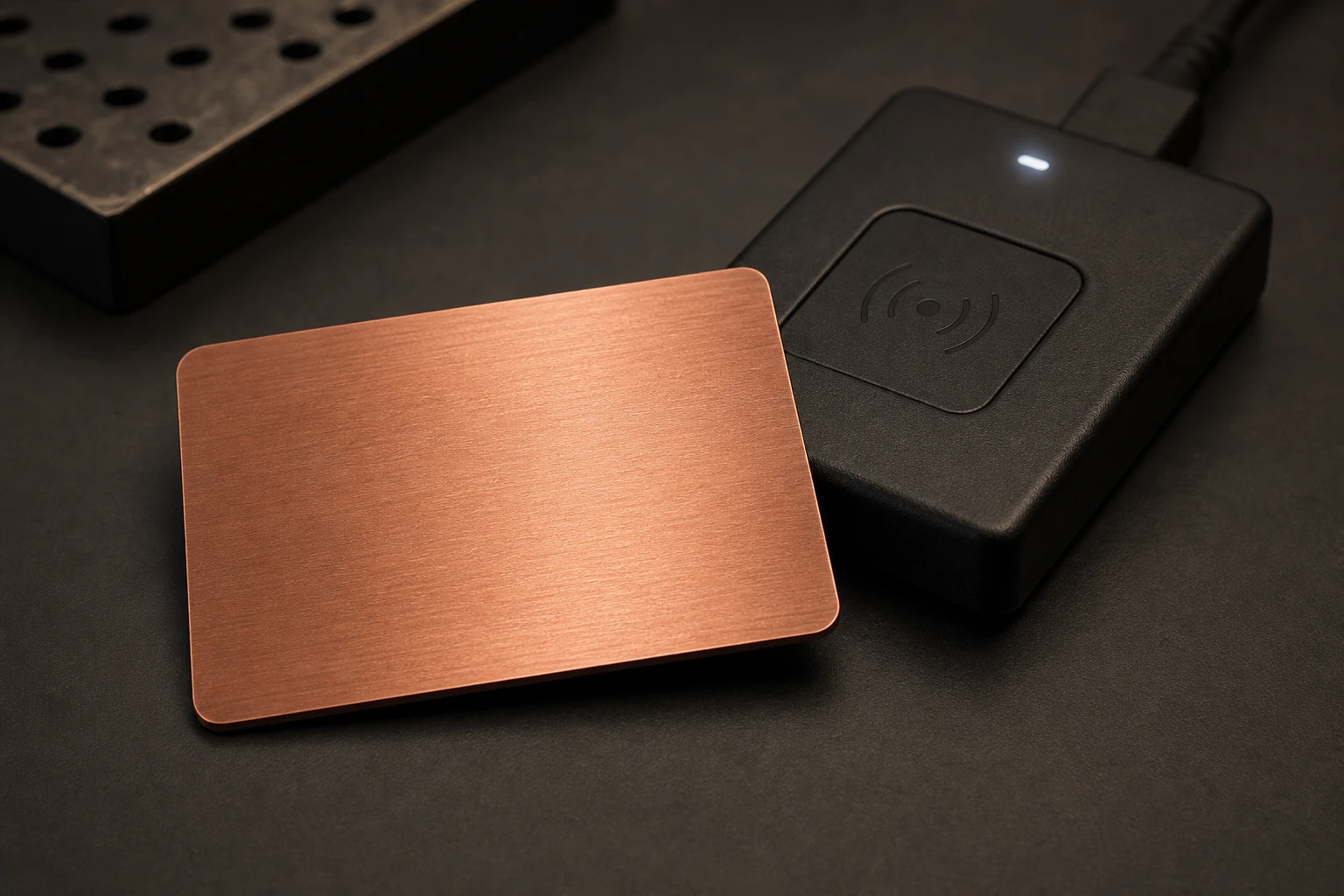
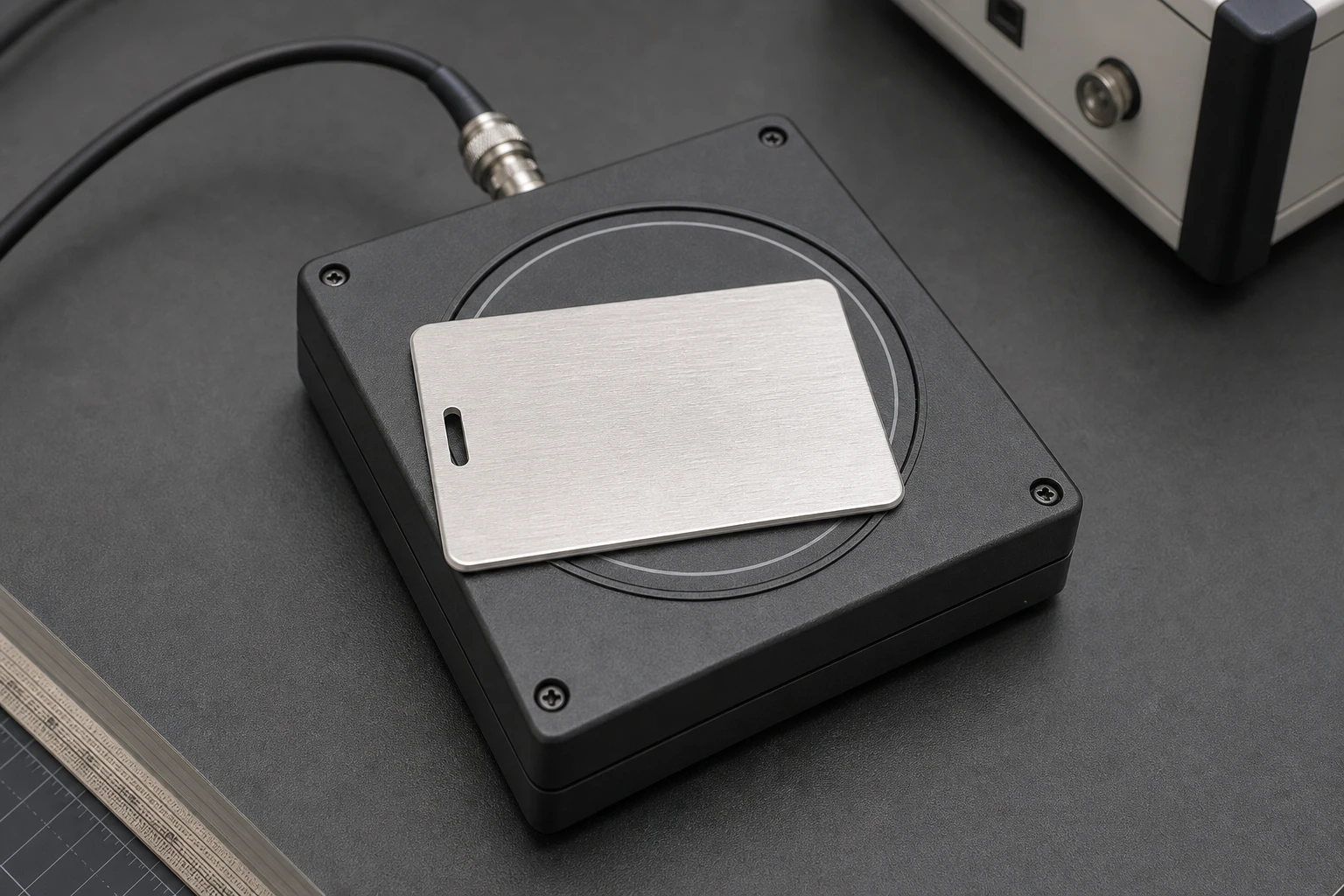
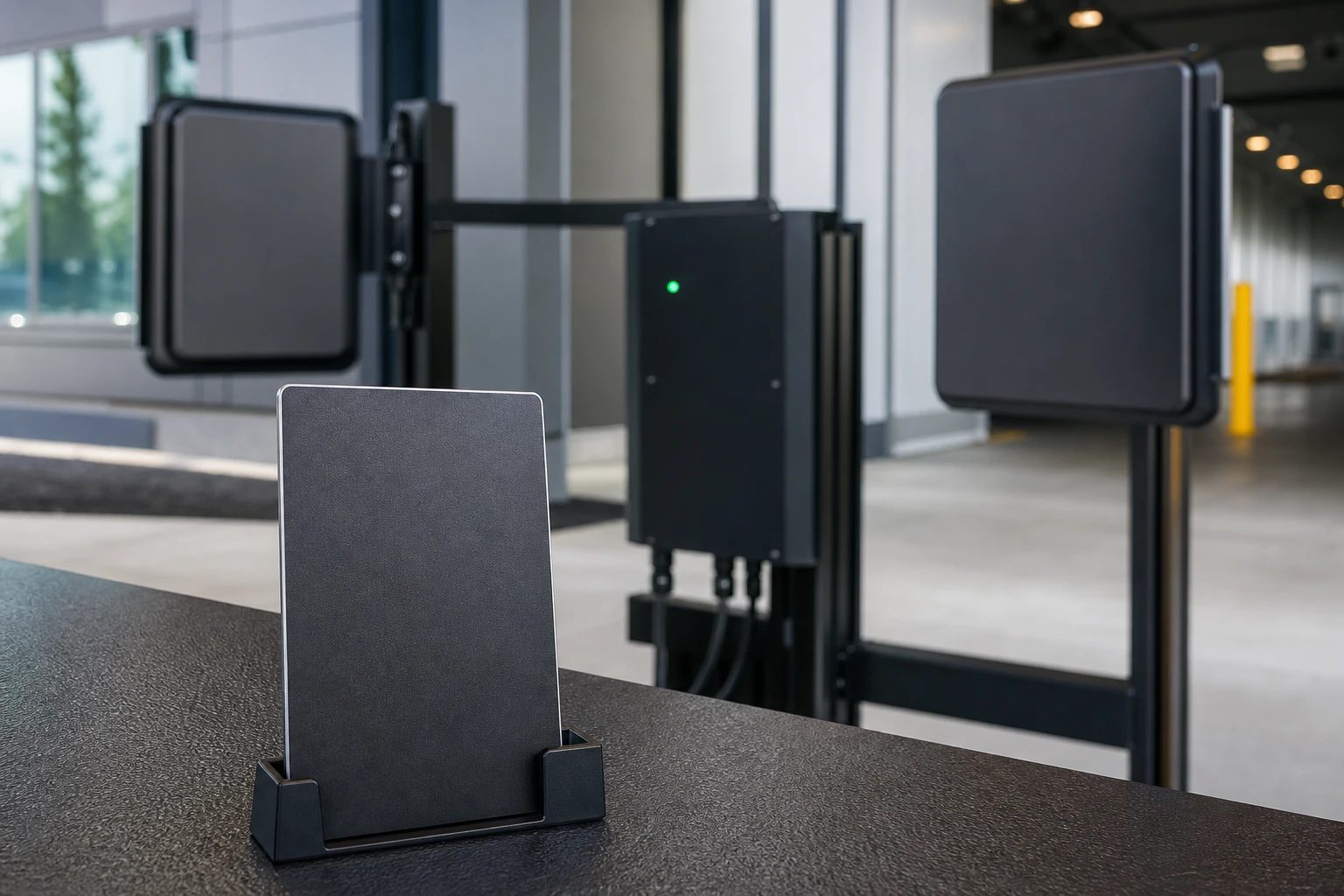
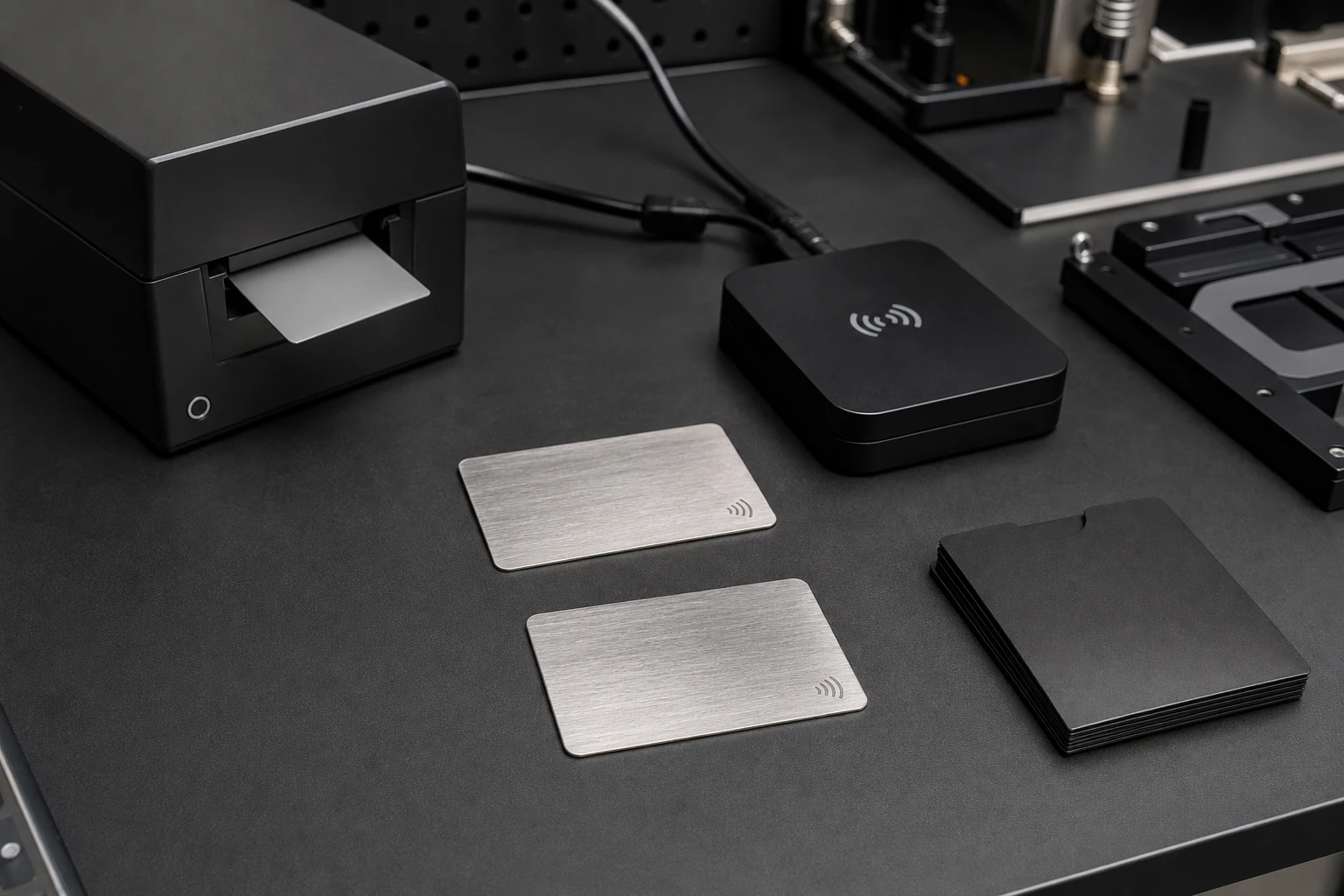
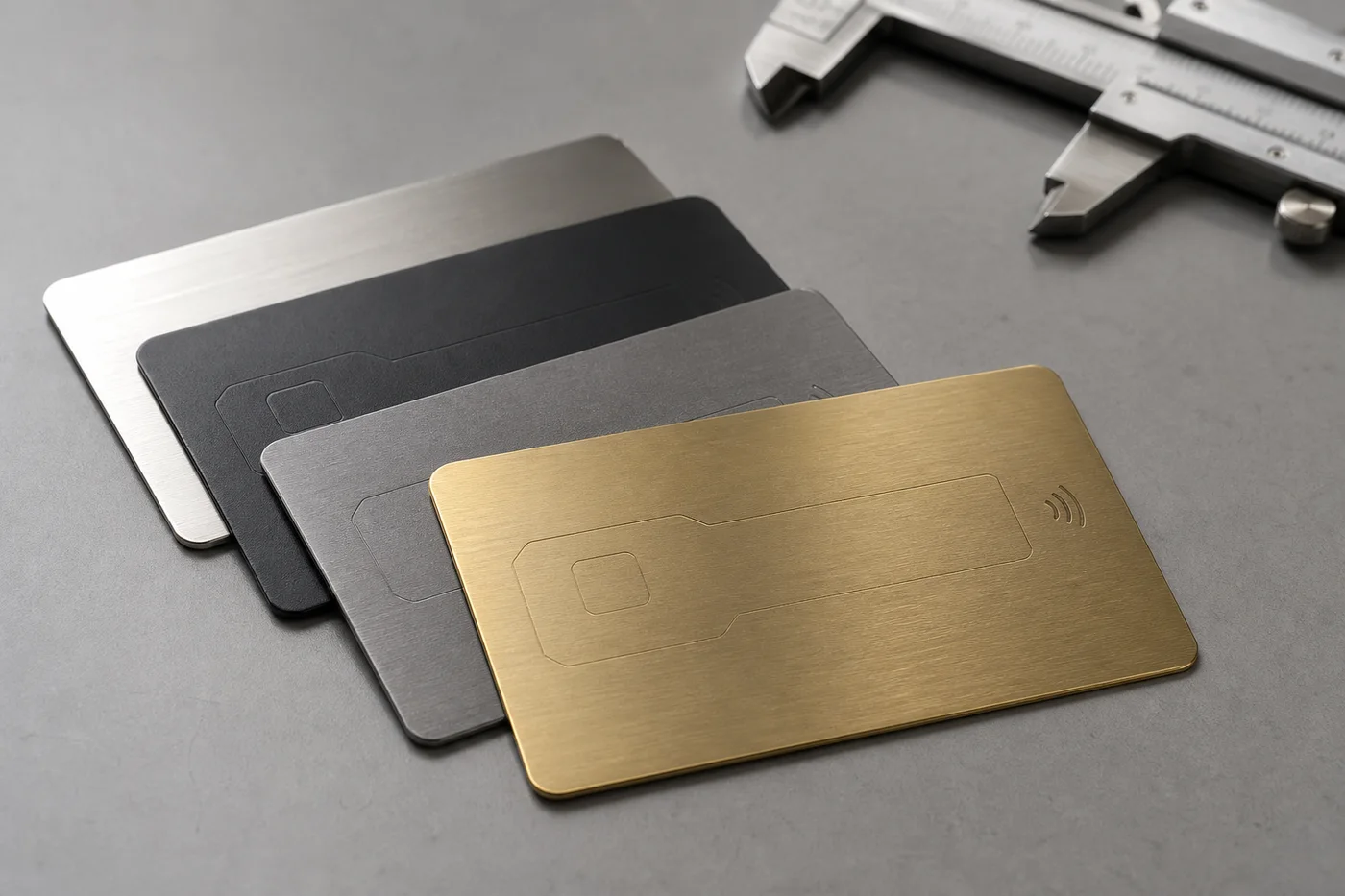
AES keys mean an owner — name one before production.
AES-128 protection only works if someone controls the keys. Define who generates them, who personalizes the cards, and whether the reader platform or an app performs the authentication. A secure chip with unmanaged keys is security theatre — that decision is part of the order, not an afterthought.
Approve a working sample in the real environment.
Define key ownership, personalization responsibility, app or reader support, and sample validation.
Best uses
- Lightweight secure ticketing, controlled membership, event access, and loyalty needing stronger authentication.
- Metal card programs that can validate a finished encoded sample on the target reader
- Projects that need print, serial, QR, packaging, and data handling reconciled in one approved brief
Frequently asked questions
When should a metal card use AES-secured lightweight HF?
When ticketing or membership needs real authentication — enough to stop casual cloning — but the platform does not require high-security AES HF's application structure. It is the light secure route of the 13.56 MHz family.
What does AES-128 add over plain entry-level HF?
Authenticated access to the chip's pages: a reader must prove knowledge of the AES key before reading or writing protected data. Plain entry-level HF has no cryptography; the 3DES variant offers only the older 3DES route.
Who manages the AES keys?
That is defined before production: the buyer, the platform provider, or the integrator generates and owns the keys, and personalization responsibility follows the same decision. Samples are validated under the agreed key flow.
Specification
| Format | CR80 85.6 x 54 mm by default; custom outlines after RF review |
|---|---|
| Thickness | 0.3 mm to 0.8 mm depending on construction |
| Minimum order | None — single samples to production runs |
| Production time | About one week after artwork and sample approval |
| RF construction | Antenna, ferrite or hybrid shielding, chip, metal faces, and edge stack specified together |
| Chip routes | NFC tag, standard HF, high-security AES HF, LF compatibility, and selected UHF by reader test |
| Marking options | Laser etch, deep engraving, UV print, white ink, enamel fill, QR, serial, and controlled cut-through |
| Approval flow | Finish sample, encoded working sample, reader check, pre-production approval |
| Frequency | 13.56 MHz secure HF |
| Chip route | AES-secured lightweight HF or the platform-specified AES-authenticated lightweight HF chip. |
| Phone behavior | Not a generic tap-to-URL choice; phone behavior depends on the app, NDEF setup, and AES flow. |
| Encoding | AES keys, authenticated pages, counters, UID mapping, access rights, and app-specific payloads. |
| Approval check | Define key ownership, personalization responsibility, app or reader support, and sample validation. |
Related metal RFID card pages
- LF Metal RFID Cards
- HF NFC Metal RFID Cards
- NFC Tag Metal RFID Cards
- Entry-level HF Metal RFID Cards
- Standard HF Metal RFID Cards
- High-security AES Metal RFID Cards
- UHF Metal RFID Cards
- Programmable 125 kHz Metal RFID Cards
- Metal RFID Card Encoding
- RFID UID Converter & Wiegand 26-bit Calculator