Technology decision guide · 9 min read
NFC, RFID or QR for Automotive Membership Cards?
NFC, RFID, and QR are not interchangeable labels. They solve different parts of an automotive membership journey: phone interaction, installed-reader access, and camera-based validation. Start with the exact action and device, then engineer the metal card around it.
Industry program views
Choose the technology from the action and device.
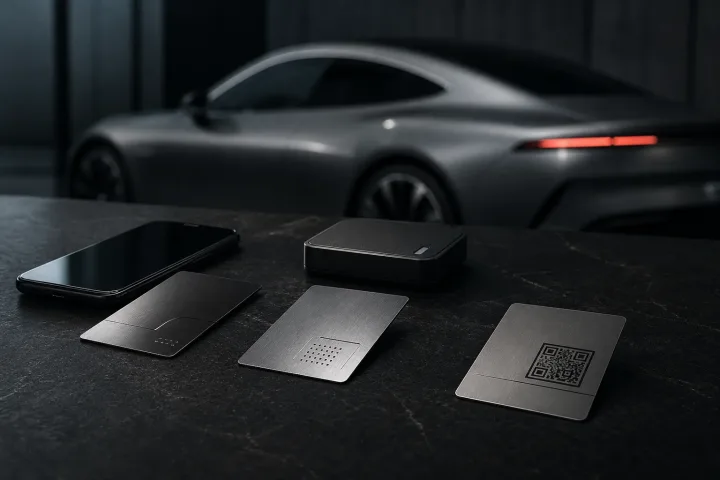
Phone tap, installed-reader access, camera scan, and metal RF construction should be evaluated separately before combining them in one credential.
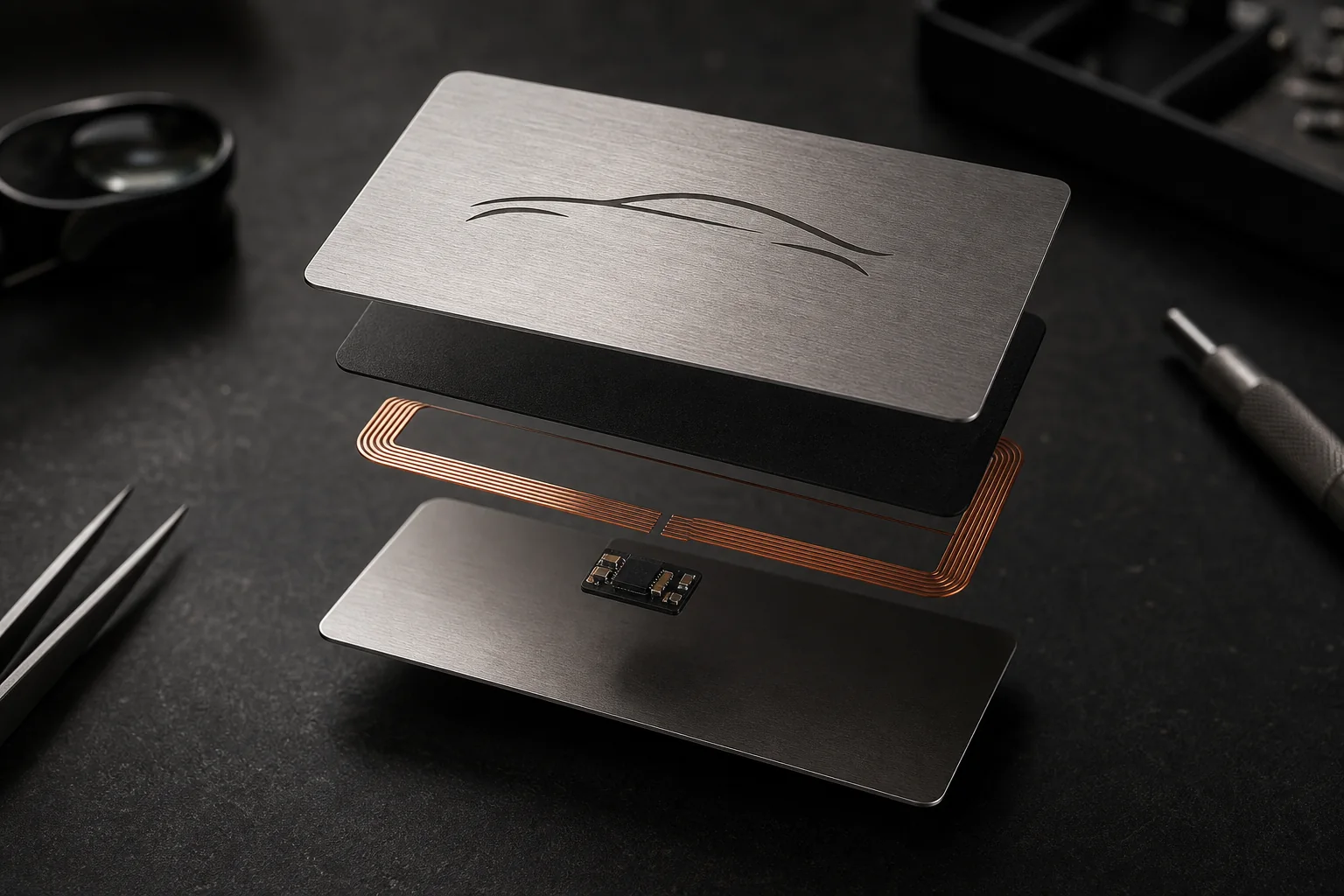
Choose NFC when the main action happens on a phone.
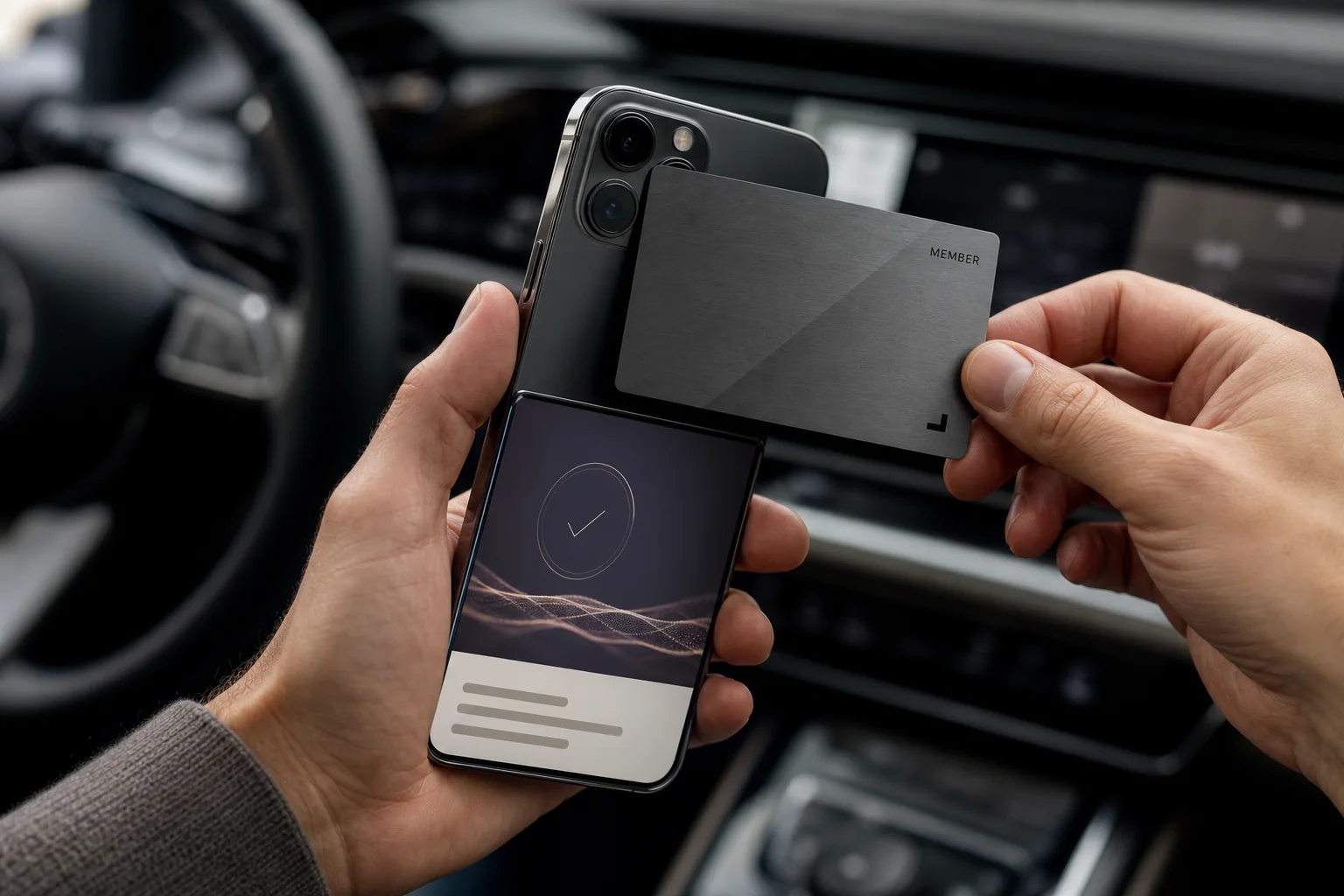
A phone-readable NFC route is suited to member profiles, booking pages, benefit directories, event registration, concierge contact, or controlled web portals. The card holds or points to a small data payload; the website or app provides the changing experience. Test the finished metal card across representative phones, because antenna position, device case, metal construction, and tap guidance affect behavior.
Choose RFID access from the installed system.
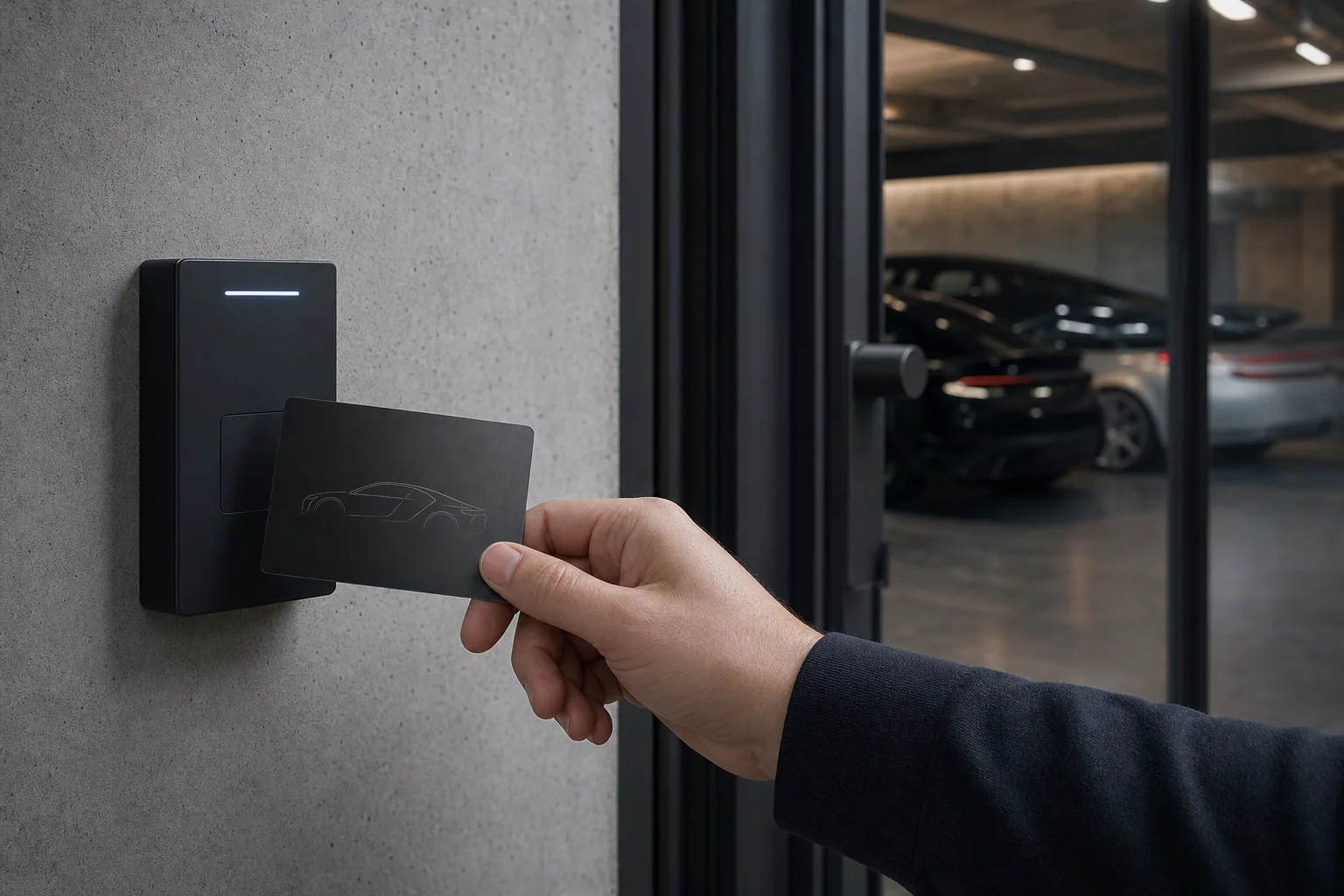
Private garages, lounges, doors, and event gates may use LF 125 kHz, HF 13.56 MHz, secure HF, or another defined reader route. The installed platform decides the frequency, encoding, memory, and security model. Supply the reader specification or working credential, then test a finished encoded metal sample. A generic claim of RFID compatibility is not enough.
Use QR when camera access and visible fallback matter.
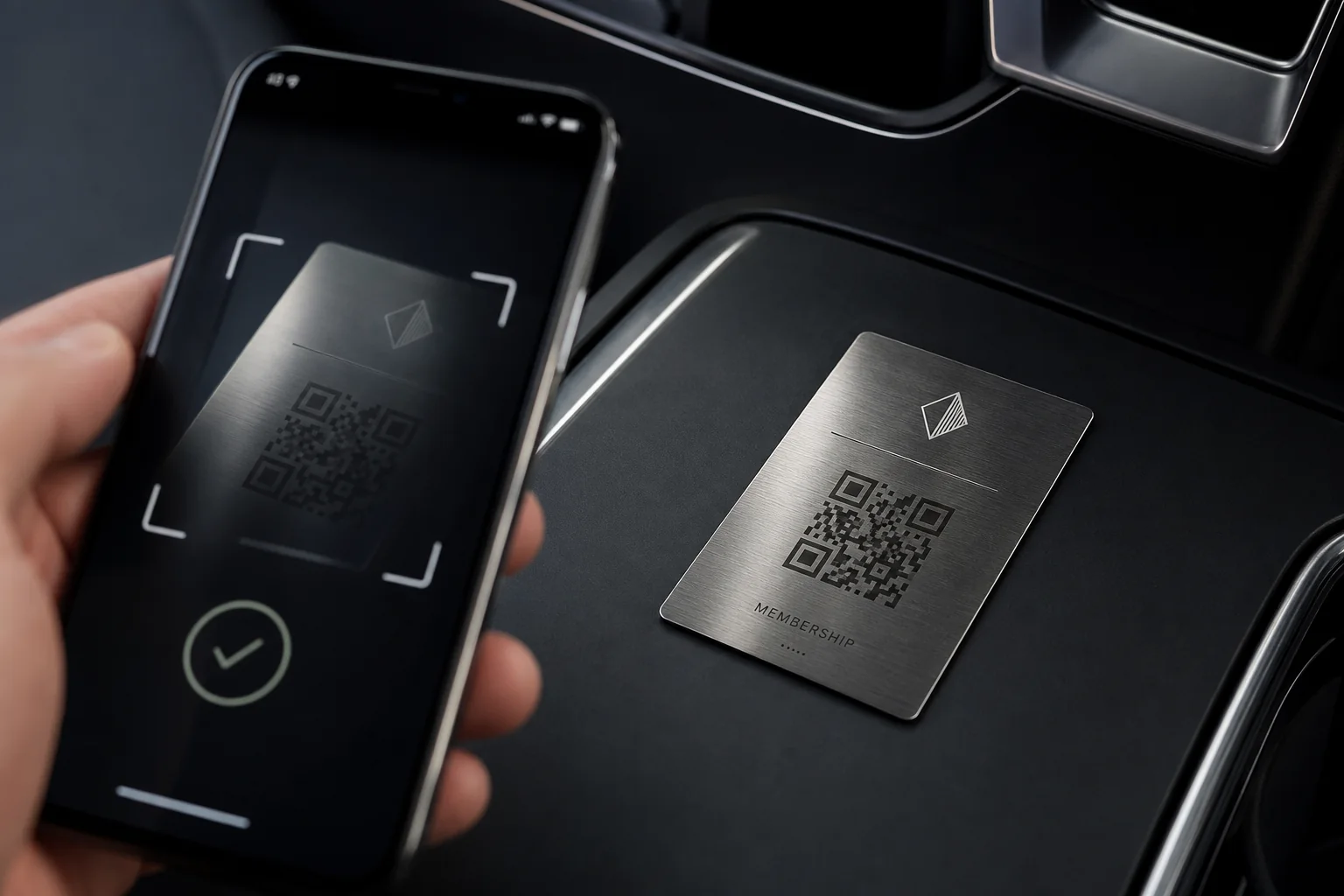
QR works with ordinary cameras and can support check-in, member validation, benefit pages, or recovery when a tap route is unavailable. On reflective metal, code contrast and quiet zone are critical. Use a dark mark on a controlled light panel or an opaque light panel on a dark finish, then scan-test every production code against the data file.
Combine methods only when each has a clear job.
A useful combined card might use RFID for a garage door, NFC for the member portal, and a printed QR as event or support fallback. Do not add technologies as decoration. Each route increases artwork constraints, data management, testing, and replacement complexity. Write one sentence describing the job of every identifier before approving the card.
Metal makes RF engineering part of the design.
Metal can detune or block radio performance. Working cards use a coordinated antenna, ferrite or shielding layer, chip position, body thickness, and clear tap or presentation zone. Slots, cut-through artwork, deep engraving, and custom shapes can affect that stack. Approve the actual construction on the actual device, not a visual mockup or loose inlay.
Best uses
- Automotive member portals and booking journeys
- Private garage, lounge, or venue access
- Event check-in and partner validation
- Programs needing a tested secondary validation route
Relevant metal card routes
Frequently asked questions
Is NFC the same as RFID?
NFC is part of the broader RFID family, but buyer decisions should stay practical: phone-readable NFC and installed access-reader credentials have different device, data, and approval requirements.
Can one metal card contain NFC and another RFID route?
Some combined constructions are possible, but antenna space, shielding, thickness, reader behavior, and data ownership must be reviewed together. Test the final sample on every target device.
Does QR replace RFID?
QR can provide camera-based identification or fallback, but it does not automatically replace secure reader access. Choose it when a camera workflow genuinely fits the validation need.
Specification
| Card format | CR80 85.6 × 54 mm by default; custom outlines after RF review |
|---|---|
| Thickness | 0.3–0.8 mm depending on construction |
| Minimum order | None — from one approval sample to production runs |
| Production time | About one week after artwork and sample approval |
| Personalization | Member name, ID, tier, serial, expiry, QR, NFC data, and matched packaging |
| Approval path | Finish proof, encoded working sample, reader or phone test, production approval |
| NFC route | 13.56 MHz phone tap for controlled URLs, profiles, booking, or member journeys |
| RFID route | Exact installed-reader frequency, encoding, security, and sample test |
| QR route | High-contrast variable code with verified payload and quiet zone |
Related metal RFID card pages
- Metal RFID Membership Cards for Yacht Clubs and Marinas
- Metal RFID Membership Cards for Private Aviation and FBO Lounges
- Metal RFID Membership Cards for Golf and Country Clubs
- Metal RFID Membership Cards for Luxury Residence Clubs
- Metal RFID Membership Cards for Private Wellness Clubs
- Custom Metal Membership Cards for Car Clubs
- Metal Membership Cards for Car Detailing Studios
- How to Build a Luxury Car Rental VIP Membership Program
- Metal Membership Cards for Private Car Storage Clubs
- Dealership VIP Cards That Extend the Owner Relationship
- VIP Metal Passes for Rallies, Track Days and Car Events
- How to Design Black, Gold and Founder Car Club Tiers
- What Can Be Personalized on a Metal Automotive Card?
- Metal vs Plastic Membership Cards for Automotive Brands
- How NFC Metal Cards Connect Automotive Member Portals
- Seven Benefits an Automotive VIP Card Can Support