Satin steel baseline
Brushed Stainless RFID Cards
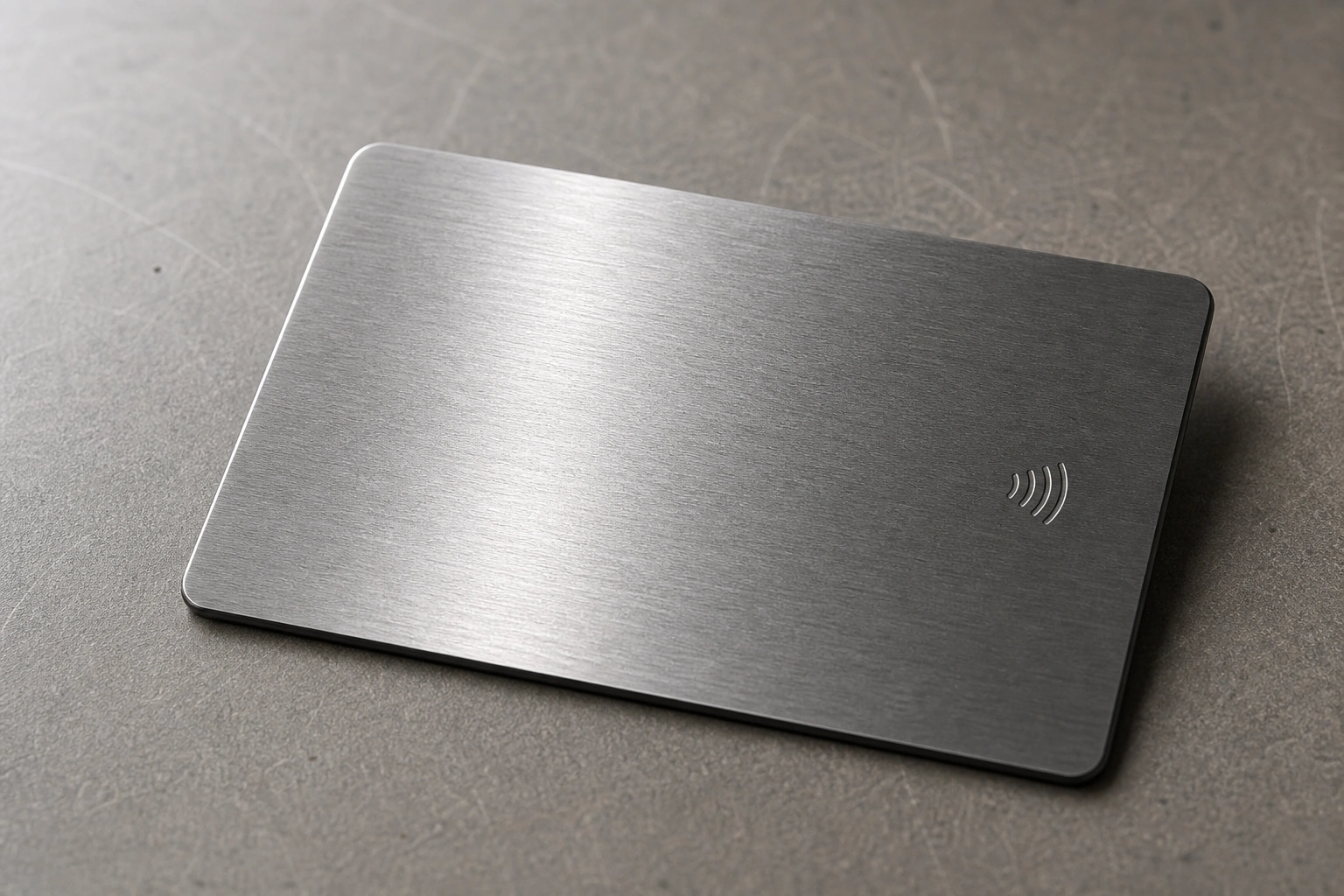
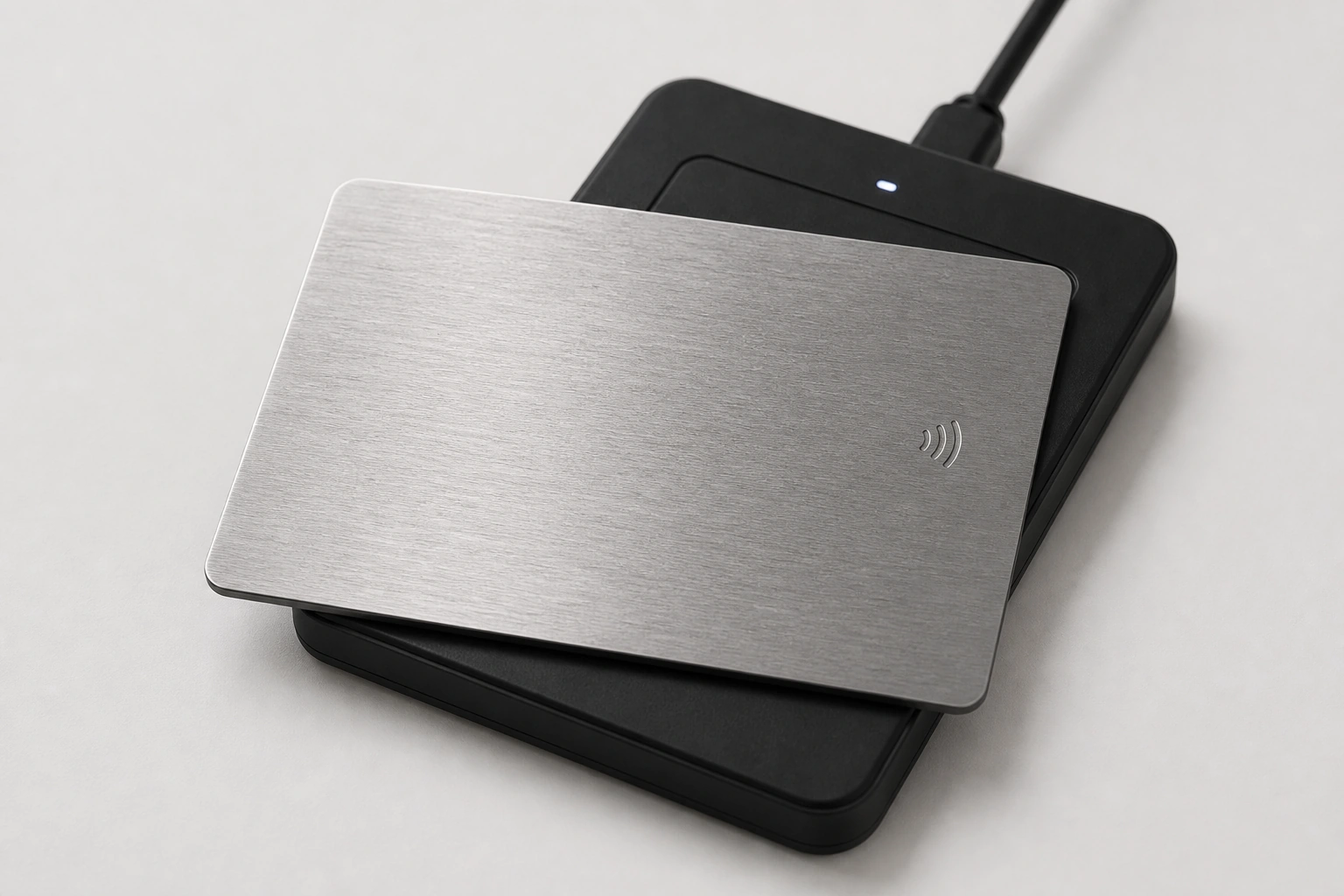
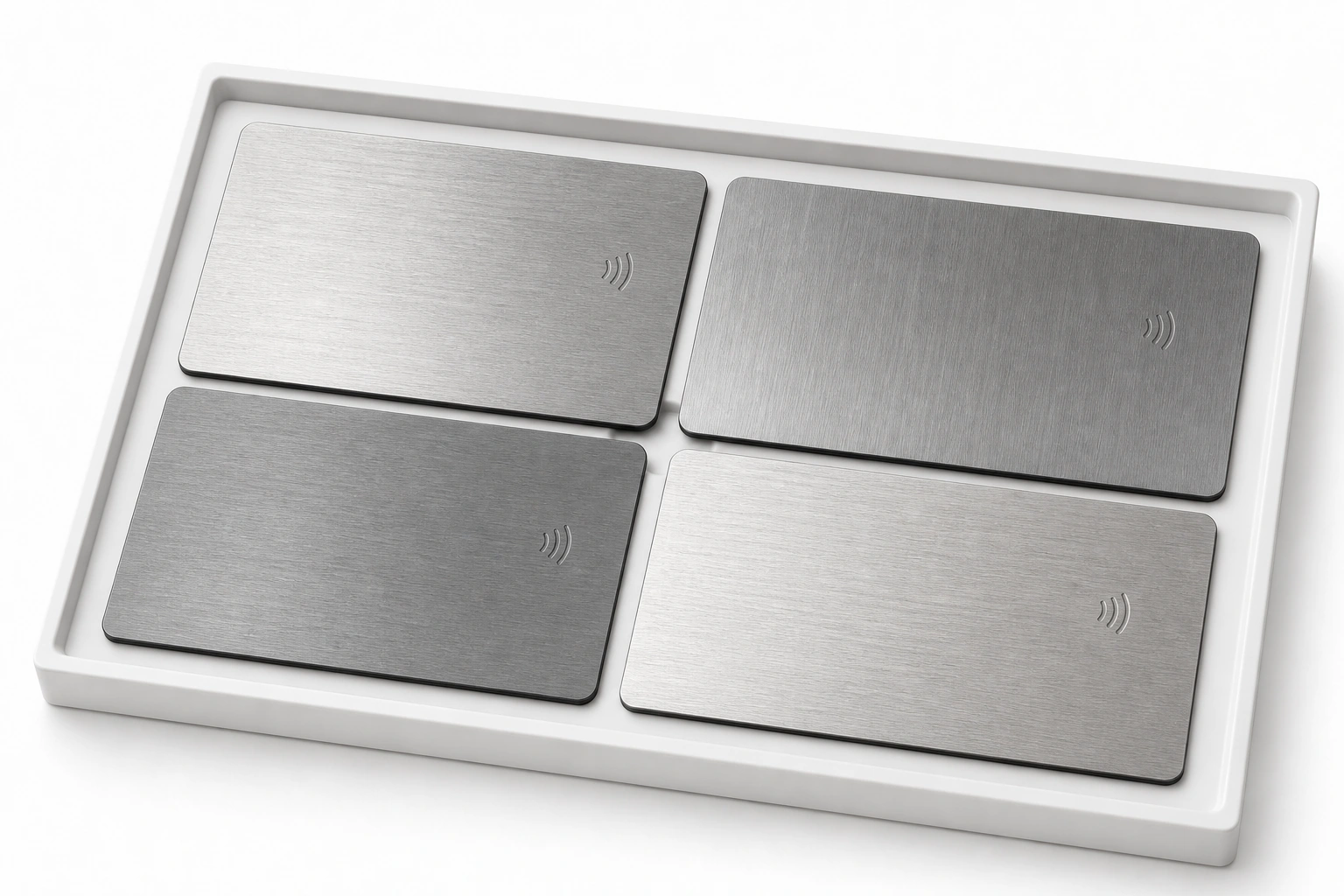
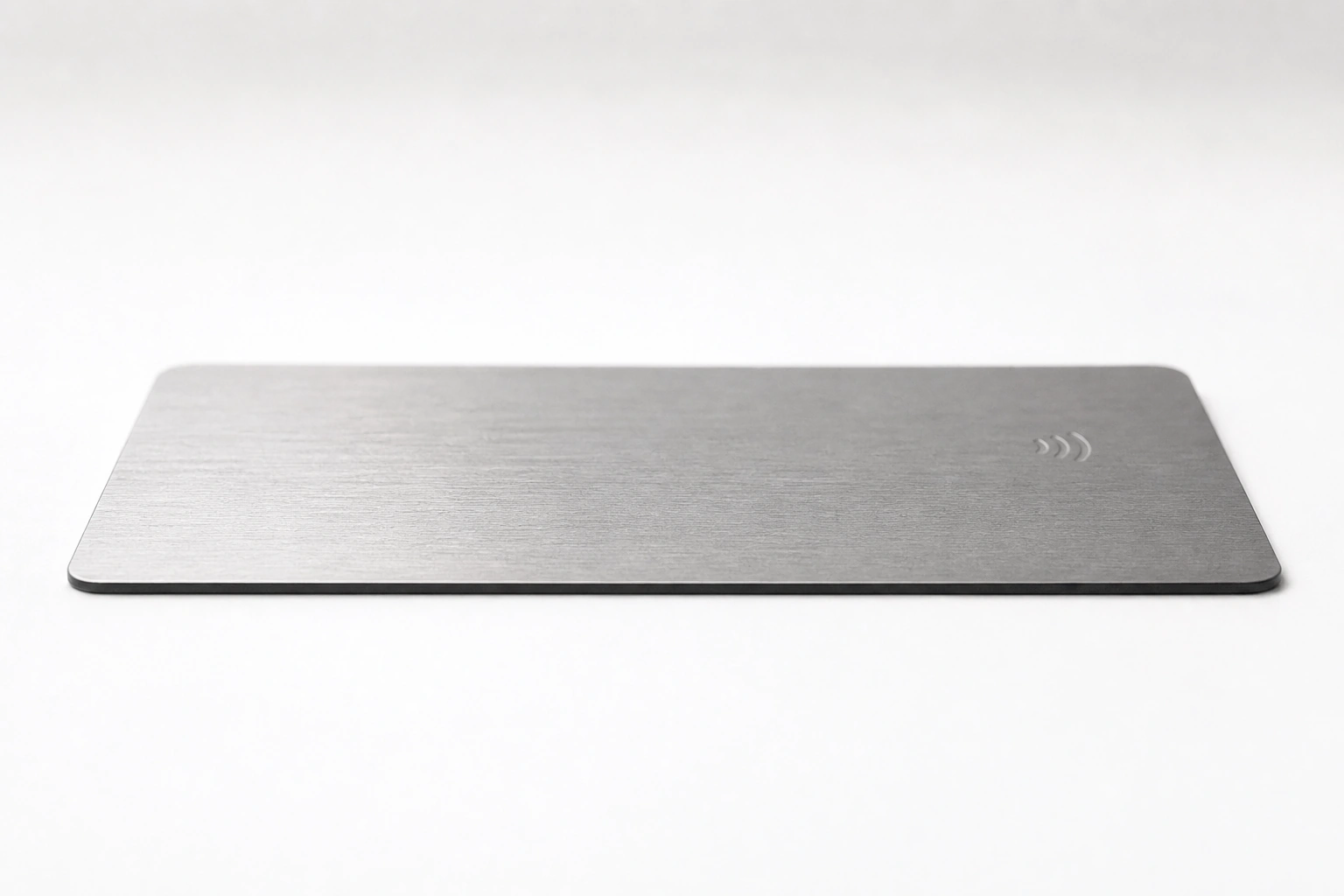
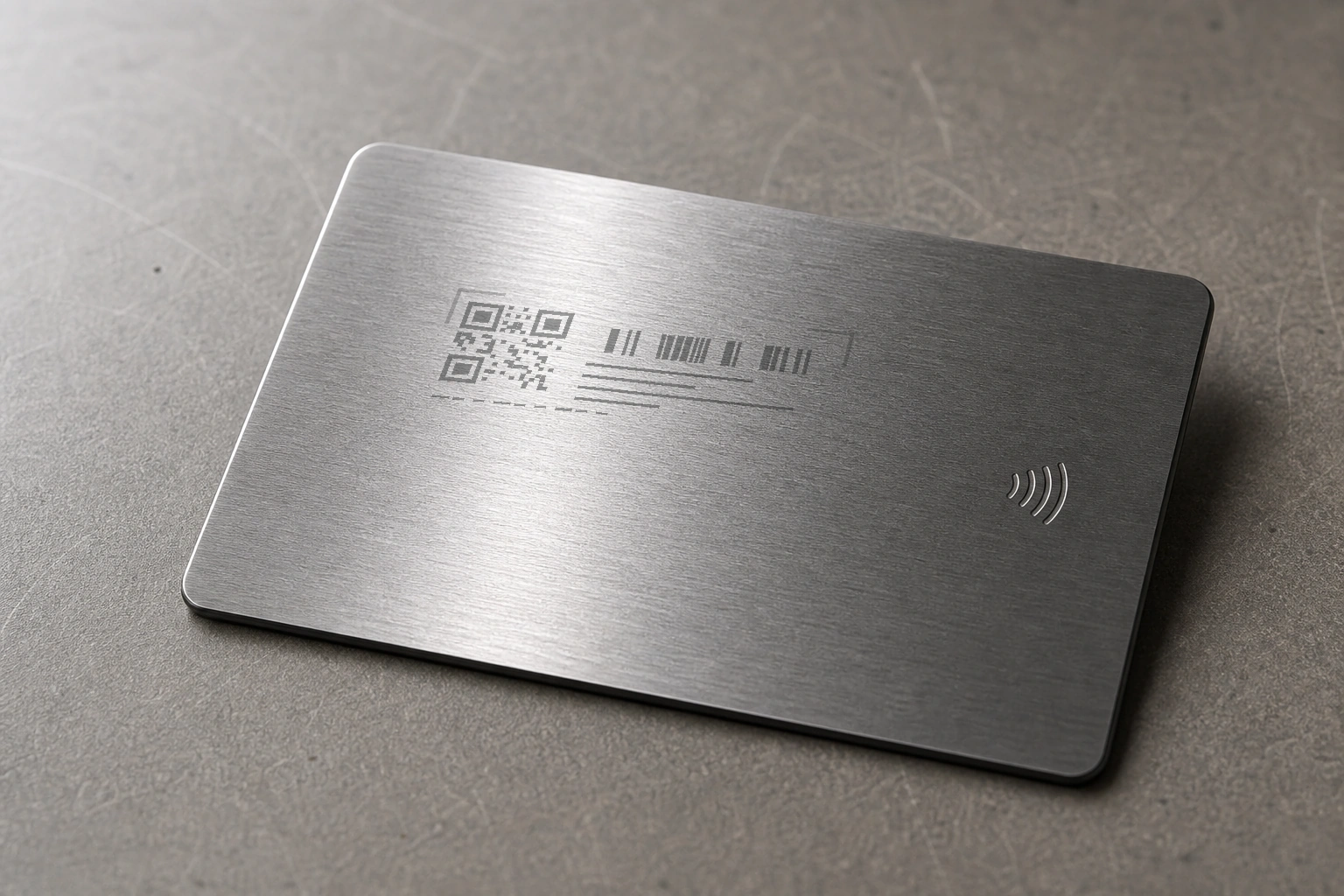
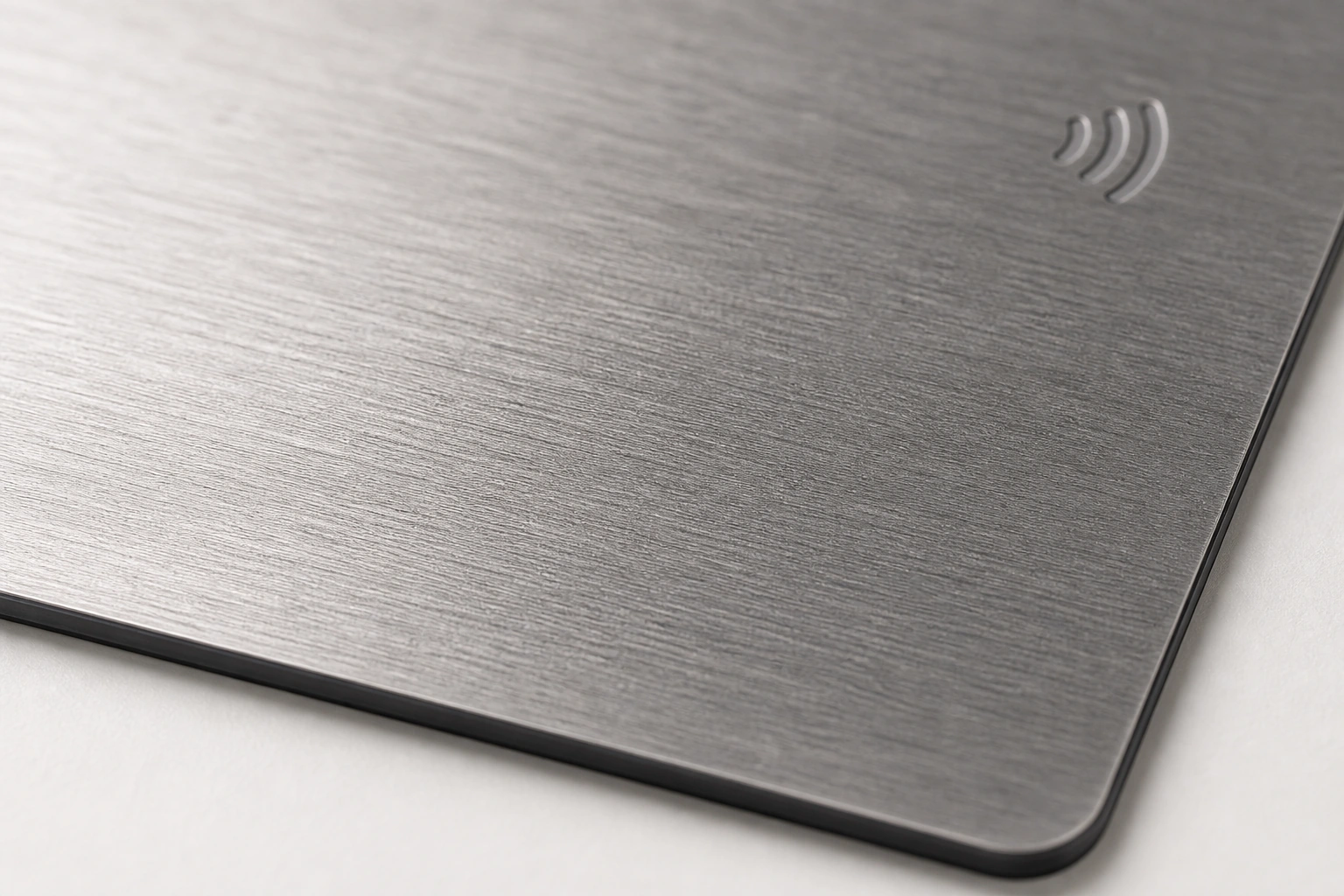
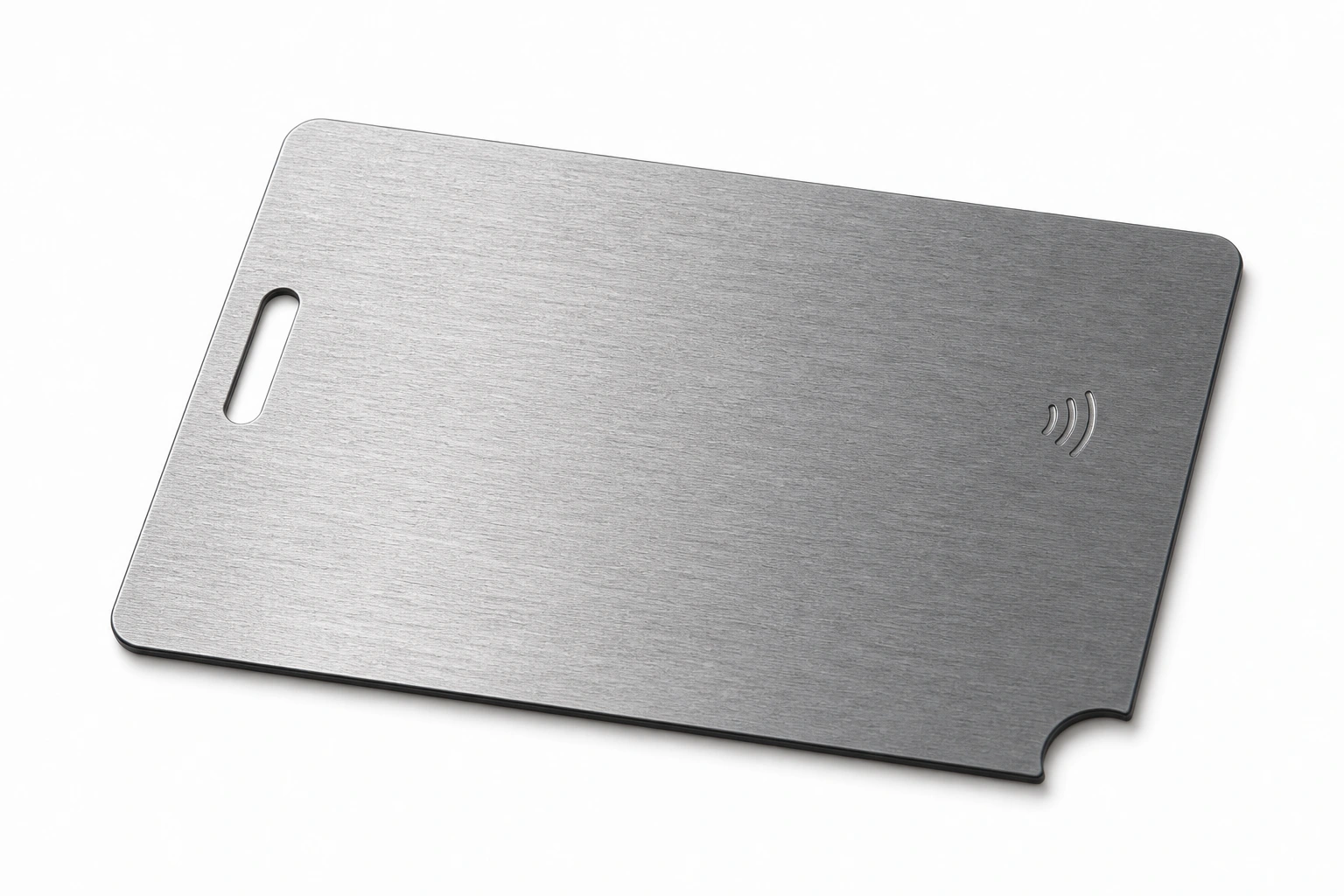
Brushed stainless is the safest metal RFID direction when the buyer wants a premium card that still feels practical, technical, and easy to approve. The satin steel surface hides fingerprints better than mirror metal, shows laser marks cleanly, and works well for corporate identity, VIP access, NFC business cards, visitor credentials, and sample kits.
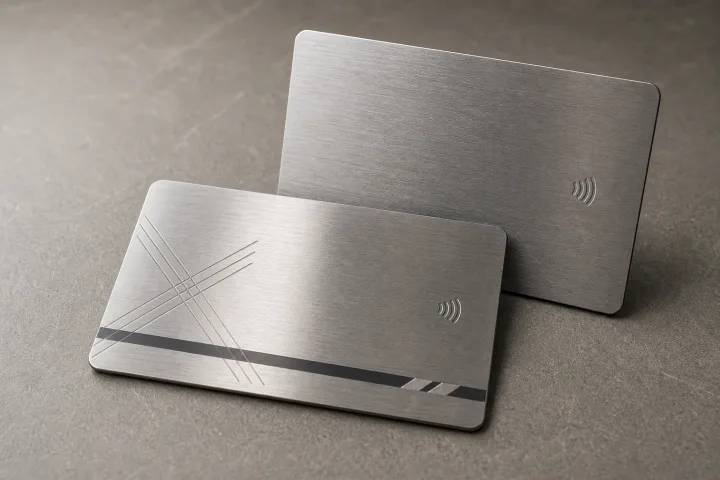
Brushed stainless image set
Best uses
- Corporate NFC business cards and executive identity cards
- Private club, VIP, and visitor access credentials
- Hotel, coworking, event, and hospitality reader programs
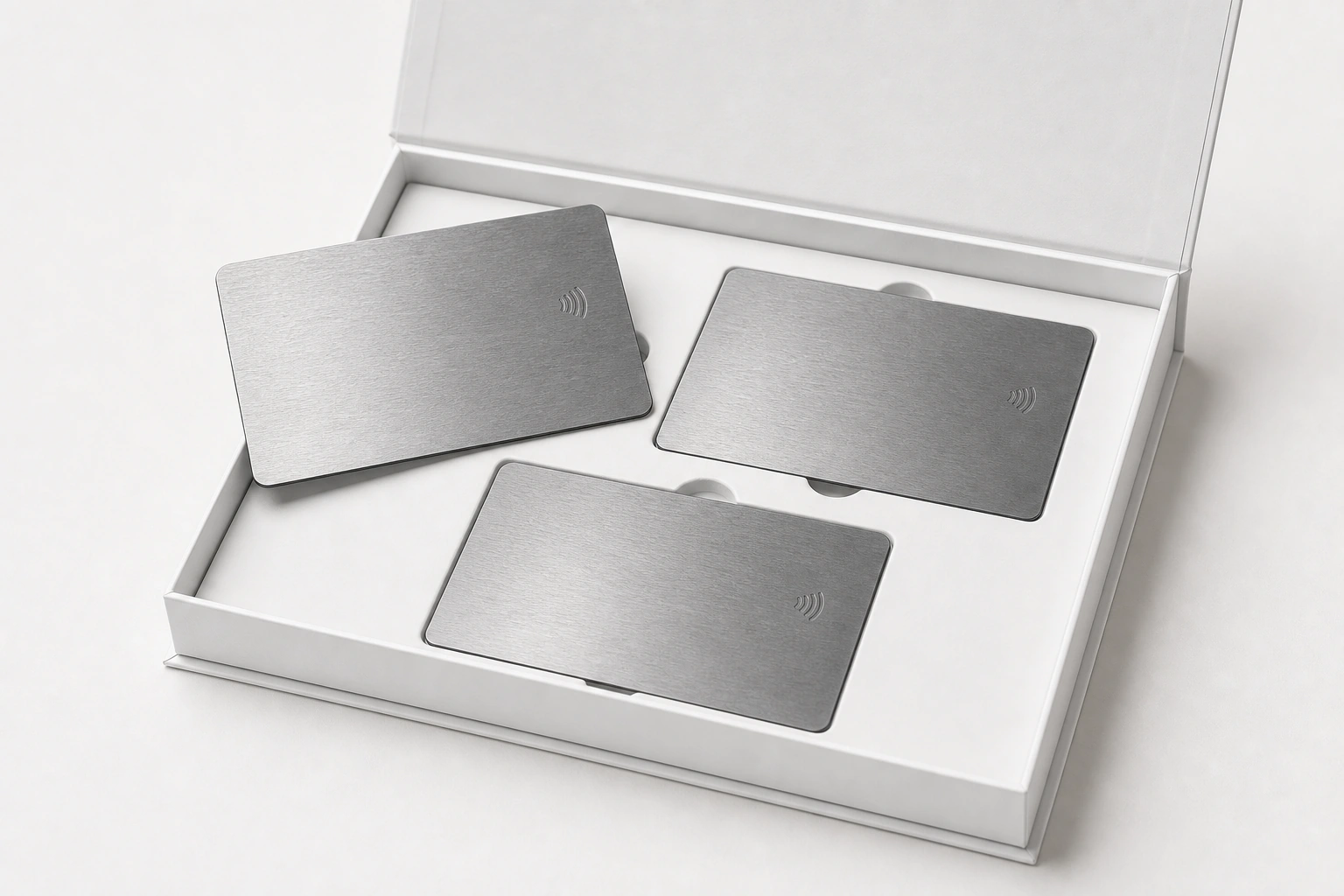
- Sample kits where metal finish and RF behavior must be approved together
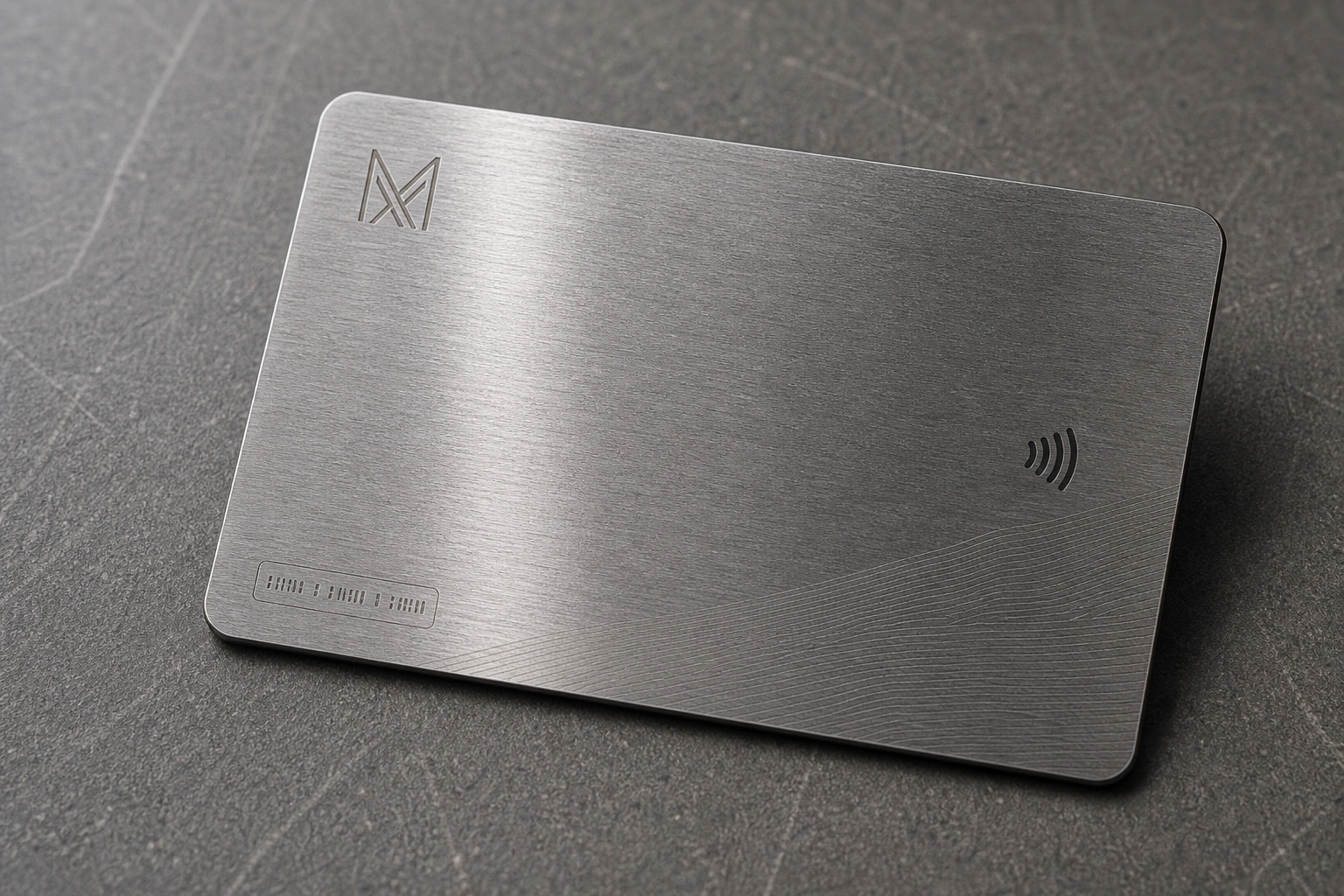
- Minimal branding with laser marks, QR, serial, or white UV print
Finish options
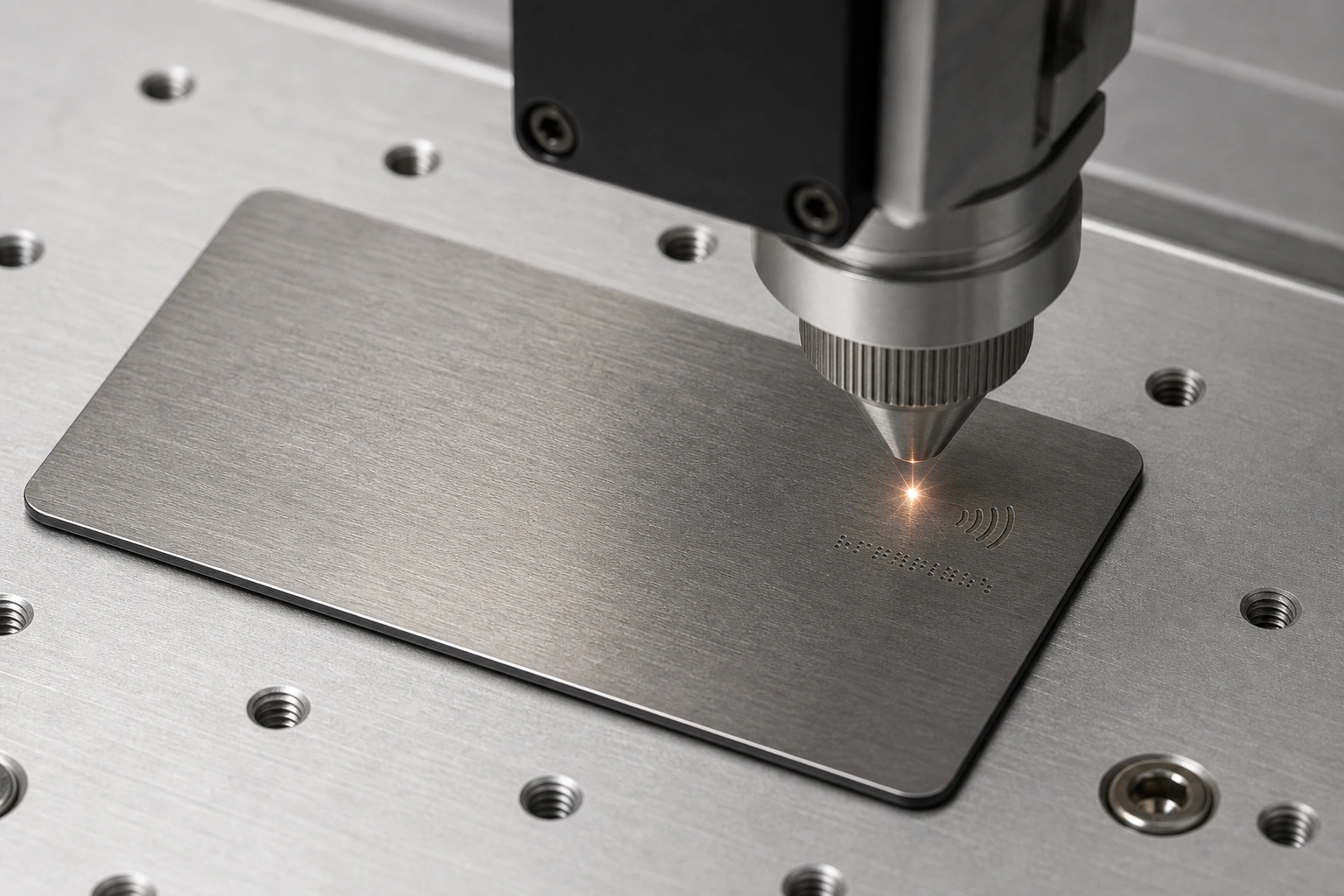
- Natural brushed stainless with laser-etched contactless mark
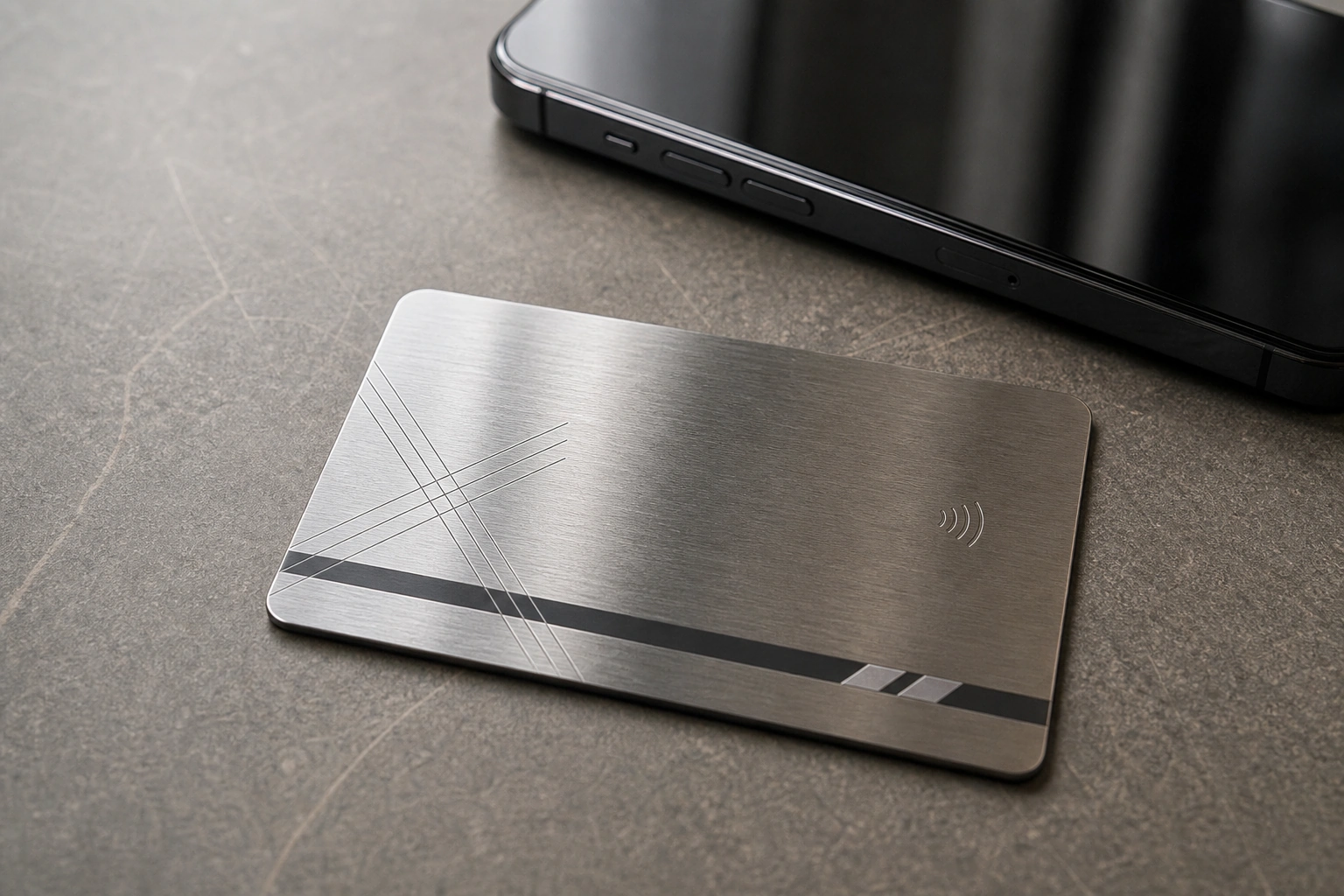
- Black UV print, white ink panels, QR, barcode, UID, and serial zones
- Fine laser linework and small geometric patterns
- Brushed face with dark RF edge or hybrid ferrite layer
- Optional sleeve, sample box, or member-kit packaging
RFID construction
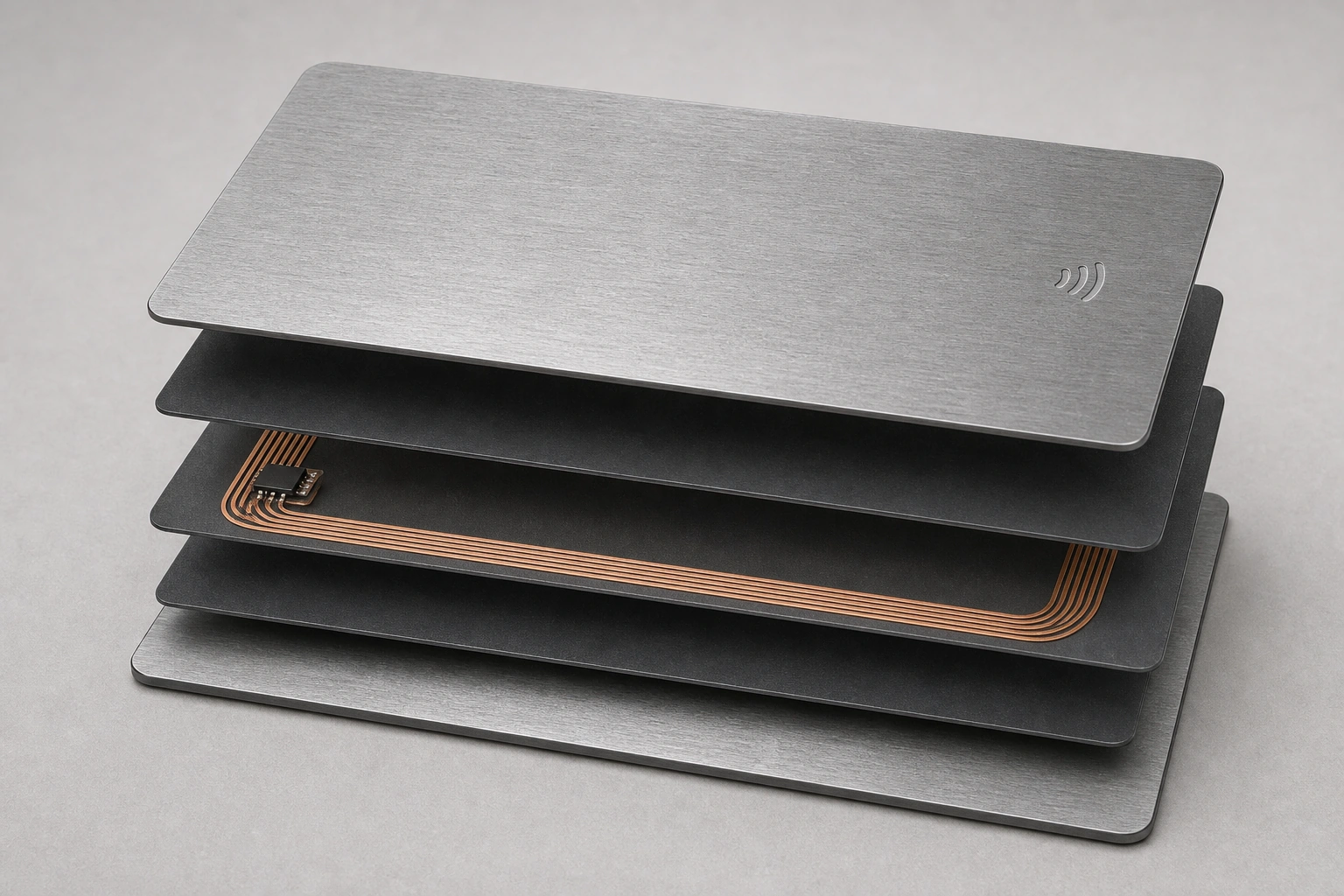
Brushed stainless is the reference build for metal RFID: a 304-family steel face whose conductivity is exactly why the construction matters. Steel in front of a coil antenna detunes it, so the working card places a ferrite layer between face and antenna to give the field a controlled path. It is the construction most programs sample first — corporate NFC business cards on NFC tag, visitor and access credentials on standard or high-security HF — and the encoded sample is approved on the exact phone or reader before the run.
Print and marking
Satin steel is the most forgiving marking canvas in the range. The grain softens reflections, laser marks read cleanly, and black UV or white panels carry data well — but dense QR or barcode zones still belong on high-contrast printed panels, checked at real scanning distance.
Frequently asked questions
What are brushed stainless RFID cards best for?
Corporate NFC business cards, visitor and access credentials, and sample kits. The satin steel face is the practical baseline of the range: premium in hand, forgiving of fingerprints, and clean under laser marking.
Do stainless steel cards block RFID?
Bare steel in front of an antenna would — which is why the working card is built with a ferrite layer that gives the field a controlled path. The finished construction is proven on the exact phone or reader before production.
How thick is a brushed stainless RFID card?
Between 0.3 mm and 0.8 mm depending on construction, in the standard CR80 85.6 x 54 mm format. Custom shapes are possible after RF review, and there is no minimum order.
Specification
| Card size | CR80-style 85.6 x 54 mm, custom shapes by RF review |
|---|---|
| Base build | 304-family brushed stainless face over a ferrite-shielded RF stack |
| Thickness | 0.3 mm to 0.8 mm depending on construction |
| Minimum order | None — single samples to production runs |
| Production time | About one week after artwork and sample approval |
| Visual character | Cool silver satin steel with directional brushing |
| Surface feel | Smooth metal body, fine hairlines, soft reflection |
| Best contrast | Laser etch, black UV, white ink panels, dark edge detail |
| QR / serial | Use printed contrast panels and approve scan distance on the finished sample |
| RF route | LF, HF/NFC, standard and high-security HF routes, selected UHF by reader test |
| Reader approval | Test against the exact phone, lock, gate, or desktop reader |
| Edge options | Rounded CR80 edge, chamfer control, dark RF layer by build |