(02) — Blog
Keep the NFC payload simple and the destination flexible.
A managed URL is usually more useful than placing changing member details directly on the card. The destination can route members to login, booking, events, benefits, or support while the physical card remains unchanged. Plan redirects and domain ownership so the link can survive a portal redesign without re-encoding the entire card population.
(03) — Blog
Design a useful landing state for every tap.
A member may tap before booking, at reception, during an event, or while asking for support. The landing page should explain where they are, protect private content behind authentication, and offer a small number of relevant actions. Avoid a generic marketing homepage. The card promises a direct member route, so the first screen should honor that promise.
(04) — Blog
Connect vehicle care without exposing vehicle data.
Detailing, storage, and owner programs may hold service history, vehicle profiles, preferences, and upcoming work. The NFC card should link to authenticated records rather than carrying those details openly. A stable member ID can connect several vehicles, while permissions decide what the member, advisor, and partner may see.
(05) — Blog
Use the same identity across booking and events.
A consistent member record can support service booking, private-event registration, partner benefits, and concierge contact. Event access may still require a temporary QR or dedicated pass. Keep the physical card focused on stable identity and route changing entitlements through the live system.
(06) — Blog
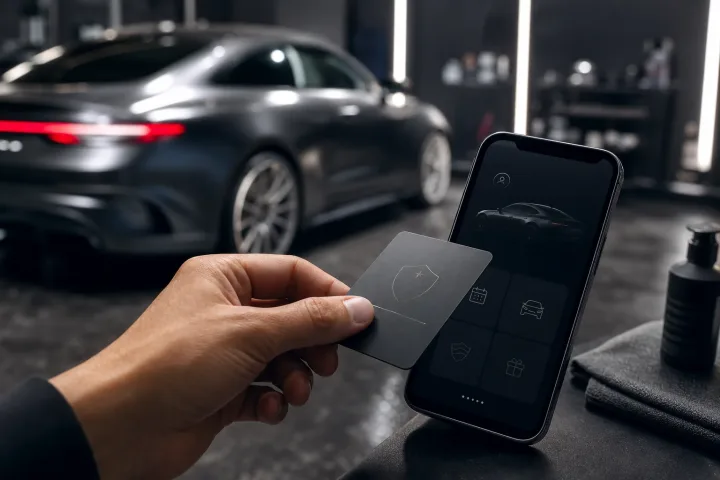
Test the actual tap experience on finished metal.
Metal needs an engineered antenna and shielding route, and phone antennas sit in different positions. Test representative devices with common cases, confirm the intended tap zone, and keep tap guidance clear. A QR code can provide a camera-based fallback. The sample should prove both the physical finish and the digital journey before production.