Material comparison · 8 min read
Metal vs Plastic Membership Cards for Automotive Brands
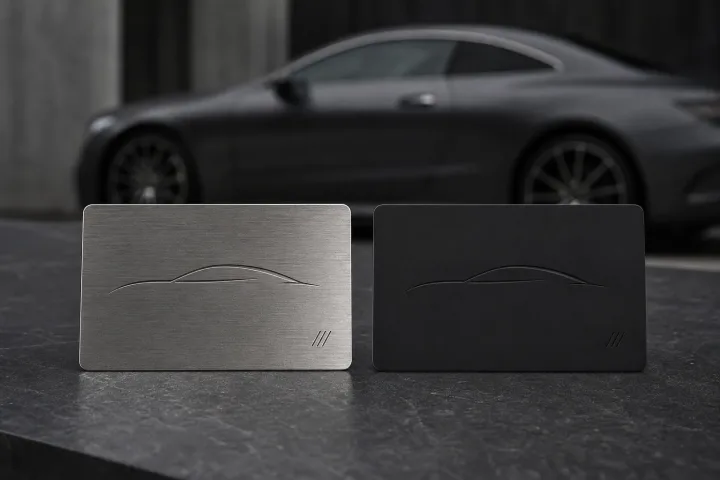
Metal is not automatically the right material for every member. It is strongest when the relationship has weight: founder status, private access, concierge service, collectability, or a long-lived VIP tier. Plastic remains practical for high-volume, frequently replaced, or cost-sensitive credentials.
Industry program views
Choose material by program role, not prestige alone.
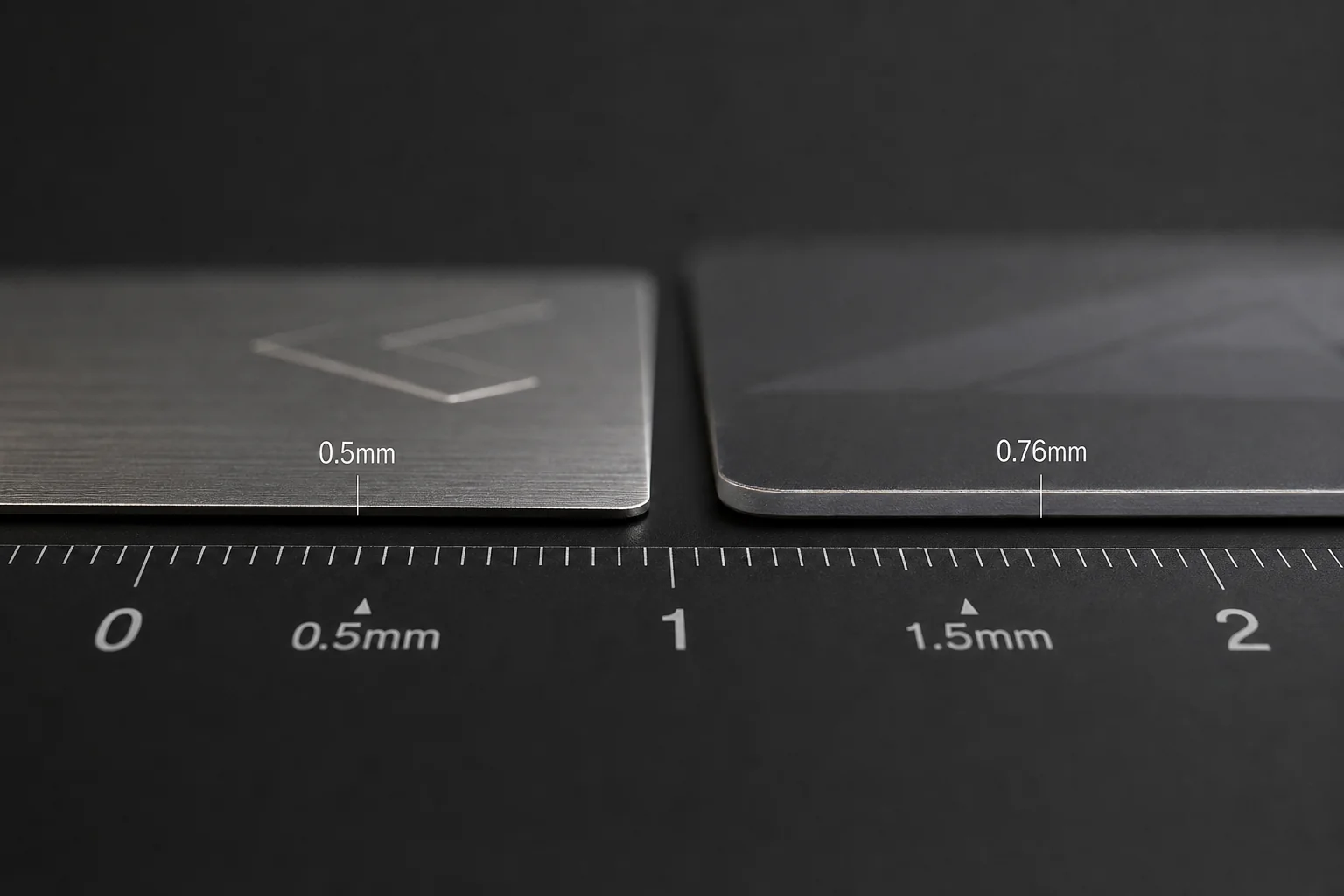
Thickness, handling, wear, presentation, volume, replacement, and RF construction matter more than a simple claim that one material is always better.
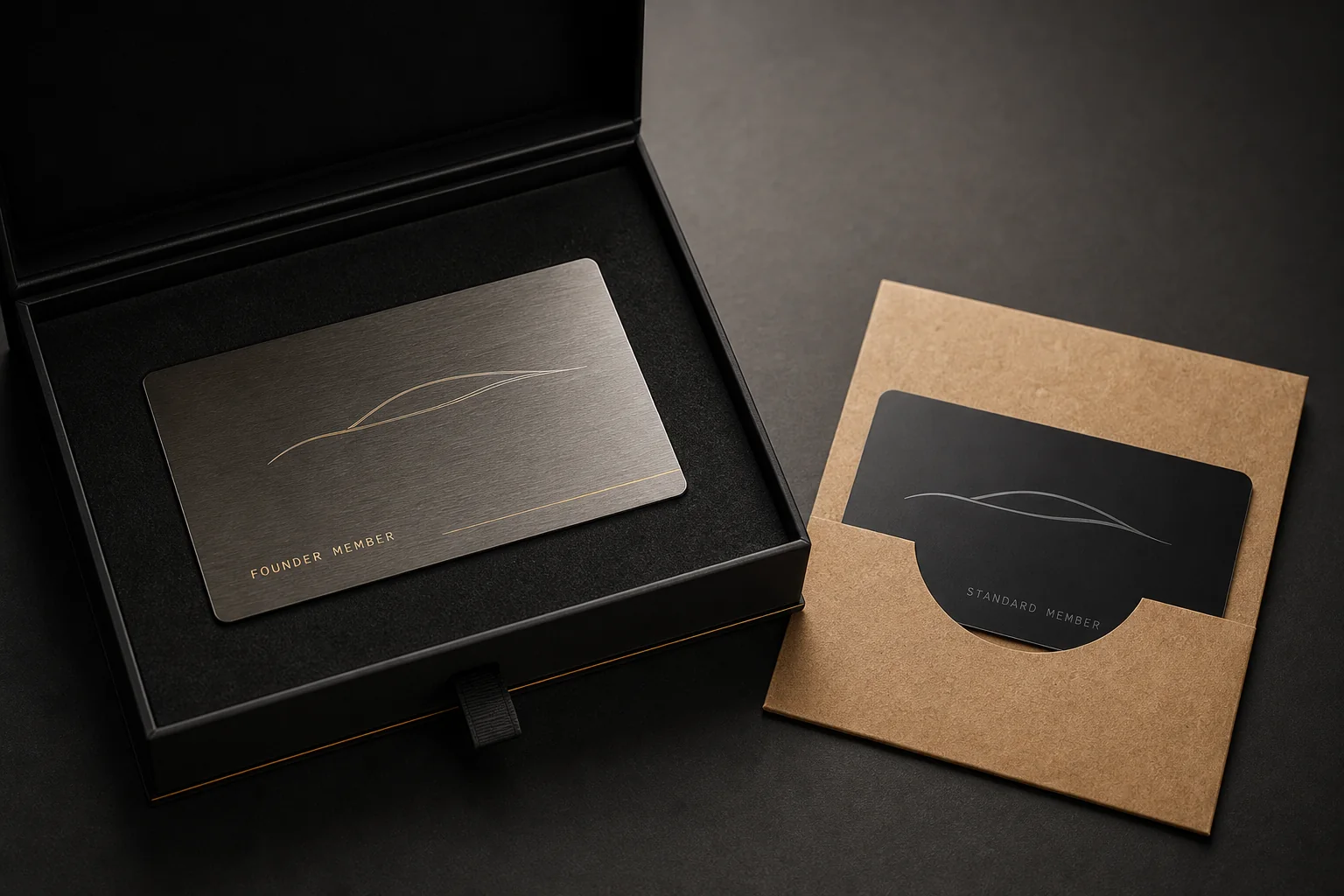
Use metal where the credential carries symbolic weight.
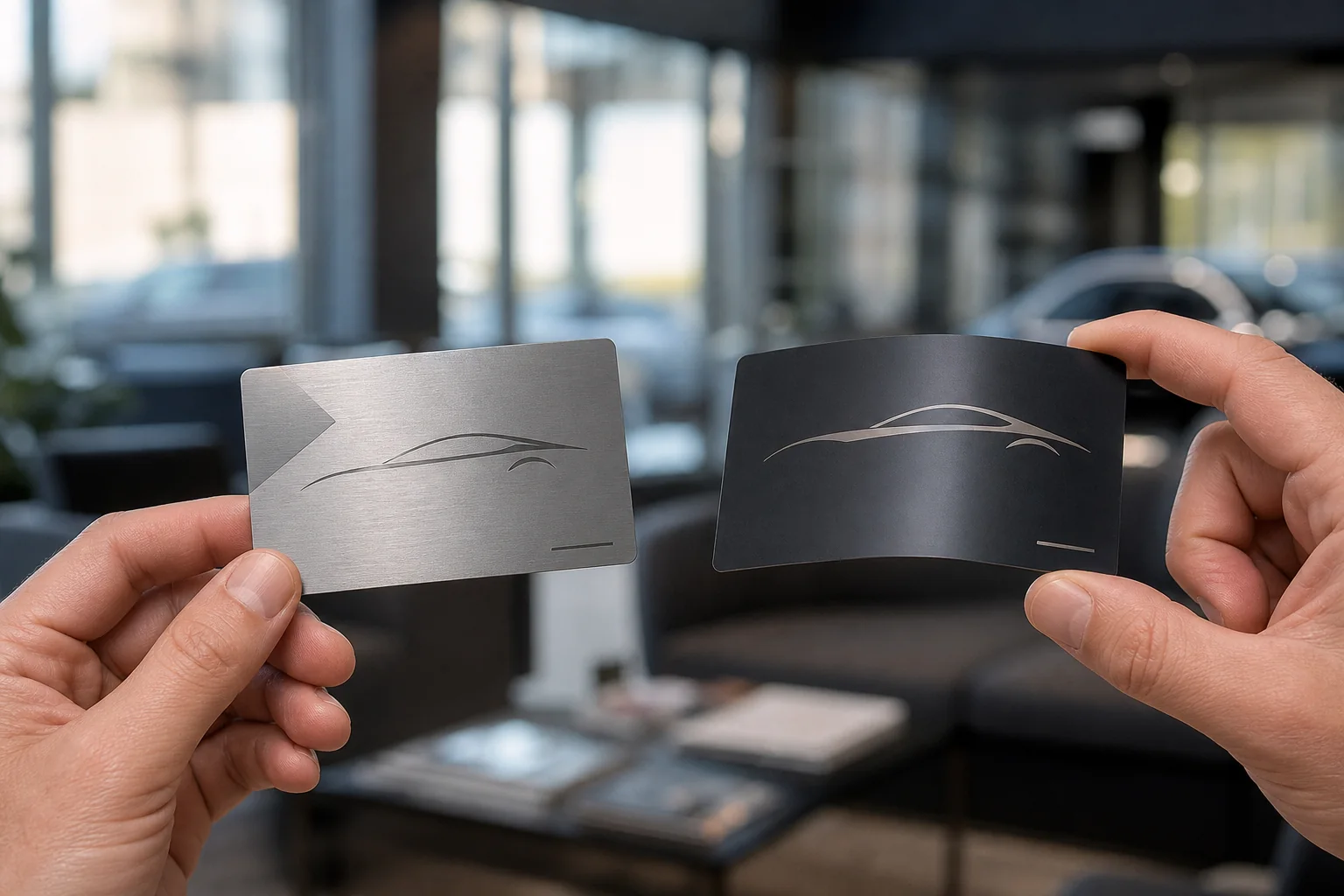
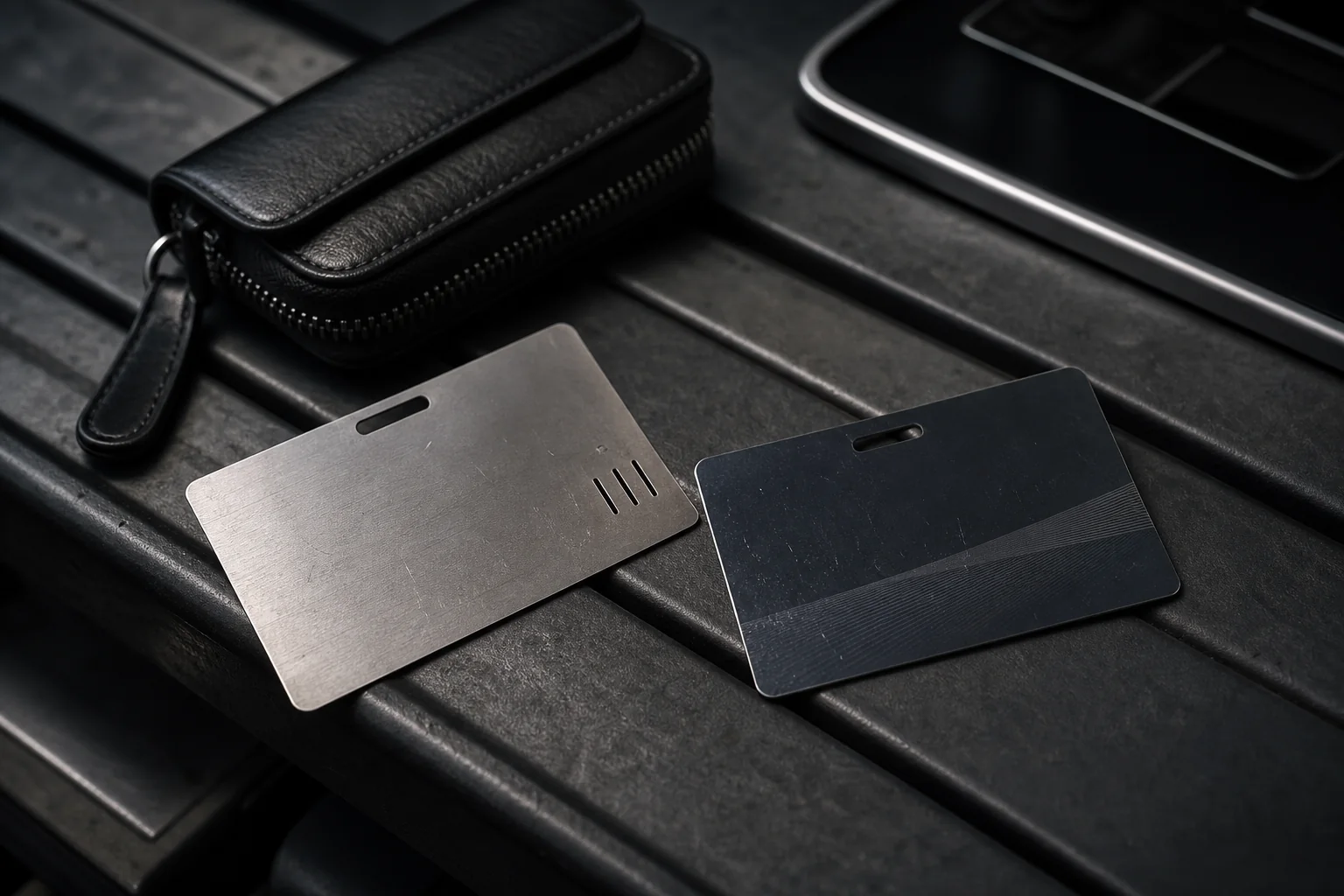
Founder, lifetime, invitation-only, private-garage, collector, or concierge tiers often benefit from a card that feels permanent and considered. Metal provides distinct weight, edge, reflection, engraving, and presentation options. Those qualities matter when issue is a deliberate moment and the member is expected to keep the credential for years rather than replace it every season.
Use plastic where scale and frequent change dominate.
Plastic may be the better fit for broad programs with many temporary members, frequent expiry changes, routine replacement, or tight unit-cost controls. It can support full-color print, personalization, and many RFID routes with simpler construction. A mixed strategy can reserve metal for high-value tiers while using plastic for general or event-specific credentials.
Compare the complete program cost.
Look beyond unit price. Include artwork setup, samples, encoding, personalization, packaging, fulfilment, replacement rate, support, and staff handling. Metal can justify its cost when it improves issue, recognition, retention, or collectability for a small high-value group. It is wasteful when the program has not defined why the premium object exists.
RFID and NFC construction differ by material.
Metal can block or detune radio performance, so a working contactless metal card needs an engineered antenna and ferrite or shielding route. Plastic is generally more RF-friendly but still requires the correct chip, antenna, encoding, and reader test. In either material, approve the finished credential on the real phone, lock, gate, or scanner.
Choose presentation and replacement together.
A boxed metal founder card can create a memorable onboarding moment, while a simple recyclable sleeve may be better for a broad plastic tier. Define what happens at expiry, upgrade, loss, and cancellation. A durable card is only useful when the membership record, revocation process, and replacement policy are equally well designed.
Best uses
- Automotive brands deciding between broad and premium tiers
- Founder, lifetime, collector, and concierge programs
- Mixed metal-and-plastic membership architectures
- Teams comparing complete program cost and replacement behavior
Relevant metal card routes
Frequently asked questions
Is metal always more durable than plastic?
Metal offers a different body and surface, but finish, thickness, handling, storage, and marking all affect wear. Approve real samples rather than relying on a universal durability claim.
Can one membership program use both materials?
Yes. Many programs can reserve metal for founder or premium tiers and use plastic for broad, temporary, or frequently replaced credentials while keeping one visual identity.
Which material is better for NFC?
Both can support NFC when properly specified. Metal requires a coordinated RF construction and sample test; plastic is generally less obstructive but still needs the correct chip, antenna, encoding, and device approval.
Specification
| Card format | CR80 85.6 × 54 mm by default; custom outlines after RF review |
|---|---|
| Thickness | 0.3–0.8 mm depending on construction |
| Minimum order | None — from one approval sample to production runs |
| Production time | About one week after artwork and sample approval |
| Personalization | Member name, ID, tier, serial, expiry, QR, NFC data, and matched packaging |
| Approval path | Finish proof, encoded working sample, reader or phone test, production approval |
| Metal strength | Weight, edge, engraving, limited tiers, long-lived presentation |
| Plastic strength | Volume, full-color flexibility, frequent replacement, broad programs |
| Decision test | Tier value, expected life, replacement rate, RF route, issue experience, and total program cost |
Related metal RFID card pages
- Metal RFID Membership Cards for Yacht Clubs and Marinas
- Metal RFID Membership Cards for Private Aviation and FBO Lounges
- Metal RFID Membership Cards for Golf and Country Clubs
- Metal RFID Membership Cards for Luxury Residence Clubs
- Metal RFID Membership Cards for Private Wellness Clubs
- Custom Metal Membership Cards for Car Clubs
- Metal Membership Cards for Car Detailing Studios
- How to Build a Luxury Car Rental VIP Membership Program
- Metal Membership Cards for Private Car Storage Clubs
- Dealership VIP Cards That Extend the Owner Relationship
- VIP Metal Passes for Rallies, Track Days and Car Events
- NFC, RFID or QR for Automotive Membership Cards?
- How to Design Black, Gold and Founder Car Club Tiers
- What Can Be Personalized on a Metal Automotive Card?
- How NFC Metal Cards Connect Automotive Member Portals
- Seven Benefits an Automotive VIP Card Can Support