Yacht club and marina guide · 8 min read
Metal RFID Membership Cards for Yacht Clubs and Marinas
A yacht-club card can connect member identity, marina access, guest privileges, dining, events, and concierge requests without turning every touchpoint into the same technical problem. The strongest programs separate secure access from phone services, then present both through one coherent member credential.
Industry program views
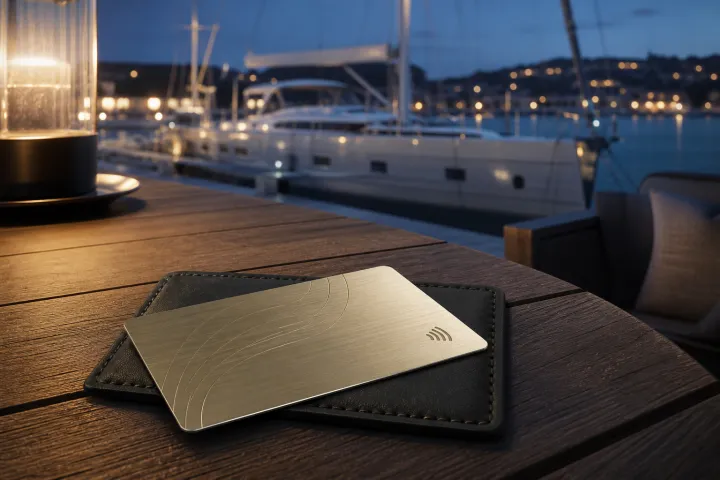
Design one member identity across marina, clubhouse, and service journeys.
Surface, personalization, access data, phone journeys, and replacement rules should be reviewed as one program before the finished sample is approved.
Map the member journey before choosing a chip.
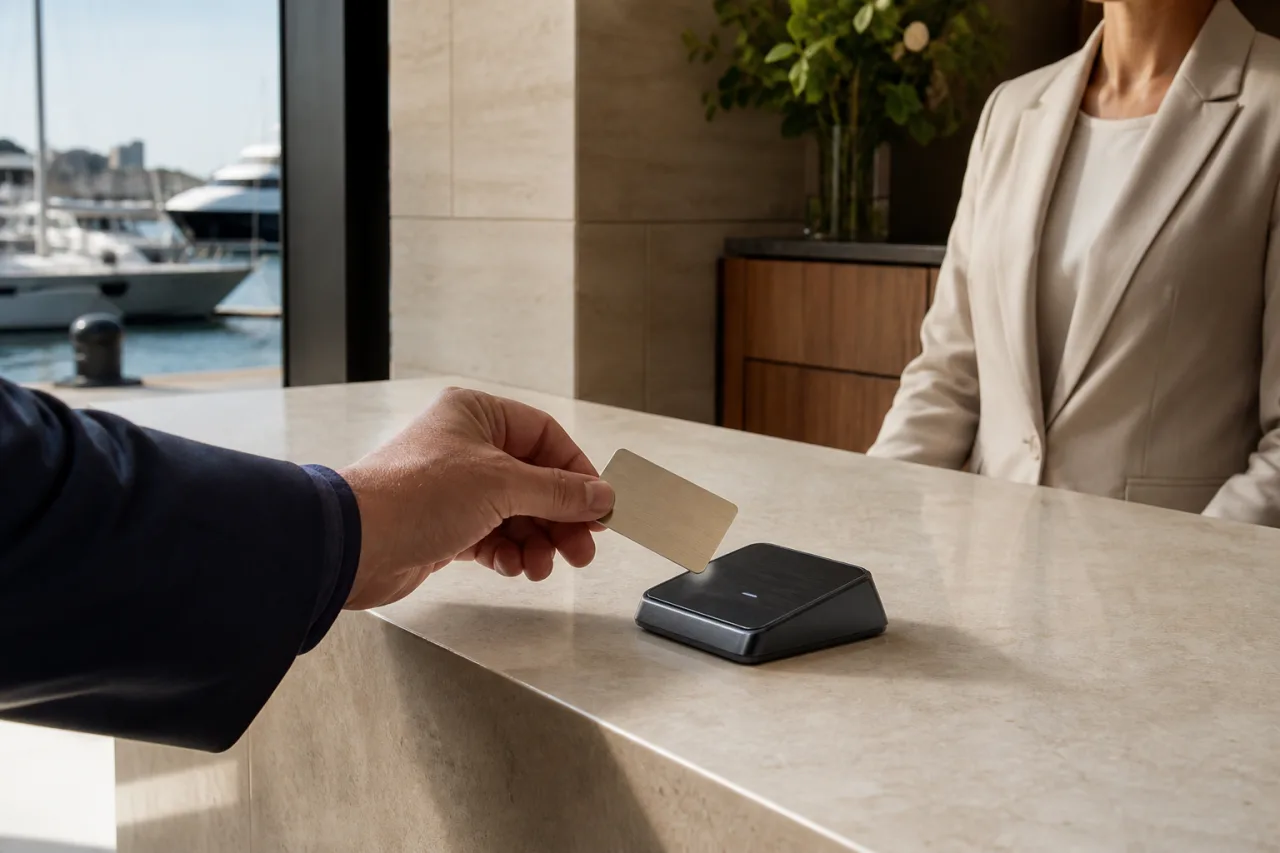
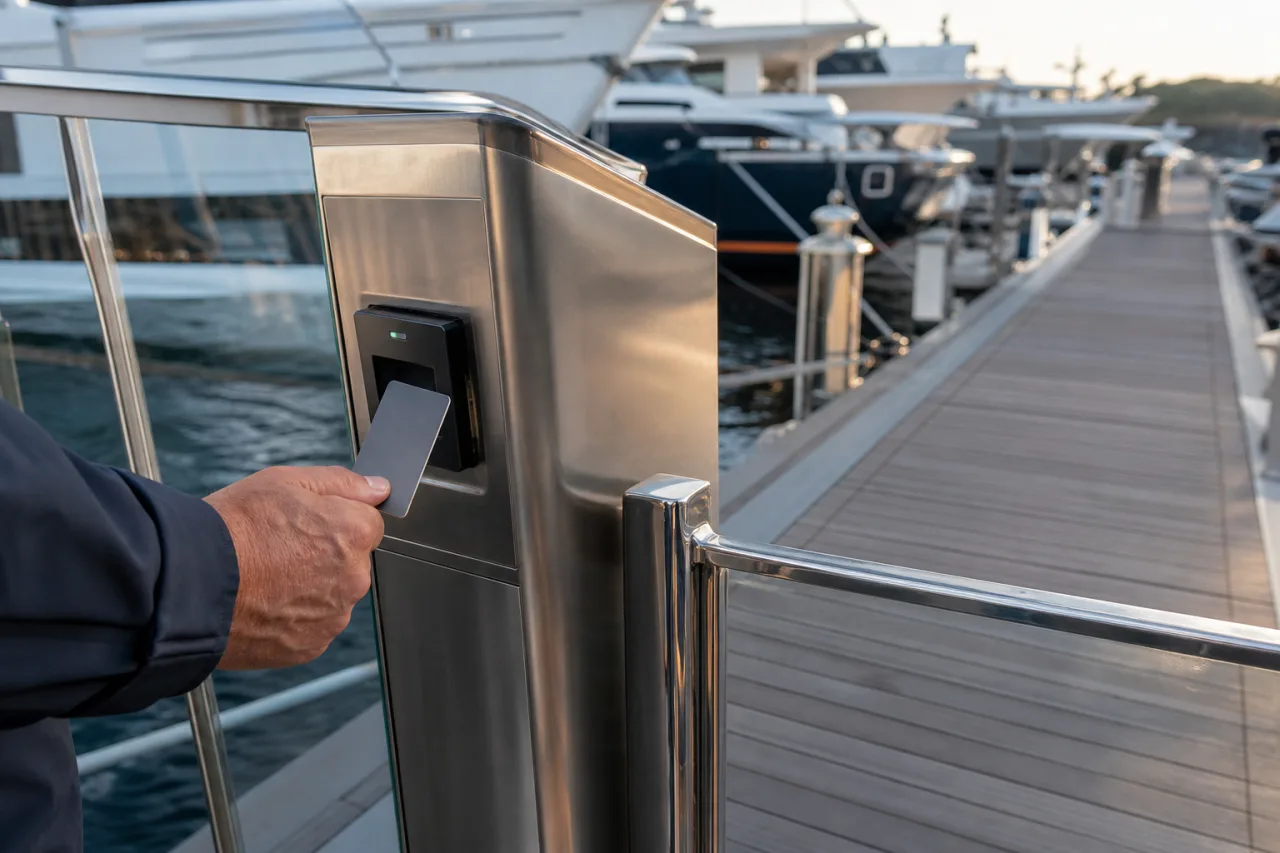
List the marina gate, parking, pontoon, clubhouse, dining room, gym, event check-in, and service desk. Some points may need an installed access credential; others need only visual recognition or a phone link. The card should make the journey simpler without extending secure access to places where the member has no entitlement.
Walk the route with operations, security, food and beverage, and member services before writing the brief. Record who validates the member at each point, what happens when connectivity is weak, and which action needs a live lookup rather than a visual check. This exposes duplicate systems early and prevents a premium card from becoming a decorative layer over an unchanged process.
Keep secure access and concierge services separate.
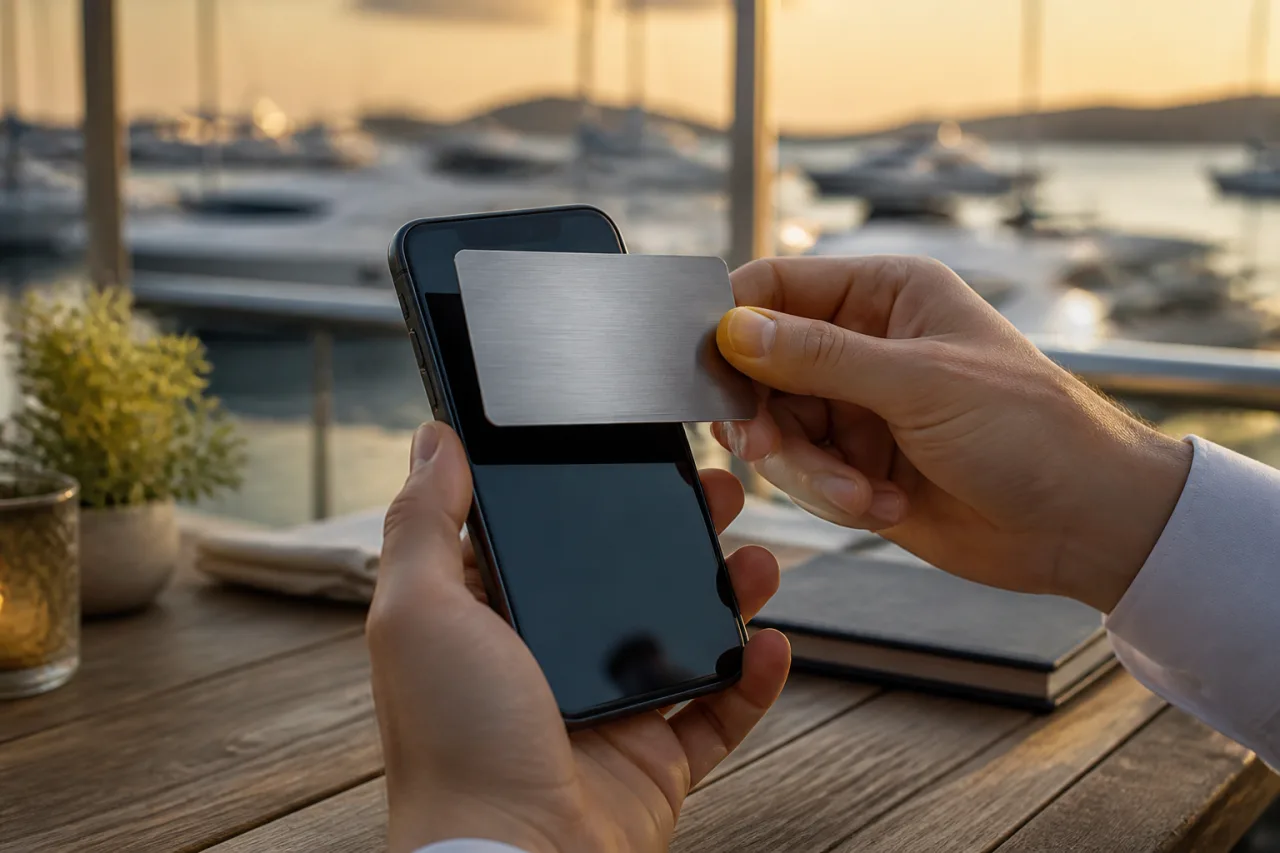
An RFID credential must match the installed reader, frequency, encoding, and access-control rules. A phone-readable NFC or QR route can open berth services, dining reservations, events, guest requests, or a member portal. They may share one physical card, but each function needs its own data owner, test, and fallback.
Treat the phone destination as a service product in its own right. It needs a stable domain, an owner, authentication where personal information appears, and a useful landing state for members who tap before arrival or while abroad. If a second contactless technology is required for gates, document both functions clearly so staff never confuse a convenient phone tap with an access decision.
Build guest, crew, and family rules into the program.
A member card should not silently become a universal pass for guests or crew. Define who may sponsor access, which areas are included, how long a temporary privilege lasts, and whether a separate guest credential is required. The live access system remains authoritative even when the metal finish signals a membership tier.
Crew and family access deserves the same precision as the main member record. A captain may need a different schedule from a spouse; a guest may need one event rather than the full marina; a contractor may need a short maintenance window. Unique credentials and explicit sponsors make expiry, audit and assistance far easier than passing the principal member's card between people.
Choose a finish that survives a marine routine.
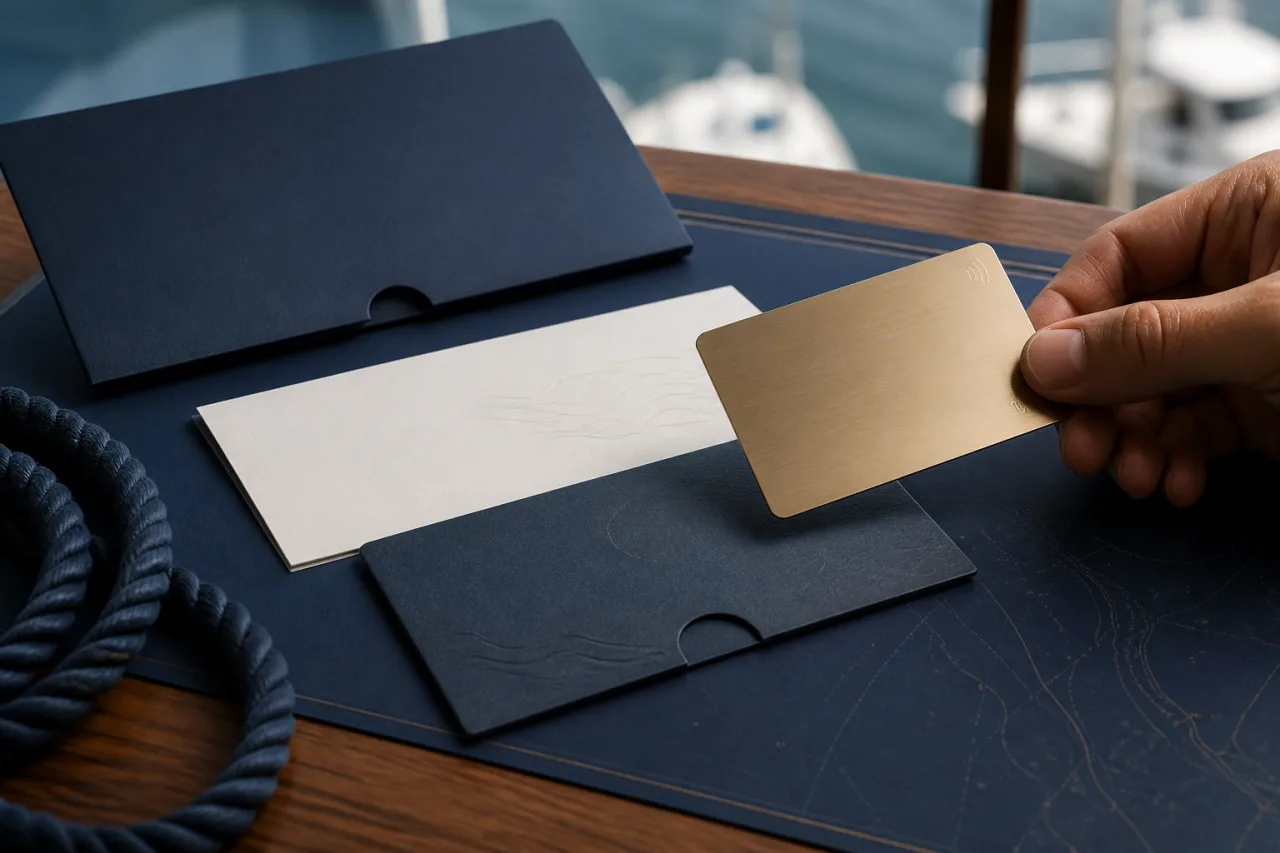
Brushed steel, champagne PVD, gunmetal, and controlled laser marking suit a maritime setting without imitating a payment card. Review fingerprints, salt-laden handling, sleeve use, wet hands, edge comfort, and QR contrast on a real sample. Metal finish and RF construction are approved together, not as independent decisions.
The marine environment also changes the approval conversation. Compare fingerprints, coating wear, edge comfort and sleeve behavior after realistic handling, not only under studio light. Test QR contrast after surface reflections, and check the card at the gate in the orientation members will actually use. A restrained finish that remains legible after a season can feel more premium than a mirror surface that requires constant care.
Control issue, renewal, and replacement data.
Member name, number, tier, access reference, NFC destination, QR payload, expiry, and packaging label should originate from one approved file. Define revocation and replacement before launch, and keep private berth, billing, travel, and family information in authenticated systems rather than printing or openly encoding it on the card.
Finally, rehearse loss, renewal and tier change with frontline staff. The system should show the current entitlement even when the visible finish reflects an earlier tier, and revocation should not depend on recovering the physical card. Keep a simple issue log connecting the member record, encoded identifier, physical serial and replacement history, with access limited to staff who genuinely need it.
Best uses
- Private yacht clubs and marina memberships
- Berth-holder, family, founder, and invitation tiers
- Clubhouse, pontoon, parking, dining, and event journeys
- Programs combining compatible access with NFC or QR services
Relevant metal card routes
Frequently asked questions
Can one metal card open the marina gate and work with a phone?
Sometimes. Secure reader access and phone NFC are different functions. Confirm the installed access system first, then approve a finished sample that proves every required device journey.
Should berth or vessel details be stored on the card?
No. Use a stable member identifier and keep berth, vessel, billing, and personal details inside the controlled club system.
How should guest access work?
Use explicit sponsor, zone, schedule, and expiry rules. A separate temporary guest credential is often safer and easier to revoke than extending the member card.
Specification
| Card format | CR80 85.6 × 54 mm by default; custom outlines after RF review |
|---|---|
| Thickness | 0.3–0.8 mm depending on the metal and RF construction |
| Minimum order | None — from one working approval sample to production runs |
| Production time | About one week after artwork, data, and sample approval |
| Personalization | Member name, ID, tier, serial, expiry, QR, NFC data, and matched packaging |
| Approval path | Program brief, artwork proof, encoded sample, device test, and production approval |
| Access route | Exact marina or clubhouse reader, credential format, zones, schedules, and revocation rules |
| Service route | Managed NFC or QR destination for reservations, berth services, events, and concierge requests |
Related metal RFID card pages
- Metal RFID Membership Cards for Private Aviation and FBO Lounges
- Metal RFID Membership Cards for Golf and Country Clubs
- Metal RFID Membership Cards for Luxury Residence Clubs
- Metal RFID Membership Cards for Private Wellness Clubs
- Custom Metal Membership Cards for Car Clubs
- Metal Membership Cards for Car Detailing Studios
- How to Build a Luxury Car Rental VIP Membership Program
- Metal Membership Cards for Private Car Storage Clubs
- Dealership VIP Cards That Extend the Owner Relationship
- VIP Metal Passes for Rallies, Track Days and Car Events
- NFC, RFID or QR for Automotive Membership Cards?
- How to Design Black, Gold and Founder Car Club Tiers
- What Can Be Personalized on a Metal Automotive Card?
- Metal vs Plastic Membership Cards for Automotive Brands
- How NFC Metal Cards Connect Automotive Member Portals
- Seven Benefits an Automotive VIP Card Can Support