High contrast
White Ink Metal RFID Cards
White ink is the clearest print route on matte black, gunmetal, carbon, and other dark metal faces — an opaque layer that gives critical data and branding full contrast without losing the restraint of the base finish. Its real limits are size and distance, and both are approved by scanning a physical sample.
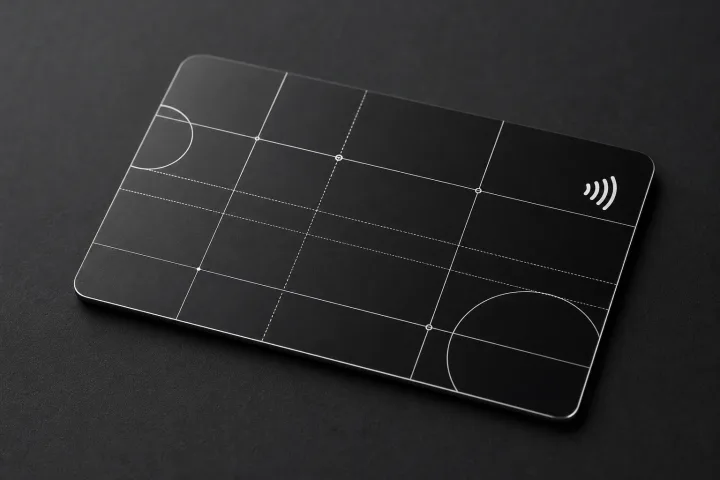
Production detail views
Four white ink references for planning the finished metal card.
Crisp geometry, fine registration stripes, contrast pairs, and a data-matrix zone — white ink at work on dark metal.
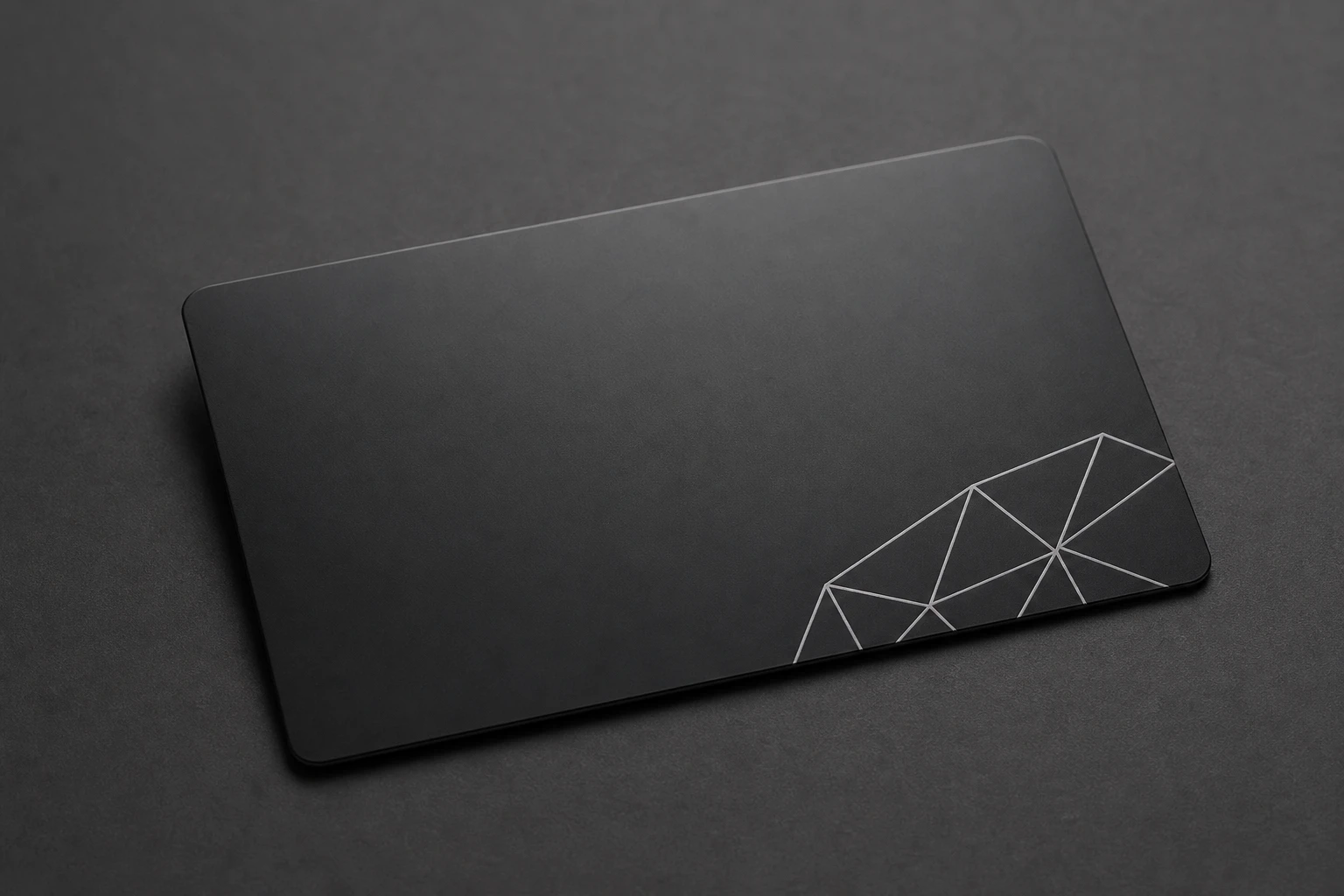
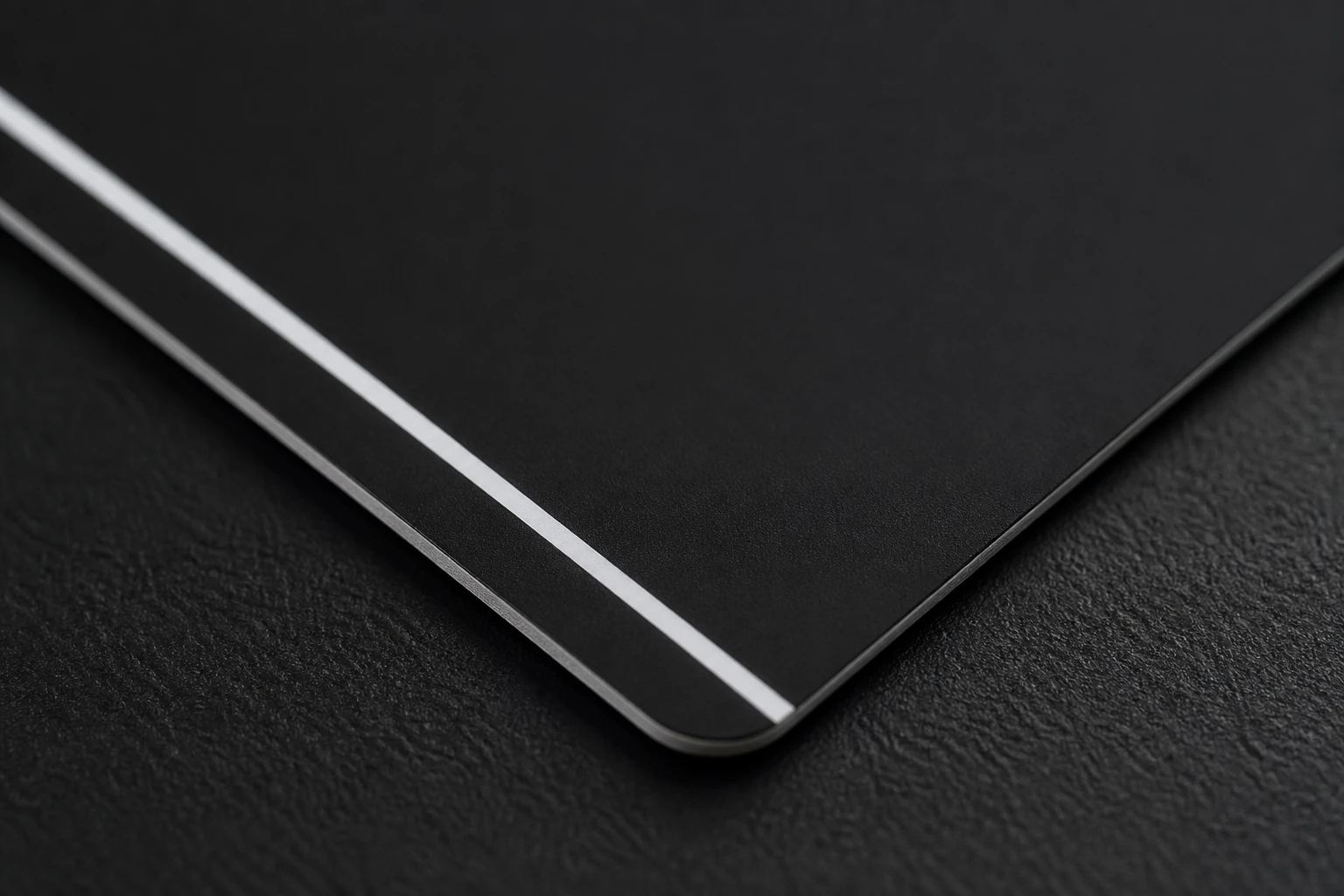
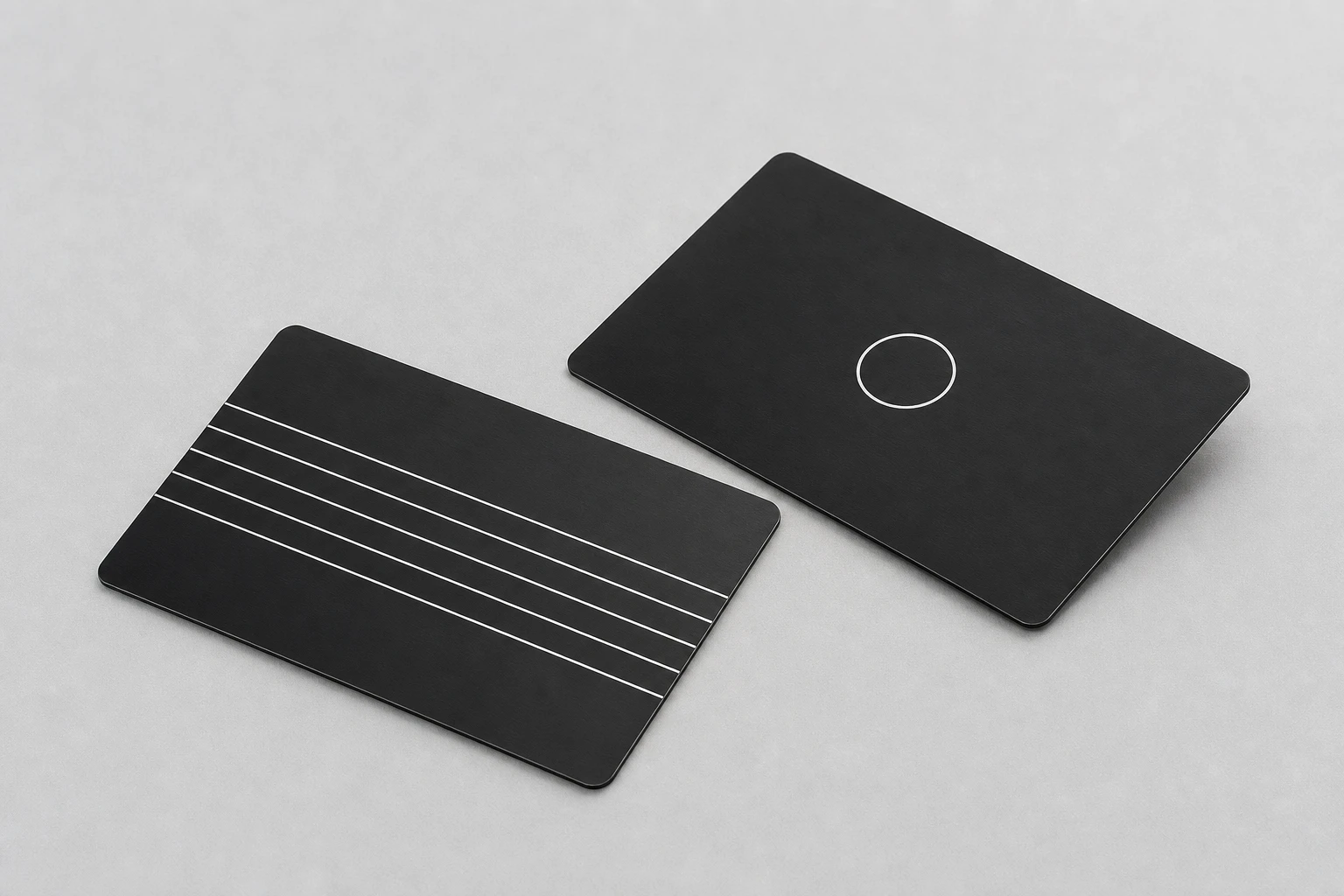
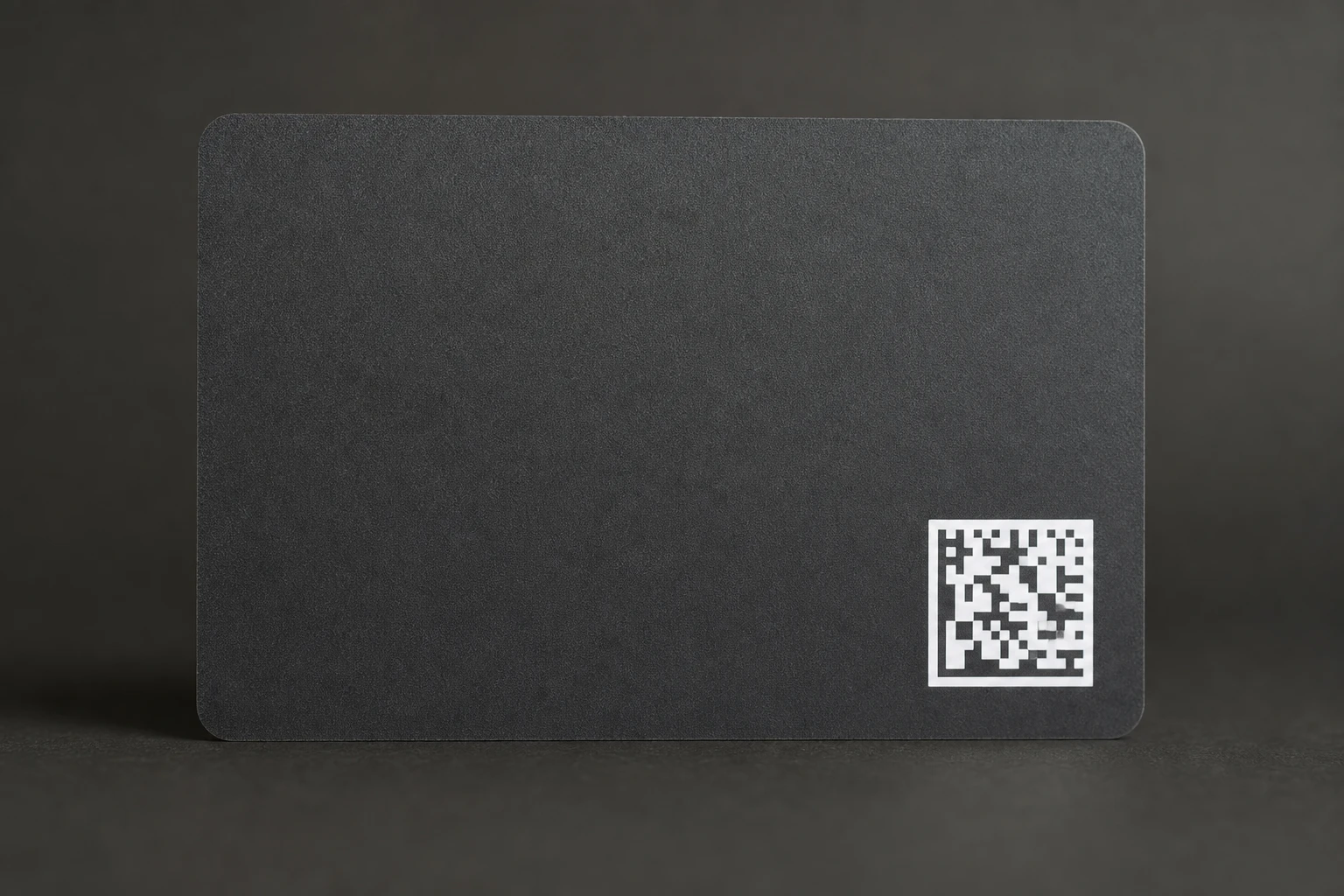
The scan test sets the size limit, not the artwork file.
White is the workhorse on dark metal: the only print route that holds full contrast on matte black, gunmetal, and carbon faces. The practical limits are size and distance — the smallest text and the QR zone are approved by scanning a physical sample at the real working distance, because a code that scans at arm's length on screen can fail at a gate.
Prove visual and technical performance together.
Approve opacity, smallest readable data, QR scan distance, and edge sharpness on the final metal surface.
Best uses
- High-contrast logos, QR codes, serials, member names, access instructions, and dark-finish data zones.
- Premium metal card programs where the finish, data zones, and RF construction need coordinated approval
- Projects with a defined artwork file, variable-data need, and reader or scan validation route
Frequently asked questions
How small can white-ink text and QR codes be?
Small enough for serials and dense QR zones — but the real limit is set by scanning the physical sample at working distance, and that check is part of every white-ink approval.
Which finishes need white ink?
The dark ones: matte black, gunmetal, and carbon faces, where any other print route loses contrast. On pale metal, white ink becomes a subtle accent rather than the data carrier.
Does white ink affect the RFID construction?
No — it is a surface layer. The QR panel's position is planned with the artwork so codes sit clear of edge treatments and stay scannable on the finished, reader-tested card.
Specification
| Format | CR80 85.6 x 54 mm by default; custom outlines after RF review |
|---|---|
| Thickness | 0.3 mm to 0.8 mm depending on construction |
| Minimum order | None — single samples to production runs |
| Production time | About one week after artwork and sample approval |
| RF construction | Antenna, ferrite or hybrid shielding, chip, metal faces, and edge stack specified together |
| Chip routes | NFC tag, standard HF, high-security AES HF, LF compatibility, and selected UHF by reader test |
| Marking options | Laser etch, deep engraving, UV print, white ink, enamel fill, QR, serial, and controlled cut-through |
| Approval flow | Finish sample, encoded working sample, reader check, pre-production approval |
| Primary route | White ink |
| Best use | High-contrast logos, QR codes, serials, member names, access instructions, and dark-finish data zones. |
| Approval check | Approve opacity, smallest readable data, QR scan distance, and edge sharpness on the final metal surface. |
Related metal RFID card pages
- Laser Engraved Metal RFID Cards
- Deep Engraved Metal RFID Cards
- UV Printed Metal RFID Cards
- Enamel Filled Metal RFID Cards
- QR and Serial Metal RFID Cards
- Metal Card Edge Finishing
- Metal RFID Card Artwork Specs