Production files
Metal RFID Card Artwork Specs
A metal RFID artwork file needs more than a logo. Production-ready means vector artwork (AI, PDF, or EPS) with fonts outlined, each process on its own named layer — laser, print, white ink, fill, cut, variable data — a die line for any custom outline, and an antenna-safe area confirmed before release.
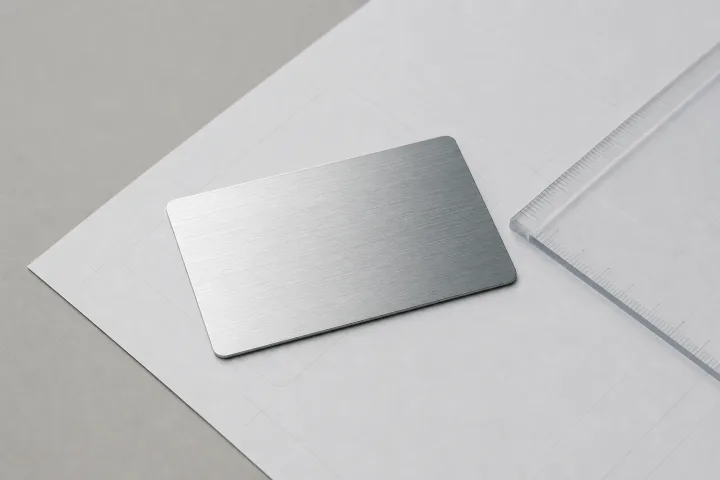
Production detail views
Four artwork specs references for planning the finished metal card.
Outline proofs, alignment templates, approval sheets, and a die-line check — the file work behind a clean production run.
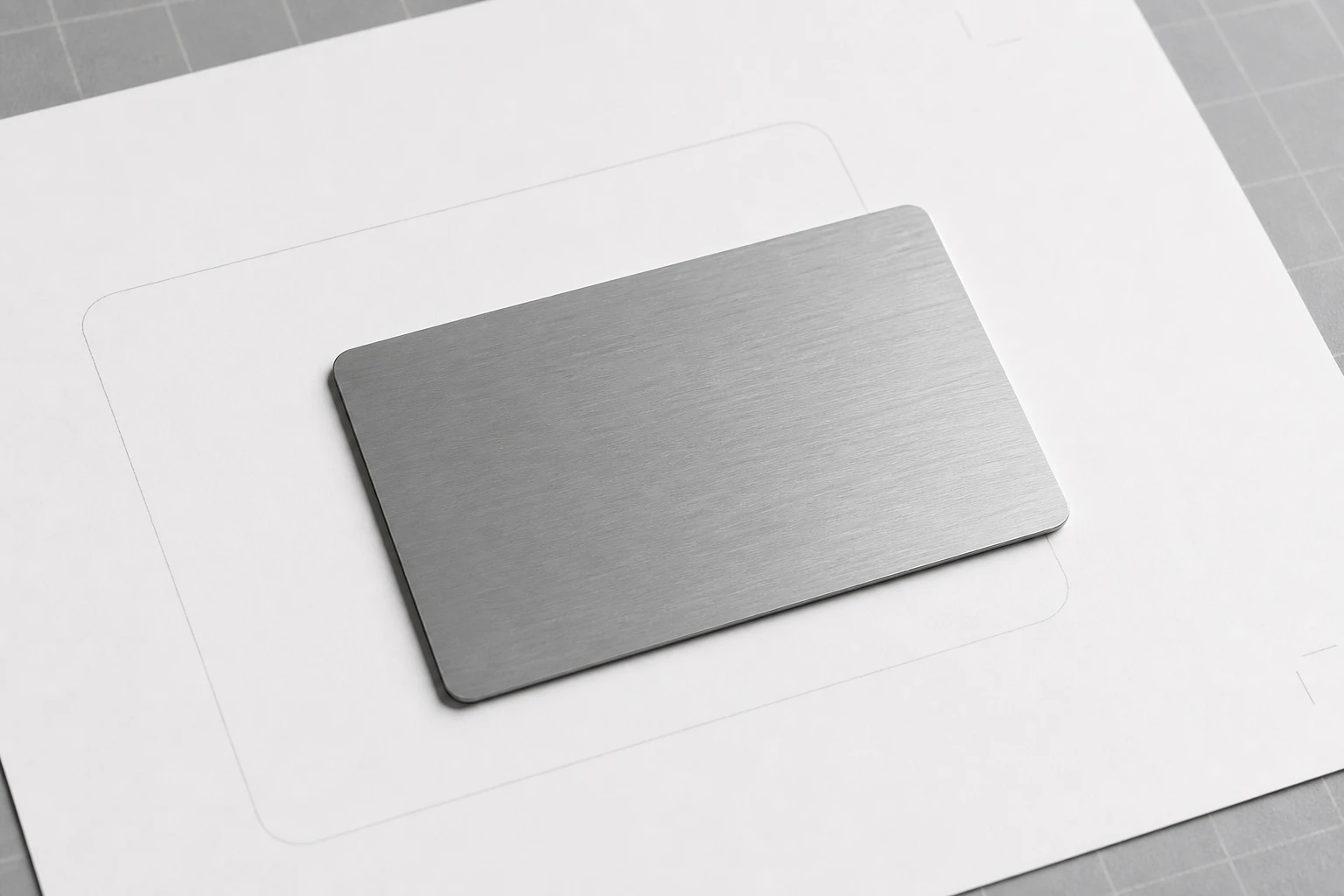
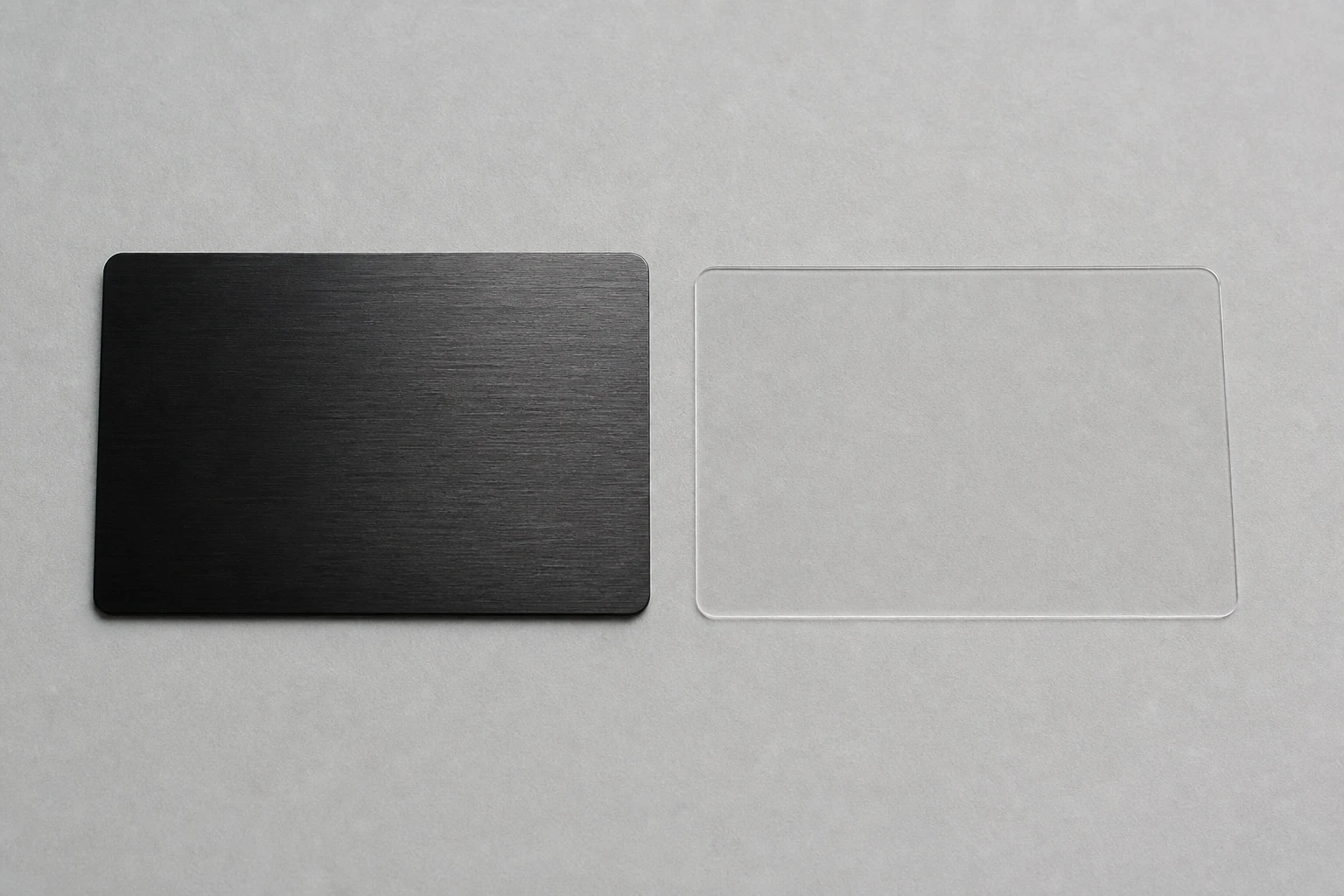
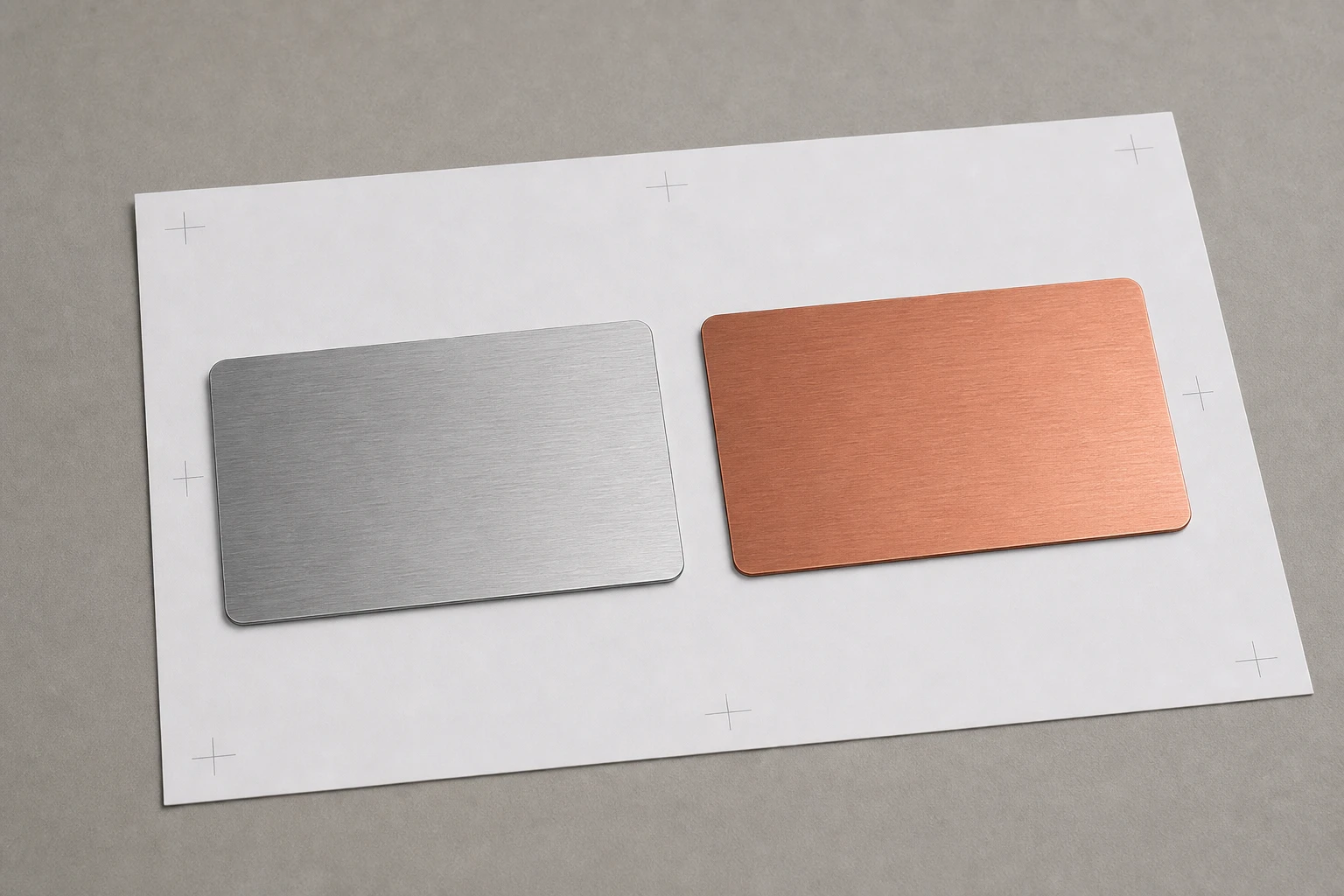
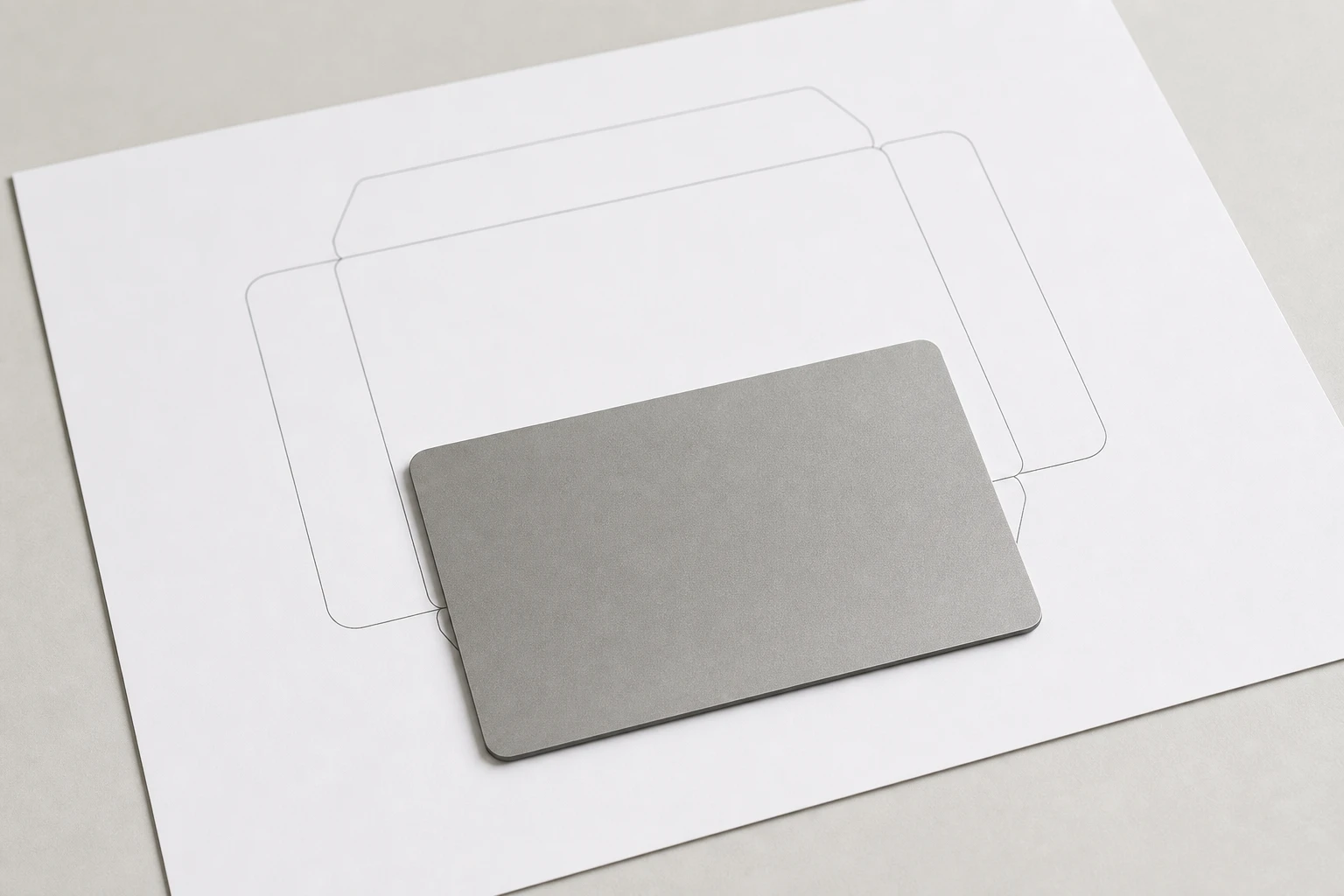
One file, separated by process.
A production-ready file is vector artwork (AI, PDF, or EPS) with fonts outlined and each process on its own named layer — laser, print, white ink, fill, cut, and variable-data zones separated, plus a die line for any custom outline. Variable data arrives as a spreadsheet matched to the layout, and the antenna-safe area is confirmed on the proof before anything is released.
Prove visual and technical performance together.
Approve vector file, layer naming, data template, QR proof, print proof, and working final sample.
Best uses
- Production-ready artwork, variable data sheets, QR or serial zones, print layers, laser layers, and RF-safe placement.
- Premium metal card programs where the finish, data zones, and RF construction need coordinated approval
- Projects with a defined artwork file, variable-data need, and reader or scan validation route
Frequently asked questions
What file format is needed for metal card artwork?
Vector AI, PDF, or EPS with fonts outlined, separate named layers per process (laser, print, white ink, fill, cut), a die line for custom outlines, and variable data as a spreadsheet matched to the layout.
Why do laser and print need separate layers?
Because they are different production processes with different registration: mixing them in one layer forces guesswork at setup. Separated, named layers mean the proof matches intent and the run matches the proof.
What is the antenna-safe area?
The zone the RF construction reserves — artwork, cuts, and data placement must respect it. RF-safe placement is confirmed on the proof, so artwork approval and RF approval stay one step.
Specification
| Format | CR80 85.6 x 54 mm by default; custom outlines after RF review |
|---|---|
| Thickness | 0.3 mm to 0.8 mm depending on construction |
| Minimum order | None — single samples to production runs |
| Production time | About one week after artwork and sample approval |
| RF construction | Antenna, ferrite or hybrid shielding, chip, metal faces, and edge stack specified together |
| Chip routes | NFC tag, standard HF, high-security AES HF, LF compatibility, and selected UHF by reader test |
| Marking options | Laser etch, deep engraving, UV print, white ink, enamel fill, QR, serial, and controlled cut-through |
| Approval flow | Finish sample, encoded working sample, reader check, pre-production approval |
| Primary route | Artwork specs |
| Best use | Production-ready artwork, variable data sheets, QR or serial zones, print layers, laser layers, and RF-safe placement. |
| Approval check | Approve vector file, layer naming, data template, QR proof, print proof, and working final sample. |
Related metal RFID card pages
- Laser Engraved Metal RFID Cards
- Deep Engraved Metal RFID Cards
- UV Printed Metal RFID Cards
- White Ink Metal RFID Cards
- Enamel Filled Metal RFID Cards
- QR and Serial Metal RFID Cards
- Metal Card Edge Finishing